9 October 2026
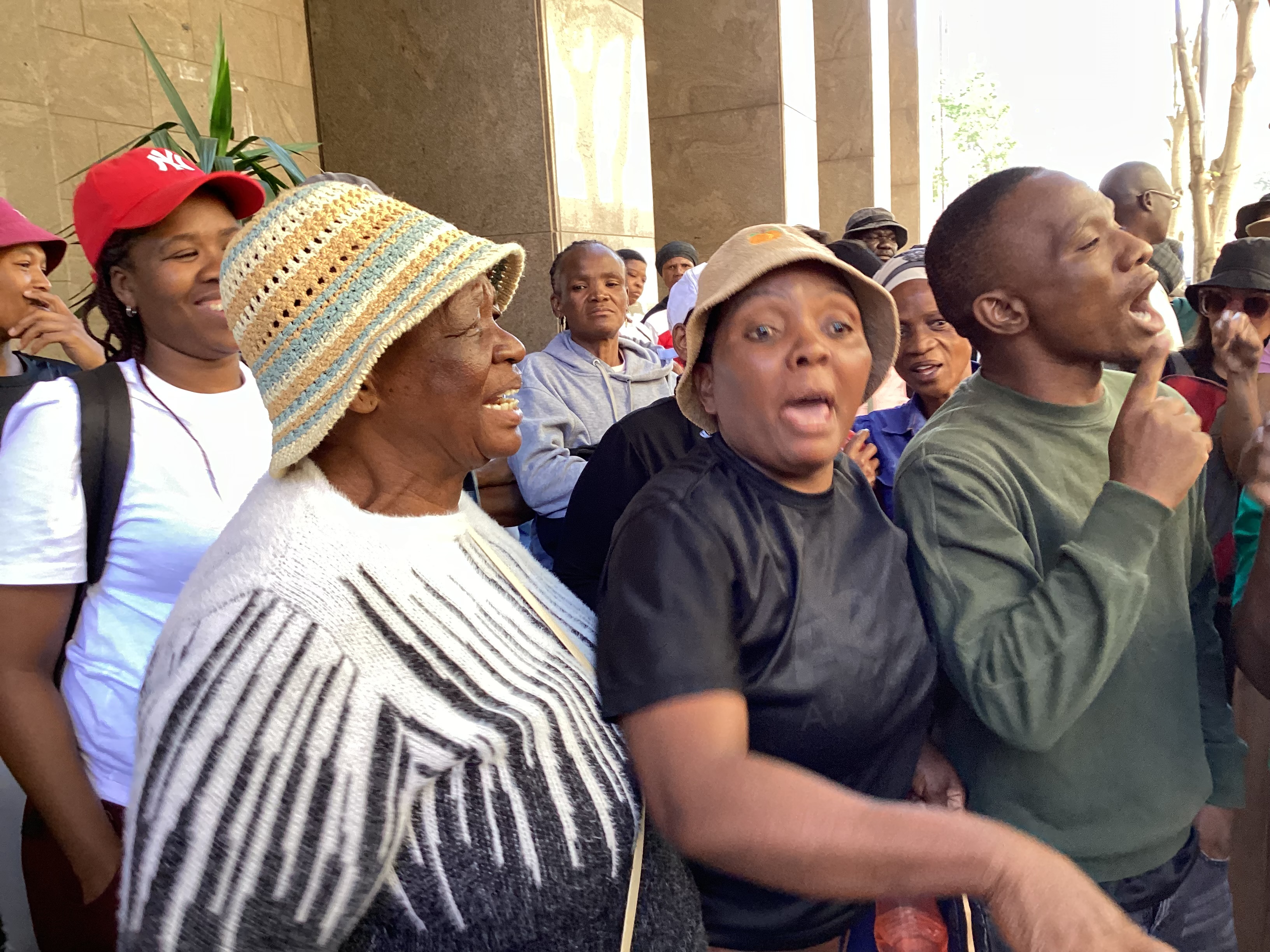
Dozens of residents from informal settlements across Gauteng marched to Premier Panyaza Lesufi’s office in Johannesburg on Friday, demanding answers about their housing applications. Some arrived with proof of applying for government housing. Photos: Kimberly Mutandiro
Dozens of residents from informal settlements across Gauteng marched to Premier Panyaza Lesufi’s office in Johannesburg on Friday, demanding answers about their housing applications. Some said they had been waiting for houses since 1996.
The protesters said they had submitted numerous memoranda to the Premier’s office without receiving any feedback. They accused government of ignoring their housing needs for decades.
In August, they submitted a petition with about 100 signatures, asking government to confirm the status of their housing applications. They said they had received no response.
On Friday, they returned to the Premier’s office demanding feedback on the status of their applications.
The march, led by the Unemployed People of South Africa (UPSA), drew residents from informal settlements in Soweto, Midrand, Roodepoort, Randburg and Randfontein. They marched from Newtown Junction to the Premier’s office, where they threatened to shut the office down if their pleas were not heard.
They had expected to see the Premier. When he did not address them, tensions rose. Some shouted at police and officials; others tried to enter the building but were stopped by police.
Some protesters also showed up with forms proving they had registered for government housing.
In a memorandum they accused government of a lack of transparency in housing allocations and of neglecting elderly and disabled applicants.
“We understand that housing allocation must be conducted according to applicable laws, policies and available resources. However, the length of time an applicant has been waiting must be taken seriously,” the memorandum read.
March convener Steven Sechaba said 30 years was a “long time” to wait for government housing without answers.
“My grandmother died without getting the house she applied for, and I do not even know when I will get a house. This should be addressed,” he said.
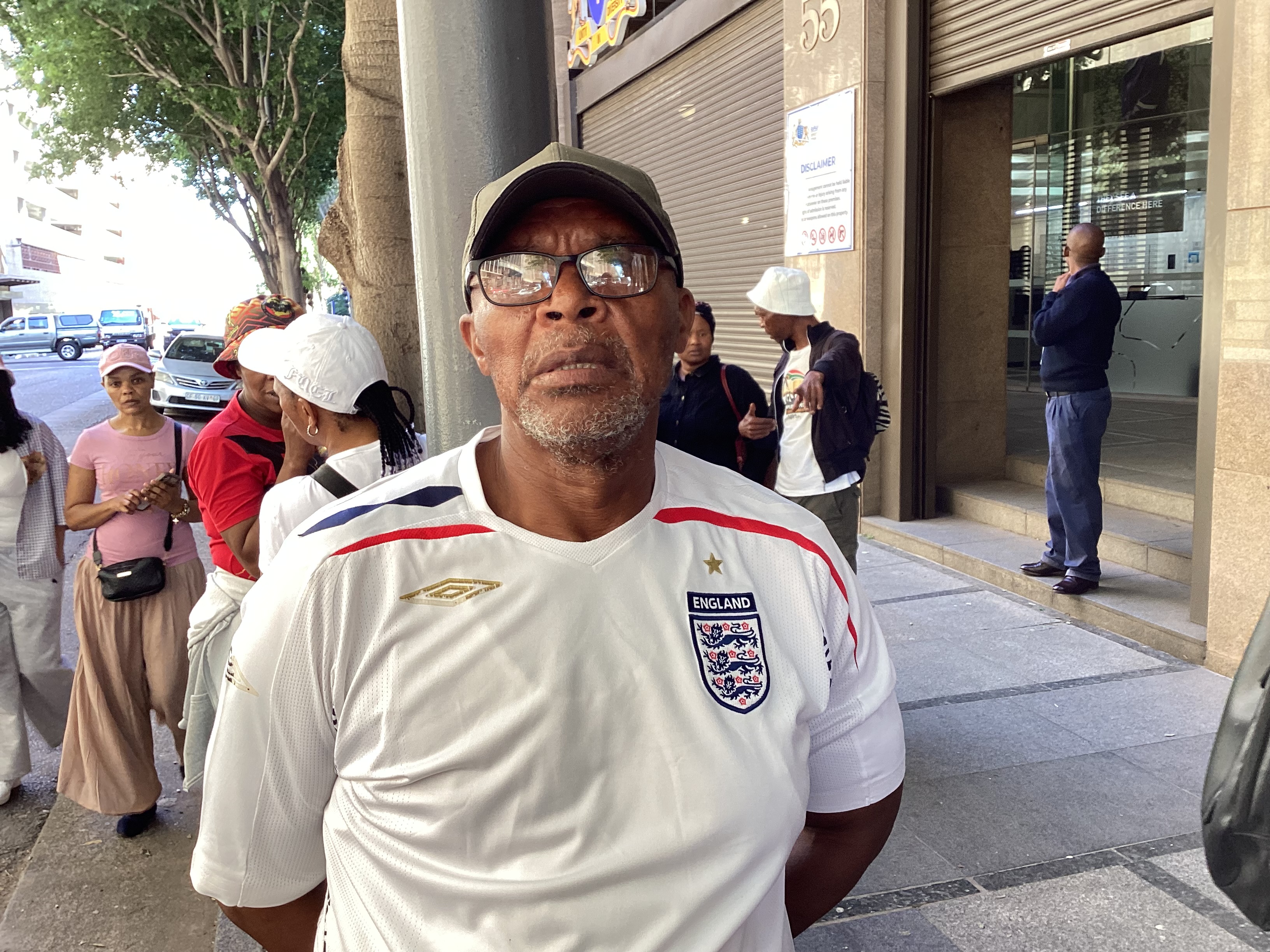
Mzwandile Makoba registered for a house in 1996. He still hasn’t received a state house and says he spends half of his old age grant on rent.
Among the protesters was Mzwandile Makoba, who registered for a house in 1996. He lives alone in a small rental room in Naledi, Soweto. He said he spends half his old age grant on rent, which leaves little for food and other needs.
Makoba said he “has lost count” of the number of times he has visited the local housing office only to be told no house has been allocated to him.
“It’s embarrassing to see young children being given houses while older people like myself are still waiting. When will the government remember us?” he asked.
Some protesters said they had been allocated houses but found other people living in them when they tried to claim them.
Eliza Moji, a part-time domestic worker in Randfontein, said she was allocated a house in Dan Tloome in 2016 and it is reflected on the housing database. But she found other people living there when she went to claim it. Moji never moved in. She now rents a small room in an informal settlement.
“I want the government to give me the house that was allocated to me many years ago. It’s not easy to live in a small rental room,” she said.
Sizeka Williams from Roodepoort said a house had been allocated to her in Sinqobile, Kagiso North, some years ago, but she found strangers living in it. She now lives in an informal settlement with no water supply or toilets.
“We are demanding answers. We want to know what the government has done with our houses,” said Williams.
Dumisani Nxumalo, from the Premier’s office, addressed the protesters, saying the matter had been referred to the provincial department for human settlements and its feedback would be conveyed in due course.
Edwin Masina of UPSA’s Gauteng housing crisis committee said they would not hesitate to shut the Premier’s office down if their pleas went unheard.
“The people are questioning the relevance of voting for the past 30 years when they do not have houses. What’s the point in voting for a government that only enriches itself while people continue to suffer?” he asked.