17 March 2026
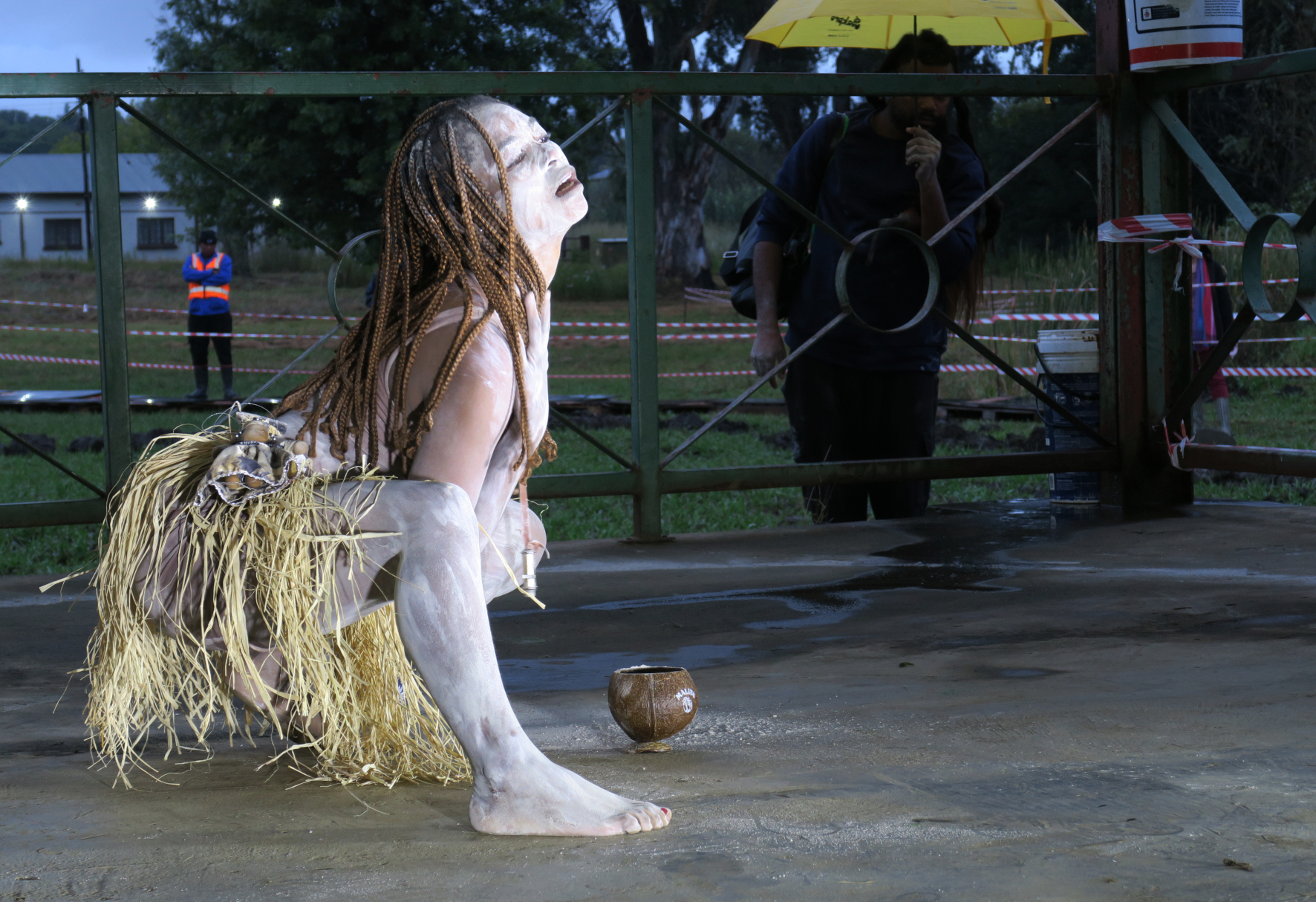
Dr Nashilongweshipwe Mushaandja from Owela Live Arts Collective Trust performs in Kina: A Choreopoem for Otherwise’s Grandchildren at the My Body My Space public arts festival in eNtokozweni. Photos: Steve Kretzmann
In the impoverished town of eNtokozweni (formerly Machadodorp) in Mpumalanga, the annual My Body My Space public arts festival provides a much-needed injection of money and opportunities for an otherwise neglected community.
This year’s festival ran from 9 to 14 March. Presented by the Forgotten Angle Theatre Collaborative (FATC), the festival brings award-winning performers to the town, along with workshops and discussions in other towns within the rural municipality.
Acclaimed performers included Vincent Mantsoe, Fana Tshabalala, Thamsanqa Majela, and Musa Hlatshwayo, who drew audiences from Johannesburg and as far afield as Cape Town.
Their performances were among the 27 dance-centred works presented free of charge and attended by hundreds of locals and visitors despite nearly continuous rain on 13 and 14 March. Usually an open-air focused festival, the weather this year saw performances moved into a large hall on the town’s former campground.
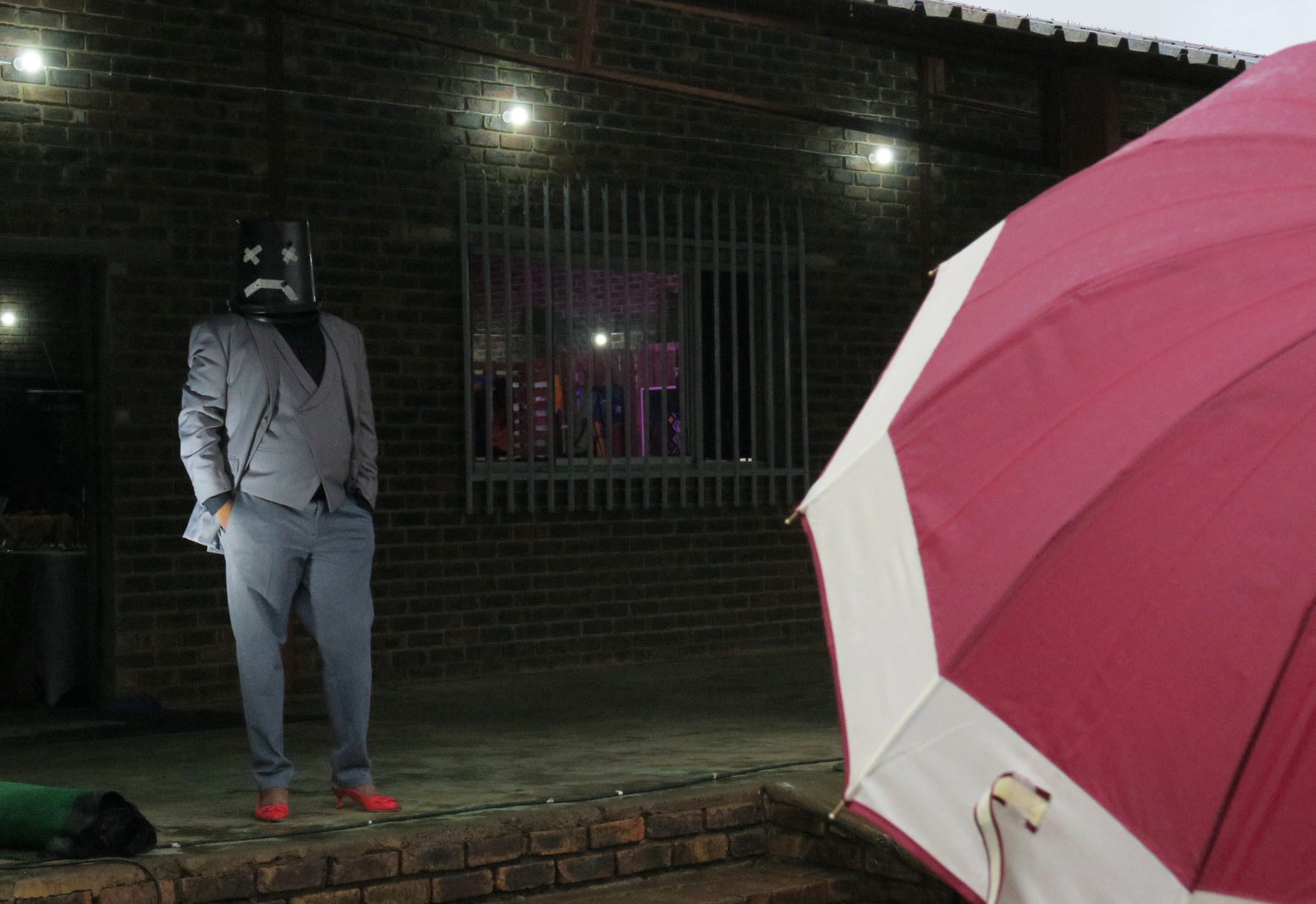
Unmasking Masculinity by Thabiso Heccius Pule was the first performance on Friday night at the My Body My Space public arts festival, which drew hundreds of spectators despite continual rain.
“Besides this festival, nothing happens in this town,” said resident Gift Makofane, who has attended the event since it first came to the town ten years ago.
“It is amazing. It creates great opportunities for the locals, and for talent to be shown,” said the 32-year-old, who works as an assistant mechanic at a nearby mine.
Makofane said his nine-year-old daughter was performing in this year’s festival after taking classes that FATC offers to schools in eNtokozweni throughout the year. Without the outreach programme, he said, she would not have been exposed to dance and other arts opportunities.
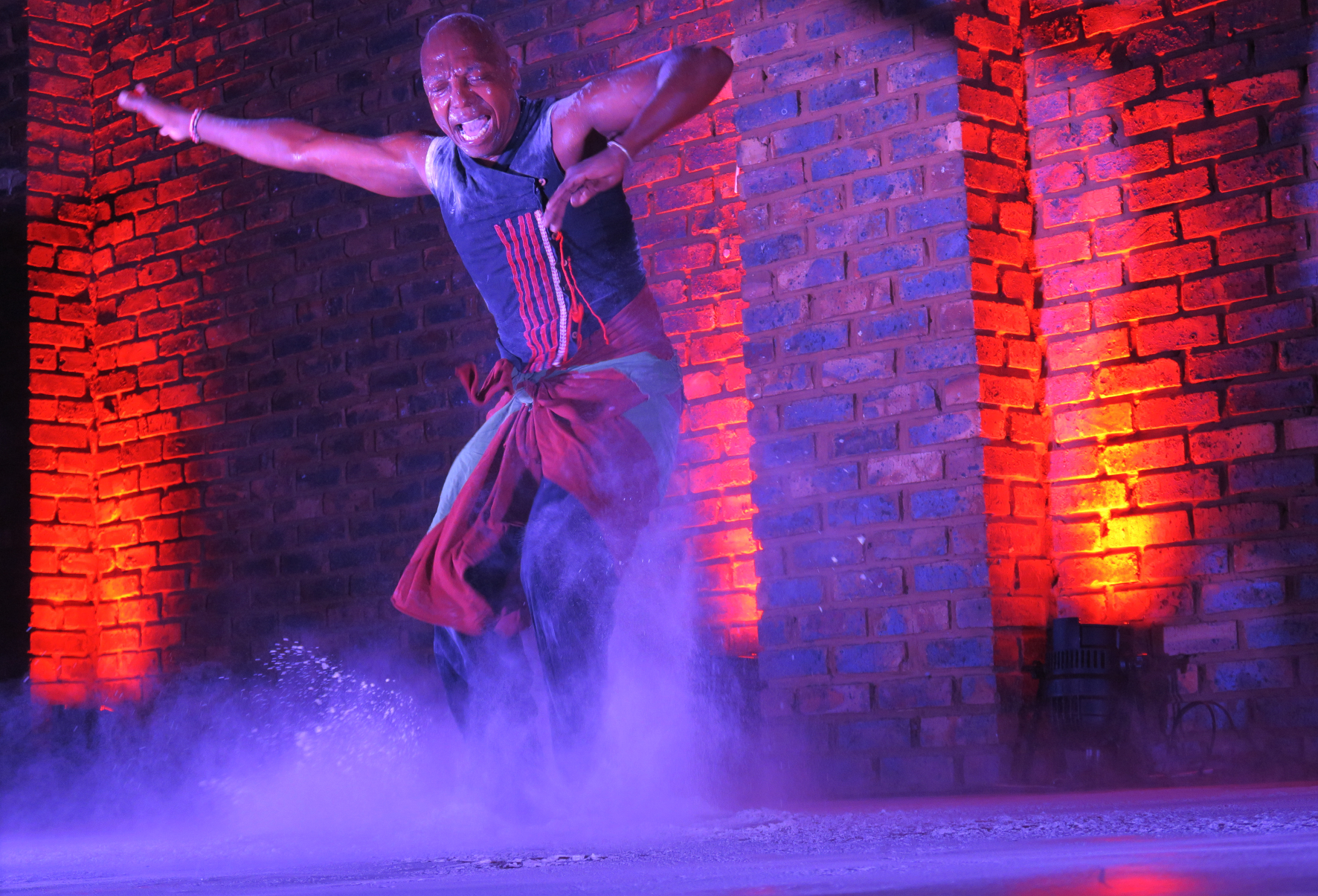
Acclaimed, award-winning performers such as Vincent Mantsoe premiered riveting works, such as ‘koma’.
Caroline Makoa, 17 and in grade 11, was one of the dancers in Young Voices for Human Rights. She started dance classes in Dullstroom when she was seven, and she has taken part in the festival since 2018.
Dance and spoken word poetry are her main interests, she said, and she wants “to go to FATC and also become a facilitator”.
Her uncle facilitates classes. He was trained through FATC’s intern programme, which offers training in dance, administration, and agriculture.
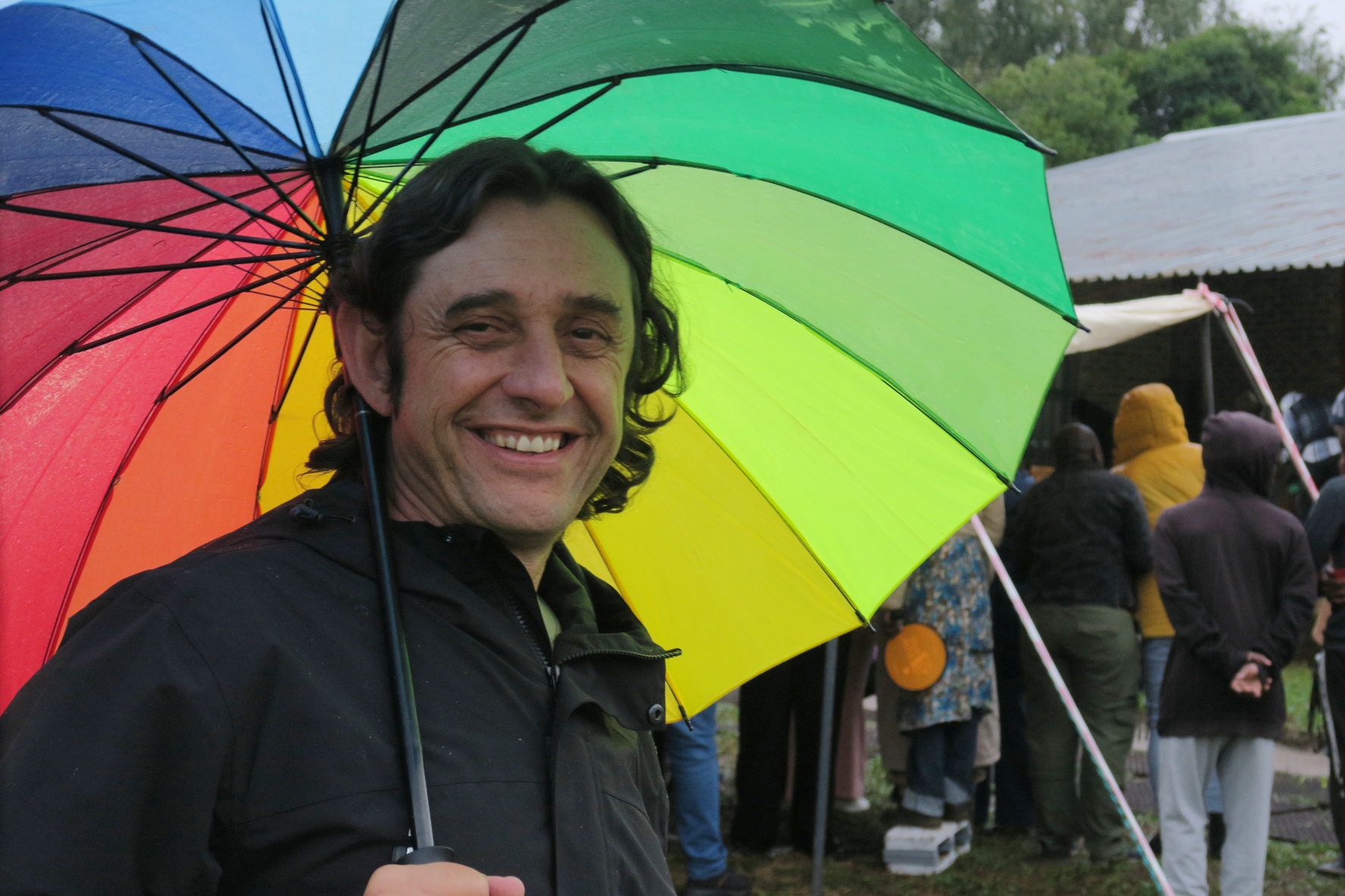
Founder of the Forgotten Angle Theatre Collaborative and My Body My Space public arts festival project manager PJ Sabbagha said the rain caused him to invoke “plan B” for the first time in 11 years.
FATC founder PJ Sabbagha said the festival was conceived with fellow dancer and choreographer Athena Mazarakis and first took place in Ekurhuleni in 2015. In that year, FATC moved from Johannesburg to a farm outside eNtokozweni and the festival was reconfigured for the town.
The festival takes place in open public spaces across eNtokozweni, including Emthonjeni township, allowing residents to unexpectedly encounter performances.
This year, for the first time in the festival’s 11-year history, Sabbagha said they had to resort to plan B as rain was forecast. This meant running all the performances at its central hub, a large hall at Pholani Park, the town’s otherwise abandoned campsite.
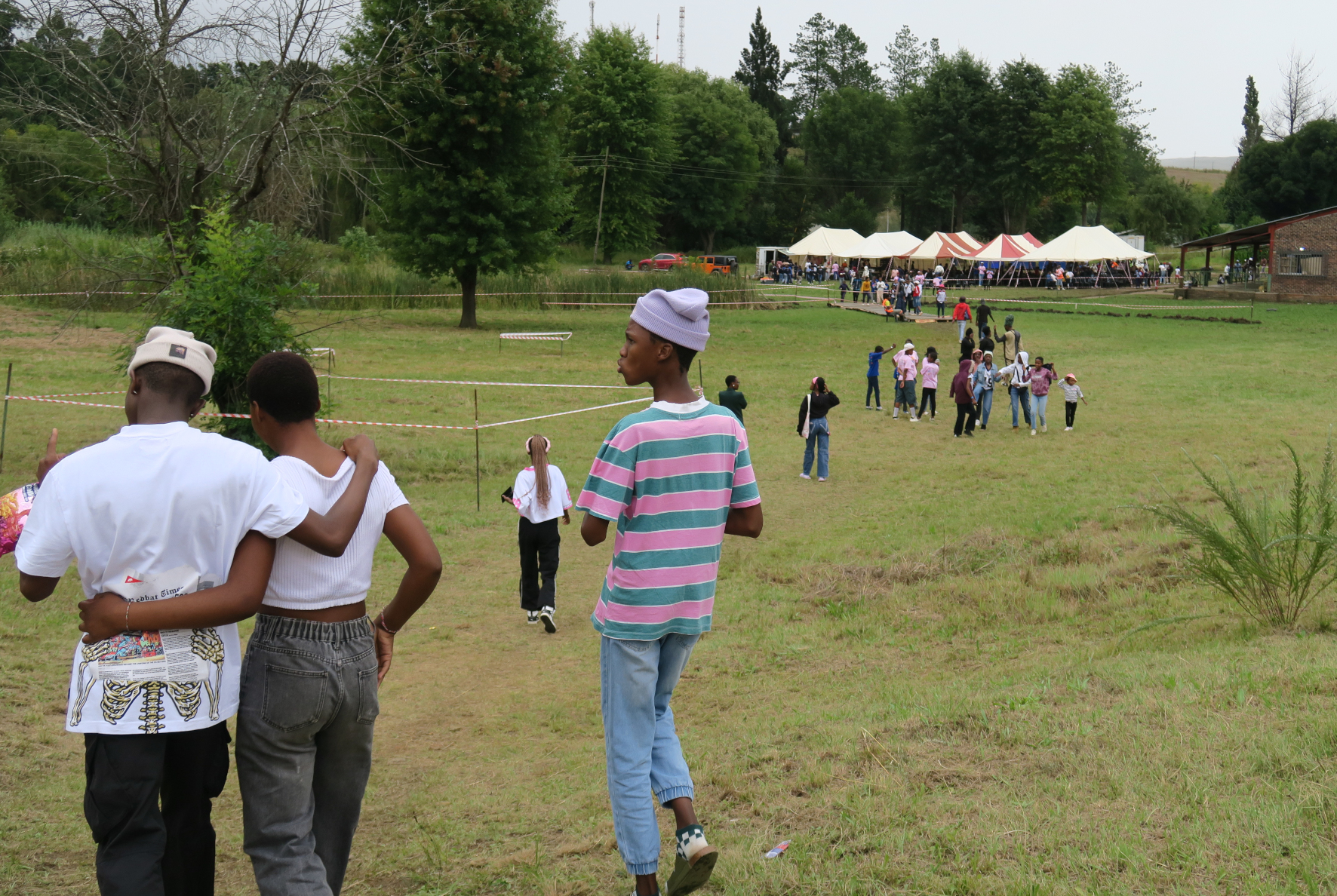
Rain kept the My Body My Space festival confined to the hall in the otherwise abandoned caravan park, but did not stop hundreds of people from coming to watch the numerous shows over the weekend.
Despite the almost continual rain, hundreds of people gathered under a marquee on the lawn to watch performances on the hall’s stoep, or crammed into the hall to watch works originally designed to be performed in the open.
Sabbagha said FATC has three main strands, each contributing to the festival. There is the 12-month First Job Programme funded by a private bank, offering dance, administration and agriculture internships. The dance interns can become facilitators for the Local Education in Arts (LEAP) programmes offered to school children, who then perform at the festival.
A second strand is the national Community Art Centres (CAC) programme for arts and craft training, with participants exhibiting their work at the festival.
The third strand is privately funded residencies for established artists to develop works, which are often performed at the festival by FATC interns and LEAP participants.
Sabbagha said Drama For Life would normally run numerous workshops in surrounding towns in the first four days of the festival, but their funding was approved too late this year, which meant that part of the programme was severely curtailed.
Although there has been no formal audit of the festival’s economic impact, Sabbagha said about half the budget is direct local spend, about R500,000 for accommodation, the hiring of caterers, drivers, and other service providers, and paying wages and salaries.
Catrina Matheson, who runs a guesthouse and was instrumental in setting up the local tourism board, said all available accommodation is fully booked during the festival.
Matheson said FATC’s programmes that run outside of the festival period also benefit the town, such as venue hires for CAC training.
She said some streetlights in eNtokozweni were working for the first time this year, because the municipality had made an effort to spruce up the town for visitors.
Sabbagha said they managed to run the festival by leveraging funds they received to implement national programmes, as well as funding from the National Arts Council and the Oppenheimer Memorial Trust, with technical support from Split Beam and the University of Johannesburg, and in-kind support from the Emakhazeni Local Municipality.
