18 March 2026
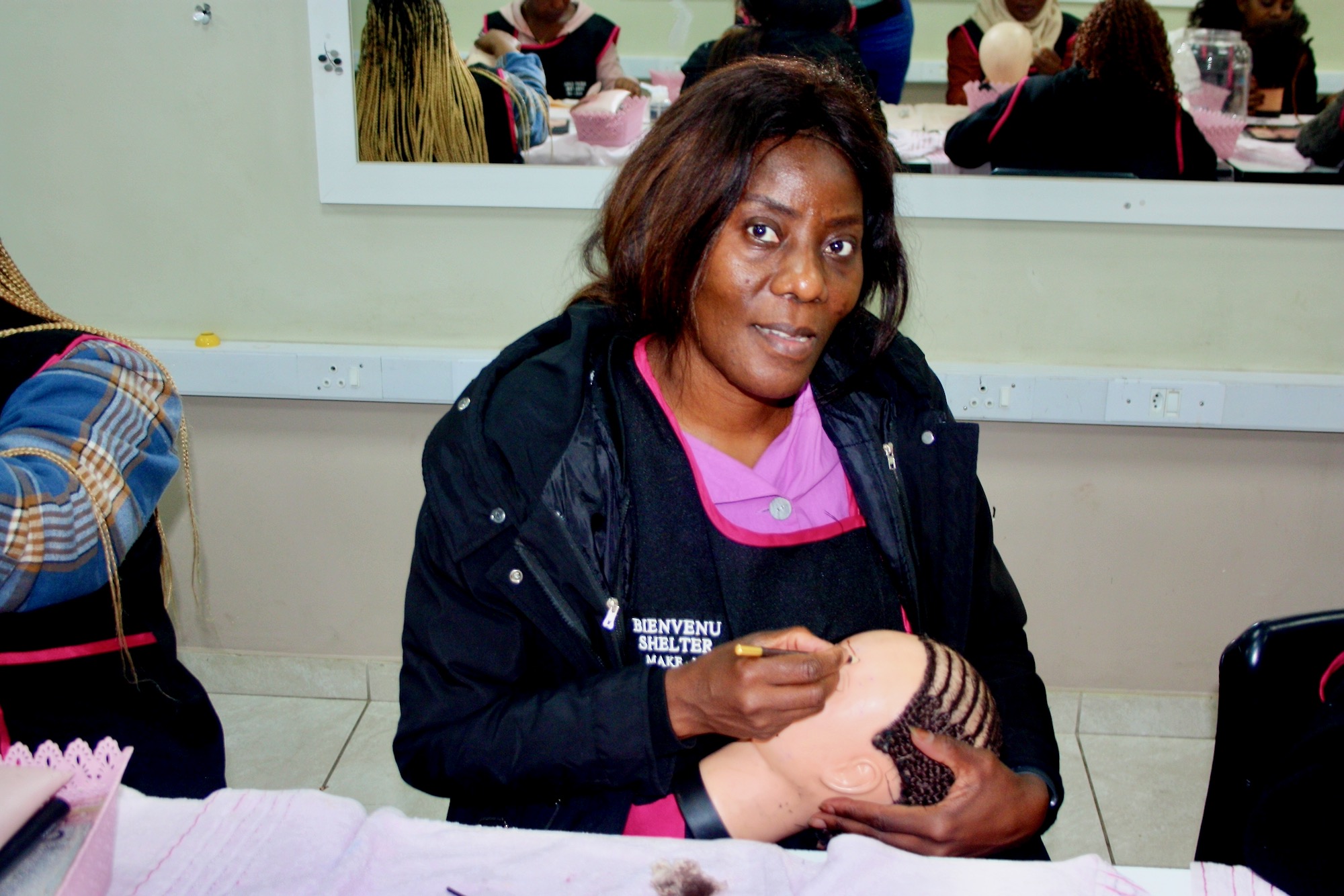
The Bienvenu Shelter’s skill centre in Kensington, Johannesburg, an initiative of the Scalabrinian Missionary Sisters, provides training for refugee women. Natalie Kiza Kanjinga, above, is learning professional makeup skills. Photo: Kimberly Mutandiro
A warm bed, daily meals and permission to stay for up to six months, can be a life saver for destitute asylum seekers. The Bienvenu Shelter, an initiative of the Scalabrinian Missionary Sisters in Bertrams, Johannesburg, provides this for up to 60 women at a time.
During the course of 2025, the shelter was a safe haven for 95 women and 110 children from 16 African countries.
It also has a skills centre in Kensington, established in 2017, offering make-up and manicure skills, sewing, cooking and baking. Participants later receive ovens, sewing machines, and professional make-up and beauty equipment to start a small business. Some are employed by the centre.
After leaving the shelter, women are assisted to get permanent housing and may be provided with food parcels and money for rent for up to three months.
According to project manager Adilia Sousa, the shelter also works with organisations such as Sophiatown Pastoral Care and the Migrants and Refugees Department of the Johannesburg Archdiocese.
Support and counselling is also provided for women and children who have experienced trauma.
United Nations High Commissioner for Refugees (UNHCR) spokesperson Duniya Aslam Khan said the shelter has operated since 2001 and the UNHCR has long valued its work. The UNHCR recently provided a small financial contribution.
Mamadou Dian Balde, newly appointed UNHCR regional director for Eastern and Southern Africa, says the region has the highest number of refugees in the world.
On his first visit to South Africa last week, he visited the shelter.
“Something very clear that appeared in the discussion was access to documentation,” said Balde.
He said in South Africa refugees often stay in places “where the host populations themselves are faced with challenges” and this creates tensions for access to services.
At the skills centre GroundUp met Natalie Kiza Kanjinga who came to South Africa in 2017, fleeing unrest in Lubumbashi in the DRC.
Last year, she says, she was chased away from Yeoville Clinic by members of Operation Dudula.
Her asylum permit expired during the covid pandemic and she struggled to find employment as a result. To date she has been unable to renew her permit despite repeated trips to the refugee centre in Pretoria.
When she could no longer pay rent, she came to the shelter. She knows it is temporary but she sees it as a “second chance”.
She is attending make-up and manicure classes.
