18 March 2026
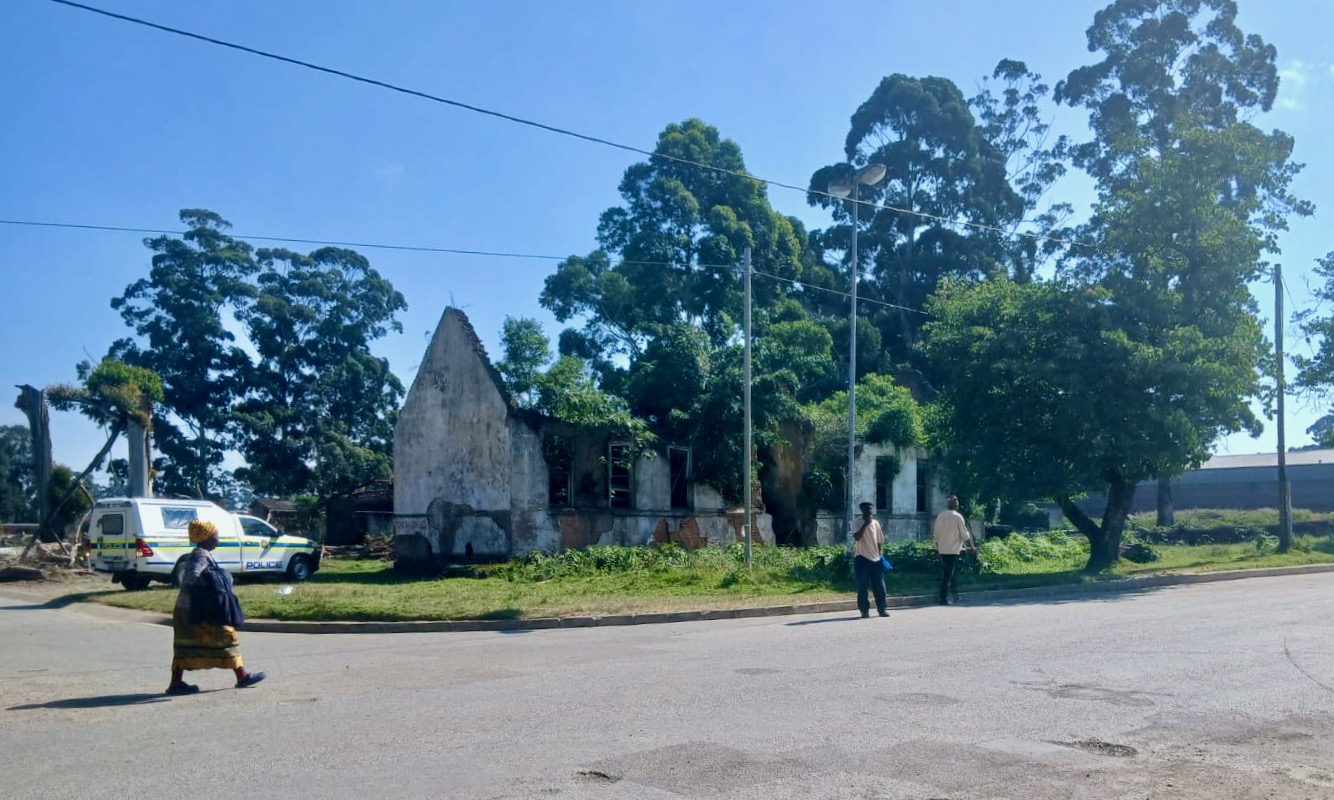
A plot where residents and visitors to Centane go to relieve themselves because the town lacks public toilets. Photo: Nombulelo Damba-Hendrik
In desperation, community leaders in Centane, Eastern Cape, have turned to the South African Human Rights Commission (SAHRC) for help. For many years the local authorities have failed to resolve serious failures in the provision of water and sanitation.
On Tuesday, SAHRC officials, invited by traditional and community leaders, heard the residents’ grievances.
The officials heard how people from nearly 50 surrounding villages visit the town to do monthly shopping, collect SASSA grants, documents from Home Affairs, or conduct other business. But offices are often closed due to a lack of water. There are also no public toilets in town and people have to relieve themselves where they can.
Secretary to the chiefs, Chief Lumumba Ngamntwini, said, “Our people spend money to come to town for services, only to find offices closed because there is no water.”
“Even this hall has no toilets. We have raised this many times with officials.”
The clinic’s toilets are also closed and patients relieve themselves in open spaces.
SANCO secretary Mvuseleli Tonisi said, “We have a nearby location with 128 RDP houses, and none of them have proper toilets. Residents are still using pit latrines. We were promised that water tanks would be installed, but nothing has happened.”
In November, we reported that Centane residents were taking the government to court over the lack of water. In villages such as Nombhanjana and Nxaxo, taps have been dry since 2017.
“All that has been said here is true,” admitted Phumzile Billie, from the Amathole District Municipality.
“Our water schemes rely on boreholes powered by generators, which are frequently stolen or vandalised,” he said. “Security guards are often threatened at gunpoint or with knives.”
He said only one generator is currently operational.
He said a water committee, formed with community members and leaders, meet regularly.
He encouraged residents to safeguard municipal property. “Our water trucks have been attacked or threatened by people demanding to be hired. There is also illegal diversion of water from pipelines,” he said.
Local municipality representative Luvuyo Mafanya said the municipality has been struggling to find suitable land for a wastewater treatment plant.
The project was halted after the community rejected two sites.
“Until we secure land for a treatment plant, building toilets in town will not be feasible,” he said.
Provincial SAHRC senior legal officer Loyiso Mpondo promised the commission would conduct further investigations.
