9 October 2026
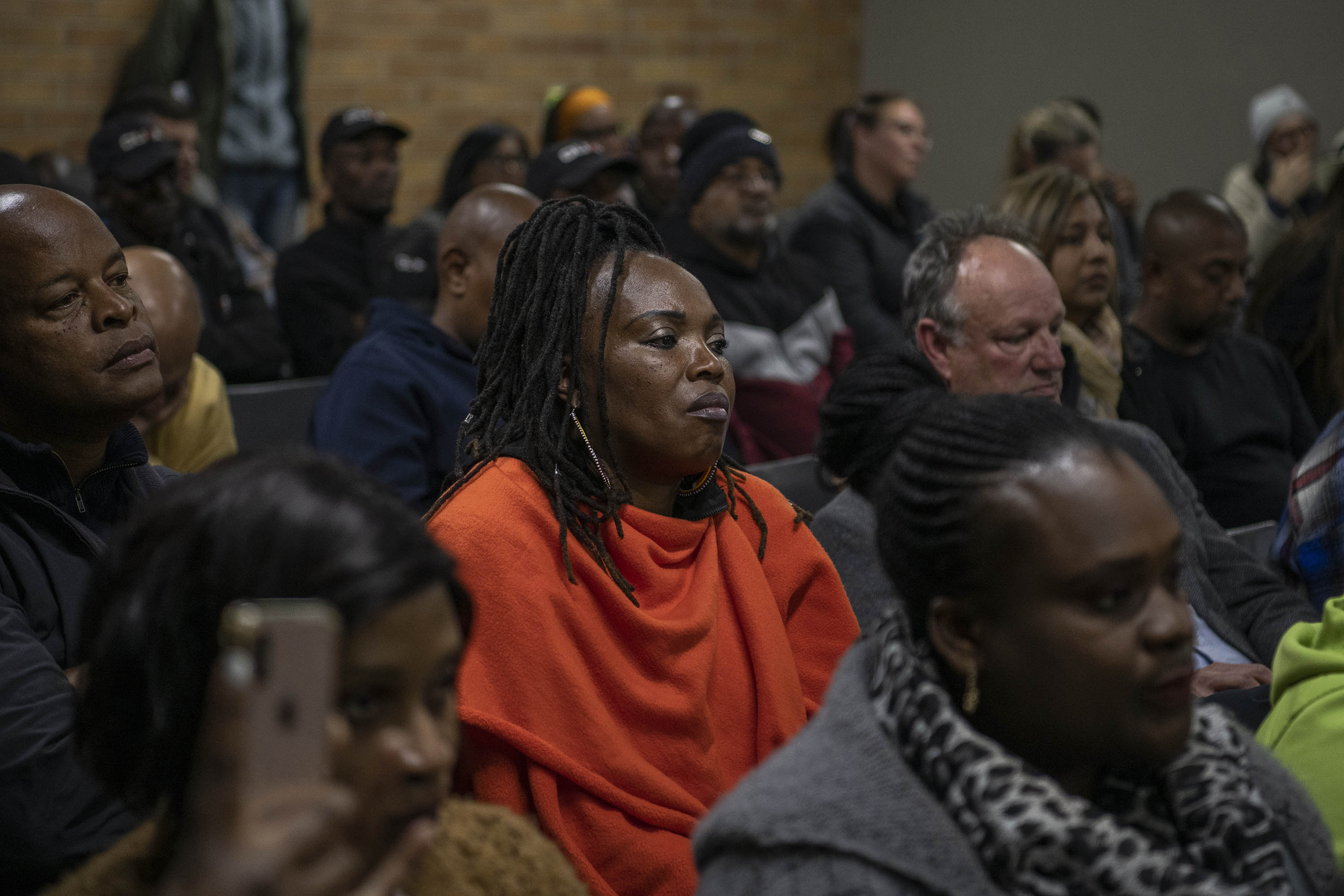
Five years after being fired from PRASA, Martha Ngoye, former legal head, is still fighting to be reinstated. Archive photo: Ihsaan Haffejee
The Campaign for Free Expression (CFE) has applied to join a case in the Constitutional Court involving two PRASA whistleblowers who are fighting to be reinstated.
Martha Ngoye, former legal head of the Passenger Rail Agency of South Africa (PRASA), and Tiro Holele, former head of strategy, were fired in 2021. They argue this was a direct consequence of speaking out on corruption at the state-owned entity.
In an affidavit filed this week with the apex court, CFE’s executive director Nicole Fritz said the matter “extends beyond the interests of the immediate parties” and could have serious ramifications for freedom of expression and grave consequences for the treatment of whistleblowers.
Activist organisation #UniteBehind, which worked closely with Ngoye and Holele to expose corruption at PRASA, has made a similar application to join the case.
Days after they were fired in 2021, Ngoye and Holele launched proceedings in the labour court against PRASA. The court ruled that their dismissal was unlawful and ordered they be reinstated. PRASA was ordered to pay the costs of the application.
The PRASA board appealed that decision in the Labour Appeal Court (LAC), which, while confirming they had been unlawfully dismissed, upheld the appeal and set aside the entire order but found that the lower court should not have ordered their reinstatement, and so set aside the entire order.
The LAC also ordered that Ngoye and Holele pay PRASA’s costs in both applications.
The whistleblowers then approached the Constitutional Court, which refused to grant them leave to appeal in December 2025, saying the reinstatement issue was already fully settled in law.
In early 2026, Ngoye and Holele filed a further application, asking the Constitutional Court to rescind that decision, grant leave to appeal and hear their arguments.
It is in this application that CFE wants to be admitted as an amicus curiae (friend of the court).
In her affidavit, Fritz said CFE accepts that the law on when a court can force a party to honour a contract is settled, and it won’t argue about contract or employment law.
She said the court should take into account the “particular factual context” of Ngoye and Holele’s case. They were whistleblowers and two courts had ruled they had been unlawfully dismissed, yet they were left with no real remedy.
This, along with the order that they had to pay costs, has created legal uncertainty for a “whole class of potential litigants”, she said.
She said CFE would argue the constitutional significance of whistleblowing “as an important manifestation of the right to freedom of expression” and its role in promoting accountability, openness and responsive governance.
The court is yet to rule on CFE’s application.
In August, Chief Justice Mandisa Maya directed Ngoye, Holele and PRASA to make further written submissions.
Ngoye and Holele’s lawyers submitted that “the injustice cries out for correction”. The LAC had itself found that the dismissals were unlawful, so it could not reasonably overturn the finding of unlawfulness.
“It is, at this point, beyond doubt that the termination … was unlawful … there was no justifiable reason for the LAC to reverse that order.”
They said the rescission application, for the first time, raised the issue of fairness and Ngoye and Holele’s constitutional rights of access to courts.
Even though the LAC agreed they had been unlawfully dismissed, the two must now pay PRASA’s legal costs in both courts, which they say they cannot afford. “It is a grave injustice that an employee who rightly challenges their dismissal is left with no relief, but has to pay the costs of their employer who unlawfully dismissed them,” the lawyers said.
“This is not an ordinary dismissal of ordinary employees. It is a case where whistleblowers against public corruption have been victimised by their employer and then failed by the courts.”
PRASA is opposing the application. It said Ngoye and Holele are raising the issue of being whistleblowers for the first time. If the Constitutional Court considered it, it would in effect be hearing that issue for the first time, which goes against settled law.
PRASA argues that the rescission application “is no more than an attempt to obtain a second appeal” and should be dismissed, with costs.