3 September 2026
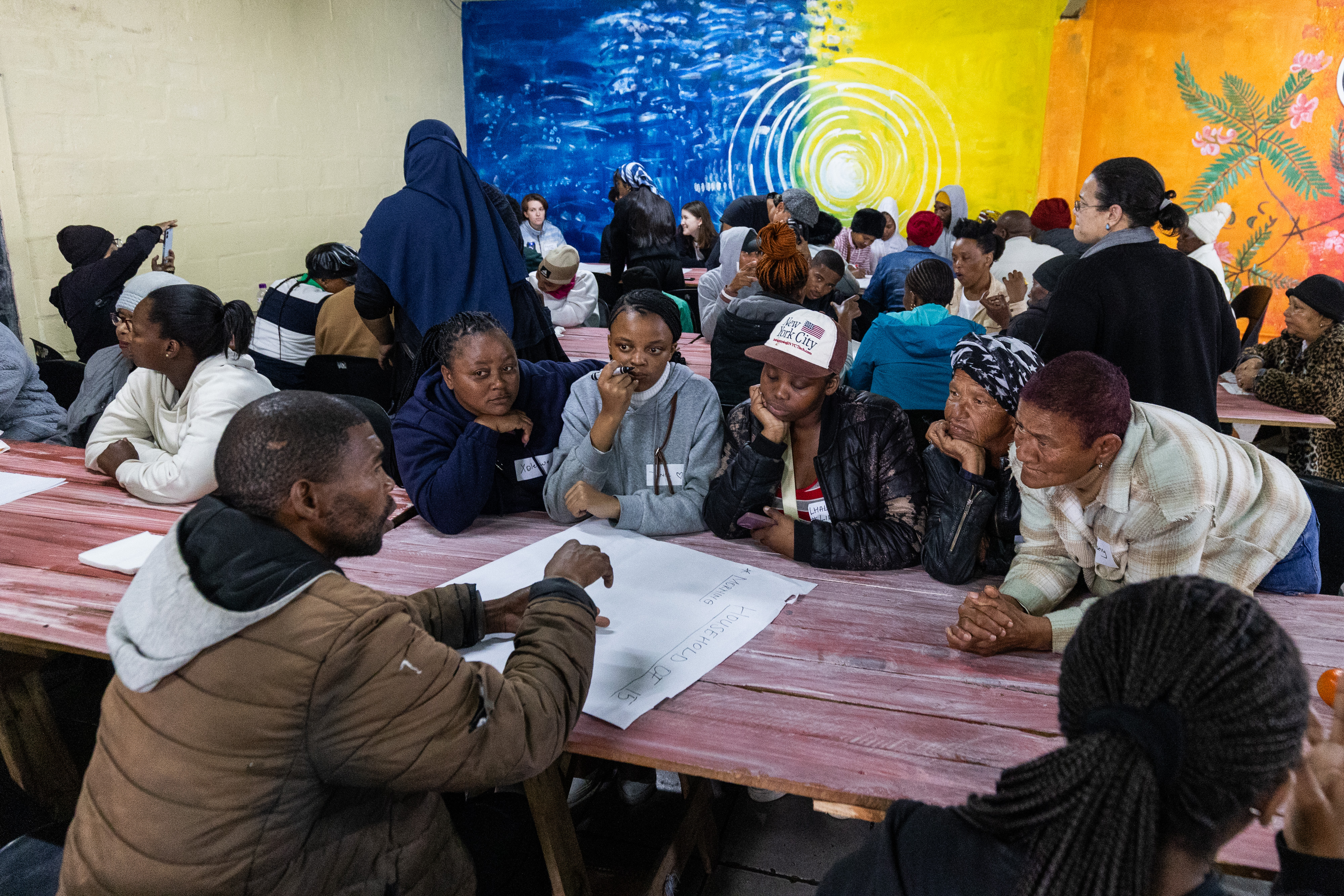
Over 100 climate activists and other participants gathered at the Vegkop Polyculture Farm as part of Cape Town Climate Week. Photos: Ashraf Hendricks
The battle to preserve the Philippi Horticultural Area (PHA) wetland and the crucial Cape Flats Aquifer from mining and development was at the centre of a Cape Town Climate Week event on Thursday.
Over 100 climate activists and other participants gathered at the Vegkop Polyculture Farm to discuss the importance of food and water security. They also did a water mapping exercise, in which groups worked out how much water different households use each day.
PHA Food and Farming Campaign chairperson Nazeer Sonday told the gathering about how they had fought development in the PHA, a crucial recharge zone for the Cape Flats Aquifer.
GroundUp previously reported how mining had threatened to have a “significant and unacceptable impact” on the environment, the Cape Flats Aquifer, and the surrounding farmlands, affecting food security in Cape Town.
“The PHA is a drought-proof farmland, the value of which has become incrementally more clear in the face of the role it must play in offsetting the worst effects of climate change,” the PHA Food and Farming Campaign said at the time.
On a proposed urban development, the campaign had said it could cause “irreplaceable loss of significant and fertile agricultural land”.
On Thursday, Sonday said organic farming can cut greenhouse gas emissions caused by pesticides and fertilisers. He said that worldwide more than two billion hectares of land cannot be farmed because of land degradation.
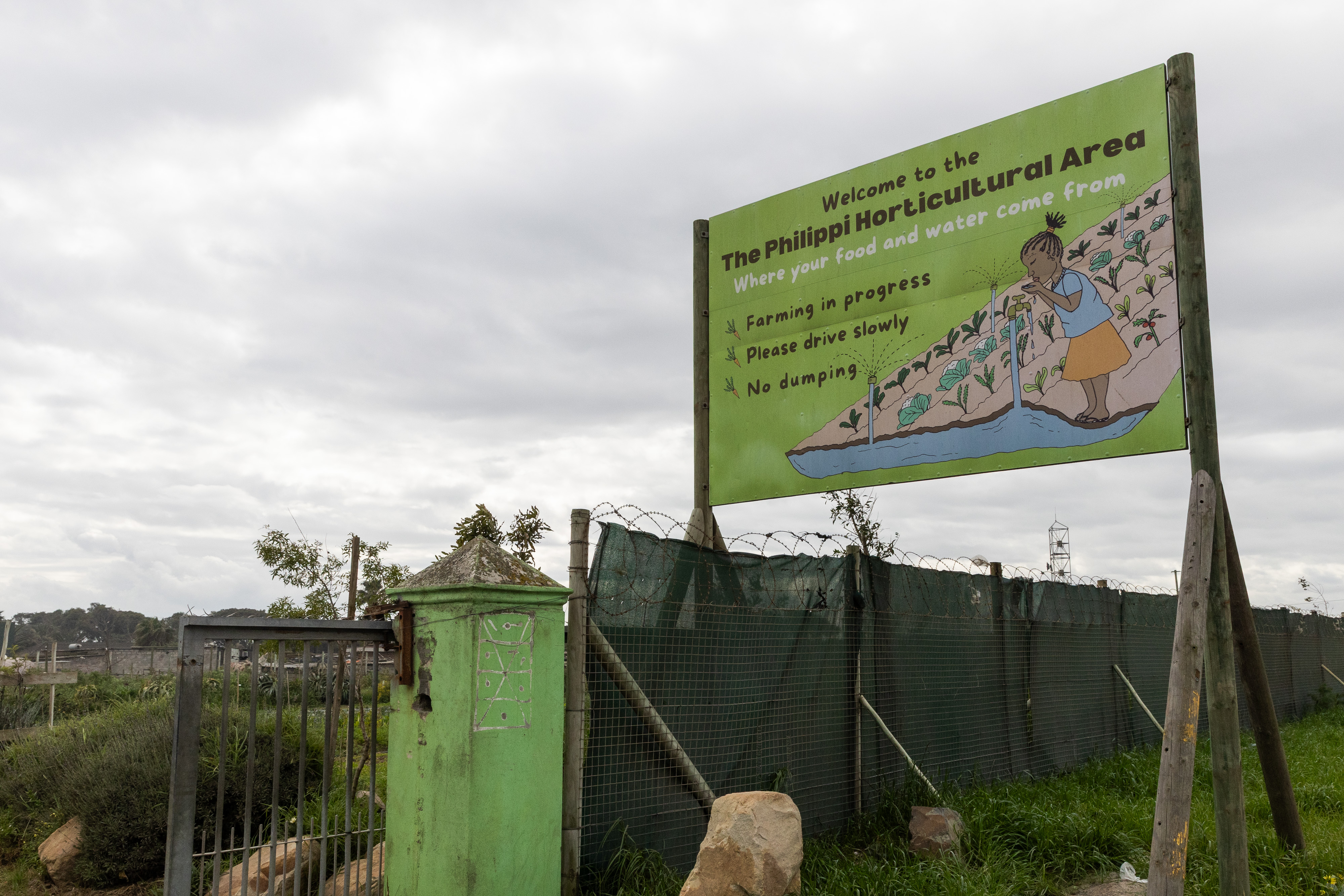
The Philippi Horticultural Area serves as a crucial recharge zone for the Cape Flats Aquifer.
Luvo Mnyobe of the African Climate Alliance said, “The climate crisis impacts all corners of our lives,” and the week’s events were intended to “connect the dots”.
Other events this week included a train ride from Cape Town to Khayelitsha during which stories of housing, infrastructure and inequality were shared. Another hub was the Energy Justice Climate Café, where discussions and workshops about the South African energy system were held.
Mnyobe said one of the goals of the climate week was to “make the issues of climate change which sometimes seem scientific and technical, relatable, and related to people’s stories”.
Climate Week is hosted by the African Climate Alliance with partner organisations Ndifuna Ukwazi, Open Secrets, Fossil Free SA, the African Water Commons Collective and others.
