6 July 2026
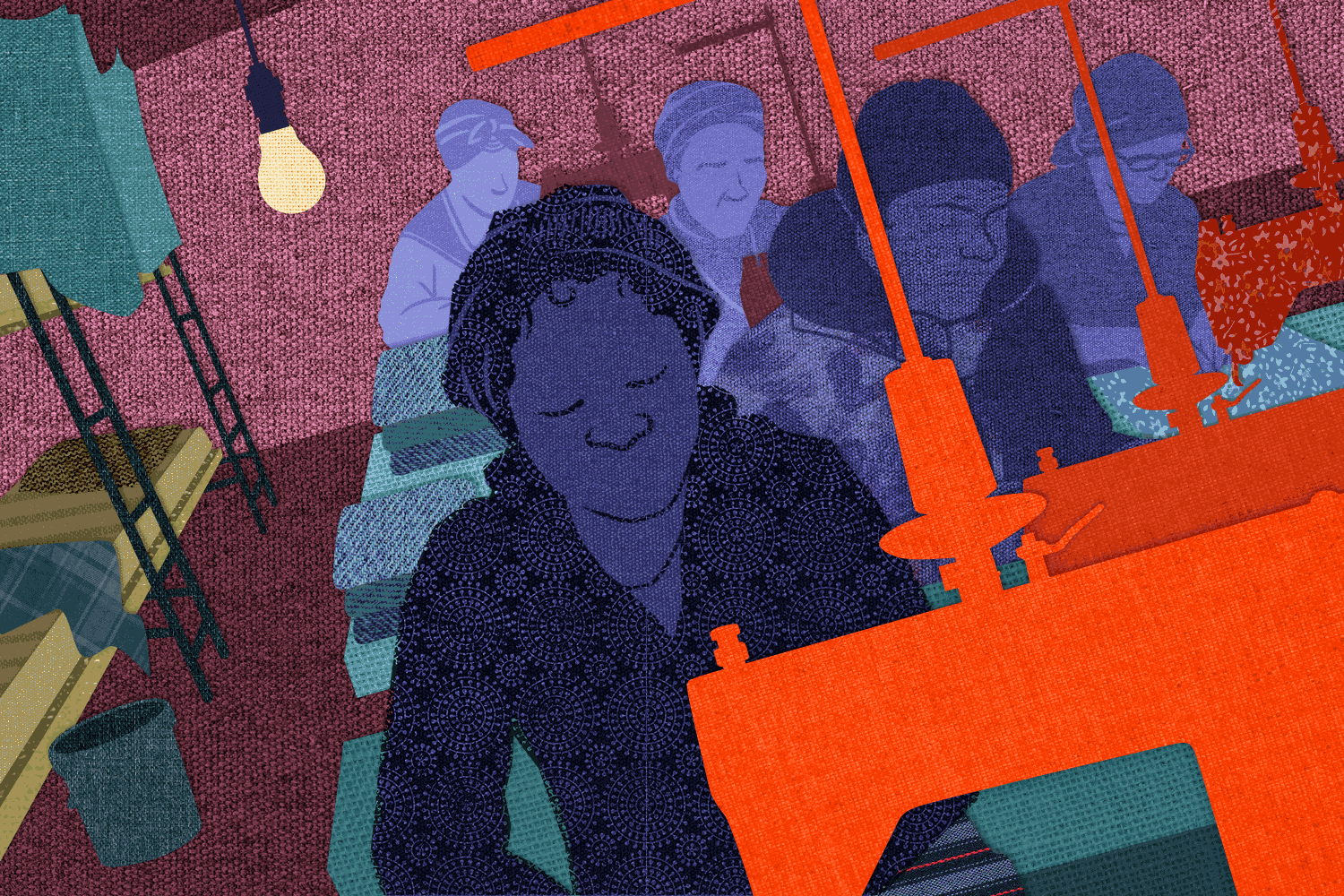
The clothing manufacturing industry in KwaZulu-Natal relies heavily on immigrant workers. Illustration: Bronwyn Webb
Clothing factories in Newcastle are closing as immigrant workers flee to avoid xenophobic violence, according to the chairperson of the eThekwini Clothing and Leather Association, Iqbal Ismail.
Newcastle is the hub of the Cut, Make and Trim (CMT) business in KwaZulu-Natal.
Almost all CMTs are owned by citizens of Taiwan and the People’s Republic of China, who have permanent residence in South Africa and rely on immigrant workers.
Retailers had already pulled business from the factories after raids in February exposed “sweatshop” conditions in some places.
“Our sector will one hundred percent collapse if migrants suddenly disappear from our factories,” says Iqbal Ismail, a third-generation clothes maker and the chairperson of the eThekwini Clothing and Leather Association.
Ismail employs 150 workers, only 30 of whom are South African.
In May, the association called for a “complete shutdown of CMT factories in eThekwini” in the second half of June to raise awareness of the sector’s dependence on immigrant workers. CMT stands for Cut, Make and Trim (CMT), and refers to factories — most of them in KwaZulu-Natal — in which clothes are made on behalf of clothing retailers.
The shutdown did not materialise, but factories are closing anyway, says Ismail, as immigrant workers flee the country.
Ismail said the association, representing 102 CMT businesses, was founded “in response to ongoing demands that no foreigner be allowed to work in factories”.
“We are simply trying to survive,” he says.
To more closely investigate claims of an impending collapse of CMT businesses, GroundUp travelled to Newcastle. Depending on who you ask, it is home to between 140 and 300 CMT factories. Almost all are owned by citizens of Taiwan and the People’s Republic of China, living in South Africa with permanent resident status.
“It is true, if you take foreigners out of the factories almost every CMT will have to close,” said Alex Liu, who has for years been the unofficial spokesperson of the Newcastle factory community and is also a PR councillor.
“The main problem is we simply don’t have enough skilled machinists. When you make pants, the local machinists can do overlocking and most of the other operations, but very few know how to insert the zipper, which is a specialised task that is mostly done by foreigners. With investment in the training of local machinists, this could change, but the sector needs time and support, which is the opposite of what is happening now,” he said.
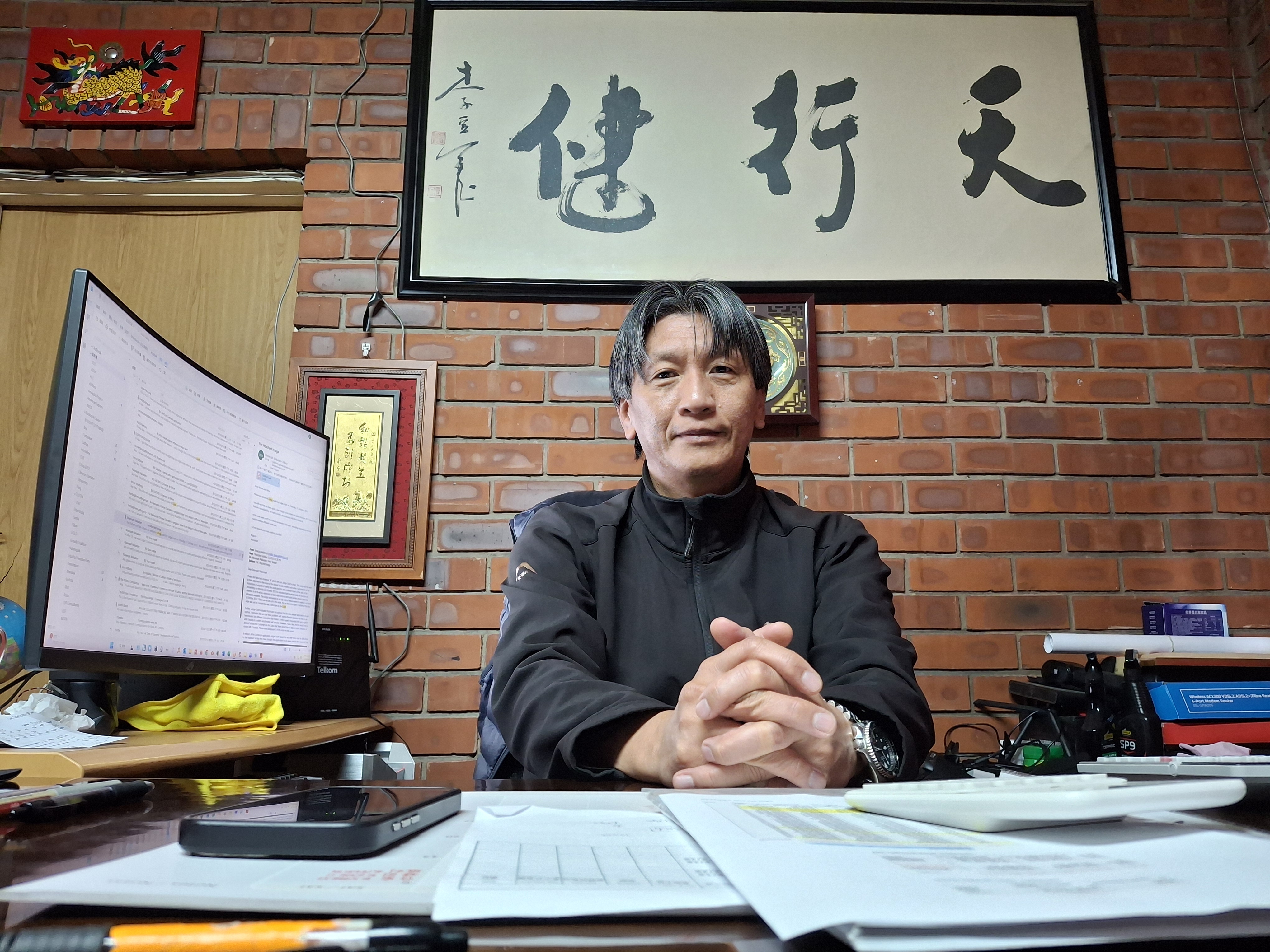
Without immigrant workers, most CMT factories would have to close, says Alex Liu. Photo: Sean Christie
The town’s CMT sector is currently reeling from the sustained exposure of “sweatshop” type factory conditions, following high-profile government inspection raids in September 2025 and February 2026. The raids revealed wages well below baseline rates, squalid worker dormitories, unsafe factory floors, and a reliance on immigrant workers from other countries in southern Africa.
The impact on business has been severe.
“Since February, most factories, if not all, have been on short-time,” said Liu.
In nearby Madadeni, in the industrial park run by the Ithala Development Finance Corporation, Ronghua Yan, better known in the industry as David Old (derived from the name of his business, David Old Tailor), is struggling to keep the doors open.
“It’s the darkest time of my life,” said Yan. A combination of rising input costs, low CMT prices and bad publicity “is killing the CMT business”.
“When I arrived here in the early 2000s, the industry was down; tall grass and broken windows everywhere. I invested, and others followed. We were supported, and business started to bloom. About ten years ago, the storms really started: low-prices storm, union and Bargaining Council storm, load shedding and looting storm. Now, foreigner storm,” said Yan.
All CMT factory owners in Newcastle are facing the same difficult choice, he said.
“Either we leave while we still can, or do something different, like marketing our own brands. We cannot continue like this. The retailers are not going to pay more, because they have their own problems — all over the world, consumers simply don’t have money to buy clothes right now,” he said.
He used the Chinese term 轮回 (lun hui) - meaning a cycle of death and rebirth - to describe his experience in South Africa.
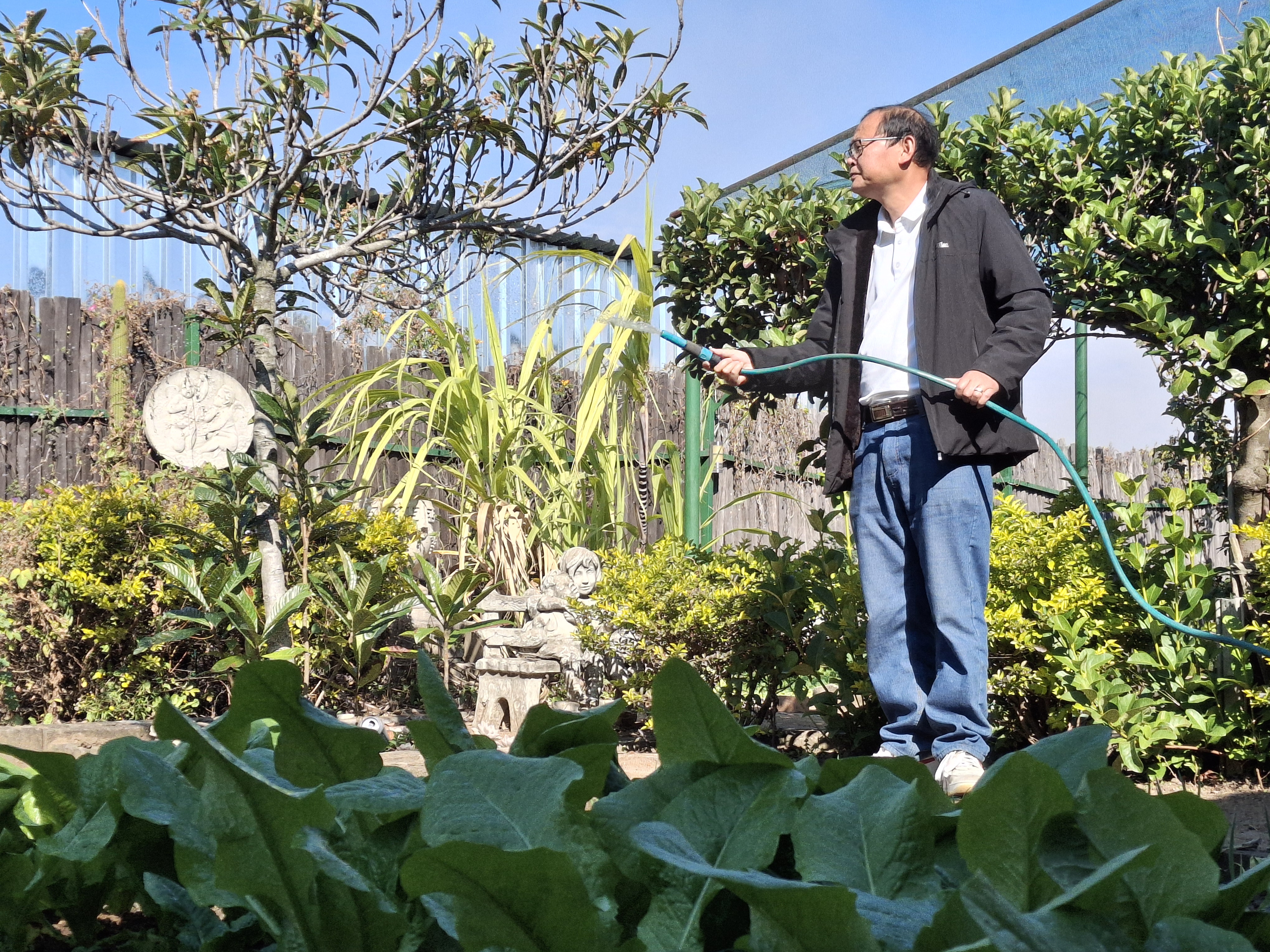
Ronghua Yan waters the garden behind his Madadeni factory, an activity he finds comforting in a period he describes as “the darkest of my life”. Photo: Sean Christie
With the exception of a single recycling business, all Madadeni Industrial Estate’s tenants are Chinese CMT owners. Most live in or next to their factories. GroundUp spoke to several, none of whom wished to be named, citing fears they would be targeted.
Alongside the low prices paid by suppliers, factory owners identified penalties for late delivery of orders as the biggest risk to the sustainability of their businesses.
“If I am one day late, the supplier deducts 10% from my payment, but when my business is disrupted because of a problem on their side, I cannot charge them because they hold the money,” said one owner.
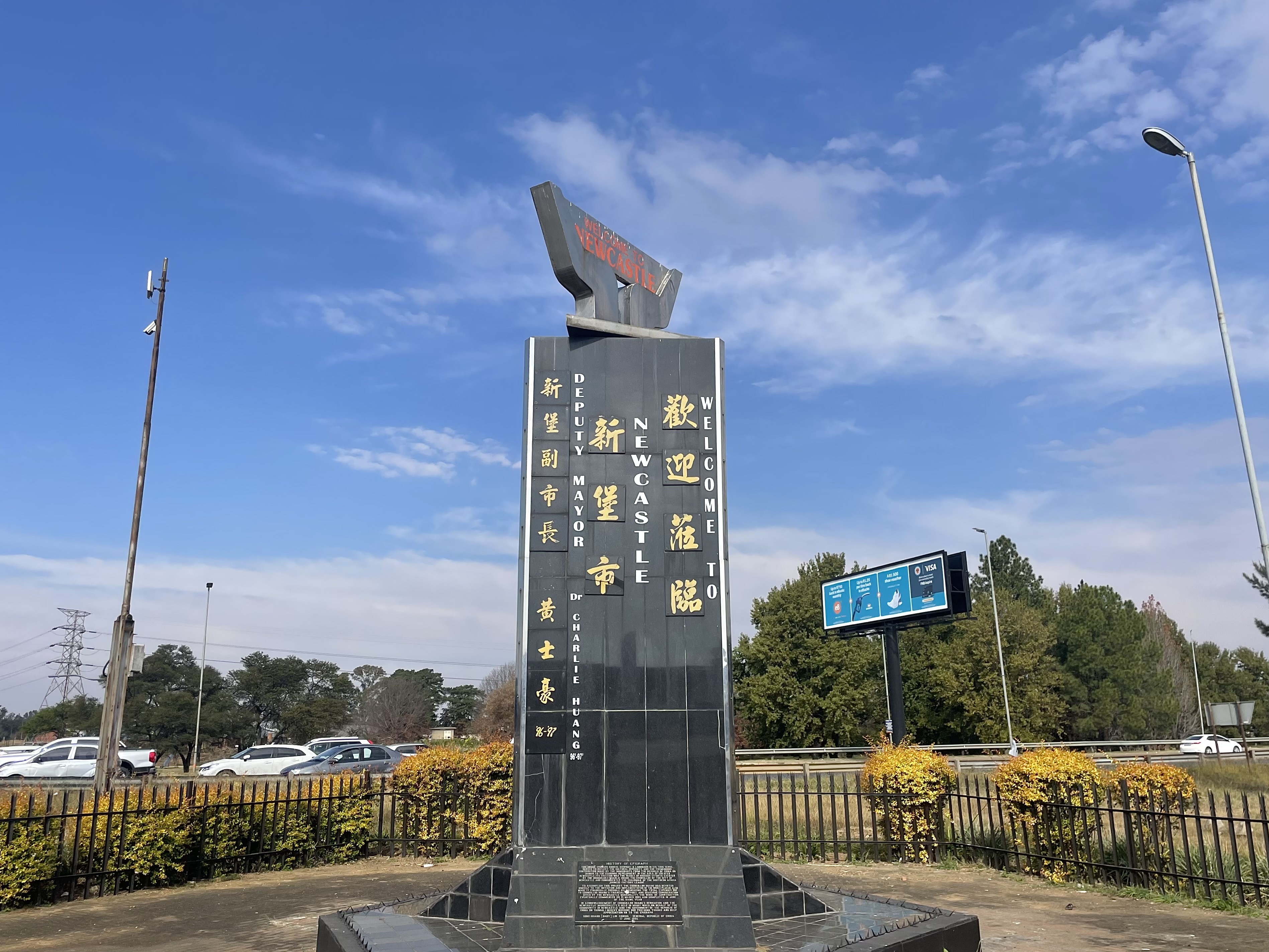
Newcastle’s Chinese community is the major contributor to the town’s economy, as symbolised by the “Welcome to Newcastle” obelisk at the city limits, with messaging in Mandarin and English. Photo: Joseph Bracken
In Madadeni, no workers live on site, but in eMabodheni, many do.
At a tuckshop on Marconi Drive, a Chichewa greeting of Muli Bwanje caused a group of young men to break out in smiles and yell back, “Ndili bwino, kaya inu?” [Fine, how are you?]. But the moment we identified ourselves as reporters, the Malawian youths became highly circumspect. One, working as a cutter in an adjacent factory, agreed to connect on WhatsApp and shared information on the working conditions in his factory.
“We get paid for every piece of cloth we cut: 20 cents for a small piece, 30 cents for a big piece,” he wrote, referring to the internationally maligned practice of paying workers per component of a garment, rather than by the hour.
He said most of the workers stayed in the factory, and preferred it that way because they could work longer hours, earn more, and save the R40 to R55 it costs to commute daily to and from the informal settlements of Madadeni and Osizweni.
Immigrants in the settlements are increasingly fearful that they will be targeted by supporters of the March and March movement, he said.
To comply with the minimum wage rate set by the National Bargaining Council for the Clothing Industry for an experienced mechanist working in a non-metro area like Newcastle, factory owners would need to pay R32 per hour, or R1,443.50 for a 45-hour week, slightly more than the national minimum wage of R30.23 an hour. To make the same amount through “piece work”, a worker would need to cut approximately 7,500 pieces, or 167 pieces an hour.
“It is possible,” said Gift (not her real name), a machinist from Lesotho, “but only very fast workers can do it. Slow workers can make as little as R20 [a day], while fast workers can earn up to R80 a day,” she said.
Skilled machinists can earn considerably more in Lesotho — over R3,000, according to Gift. But jobs are scarce, with many factories having closed in recent years, some as a result of the 50% tariffs announced by US President Donald Trump in April 2025. In eSwatini, machinist jobs are more plentiful, but monthly payments as low as R200 have been documented recently.
Gift and several other people from neighbouring countries stay in a dormitory room at the back of a factory off Albert Wessels Drive, which she described as “dirty” and lacking bathing facilities.
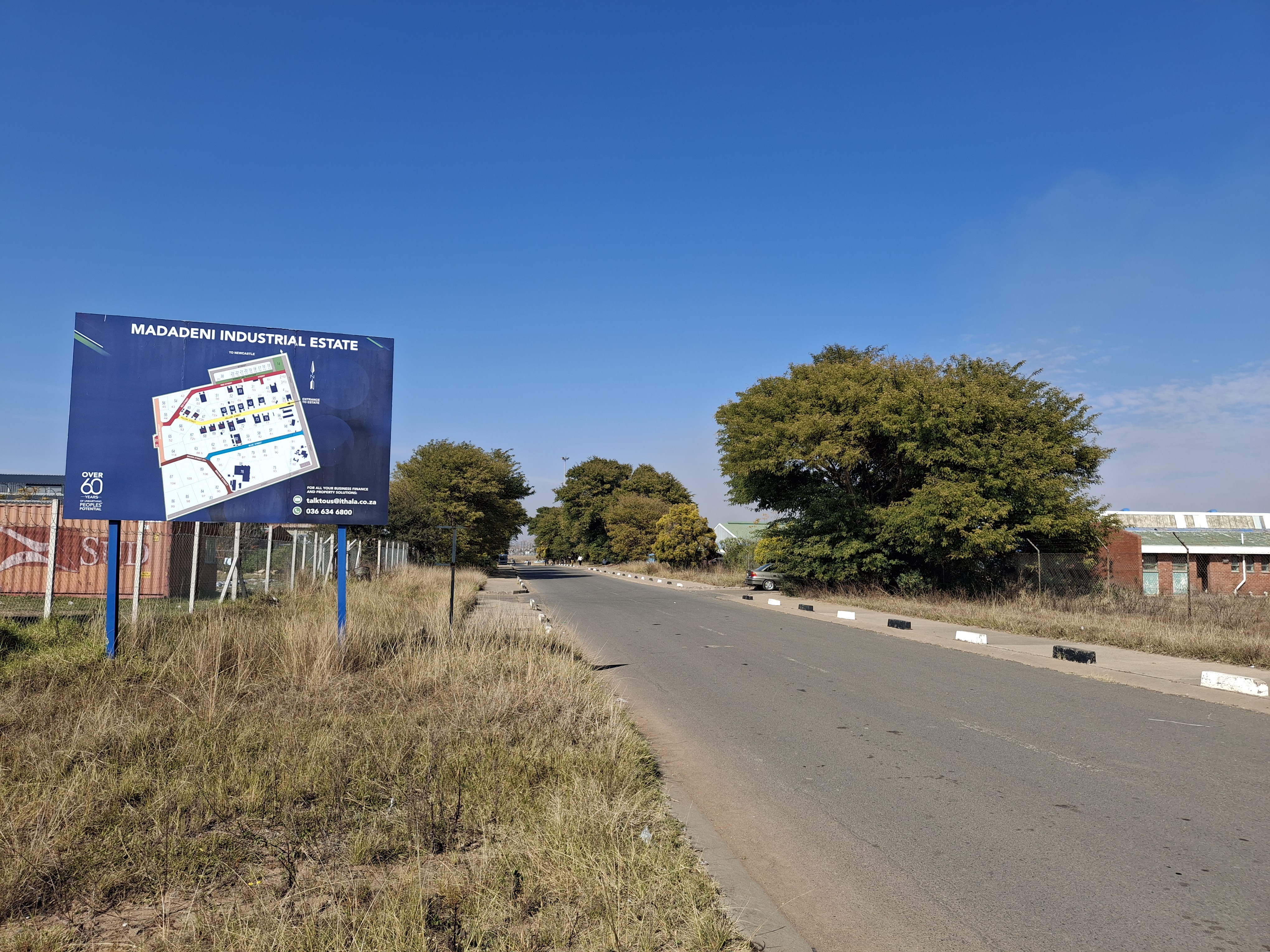
Clothing factories in Madadeni Industrial Estate say they are battling rising rates and taxes, poor service, low product prices, business penalties and bad publicity. Photo: Sean Christie
On Newcastle Municipality’s rates collection table for June 2025, the contribution from Ward 34, which incorporates the riverside industrial area, a small residential suburb, and, on the southern end, the Newcastle Mall and Blackrock Casino, stands out: R761,424,823, amounting to approximately 47% of the municipality’s total revenue from all wards.
Most of the businesses in Ward 34 are clothing and textile businesses, and the vast majority are CMT factories.
Liu believes the factories employ between 15,000 and 20,000 workers, producing approximately ten million garments a month.
“Let’s be extremely conservative and say the average price paid by suppliers for each garment [known as the CMT price] is R5. This means the sector pulls in R50-million a month. The wage bill of CMT factories is around 50% of all costs, so you are looking at a minimum of R25-million going into the pockets of workers each month, most of which is spent in Newcastle,” said Liu, who has worked in Newcastle factories since 1993.
Newcastle Municipality actively encouraged investment in its textile sector from Taiwan and China in the 1980s and 1990s, but by all accounts has paid little attention to the sector in recent decades.
It is now attempting to play catch-up. On 12 June, the municipality’s Local Economic Development Unit sent out a call to CMT business owners to supply basic business information with a view to “improving stakeholder engagement and developing targeted support programmes for the sector”.
After the raids on Newcastle’s CMT factories in February, retailers hurriedly sent compliance teams to evaluate all CMTs with which orders had been placed.
In answers submitted to GroundUp, Pepkor, Pick ‘n Pay and Mr Price all said they had pulled work from Newcastle factories.
Several compliant clothes makers told GroundUp they had been approached to supply orders pulled from Newcastle, but had not been able to take on the work at the prices offered.
“After the Newcastle scandal broke in February, a major retailer asked us to cost a jacket that had been pulled from a Newcastle CMT. Our labour cost alone was the same as their target price, before factoring in fabric, trims and margin,” said a Cape Town-based clothes maker, insisting her name be withheld, “due to the fact that we still depend on them [retailers] for a trickle of smaller orders”.
“The position as it stands is a stark choice between cutting corners and insolvency,” she said.
Joe Tau, the managing director of Allwear, Newcastle’s largest clothing business (mainly producing school uniforms), rejected the argument that compliance is not possible at the prices paid by retailers. But, he said, Allwear, which does pay bargaining council rates, would need to invest in new machinery.
“One of the major retailers recently gave us a shirt and said, ‘what will you charge us to make this?’ I did my homework, and realised I would need to invest R15-million in some new machines,” said Tau. He says he presented his case to the Allwear board, which approved the investment contingent on the retailer committing to a three-year supply agreement.
“When I went back to the retailer they wanted to know all my secrets – how is your cost control, and all of these things. I told them, ‘I am prepared to lift up my kimono, because I am a genuine businessman, but when I do that I expect nothing less from you’,” said Tau, who has heard nothing from the retailer since he asked for a commitment.
“I know they [retailers] are still running up and down this road as we speak, continuing to place orders in non-compliant factories,” he said. “But I do believe we are prepping this factory for a better future, for whoever wants to buy 100% local clothes, made in a fully compliant way,” said Tau, who employs over 1,000 staff, all of whom are South African and 98% of whom are women, he says.
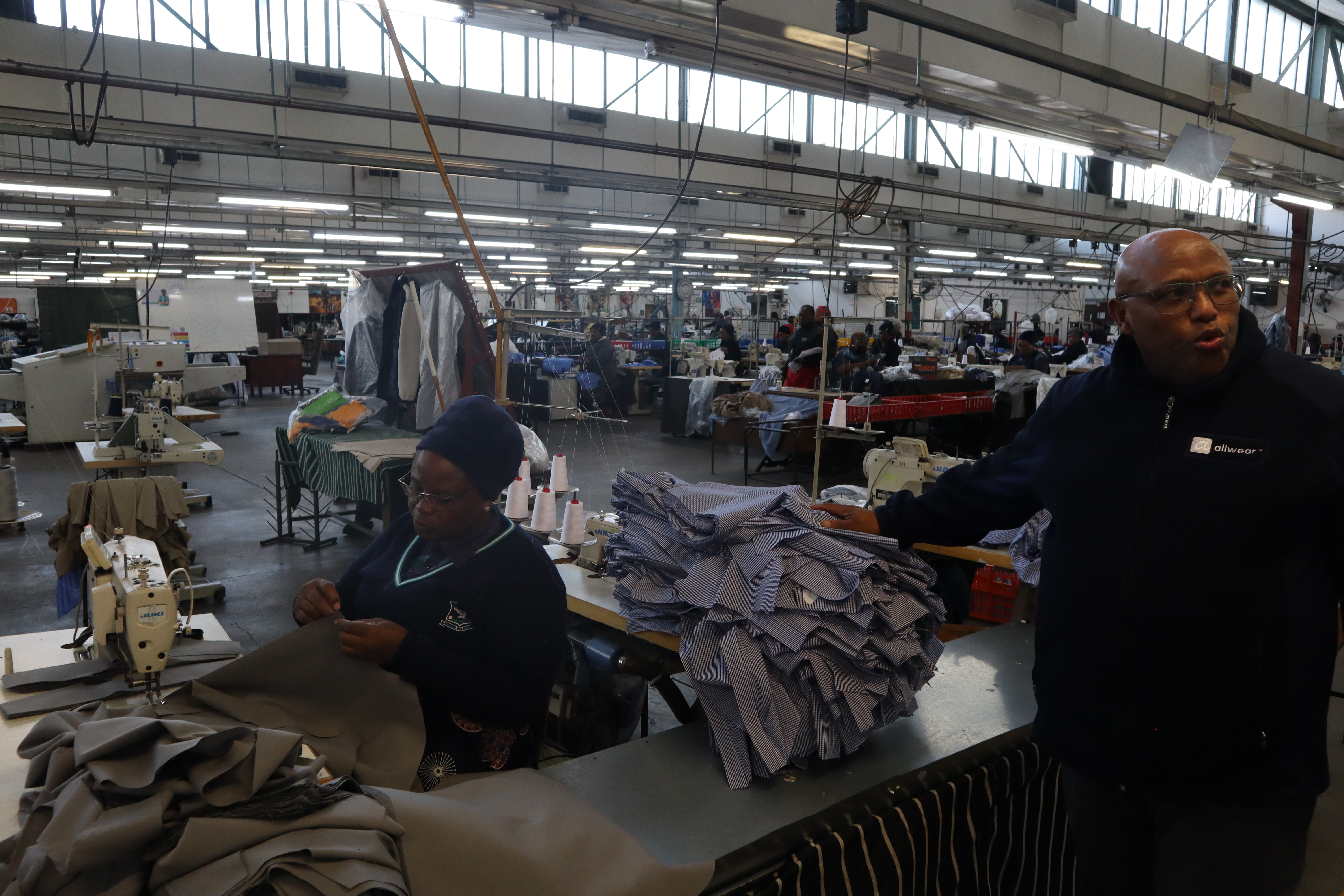
Joe Tau in the Allwear factory in Newcastle. Photo: Joseph Bracken
A procurement officer working for a major South African retailer said since the raids, many retailers had directed orders to factories in Lesotho, eSwatini, Madagascar and China. But, he said, the eSwatini Government has been on a major compliance drive of its own, with Minister of Labour and Social Security Phila Buthelezi visiting a string of factories in May and June, and threatening to prosecute non-compliant owners.
“We are in a bit of a quandary as to where to source [clothes] at prices we can afford, and still be able to claim those clothes are responsibly made. Honestly speaking, we have fallen victim to our own price wars, which started in the early 2000s when certain retailers started importing clothes under the wrong import codes, undercutting the responsible retailers and getting away with it.”
“It wasn’t long before everyone was cutting corners, and I mean everyone. And when SARS caught on to the smuggling game, the next ploy was to have clothes made in places like Newcastle, where, through subcontracting aspects of the order to uncles, cousins and friends, CMT owners were able to make clothes for the prices we needed.”
“Now this has been exposed, and the search is on for alternative solutions,” he said.
This is the first of two articles on the textile industry in KwaZulu-Natal. On Wednesday, we publish: “The clothing industry is being hammered from all sides”
