1 July 2026
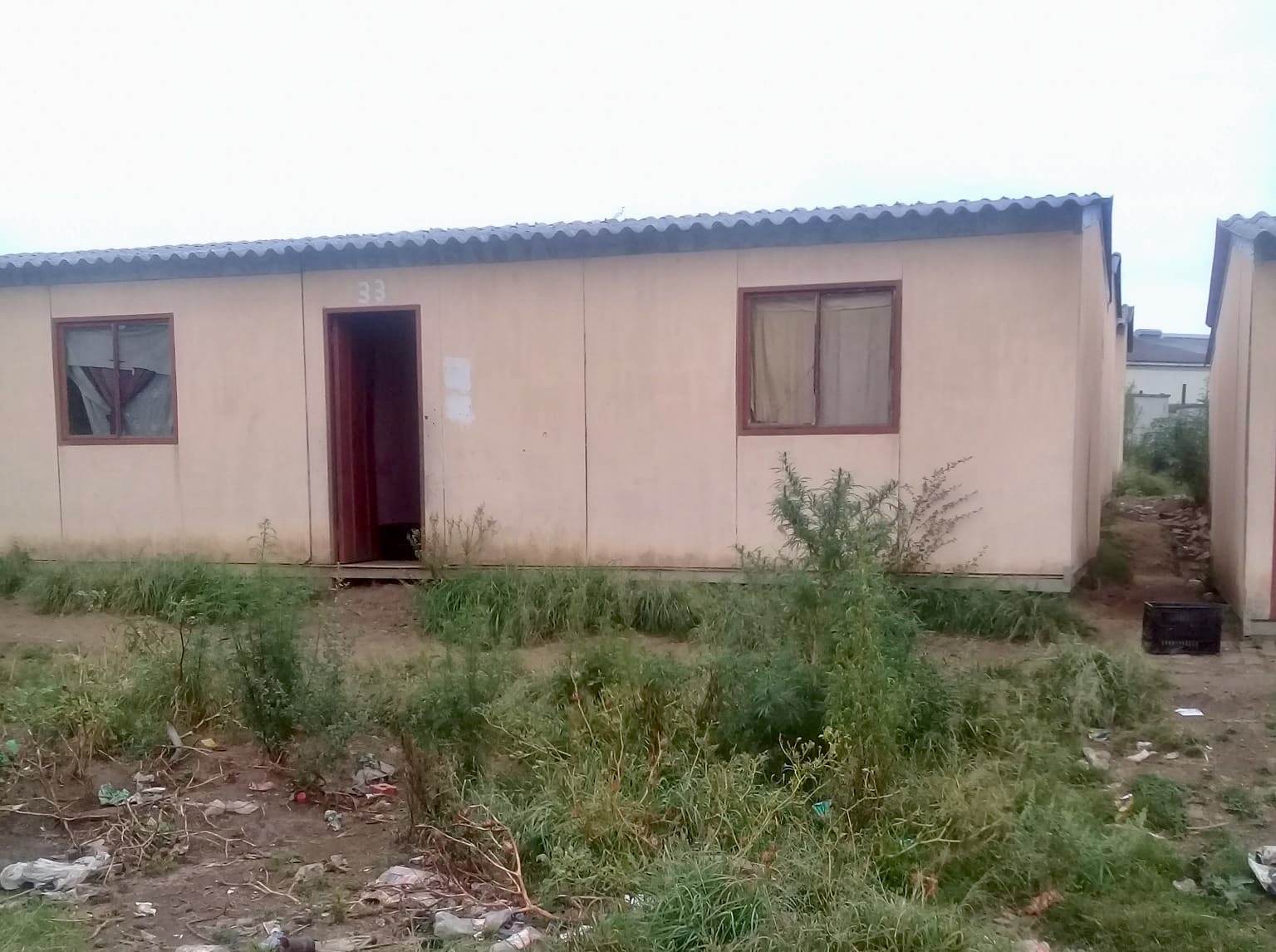
One of the temporary houses where relocated residents have spent 15 years. Photo from court papers.
In 2011, about 300 residents of an informal settlement near Butterworth were relocated to a site next to an unfenced river in an industrial area.
They were housed in temporary prefab houses.
Fifteen years later, they are still there, caught up in inter-governmental buck passing. They say that the authorities are “making us to be a joke”.
Now, they have launched a court application, seeking to compel the Premier of the Eastern Cape, the MEC and Head of Human Settlements to convene a “forum” under the Intergovernmental Relations Framework Act, with the relevant local and district municipalities, to resolve their plight.
The matter has been set down in the Makhanda High Court for August.
In her founding affidavit, Boniwe Sandla, who lives with her two children and four grandchildren in what she describes as an unsafe and dilapidated two-room structure, says she and other members of the community had lived at the Bhungeni “squatter camp” from 1985. Many of them were born there. But in 2011, the Amazizi Tribal Authority evicted them without notice, according to Sandla.
The Mnquma Local Municipality intervened and in co-ordination with the human settlements department offered the community land in the Zitulele industrial area, near Brown Factory.
“We were to remain there for six months after which we were to be given a plan to address our permanent accommodation,” says Sandla.
“The structures were built of cardboard with no electricity or sanitation. After ten years, the Amathole District Municipality provided us with pit toilets, which are now also full. They are stinky.”
She says the river is unfenced and two children have drowned. When it rains, the settlement becomes completely flooded and residents put down plastic on the floors.
Over the years, the community had made many approaches to the relevant authorities through its lawyers, Y Tsipa Attorneys, and had received many empty promises, she says.
In opposing the application, the provincial government respondents have effectively washed their hands of the issue, saying they cannot lawfully or practically proceed with the housing development in the absence of essential services infrastructure.
They say they can only embark on housing projects on land identified by the Mnquma Local Municipality, and only if it is provided with adequate bulk service infrastructure from the Amathole District Municipality.
The planned Siyanda housing project, in which the community were to be provided housing, had to be shelved because it was “not feasible” due to a lack of bulk water infrastructure.
Funds for the project were then diverted elsewhere.
In written argument, they say forums are “consultative in nature” and private parties have no right to compel their convening through court orders.
In June last year, the department confirmed that the Siyanda housing project had been shelved because of lack of bulk water infrastructure and said it had “diverted” those resources to other needy projects.
“They are playing hide and seek with us. We were not consulted when this decision was taken,” says Sandla.
“The respondents failure to declare and resolve the dispute under the Act amounts to abdication of authority. Mnquma waits for human settlements, and human settlements waits for Mnquma. It is shifting responsibility.”
In written heads of argument, the applicants say they are not asking for an order that they be given housing; “only that the respondents identify what must be done, by whom, and within what timeframe”.
They said the respondents were not in “wilful defiance”, but the issue highlighted “systematic fragmentation and a lack of co-ordination”, because no party seemed willing to initiate inter-governmental engagement.
Recent flooding has exacerbated the community’s plight.
“How we live is equal to living under a bridge and is no different from being homeless,” they say.
They are seeking an order compelling the Premier, MEC and head of department to convene a forum within 30 days and to report back to the court on progress.
They also want the court to declare that the failure by the respondents to provide access to adequate housing and basic services is a violation of their constitutional rights, and that the diversion of funds from the Siyanda housing project be declared unlawful and invalid.
