30 April 2026
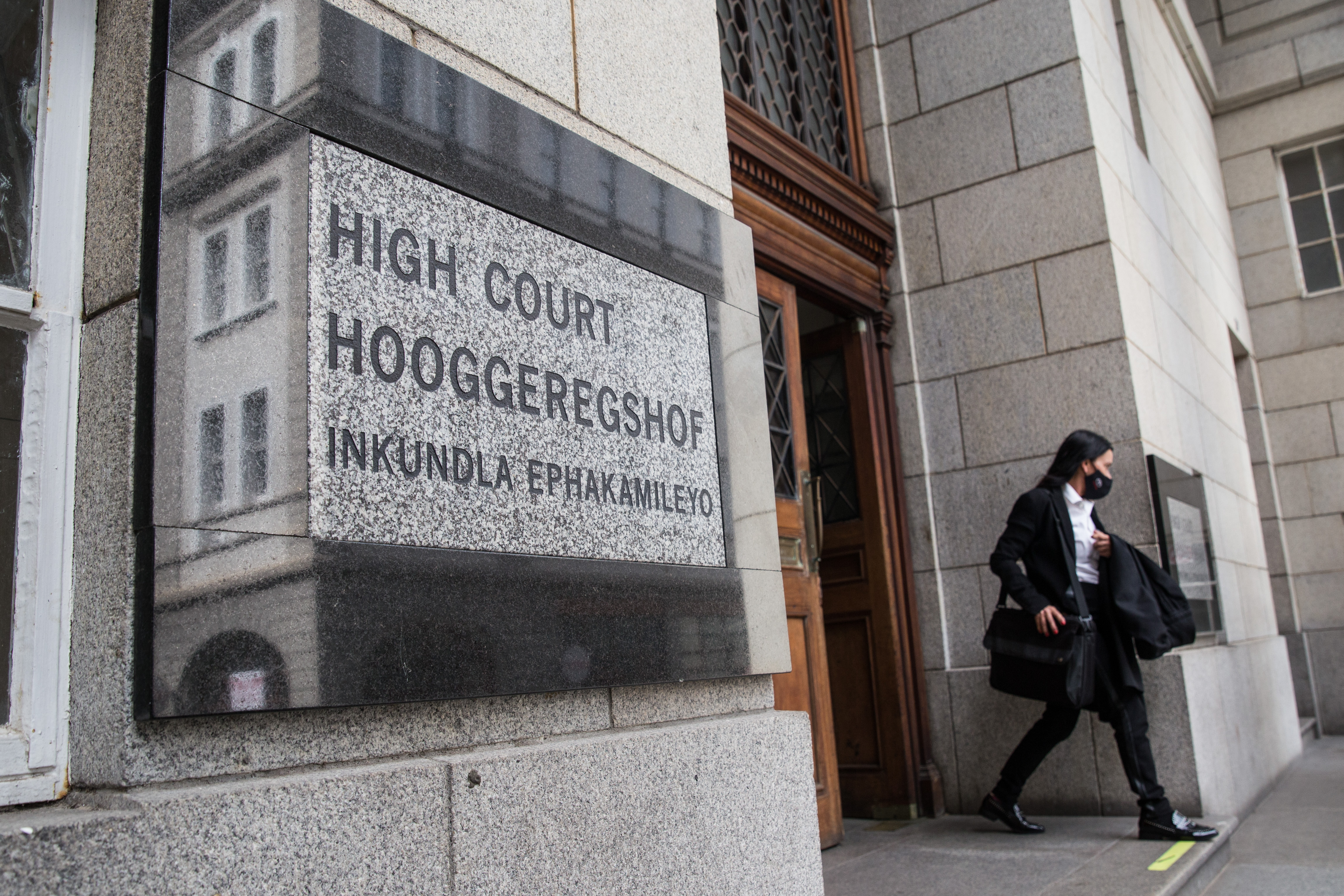
The fixed charges for water, sanitation, and cleaning imposed on residents by the City of Cape Town from July last year have been declared invalid and unlawful by the Western Cape High Court. Archive photo: Ashraf Hendricks
The fixed charges for water, sanitation, and cleaning imposed on residents by the City of Cape Town from July last year were on Thursday declared invalid and unlawful by the Western Cape High Court.
The verdict was read out by Judge President Nolwazi Mabindla-Boqwana and Judge Katherine Savage. Judge Andre Le Grange, who was the third judge making up the full bench, was absent due to a family bereavement.
The judges declared that the fixed charges were inconsistent with the Constitution, national legislation, and the City’s own Tariff By-law, and were to be set aside from 30 June 2026.
Also, the City’s counter-applications — which were conditional to losing the case that sections of the Municipal Systems Act should be declared invalid, and that the invalidity of the fixed charges be suspended for two years — were dismissed.
The ruling relates to two cases against the City’s introduction of the fixed charges. The first was brought by the South African Property Owners’ Association (SAPOA), and the second by Afriforum. A collective of Cape Town ratepayers’ organisations joined SAPOA’s case as an amicus curiae (friend of the court), and the GOOD Party joined as an intervening party to SAPOA’s application.
The two cases were heard together from 2 to 4 December.
Both SAPOA’s and Afriforum’s applications hinged on the constitutionality of the fixed charges. They argued that the charges, based on property values, constituted property rates, and thus a tax, rather than a fee for a service which needed to be based on the consumption of the service.
The Constitution only allows property rates to be based on property value. There was no national legislation that allowed a municipality to impose what otherwise amounted to a tax.
The Systems Act was also brought to bear, in which charges for services needed to be in proportion to the consumption, and related to the cost of providing the service.
Part of the City’s defence was that property value bands were used for rebates and other calculations, meaning there was precedent for using property value outside of rates calculations. The City also argued the fixed charges were allowable under its Tariff By-law, the development of which is mandated by the Systems Act. The fixed charges were, according to the City, a lawful tariff, not a property tax.
Central to the applicants’ arguments and the judgment, was section 229 of the Constitution, which states a municipality can only charge rates on property, consumption-based charges for services such as water and electricity, surcharges on these service charges, or taxes allowed by other legislation.
The “actual nature” of the fixed charges needed to be determined, the judges stated.
The judges noted that in order to constitute as a ‘rate’, the amount levied must be calculated as a ‘rate in the rand’ based on individual property values. The City used property value bands to calculate its fixed charges, not a ‘rate in the rand’. This resulted in the City having “moved into the realm of property rates yet adopted an approach which fell outside the method for determining such rates”.
The judges said the City also “failed to adhere to the procedures required to impose a property rate”, and had not adopted a rates policy, which needed public participation and comment.
Additionally, VAT is payable on the fixed charges which meant, for taxation purposes, the charges were not rates, which are exempt from VAT.
“It follows for all these reasons that the charges do not meet the requirements of a rate on property and cannot therefore lawfully be imposed by the City as such.”
The fixed charges were not a fee for services, nor a surcharge on fees for services.
While services are funded through fees, Section 74(1) of the Systems Act requires a tariff policy on the levying of such fees for services be adopted. The tariff policy had to include the principle that the fees be in proportion to the use of the service, and tariffs must reflect the costs reasonably associated with rendering the service.
The judges stated while Section 75 “permits a municipality to ‘levy and recover fees, charges or tariffs in respect of any function or service of the municipality’, by way of a resolution passed by the municipal council”, it needed to be read with other provisions of the Act.
These other provisions did not “grant an unbridled power to a municipality to levy and recover fees, charges or tariffs in respect of any function or service provided by the municipality, untethered to a tariff policy or by-law”.
“We do not accept the City’s contention that it is entitled to impose charges for services under section 75A, with the word ‘any’ in section 75A to be read broadly to grant the City whatever expansive and permissive powers it may consider itself to need in order to address its service delivery obligations.”
Without a base tariff for cleaning charges, the fixed cleaning charge was “not a charge in excess of such base tariff”, neither were the fixed charges for water and sanitation. The fixed charges were not directed at the provision of services but aimed at funding city-wide infrastructural development and maintenance.
Regarding the City’s conditional counter-application that Section 75A, read with section 74(2) of the Systems Act would be unconstitutional and invalid, the judges said it had “a number of difficulties”.
One of these is that SAPOA and Afriforum had not invoked Section 75A as the basis for their argument against the fixed charges.
There appeared to be “no logical connection” between the counter applications and the relief sought by the applicants.
Costs were granted to SAPOA and Afriforum. The GOOD Party was also awarded costs for two counsels.
