15 October 2026
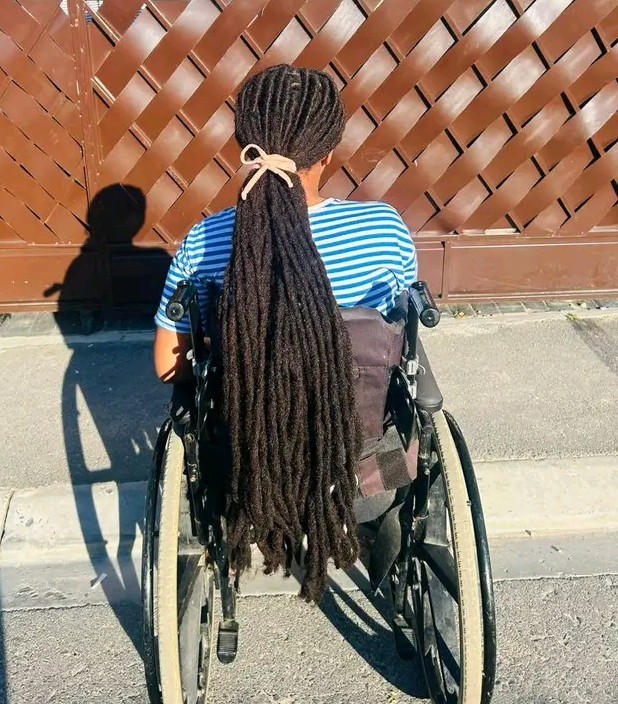
Othandwayo Rangula gets two packs of 14 adult nappies at the Mfuleni clinic every month. She says this is not nearly enough to last her the whole month. Photo: Mary-Anne Gontsana
Angel* who lives in Eerste River, Cape Town, has used a wheelchair since she was shot in 2015. She has to wear an adult nappy all the time. She gets two free packs of 14 nappies every month from the Kleinvlei Community Health Clinic but this is not nearly enough for the month.
She uses her disability grant to buy more. “It is really a problem especially if you are unemployed.”
“I have children, and the money I spend on nappies could easily be used for something else.”
Disability Revolution, an organisation representing people with disabilities, says many people are in the same situation as Angel. In a letter to the Western Cape Department of Health and Wellness and the City of Cape Town on 18 September, the organisation said most people with disabilities who needed nappies got a single pack of 10 to 15 a month and this was not enough.
The organisation said since 2023 it has asked for information about policy on incontinence products.
A price check by GroundUp found a pack of 10 nappies cost R120 to R190, depending on the retail store, the brand and the size. A person who uses nappies all the time would need two packs a week.
“Ideally for me, four packs a month would be sufficient,” says Angel. “I have to drink lots and lots of water, which means I urinate a lot. At times you get diarrhoea meaning you have to change frequently.”
At her last clinic appointment in August, Angel says, she was given 12 packs of nappies which are to last her until her next appointment on 28 January 2027.
“I will clearly have to buy more because there is no way these will last me till next year,” she said.
Othandwayo Rangula, also a wheelchair user, gets her two packs of 14 adult nappies at the Mfuleni clinic every month. She says this is not nearly enough.
The Western Cape Department of Health said the policy is to supply a maximum of three incontinence products per person per day, for up to six months. The department said it had developed a standard operating procedure for the provision of adult incontinence products. “The procedure is supported by a provincial incontinence products eligibility assessment tool, which standardises eligibility criteria and product allocation recommendations. Both the procedure and the tool will be available once they are approved and circularised.”
Mayco member for community services and health Francine Higham said clients were assessed by a clinician, who determined the appropriate provision of products. “The City is engaging with the Western Cape Department of Health and Wellness to align its approach with the applicable provincial policy and strengthen consistency in service provision.”
“The City is working towards a written guideline covering eligibility, assessment and provision based on clinical need.” She said products were provided free of charge.
“No client with an assessed need is refused, and stock is available at City facilities with no shortages this financial year.”
“Any client who finds the quantity insufficient is encouraged to return to their facility for reassessment, and clinicians can increase the quantity where a greater need is established. Where travel is a barrier, City Health can arrange delivery to the client through its Community Health Worker service,” said Higham.
Senior researcher Adam Narain from advocacy group #UniteBehind, which works closely with Disability Revolution, said it was disappointing that after three years of asking, there was still no publicly available policy on provision of nappies.
“The City has confirmed to us that it has no written policy at all, and its clinics work on roughly 28 products a month, about one a day, while the province’s norm is up to three a day. People who live in the same city should not be supplied different amounts depending on who runs their clinic.”
Narain said policies should take into account public comment so that the people who rely on these services get what they need.
“A shortage of incontinence products has a serious effect on us as people living with disabilities,” said Nontsasa Mteza, coordinator of Disability Revolution. “The shortage compromises our dignity and privacy and prevents us from attending community events, clinic visits and essential services. Going without adult diapers means soiled clothes, bedding, further illness and more cost.”
“From 2023 we have met and communicated with different officials from government, but no one has shown care. We won’t rest until we get what is rightfully ours,” said Mteza.
*Not her real name.