19 May 2026
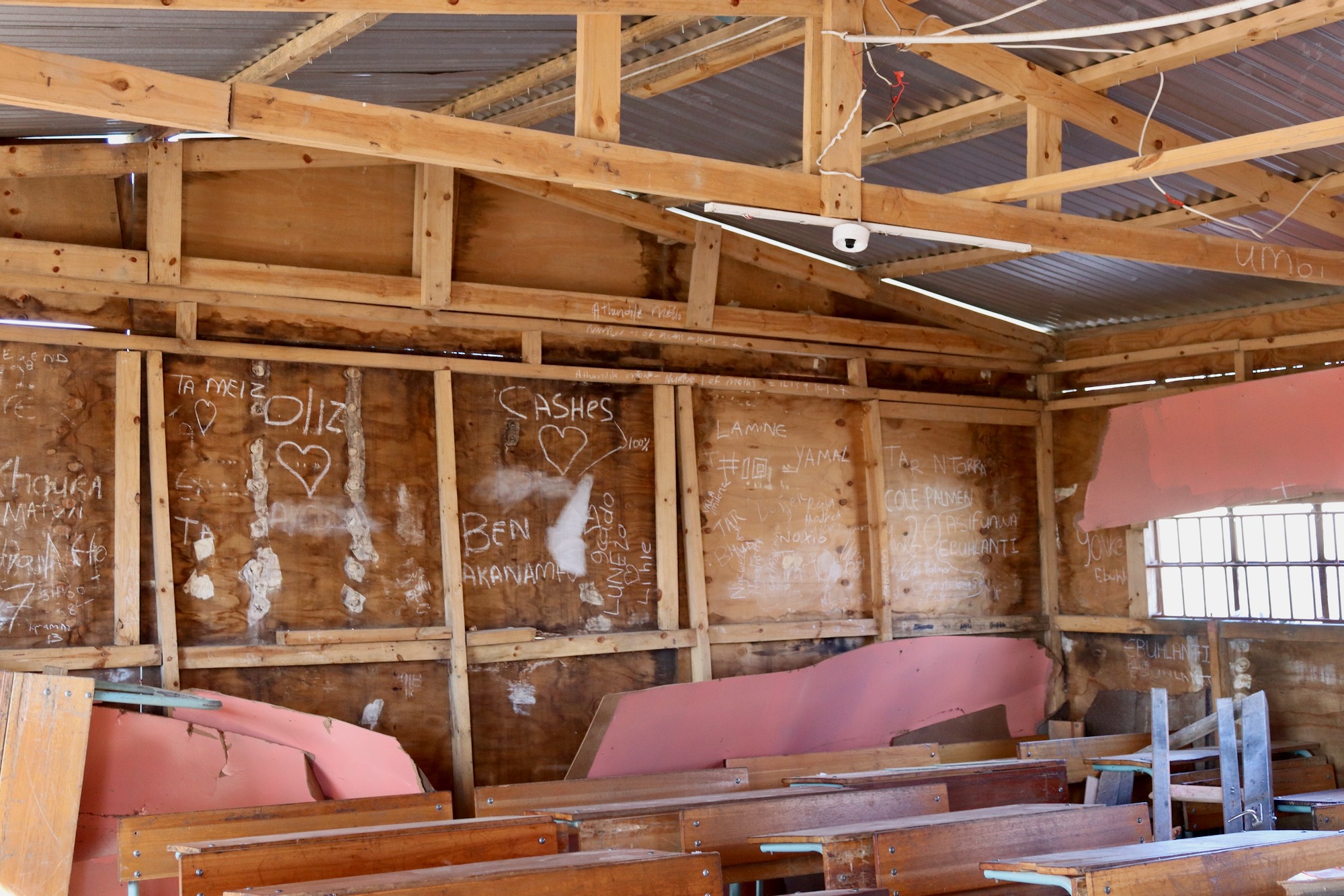
A classroom at Vulingcobo High near Dutywa. Photos: Nombulelo Damba-Hendrik
Schools built by families in the Eastern Cape decades ago have been left to fall into ruin, leaving children to learn in crumbling mud classrooms, leaking prefabricated structures and unsafe buildings. Parents and school governing board members blame the Eastern Cape Department of Education (ECDoE) for failing to act.
The mud structures of Mbashe Primary near Mthatha were built by parents in the late 1980s. They have never been renovated or upgraded.
In June last year, strong winds damaged the school and blew the roof off three classrooms. Nearly a year later, the damage has not been repaired.
The school currently has two teachers and 23 learners, in grades 1, 2, 3 and 5.
According to ECDoE spokesperson Malibongwe Mtima, the school has been identified for closure because of its low learner numbers. However, the department cannot close the school because there are no transport arrangements for alternative schools.
But school governing body (SGB) chairperson Xolani Neli blames the department for the deterioration of the school which has caused enrolment numbers to drop.
Neli said parents have been pleading for new classrooms and petitioning Mthatha since 2014, when the school still had about 100 learners.
The department installed toilets and water tanks, but the water system has never worked. Broken windows were never repaired and there was a general lack of maintenance, said Neli. He added there was no feeding scheme at the school.
He said the principal left in September under a cloud. The SGB had noticed the property was not being maintained, despite funds being allocated.
“We asked the department to investigate, but nothing happened,” said Neli.
“Most people in this village are elderly, but they are very active when it comes to their grandchildren’s education. Many of them helped build this school,” he said.
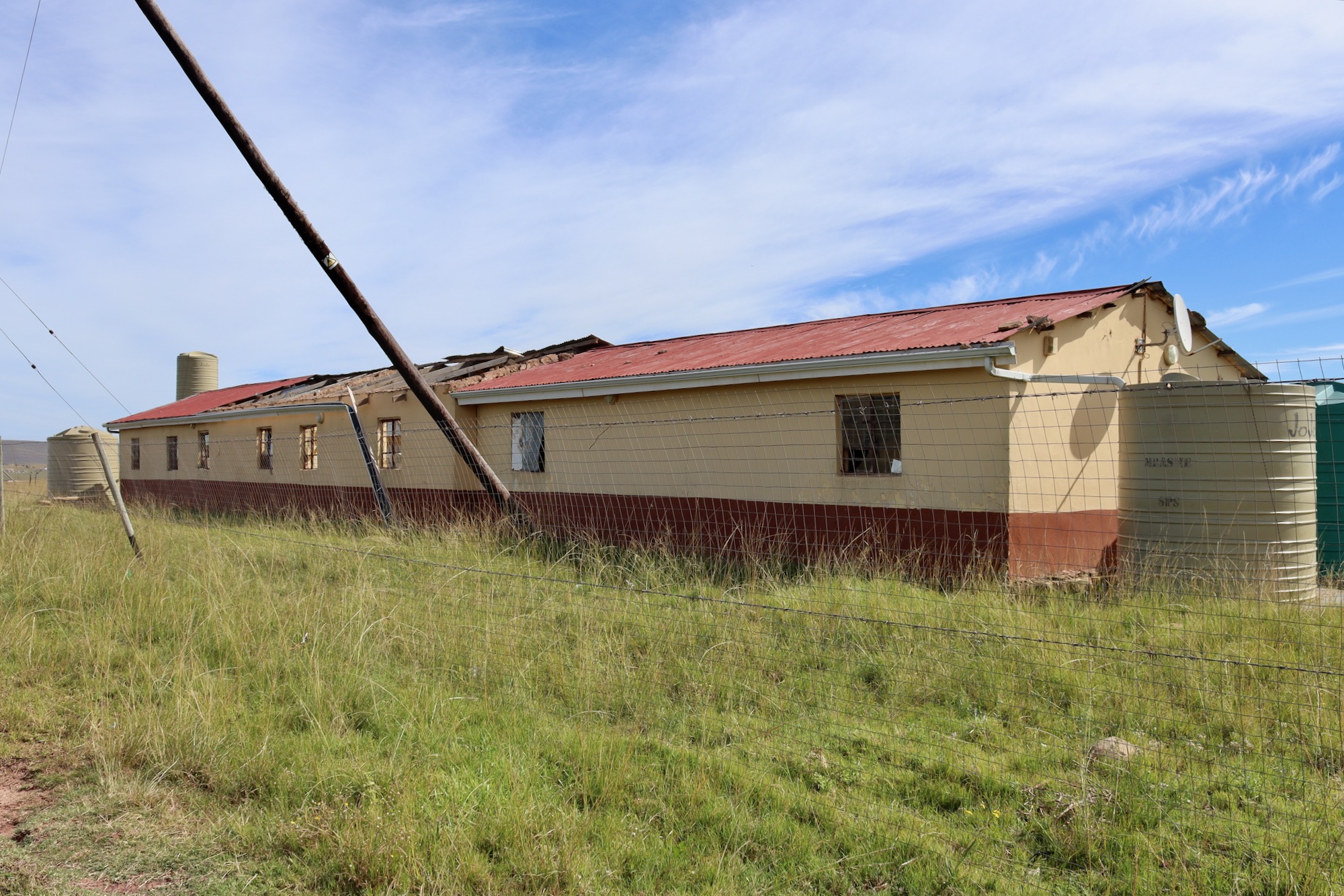
In June last year, strong winds damaged Mbashe Primary and blew the roof off three classrooms.
“We do not know who to turn to. We even asked the police to help us open a case against the department. They promised to contact the department on our behalf, but we are still waiting,” said Neli.
“The department is the reason our school has fallen apart, which is why we do not want it closed. They must fix it.”
He said, “Many parents who moved to cities have removed their children because they were not being properly taught. School would start at 9am and by 11am children were sent home, and we were never told why. We reported this too, but nothing was done.”
“At our last meeting, I asked officials about the role of supervisors. If schools are supposed to be visited every three months, how did this school deteriorate to this extent without intervention? It is clear they were not coming here,” said Neli.
Parent Nokhaya Gebenga, 71, said, “Before this school was built, we used our rondavels as classrooms. I was the first person to offer my rondavel to be used as a school in the 1970s. As a community, we hired a teacher from another village because we valued education.”
“We paid the teacher R80 a month. Most of us were unemployed, so we sold maize and traditional beer to make sure the teacher was paid on time,” she said.
Gebenga said in the 1980s the community decided to build the school.
“We were still young then. The only thing we asked from the government was to add more classrooms and maintain the school, but they failed,” she said.
“We are not going to allow the school to close because the nearest school is very far. Our children are too young to walk that distance, and when it rains they will be forced to stay at home. That is not a solution,” she said.
Mtima said the principal had experienced challenges with the community and alleged that he had been threatened, leading circuit managers to temporarily place him at another school. He said a transfer process was underway so that the post at Mbashe Primary could officially be declared vacant.
“Our internal audit team is currently auditing the school funds. The circuit manager will visit the school,” said Mtima.
Mtima said learners would eventually be moved to Ngquqa Primary School. However, Ngquqa is also struggling with poor infrastructure.
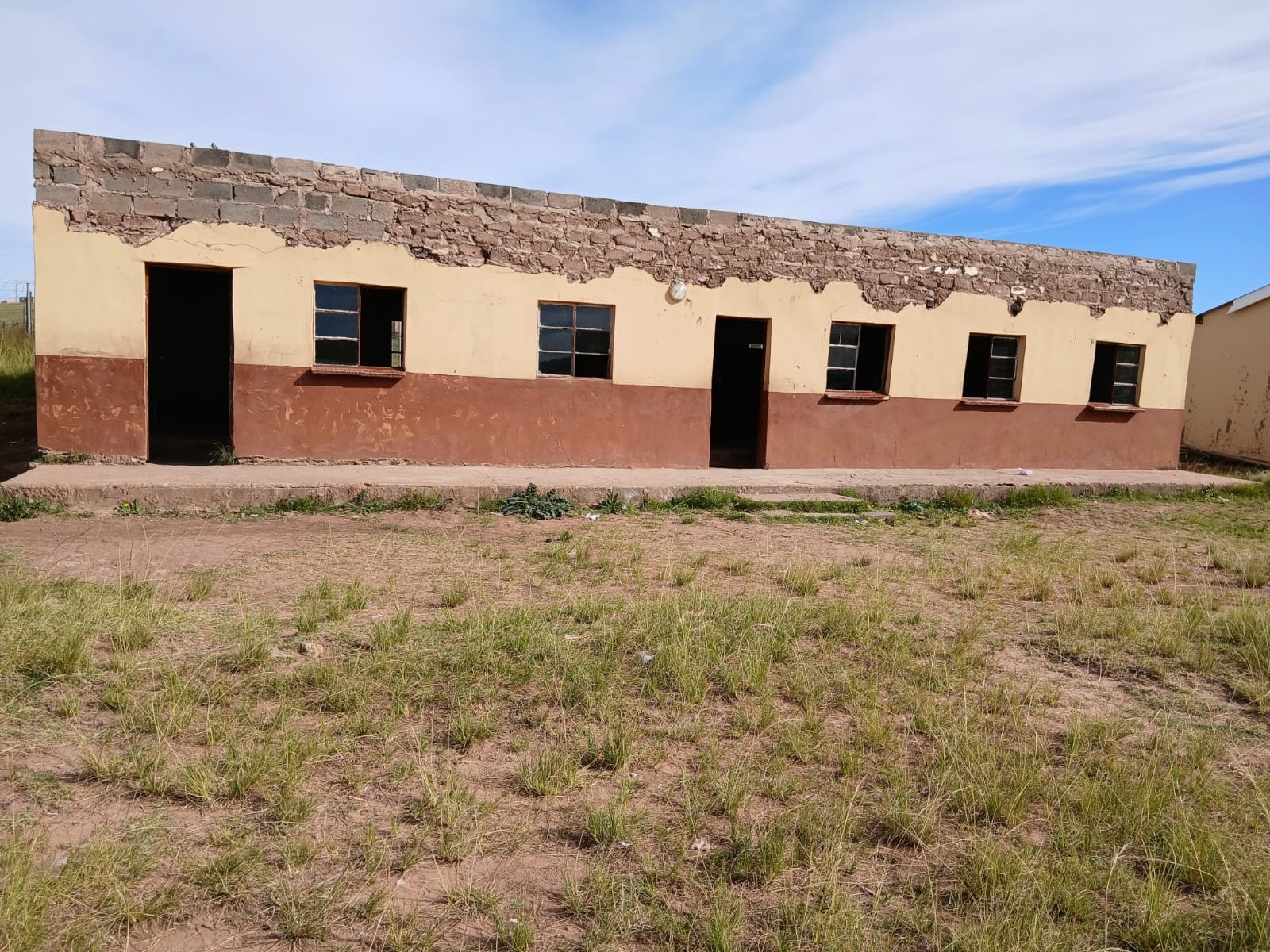
Ngquqa Primary School is in disrepair.
Ngquqa Primary was built by parents in 1992 using mud. Later, government added two classrooms and toilets.
The classrooms now have cracked walls, leaking roofs and broken windows.
SGB chairperson Sandisiwe Tayi said the department has been repeatedly asked to add classrooms.
“Our fear is that these classrooms will collapse while children are inside,” said Tayi.
“Even the toilets built by the government are now full and the smell is unbearable. We are trying to find ways to build our own toilets, but we do not have money.”
Parents have started digging two holes for pit toilets. GroundUp saw learners using an open field as a toilet.
Mtima did not respond to questions sent about Ngquqa Primary School.
Vulingcobo High in Chizela village near Dutywa was established in 1985 with prefabricated classrooms which have never been upgraded or renovated. Most have broken windows. One classroom was damaged by lightning. Parents have placed bricks to cover holes in the walls of some classrooms. Large stones have been placed on roofs to prevent the zinc sheets from blowing away. The walls and roofs leak.
SGB chairperson Mncedisi Salman said strong winds on 3 May damaged five classrooms, forcing some grades to share classrooms.
The school currently has 862 learners.
Salman said when it rains, teachers are forced to leave their cars about two kilometres away and walk to the school. Scholar transport also drops learners far from the school because of poor road conditions.
“Our classrooms are overcrowded, and during exams learners are sometimes forced to sit outside. When it rains, exams must be postponed,” said Salman.
“Last Wednesday, one of the teachers asked some learners to wait outside while she taught another grade. The learners outside started protesting because they also wanted to be taught,” said Salman.
“They blocked the road with large stones, demanding that the department address the shortage of classrooms.”
Salman said parents tried to calm the situation, but the learners insisted on continuing with the protest.
“They told us we had tried and failed for years, and now they wanted to fight for their own education,” he said.
He said parents had visited the provincial legislature numerous times demanding a new school and also approached the department’s Butterworth offices.
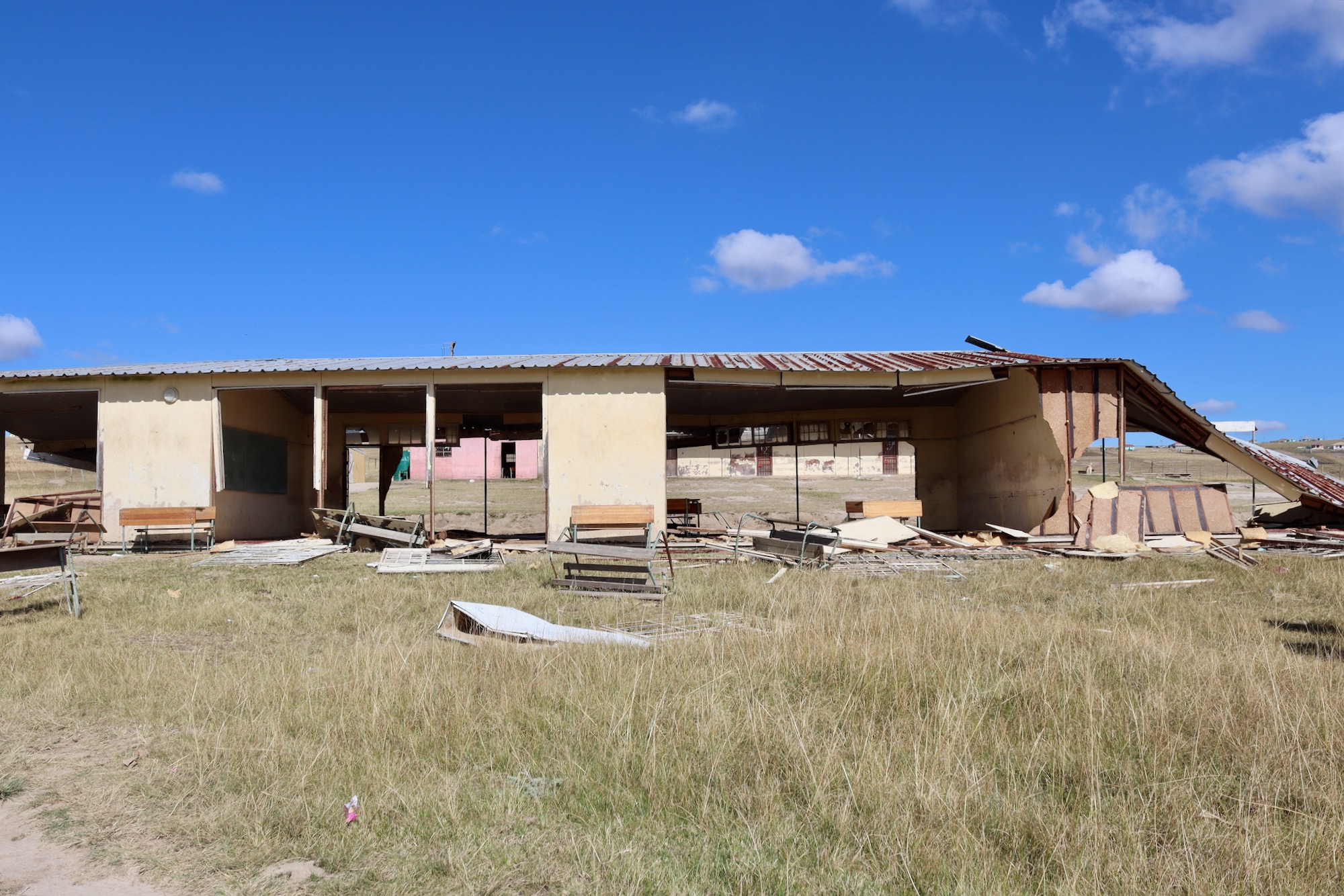
Vulingcobo High in Chizela village near Dutywa was established in 1985. The prefabricated classrooms are now falling apart.
On Thursday last week, learners marched to the department’s offices in Dutywa.
A site for a new school was identified in 2003. It was approved by the department in 2012. In 2017, the department promised to build the school. No construction has been undertaken to date.
Simphiwe Vityo said he attended the school in 1987.
“Some classrooms burnt down years ago. We were lucky the recent wind damage happened at night. Imagine if learners had been inside,” he said.
Mtima said the department had allocated the new school to the Development Bank of Southern Africa (DBSA), one of 16 projects in a programme. But the programme had not been implemented due to budget constraints, and the projects were withdrawn in August 2023, he said.
A Special Investigating Unit (SIU) report in January 2023 showed how R300-million intended for school upgrades in the Eastern Cape had been misused, leaving learners in crumbling classrooms without proper sanitation or clean water.
Several contractors were referred to the National Prosecuting Authority for fraud and some officials were implicated. But according to Equal Education researcher Mahfouz Raffee, “there were very few consequences. Some got away with written warnings or final written warnings.”
Mtima said the Vulingcobo High project had been re-allocated to DBSA in September 2023 and the new school was budgeted for the 2026/27 financial year at an estimated cost of R6.95-million.
According to Raffee, about 25% of schools in the Eastern Cape are considered to be in poor condition and require urgent intervention.
