9 April 2026
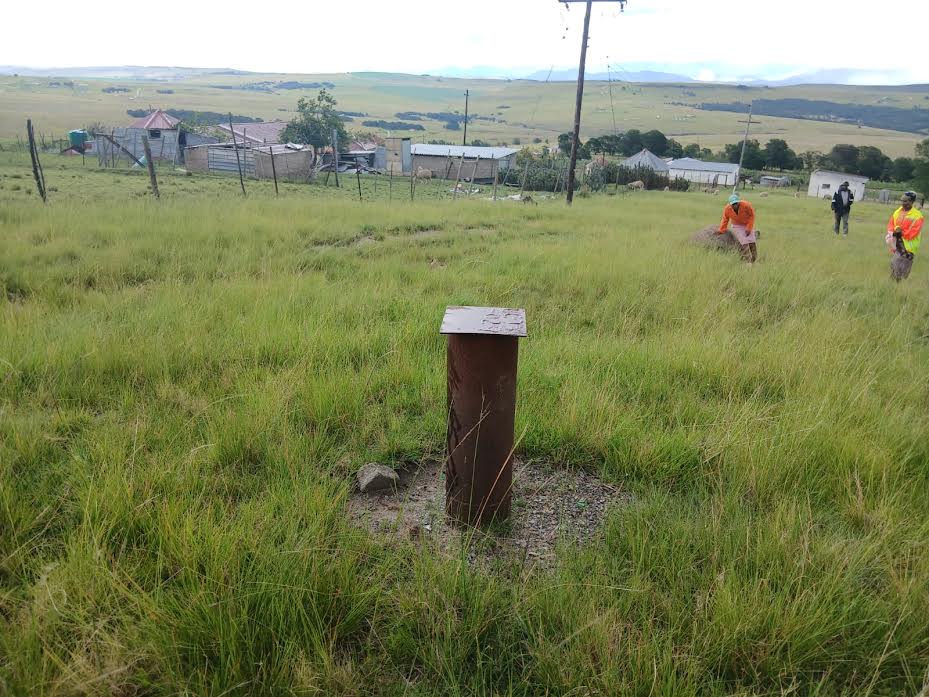
Several boreholes have been drilled as part of a major project in the Ugie area in the Eastern Cape, but as yet no water has flowed. Photo: Nombulelo Damba-Hendrik
Families in eNkalweni and surrounding villages near Ugie in the Eastern Cape say they have been waiting more than a decade for water, though a number of boreholes have been drilled in their communities.
The Joe Gqabi District Municipality began installing boreholes in the area in 2015. But 11 years later, residents say not a single one is supplying water.
At least 12 boreholes were installed between 2015 and 2019 after the municipality secured ORIO grant funding from the Netherlands government to provide water to rural villages in the Elundini Local Municipality.
According to the 2022/3 Integrated Development Plan, the project has a budget of about R230-million. The project is expected to benefit 113 villages, according to a 2016 Elundini Local Municipality newsletter.
The scope of work includes building pump houses, installing pumps, electrifying boreholes, constructing pipelines, storage tanks, reticulation networks, and communal standpipes.
A report to Parliament in September 2024 shows that only R18-million had been spent.
Asked why it was taking so long, municipal spokesperson Buli Mgojo said while the project concept dated back to the 2014/15 financial year, significant preparatory work had been required before implementation could start. This included alignment with the requirements of ORIO funding, and the appointment of specialists including land surveyors, geotechnical and geohydrological experts, and environmental consultants.
Also, Mgojo said, the ORIO funding model required approval at each stage of procurement.
Because of the scale and complexity of the tender, the internal governance process had also involved extensive due diligence and engagements, which had contributed to delays, she said.
Mgojo said some of the terrain was difficult, with complicated access.
Meanwhile, frustration is growing among residents.
During a visit to the area last month, GroundUp was shown several boreholes, none of them working. No taps had yet been installed.
Community leader Babalo Noholoza said residents had been left in the dark.
“Since last year we have been waiting for a contractor. We were told there would be jobs and opportunities for small businesses, but nothing has happened,” said Noholoza. “All we get are empty promises,” he said.
“I don’t understand why we don’t have water after so many boreholes were installed,” said resident Thethile Ramba. “My 84-year-old mother has to walk more than 500 metres to fetch water from the river. Because of the hills, it feels much further.”
He said residents they share water with animals and struggle, especially in the summer months.
“We are told there are millions for this project, but there is no action,” said Ramba.
Mgojo confirmed that while boreholes have been drilled and show good yield and water quality, they are not yet connected to a functioning network.
She said the municipality had completed the process of appointing a contractor and had submitted documents to the Netherlands government for approval in February.
“In the interim, the municipality continues to implement relief measures, including water tankering and temporary storage solutions,” she said.
