14 October 2026
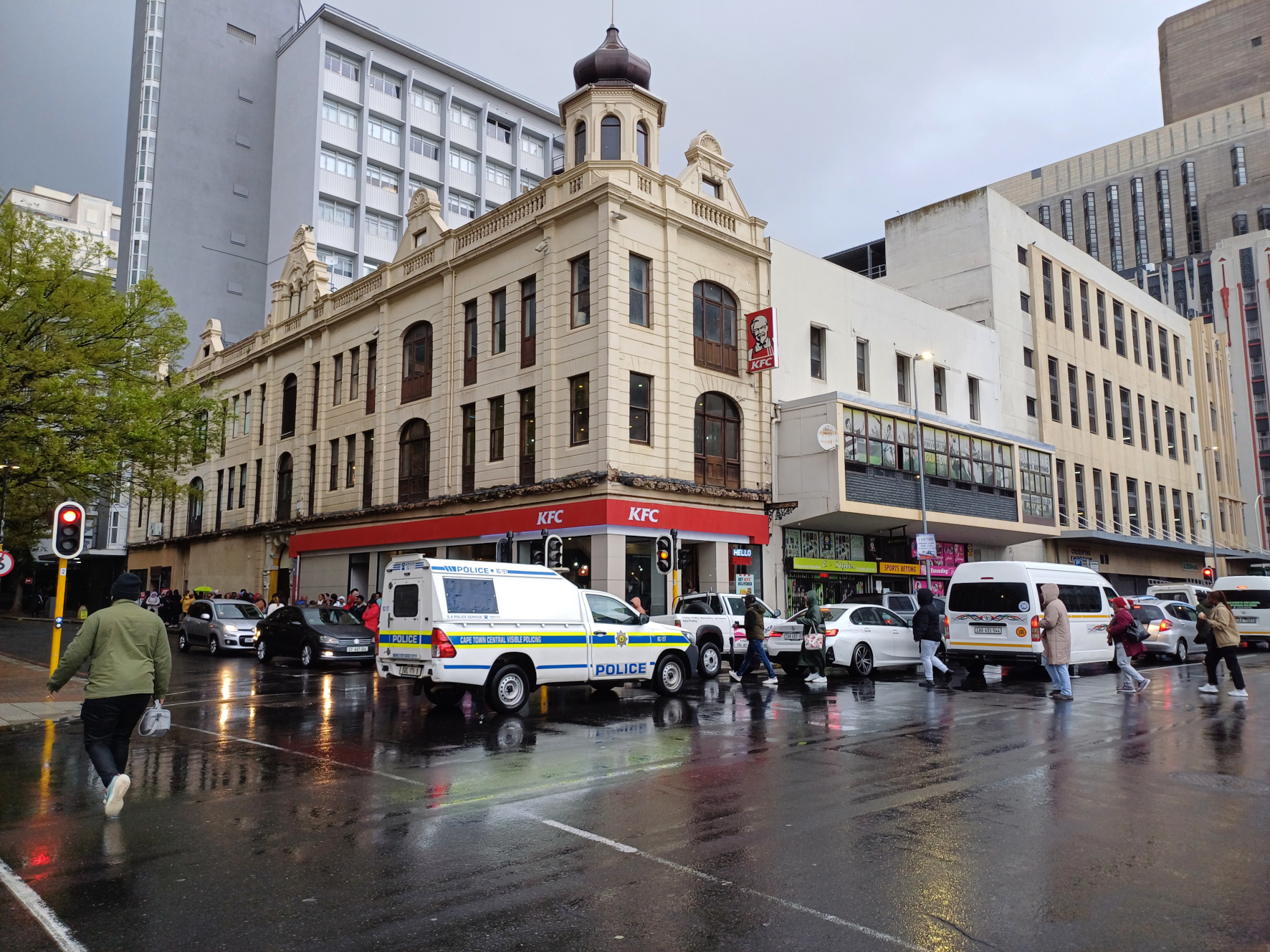
Two-bedroom flats in the Cape Town CBD are advertised on Property24 for an average rental of about R29,400 a month. Archive photo: Steve Kretzmann
Cape Town has come a long way since the Western Cape government’s controversial sale of the Tafelberg School property in Sea Point to a private school, which led to a decade-long campaign for more affordable housing in the inner city.
That campaign, by Reclaim the City and Ndifuna Ukwazi, saw the occupation of the Woodstock Hospital and Helen Bowden Nurses Home in 2017 by people who were facing eviction from their inner-city homes. The same year, the City of Cape Town announced 13 pieces of City-owned land, within a 5km radius of the CBD, would be released for affordable housing. But not one of the 13 pieces of land has been developed.
The City and the Province list just under 6,700 existing affordable housing units across the metro. None are in the inner city. The only affordable housing within a 10km radius of the CBD is at Maitland Mews, with 204 affordable homes, Conradie in Pinelands, with 1,481, and Drommedaris in Brooklyn, with 219.
In February last year, Mayor Geordin Hill-Lewis announced the City had 12,000 affordable housing units in the pipeline across the metro. We detailed where and how these houses would be built in an explainer article that year.
“To get these projects through the sausage machine of the state is like trying to swim through peanut butter,” Hill-Lewis told the Cape Town Press Club in June this year, responding to a question from GroundUp.
“Trying to pry subsidies out of the state to make those projects more viable and more affordable has been incredibly difficult,” the mayor said.
In July, the Constitutional Court ruled that the Tafelberg School sale, since cancelled, was unlawful and that the City of Cape Town and the Western Cape government have a constitutional duty to address apartheid spatial planning by providing well-located affordable housing.
In August, the City announced it now had 14,000 affordable units in the pipeline. And in a report to the Western Cape High Court last week, which the Constitutional Court ordered the City to file, it laid out plans for about 28,400 affordable homes. All of them still need to be built.
These affordable housing units are separate from the City’s other housing programmes, such as RDP/BNG houses or informal settlement upgrades.
For full screen view of the Affordable Housing Tracker, and for more details, click here.
Under the City’s definition, affordable housing generally refers to homes – usually rentals – targeted at households earning between R1,850 and R34,800 a month. The upper limit is in line with the Financial Sector Code’s Affordable Housing Standard.
According to the City’s report to the high court, none of the affordable housing projects it has approved since 2017 for the CBD, Salt River, Woodstock, Observatory or Sea Point has been completed.
The only housing the City has finished in these areas is a 39-unit transitional facility in Salt River, which opened in 2019 for families relocated from another site.
The City’s report lists plans for 19 inner-city sites, set to provide about 6,800 affordable homes. Six have been awarded to developers, some as far back as 2019, though two of those sales are now being cancelled. The remaining 13 sites are yet to be released.
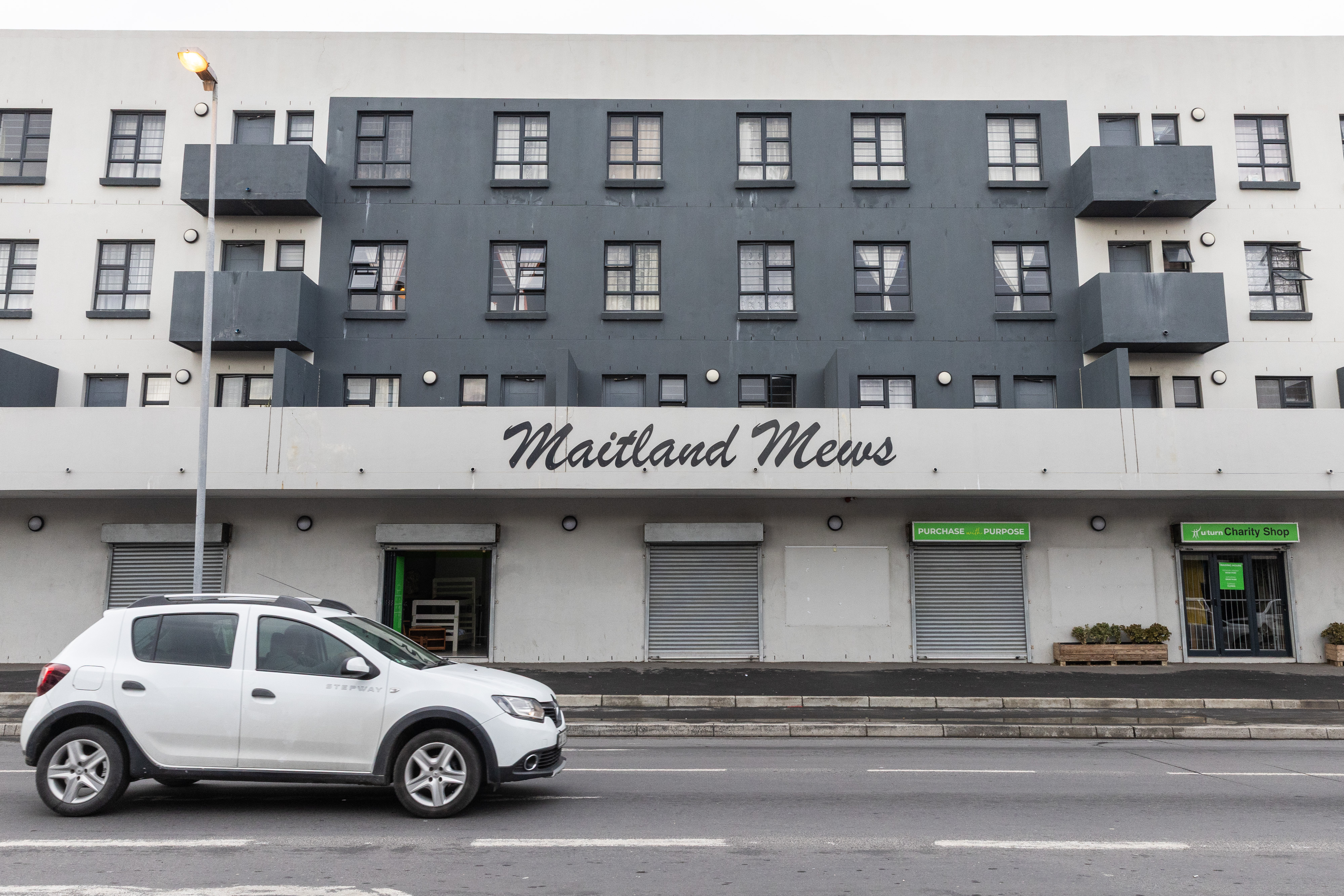
Maitland Mews, a social housing development built on land previously owned by the City of Cape Town, was completed in March 2023. Archive photo: Ashraf Hendricks
There is increasing public pressure on the City to make housing in well-located areas affordable, as private property prices and rental costs increase.
Between 2010 and 2024, house purchase prices in Cape Town increased by about 23% after inflation. This month, two-bedroom flats in the Cape Town CBD were advertised on Property24 for an average rental of about R29,400 a month.
Average rents in the Western Cape rose 9.7% in the year to June 2026, almost twice the inflation rate, according to the PayProp Rental Index.
But the City has rejected calls to introduce rent control. “One thing we will not engage in is market manipulation,” the mayor told the Cape Town Press Club earlier this year.
Activists also want the City to develop an inclusionary housing policy, under which private developments of a certain size would be required to include a share of affordable housing units. The City has been developing such a policy since at least 2019 and has missed several of its deadlines to publish it. This policy has now been folded into a broader “Affordable Housing Policy”, which is still not completed.
A proposed short-term letting by-law, which would see many Airbnb listings pay commercial property rates, has been criticised for not going far enough to free up residential space in the city.
The mayor’s position is that it is a supply and demand problem: the solution is to build more housing.
Initially, the idea was that many of the developments on state-owned land would be subsidised by the Social Housing Regulatory Authority (SHRA). The SHRA is a national government agency that provides once-off capital grants to developers, on the condition that tenants’ household income is less than R22,000 a month and the monthly rental is capped at R7,326, or 33% of household income.
But the SHRA’s budget has never been big enough to fund all the houses the City is planning to build, and fewer new developments are being approved by the SHRA. Two sales of City-owned properties are being cancelled because SHRA failed to fund the developments.
Without enough government money to build the housing, the City has now shifted to building affordable housing without direct state subsidies. It is quite possible to build affordable housing that is profitable if developers decrease their profit margins, as one company has shown. But the City’s specific model is yet to be tested.
The City’s strategy for affordable housing relies on selling City-owned land to private developers at a discounted price to build apartment blocks that contain both affordable rental units and high-end open-market units.
For example, the old Fruit and Veg site in Zonnebloem, valued at R72-million, is being sold for about R10-million. The City also conducts feasibility studies and funds the bulk and site infrastructure.
Private developers then build big developments with high-end rental units and retail space that they can let or sell at market prices and cross-subsidise a negotiated number of “affordable units” for households earning below R34,800 a month.
Unlike SHRA-funded units, there will be no blanket limit for rental amounts and these will vary from development to development.
The City has also changed by-laws so that small developments of affordable rental flats can be built on residential properties in designated areas without rezoning.
A R20-million fund was established to cover up to 90% of micro-developers’ development charges. And over the long term, the City wants to prioritise denser affordable housing along the MyCiTi and Metrorail corridors.
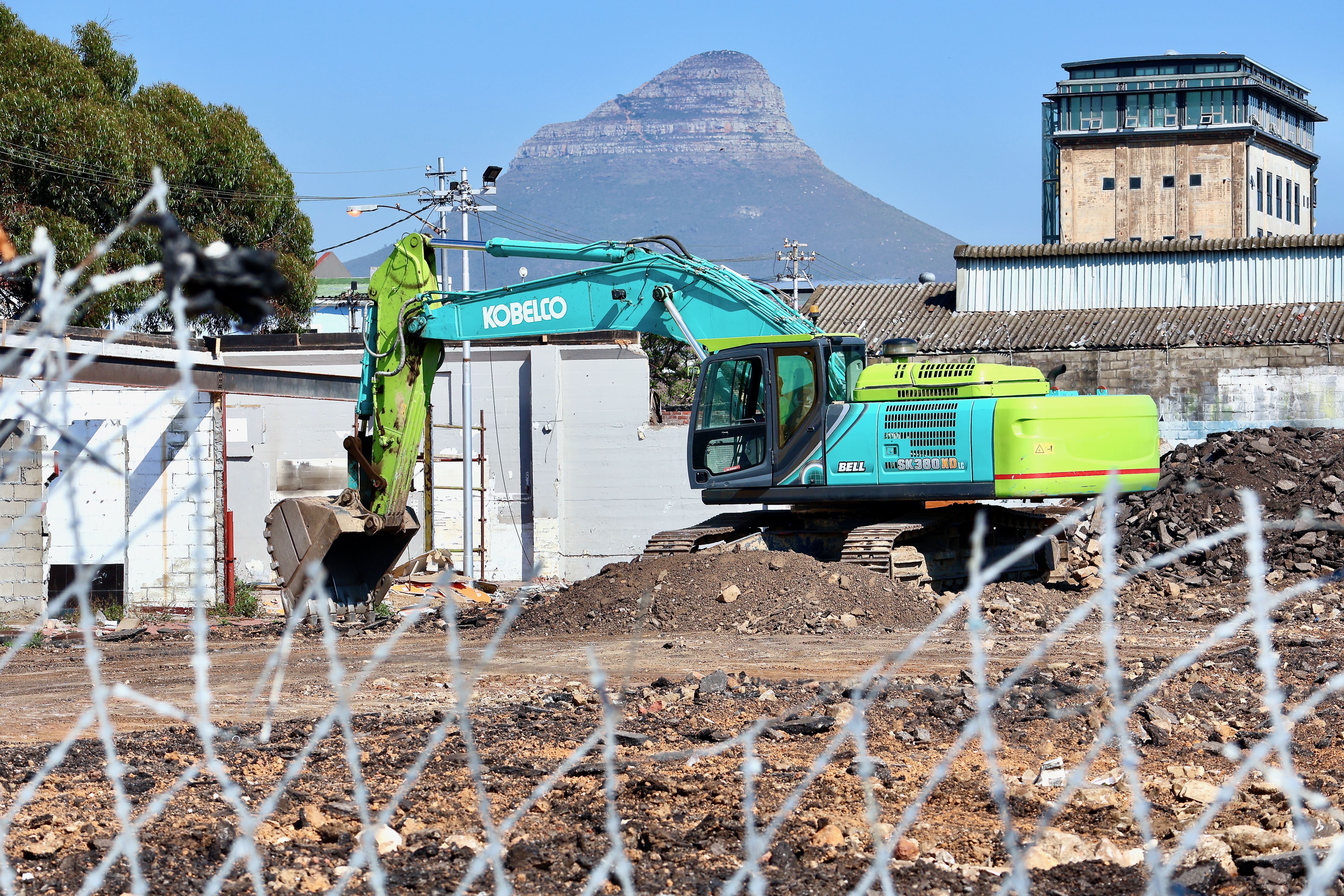
The Salt River Market is the only inner-city site in the City of Cape Town’s affordable housing pipeline where ground has been broken. Photo: Matthew Hirsch
As things stand, ground has been broken at only one of the sites in the City’s pipeline. Demolitions and earthworks have begun at the Salt River Market, which was sold to Communicare in 2022. Construction on the building is to start in January 2027, according to the court report. The SHRA council approved funding for the development in October 2025, but the SHRA has not yet signed the grant agreement.
There has also been progress on other sites. For example, the Fruit and Veg site in the city centre is due to be transferred to a developer this month. 285 non-subsidised affordable units and 25 open-market units are planned. Social housing was previously included in the plans, but has now been replaced with non-subsidised housing.
But several of the sites in the inner city have been delayed. Two Woodstock sites, at Pine Road and Dillon Lane, sold to social housing institution SOHCO in 2019 have faced significant setbacks and the sales are being cancelled. SOHCO was first selected for these developments in 2012.
In Pine Road, 267 social housing units were planned but the SHRA declined to fund it, finding the project non-viable.
In Dillon Lane, 150 social housing units were planned, but the City has decided to repackage the site and restart disposal to a different developer.
The Woodstock Hospital, which was occupied by Reclaim the City in 2017, is still in limbo with about 365 households living there. A public participation process was concluded in January 2025, but the City is still “investigating various disposal strategies … to adequately respond to the illegal occupation whilst preserving development viability”.
The site was previously earmarked for social housing, but the City now plans 500 non-subsidised affordable housing units.
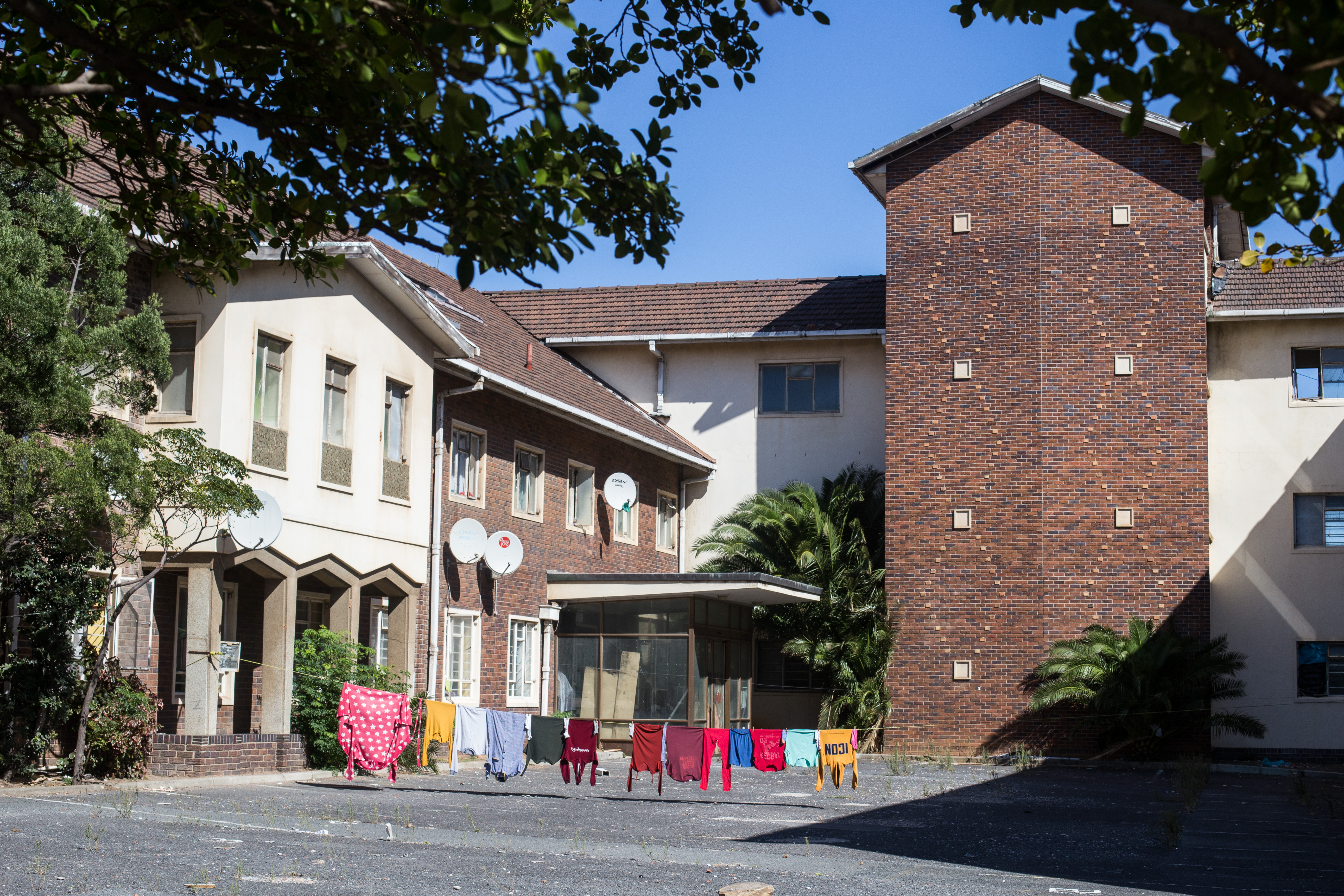
The former Woodstock Hospital site has been occupied since 2017 by the Reclaim the City movement. Archive photo: Ashraf Hendricks
A development in Pickwick Street, Salt River, has been delayed. Council approved the site to be transferred to Instratin in 2023, but the property will only be transferred to the company in March next year, with groundbreaking planned for April-May.
The development is set to have 1,800 homes in total: 840 social housing, 243 non-subsidised affordable, and 717 open-market units. There is uncertainty whether Instratin will qualify for SHRA funding, given its track record of failed social housing projects.
A 965-unit development at a property in New Market Street on the Foreshore, which was awarded to Concor Construction in 2024, is also delayed. The site will only be transferred to the company in November this year, the court report says. 590 non-subsidised affordable units will be built first, while awaiting SHRA funding for 375 social housing units.
About 27 new sites appear in the court report that weren’t included in GroundUp’s previous list of sites. They are all in different stages. When built, they could deliver more than 16,800 non-subsidised affordable units, about 1,360 social housing units and about 13,200 open-market units.
The City of Cape Town said in its report that there has been a 41% decrease in the Consolidated Capital Grant – the national grant that funds social housing projects – since 2017, when adjusting for inflation and population growth.
According to the City, no grant funding has been released for developments on City-released land since 2021, despite six applications.
Jens Horber, a researcher at Ndifuna Ukwazi, argues that the national government has never sufficiently prioritised social housing, which he calls the “only spatially targeted and spatially transformative housing programme.” He said only around 3% to 4% of the total national human settlements budget goes towards social housing.
“This has been made worse by severe governance issues at the SHRA,” Horber said.
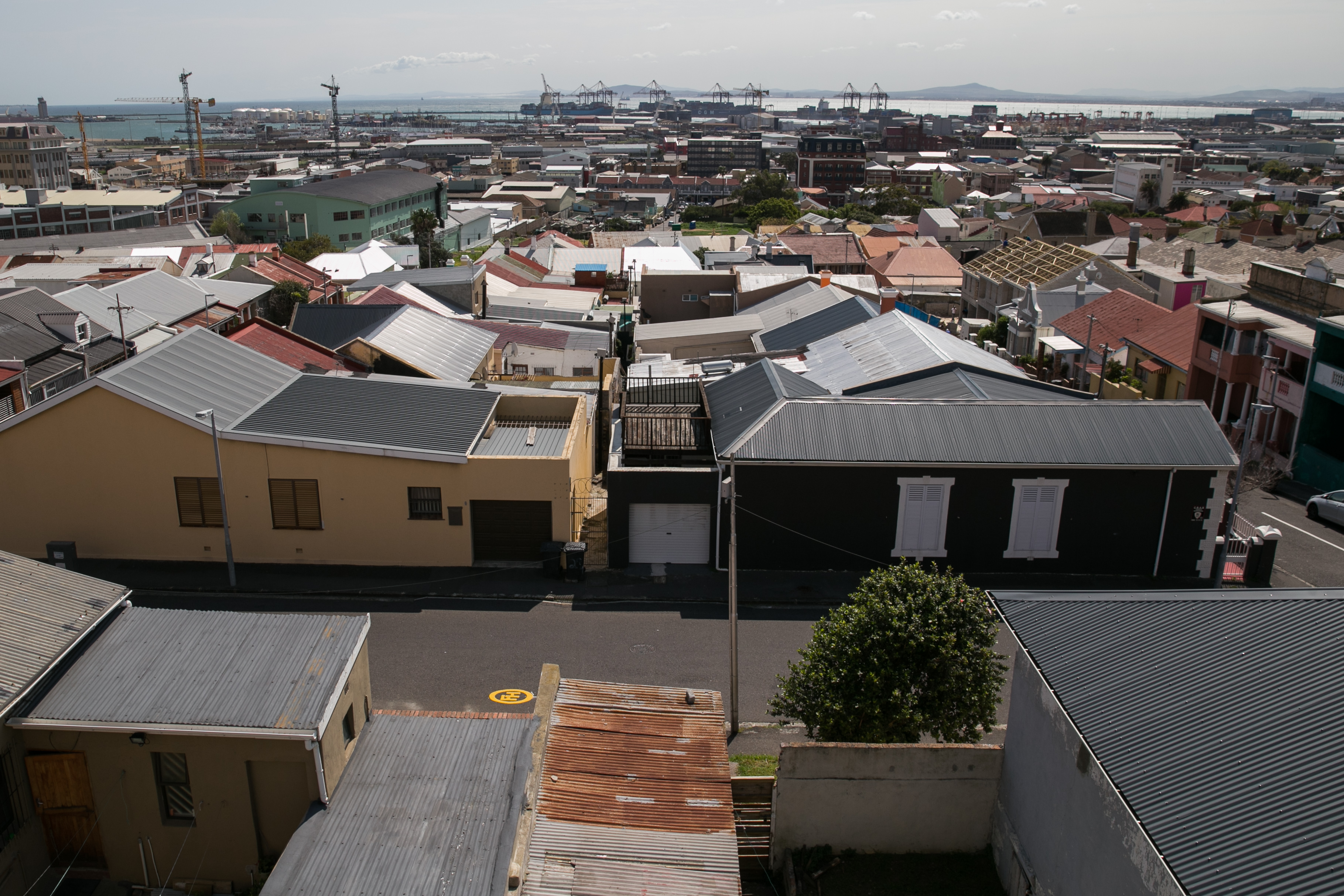
For many households in Cape Town’s inner city, rent is becoming increasingly unaffordable. It remains to be seen whether they will be protected by the City’s affordable housing programme. Archive photo: Ashraf Hendricks
Because the City’s non-subsidised affordable housing does not fall under the Social Housing Act, there is no legislated maximum limit for rental amounts. How affordable the rent will be at these new developments is still unclear.
Carl Pophaim, mayco member for human settlements, said that the affordability range for these housing developments will be distributed across different income scales to reach as many as possible. He said it has been tested through financial feasibility modelling.
“The City will monitor affordability levels within all the developments released … as each also has its own characteristics and feasibilities,” he said.
At the 72-hectare Annandale site along the N7, a proposed mixed-income development is targeting households earning between R3,500 and R34,400 a month. Many residents from nearby Dunoon, who are desperate for housing, are unlikely to benefit.
Horber said communities are right to be worried that they may be excluded, as most new housing on well-located public land will “likely only cater to households at the very upper end of the R3,500 and R34,800 per month range.”
Horber said it is crucial that these developments cater to the working class. He said that rather than pursue the open-market affordable housing model, the City should join advocacy for the national government to increase social housing funding.
“While we do acknowledge the social funding constraints that the City and Province face, there are policy levers that can be used and other sources of public and private funding that can be combined to create deeper-down affordable housing on well-located public land,” Horber said.
In its court papers, the City lists at least four occasions in 2024 in which it had raised the issue of grant funding for its social housing pipeline with the SHRA, including once at a meeting of the national human settlements minister and provincial MECs.
There now appears to be political will to deliver affordable housing in well-located areas, including in the inner city. But without the national capital grants, which are supposed to fund social housing, it has fallen to the private sector to deliver the City’s affordable housing.
This model is yet to be tested at scale, and it remains to be seen whether it will be sufficiently affordable to bring lower to middle-income families into the inner city, and to protect from eviction long-time residents for whom the inner city is becoming increasingly unaffordable.
As Geordin Hill-Lewis bids for a second term as Cape Town mayor, he may find it difficult to convince voters that his affordable housing programme is more than a pipe dream.