22 July 2026
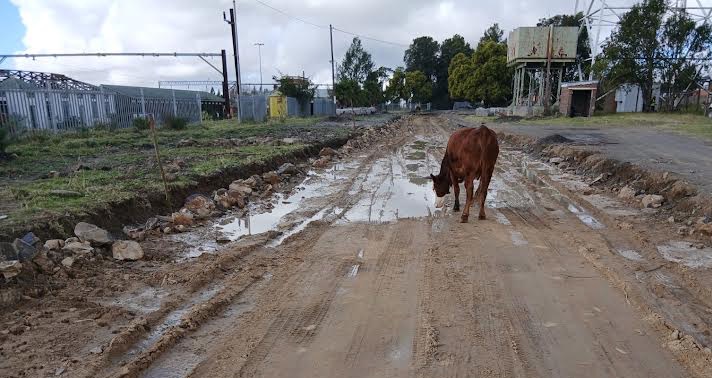
Residents of Amabele are waiting for their road to be paved as promised. Photos: Nombulelo Damba-Hendrik
Nearly nine years after construction began, a sports complex in Mlungisi township outside Stutterheim in the Eastern Cape has still not been handed over to the community.
The project is one of several under Amahlathi Local Municipality that have stalled or been delayed despite millions of rands being spent.
While the municipality says it has improved its financial management after years of instability, residents in several communities told GroundUp they are still waiting for promised projects to be completed.
We visited projects in Mlungisi, Stutterheim, Amabele and Keiskammahoek, where unfinished construction, payment disputes, and project delays continue to frustrate residents.
Construction of the Mlungisi sports complex began in 2017 and was to be completed in 2022. The complex includes a covered netball court with movable grandstands, outdoor seating, fields for soccer and rugby, additional netball courts, changing rooms, toilets, security facilities and water tanks.
Municipal manager Zamuxolo Shasha told GroundUp that only minor work is outstanding and described the project as “practically complete”.
However, the municipality’s 2025/26 mid-year performance report, dated January 2026, states: “45% achieved on the upgrading of Mlungisi sports field.”
Despite repeated requests from GroundUp over several weeks, the municipality has not provided the total amount spent on the project, but municipal annual reports indicate about R8-million was spent between 2017 and 2019. A further allocation of R4-million, which was later increased to more than R11-million, was approved between 2020 and 2021.
Shasha said several contractors had been appointed over the years, but most had failed to complete the work. He said the current administration, which took office in October 2021, had spent close to R10-million bringing the project near completion.
But the complex is already showing signs of neglect. Ceilings are falling down in the bathrooms and the untended fields are full of weeds.
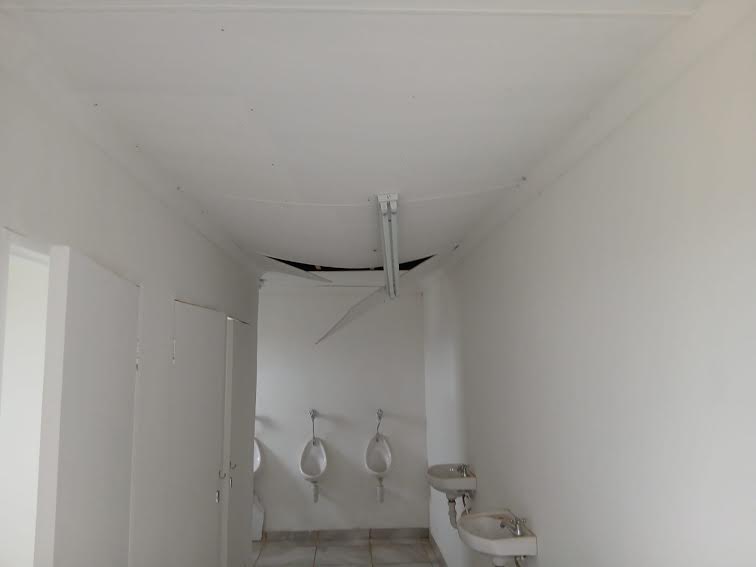
A collapsing ceiling at the unfinished Mlungisi sports complex.
Stutterheim resident Siphosethu Ntshweni said the long delay in opening the sports complex had deprived young people of an important recreational space.
“We used to play there before construction started,” he said.
“Contractors come and go without any explanation. There is very little communication from the municipality,” he said.
He said local football clubs have to use school grounds for training.
A R16-million renovation of the municipal engineering department offices was approved in 2024, according to Sasha. But after R7-million had been spent, it was discovered the building was situated on marshy ground, and the site was deemed unsafe, he said. This was despite geotechnical investigations having been carried out before the renovation began. The entire building had to be demolished.
Sasha said some of the materials bought for the renovation could be used at other projects. Stacks of bricks and steel reinforcement are still visible at the site.
The municipality’s 2025/26 midyear performance report states that only 20% progress has been achieved but the contract was terminated due to poor performance.
The council had resolved to defer the project and remove it from being funded under the Municipal Infrastructure Grant.
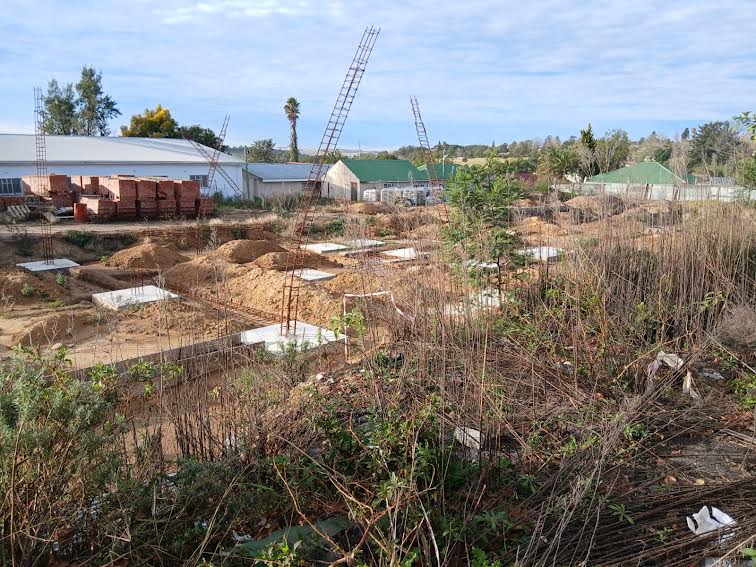
The building site for the reconstruction of the municipal engineering department offices in Stutterheim, which were demolished shortly after R7-million was spent on a renovating them.
African People’s Convention PR councillor Ntombizonke Mjandana said opposition parties had repeatedly questioned expenditure on the building but had never received satisfactory answers.
“When we questioned this in council, we were told the building had cracks and had to be demolished. Later, they wanted additional money from service delivery budgets to continue with the project, and we refused,” she said.
“Millions have gone to waste.”
Shasha said R8-million of the original project budget had been redirected for street paving in Amabele.
When GroundUp visited Amabele last month, the paving project was also incomplete and no contractor was on site. Several workers who live in the area said they had not been paid for months, while others said they had stopped working due to payment delays.
Shasha acknowledged delays in payment, saying this was due to the contractor changing the project’s scope without municipal approval.
He said payment issues have since been resolved, and work had resumed.
Amabele resident Nobuntu Ralarala said the stop-start work on the road had made daily life difficult.
“They dug up the roads and then left,” said Ralarala. “When it rains we struggle to reach our homes because of mud and standing water. The work stops for months, and even the workers don’t know what is happening.”
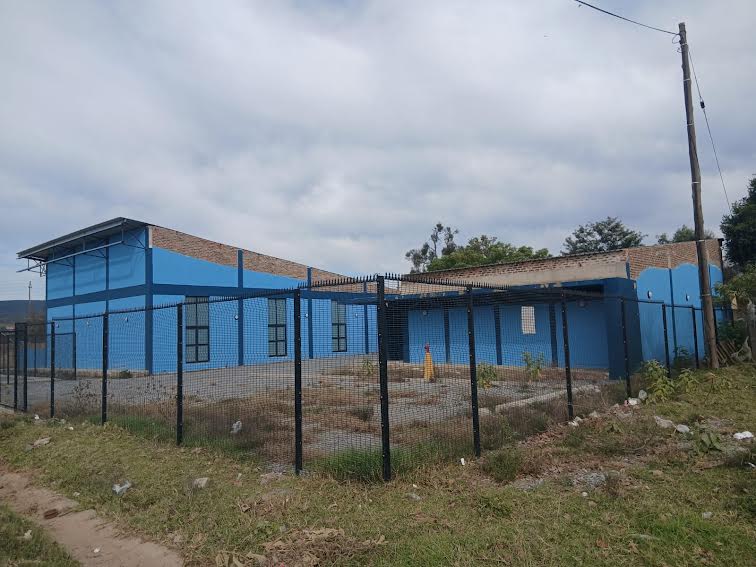
The Keiskammahoek centre, intended to house a library and a community hall, was due for completion in 2024.
In Keiskammahoek, a building intended to house municipal offices, a library, and community hall is still not complete more than three years after construction started in March 2023. It was supposed to be finished by September 2024.
The initial R12-million budget has risen to R15-million, according to Shasha.
“The main challenge was water flowing from the mountain whenever it rained. The contractor first had to build a retaining wall to divert the water, which significantly increased costs,” said Shasha.
“We were promised a library and a community hall,” said resident Phila Dyantyi. “Instead, we still have to hire venues whenever we hold meetings or events. With local government elections approaching, we worry the project will be delayed even further.”
The library and one of the municipal offices were set alight during a protest in April 2018. Another office was destroyed by a storm early last year.
After years of financial mismanagement, Shasha said the municipality has reduced its R94-million debt to Eskom. He said the municipality now pays about R5.8-million each month and expects to settle the debt before the end of November.
“We are not where we want to be yet, but we are getting there. Workers are being paid on time and we have dealt with a number of our debts,” he said.
But debt reduction may be at the cost of repairs and maintenance. The ratio of repairs and maintenance to the value of property, plants and equipment, is 0.6%, according to GroundUp’s calculations from the audited 2024/25 financial statements. (National Treasury’s guideline for this ratio is 8% to prevent breakdowns and interruptions to service delivery.) In the four previous financial years, spending on repairs and maintenance had averaged just under 17%.
Another concern is employee costs. The amount of revenue the municipality was able to collect on its own – from service charges, property rates, interest, licences and permits, etc. – was R122.6-million in the 2024/25 financial year. This was less than what it paid out in salaries and wages (employee costs), which came to R125-million.
The municipality was therefore entirely reliant on the R224-million it received in government grants and subsidies to provide municipal services.
Yet the Auditor-General noted: “Reasonable steps were not taken to prevent fruitless and wasteful expenditure amounting to R4.7-million. Most of this was due to the interest charged by creditors when not paid within 30 days.
This inability to pay creditors within the stipulated time period, along with “an inability to sufficiently maintain, renew and safeguard the municipality’s revenue-generating assets”, were among the reasons the Auditor-General expressed “significant doubt” about the municipality’s ability to continue as a going concern.
The Auditor-General noted that municipal management was taking action to address these issues, such as ensuring it didn’t spend more money than it had, implementing a financial improvement plan, and having council approve a cost containment policy in line with the Municipal Financial Management Act.
