25 March 2026
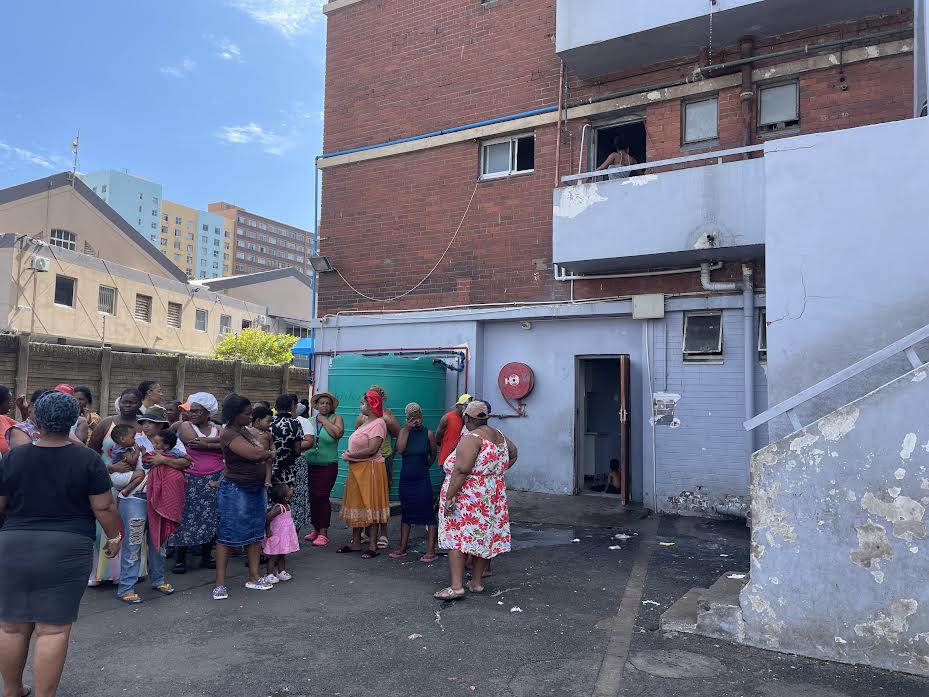
Residents of “temporary emergency accommodation” at Point Road in Durban came out to speak to GroundUp. Photo: Joseph Bracken.
Victims of the April 2022 floods have been living in “temporary emergency accommodation” at Point Road, Durban, since December 2022. They are without electricity because of a disagreement over who should pay.
The residents say the municipality cuts off the power because the landlord has not paid the municipal rates.
However, Xolani Mkhize, the manager of the Point Road building, says the municipality has not paid the owner of the building rent for January or February.
When GroundUp sought clarity, Gugu Sisilana, municipal spokesperson, said the municipality does not discuss customer account details with third parties.
Sisilana said the issues would be sorted out through “relevant provincial departments and directly with property owners”.
Resident Nomvula Mafu said families have resorted to paraffin stoves and sometimes firewood to cook.
“We just want our own houses now because we have been living here for a very long time. Electricity is always a problem here. They do not even issue notices when they cut the power,” said Mafu.
A few residents have made informal connections to neighbouring buildings.
At a media briefing earlier this month, when GroundUp asked about power being cut to emergency accommodations, Sandile Mnguni, municipal chief financial officer, said electricity had been restored to most of the emergency accommodation buildings. He said a team from the provincial human settlements department was working with the municipality to settle outstanding payments and restore power to the rest.
The eThekwini Municipality Annual Report for the 2023/24 financial year states that total grant funding for temporary shelters for flood victims was R 35.3-million. An amount of R15.66-million was committed for the 2024/25 to 2026/27 financial years. It is unclear whether this includes paying for rent and services for the families in temporary housing.
