9 June 2026
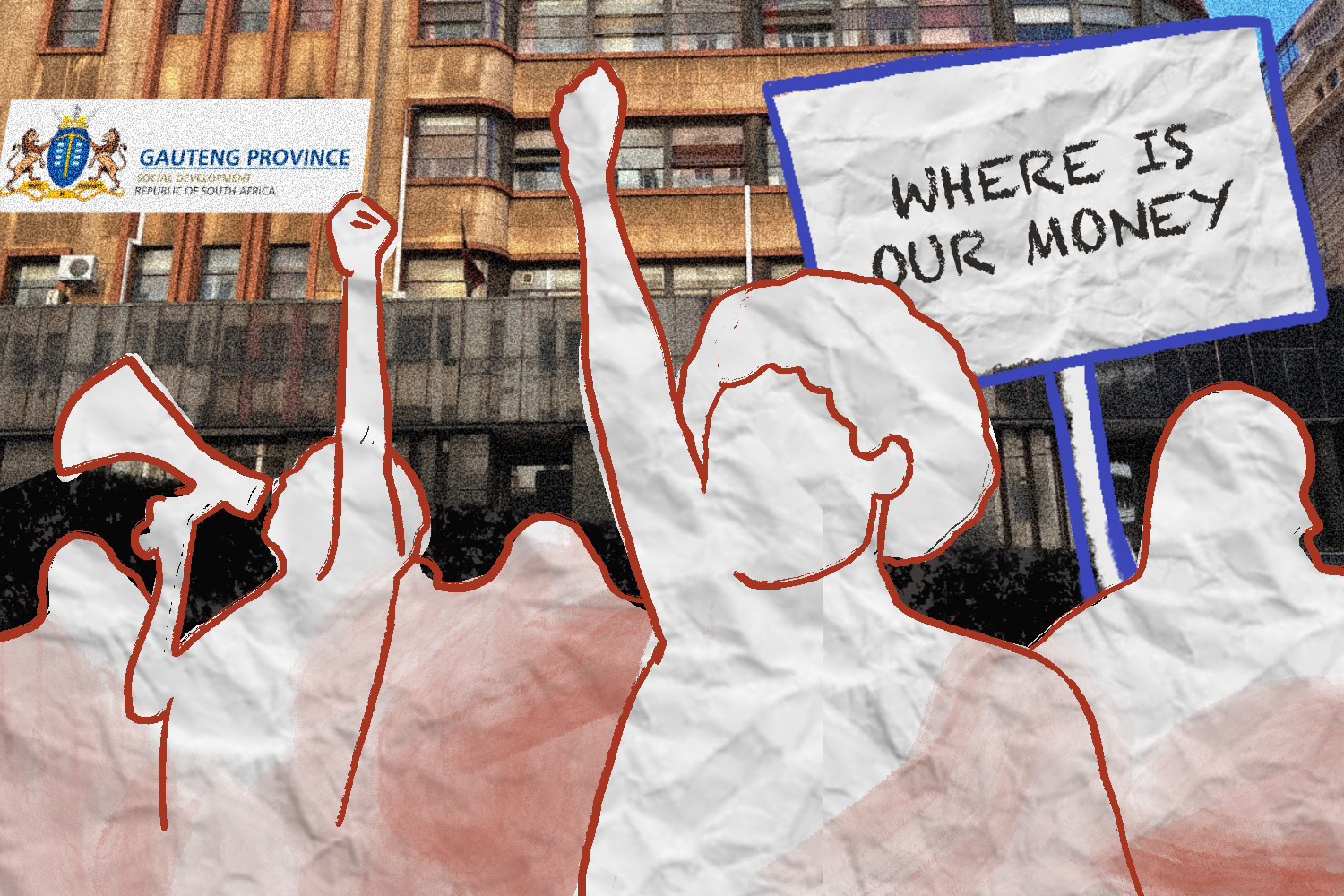
The Gauteng Care Crisis Committee has warned that delays in payments from the provincial social development department to non-profit organisations have put at least 542 jobs and 8,485 beneficiaries at risk. Illustration: Lisa Nelson
The Gauteng Care Crisis Committee (GCCC) has warned that delayed payments from the provincial social development department (GDSD) to service providers have placed at least 542 jobs and 8,485 beneficiaries at risk.
At a provincial portfolio community meeting in Benoni on Tuesday, the recently appointed social development MEC Nomantu Nkomo-Ralehoko blamed the delays on budget cuts and application errors.
The GDSD has a R5.63-billion budget for 2026/27. It was R5.58-billion for 2025/26.
The MEC said she had brought department directors from each region to the meeting to “feel the pain and correct the wrong, because we can’t keep on doing not what you expect us to do”.
GCCC, which represents about 160 organisations, warned of an administrative and financial crisis affecting organisations across the province.
Delays in processing subsidy applications, signing agreements and issuing payments prompted more than 300 organisation representatives to picket outside department offices on 22 May.
The GCCC says business plans were submitted in October 2025 already, and the provincial budget was finalised in March 2026, yet many organisations remain without decisions.
As of 4 June, GCCC knew of 29 organisations waiting for agreements or payment.
GCCC chairperson Lisa Vetten said 12 organisations had been rejected and 14 deferred to a budget committee.
The committee says many rejected organisations are unable to appeal because the department has failed to issue formal “regret letters”.
The crisis committee says the impact of the delays is already being felt:
At Tuesday’s meeting, department head Phumla Sekhonyane said there “is no silent service delivery collapse. The department has funded and paid first-quarter tranches”.
According to the department’s latest figures, 1,307 SLAs had been signed, 1,297 processed for payment, and 1,147 paid.
“Progress has been made since then,” said Sekhonyane.
Nkomo-Ralehoko said that organisations that have not yet received funding have “problems and those problems are not with us”.
She said some organisations were “not meeting the criteria” and that the department was assisting them.
“We are not turning them away … We are helping them correct mistakes,” she said.
“There are also those cases where there was a budget cut,” said the MEC. “We don’t have money … Our budget was cut, and we want the legislature to recommend that we get our money back.”
GDSD acting chief financial officer Caroline Ntsoane said social welfare services had received a 0.47% increase, while children and families programmes saw a R202-million decrease.
The MEC said her department has made presentations to the Treasury.
“Maybe fault was on our side, but we submitted all the necessary documents so that by November, they will give us our money,” said Nkomo-Ralehoko.
Provincial portfolio committee chair for social development, Tlou Chokoe said, “Remember, there are beneficiaries who are suffering”. He noted that NGOs are generally stretched during April before the new cycle of payments in May. “So you can imagine the situation for NGOs not paid by June,” he said.
She said the department had commenced with the planning process for appeals.
