8 April 2026
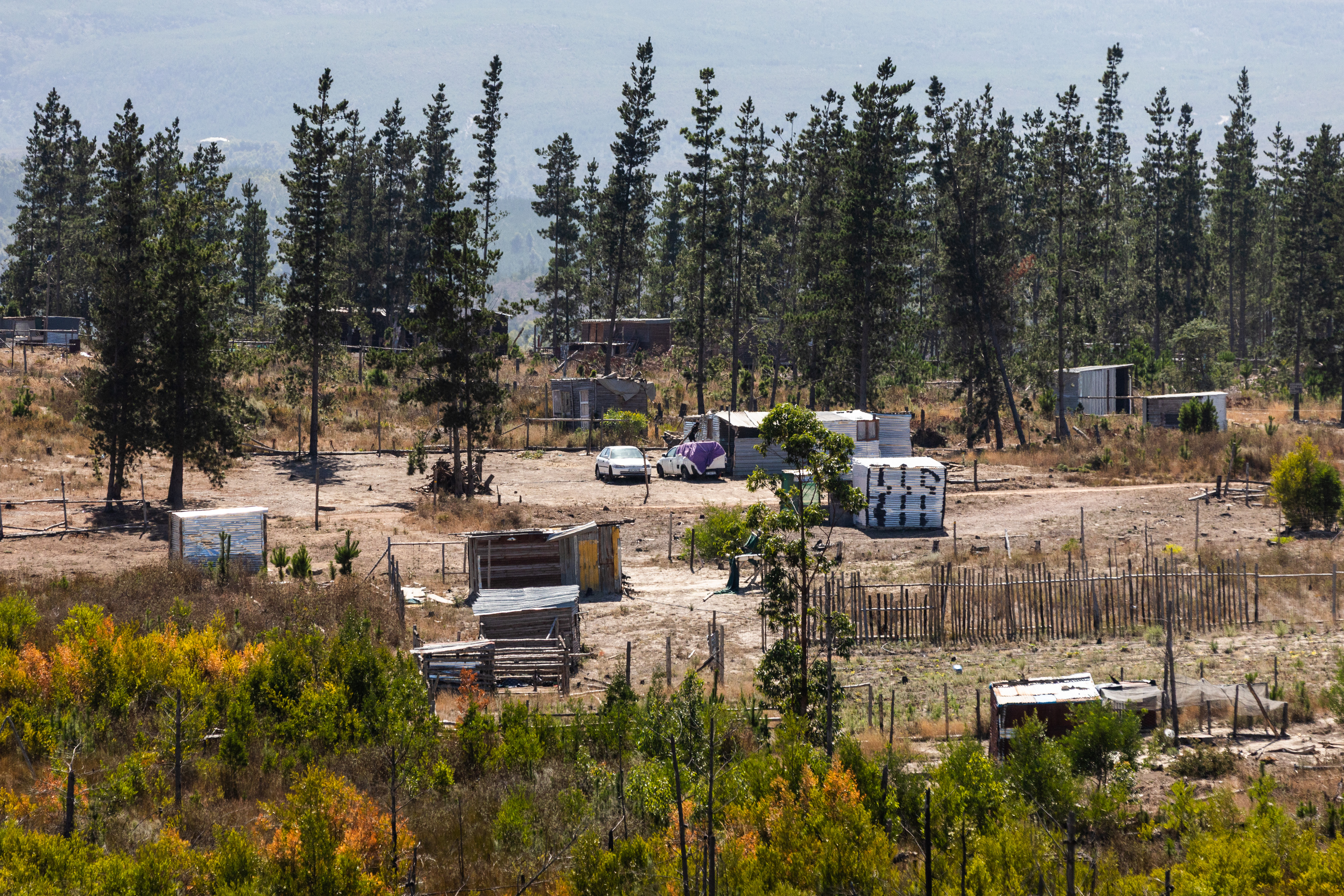
Homes erected in the informal settlement of Knoflokskraal in Grabouw in March 2025. Photos: Ashraf Hendricks
The Department of Public Works intends to go to court to try and contain the burgeoning of a self-proclaimed Khoisan settlement called Knoflokskraal in Grabouw in the Elgin Valley.
In a media briefing on Tuesday, public works minister Dean Macpherson said the government had tried to engage the leadership of the land occupation but had failed to “restore order”.
The occupation started in 2020 during the pandemic, with the intention of establishing a self-sustaining Khoisan community.
Since then it has grown significantly to an estimated 4,000 structures and between 15,000 to 20,000 people living on about 1,800 hectares of land, according to the public works department.
Macpherson said R41.4-million has been spent by the department on the occupation.
GroundUp reported on the initial occupiers, who saw Knoflokskraal as a reclamation of their indigenous heritage, and previously reported on small-scale farmers and various businesses had opened in the occupation.
Macpherson said that the department is finalising its submission to the Western Cape High Court to expand a containment order granted in 2021. That interdict was supposed to prevent more structures from being built.
“Public land cannot simply be surrendered to lawlessness and intimidation … The current situation cannot continue,” said Macpherson.
He said despite the containment order, several businesses had emerged, such as a restaurant, a flea market, and even a bed and breakfast, operating on popular accommodation booking site LekkeSlaap.
He said the department plans a structured approach to “restore the rule of law” after “repeated engagements” with the community had not resulted in anything “concrete”. This would involve formalised control over points of entry to Knoflokskraal, monitoring movement with aerial mapping, profiling residents, collecting socio-economic information, and engaging with the leadership.
The department plans to distribute pamphlets at access points to residents to allow them to provide direct feedback, anonymously if needed. He said this would help the government “to distinguish between those who may be vulnerable and those who may be exploiting the situation”.
Infrastructure MEC Tertuis Simmers said the containment order is not an eviction but is “about stabilising the situation before it becomes further entrenched”.
Theewaterskloof Municipality Mayor Lincoln de Bruyn said the matter was “complex” and “deeply important”. He said the occupation has “real and immediate humanitarian needs that cannot be ignored”.
“This has placed significant pressure on the municipality. Unplanned growth of this nature requires us to stretch already constrained resources,” said de Bruyn.
He said the municipality has provided water and refuse collection where possible.
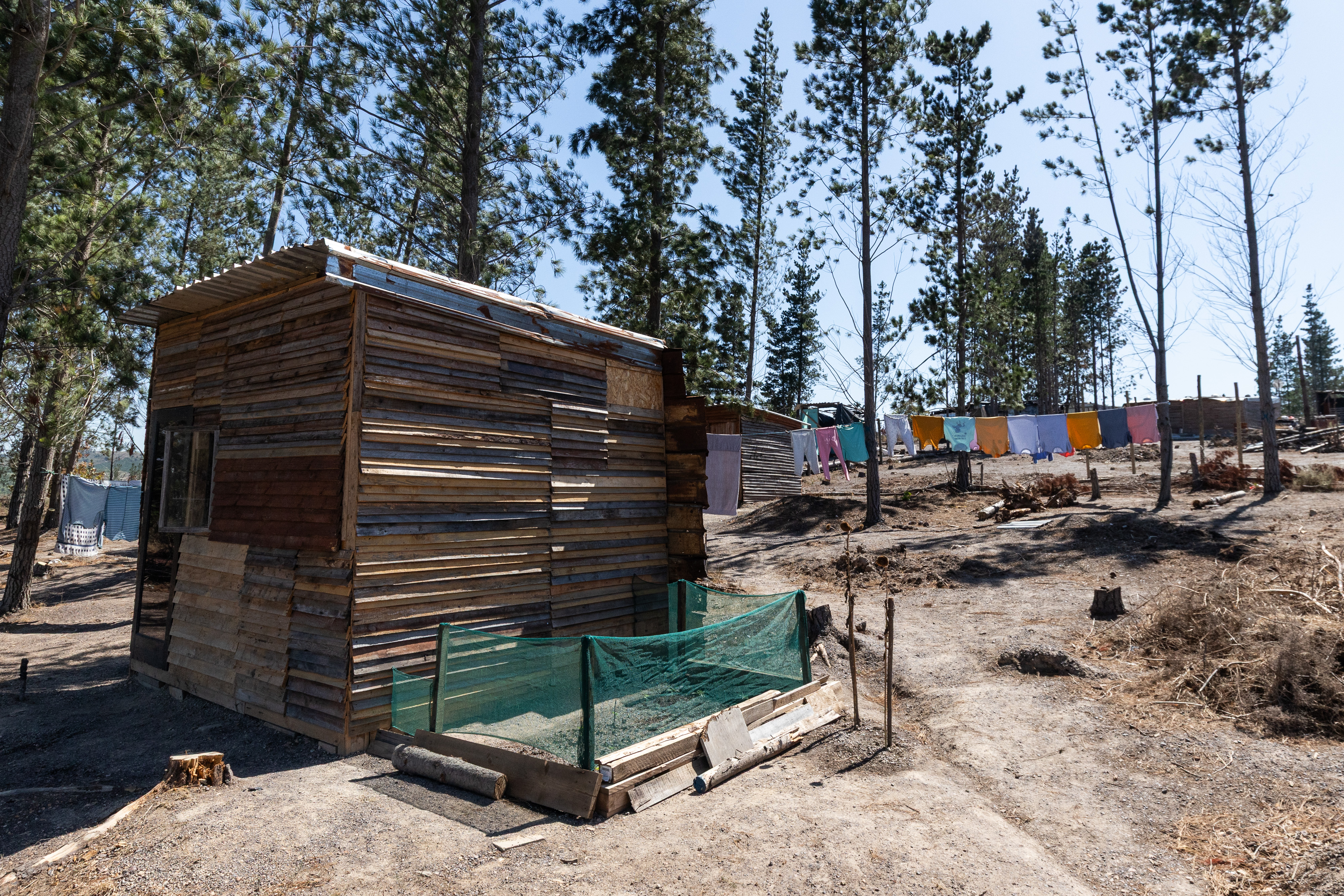
A home in Knoflokskraal photographed in March 2025.
Law enforcement would also be deployed, since “criminal cases have been opened over a number of years, yet progress has been limited and feedback insufficient,” Macpherson said.
He said the police minister had been requested to provide “a comprehensive update on investigations linked to Knoflokskraal”.
According to Macpherson, the government had received allegations of criminal activity, including drugs, harassment of officials, reports of shootings, illegal construction, abalone-related criminal activity, and allegations that the settlement is used for the movement of drugs and weapons.
He said “among the most disturbing allegations” are those related to the subdivision and sale of land, sometimes for amounts as low as R1,500.
“What we are seeing is the exploitation of vulnerable people, individuals who may believe they are securing land, when in reality they are being sold something that no one has the legal right to sell,” said the minister.
Macpherson said that public engagements with the Knoflokskraal community would begin next month.
Omar Sadien, chairperson of the United Knoflokskraal Khoi Council and paramount chief of the Aficaner tribe, said the residents of Knoflokskraal are “land reclaimers” and not “land invaders”.
“I am reclaiming on behalf of my people,” he said.
Sadien told GroundUp that their engagements with the department have been “in good faith and is ongoing”. He said allegations of criminal activity in Knoflokskraal have been exaggerated.
