25 June 2026
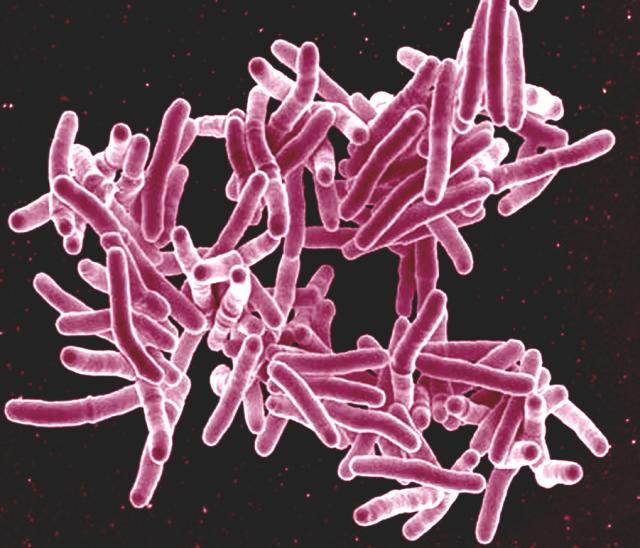
South African and American researchers have published the results of a successful drug trial to treat TB bacteria (pictured). Photo: NIAID via Wikimedia Commons (Creative Commons Attribution 2.0 Generic license).
Not only have South Africans shown excellence in soccer over the past 24 hours, they’ve also done so in medical science.
A team of researchers from Wits, UCT, and various American institutions published a study in the New England Journal of Medicine, the world’s leading medical journal, that improves the treatment of tuberculosis (TB).
TB has been infecting and killing humans for at least 9,000 years, and possibly much, much longer. Since the 1940s, the disease has been treatable with antibiotics. But scientists are in a constant battle with the bacterium, as it evolves resistance to the best current medicines. About 50,000 people die of TB in South Africa annually.
Also, TB treatment is long. Most people need six months of treatment, using four drugs. But people infected with drug-resistant strains typically need to be treated for nine months, or longer.
The longer you have to be treated, the more side-effects you will likely have; TB treatment is no picnic. A longer time on treatment with more side effects means there’s a greater chance of you not completing your treatment. That increases the risk of you becoming resistant to the medicines.
A key aim of TB research is to find new, shorter treatment regimens. The more options, the better, because different patients are resistant to different drugs.
A key TB drug since the 1970s has been rifampicin. But many patients have TB strains that are resistant to it. With the BEAT TB trial, published on Wednesday, 24 June, Francesca Conradie of Wits and her team have proved the effectiveness of a new six-month regimen for treating rifampicin-resistant patients.
Over 400 volunteers were randomly assigned to either receive what was the nine-month standard of care regimen at the time the trial was fully enrolled (October 2023), or the researchers’ new six-month regimen containing bedaquiline, linezolid, delamanid, and either levofloxacin or clofazimine. (Bedaquiline and delamanid are relatively new drugs, approved for drug-resistant TB since 2012.) Both groups did nearly identically well, with 86% having a successful TB-free outcome. Ten people died in each group (often TB patients are very ill at enrolment).
This was a pragmatic trial, meaning it took place in routine health facility settings, not in the idealised environment of most clinical trials. Conradie explained to GroundUp: “What was unusual about this study is it was pragmatic and enrolled a similar population to those who are diagnosed and treated in South Africa. Half were people with HIV. More than half were underweight, and very few of the usual exclusionary criteria were in place such as homelessness and substance abuse.”
Since the trial was enrolled, the standard of care has been changed to an effective and similar six-month regimen: bedaquiline, linezolid, pretomanid, and levofloxacin (i.e. pretomanid instead of delamanid and, for some patients, levofloxacin instead of clofazimine). But pretomanid is not recommended for children under 14 or pregnant or breastfeeding women. Also, some patients are resistant to levofloxacin.
In contrast, the researchers’ new regimen has been proven to be safe for children under 14 and pregnant or breastfeeding women.
Conradie explained that this is the first time children and breastfeeding women have been enrolled in a rifampicin-resistant TB trial. “These populations are, maybe, at even greater risk than the general population for TB disease and now we have data on them too,” she said.
Francois Venter, an HIV clinician at Wits but not an author of the study, told GroundUp: “This is remarkable work: South African researchers transforming TB care, making it steadily safer and simpler, through world-class research. The absolute tragedy is that the international funding agency behind this is extinct, thanks to the Trump cuts. Our own government has not plugged a fraction of that gap.”
Venter was referring to the fact that the study was funded by USAID, a US government institution that has been gutted by the Trump regime and might be closed down later this year.
Drug-resistant TB is a global problem, including in the United States, and studies like these are useful to people well beyond South Africa’s borders.
