31 July 2026
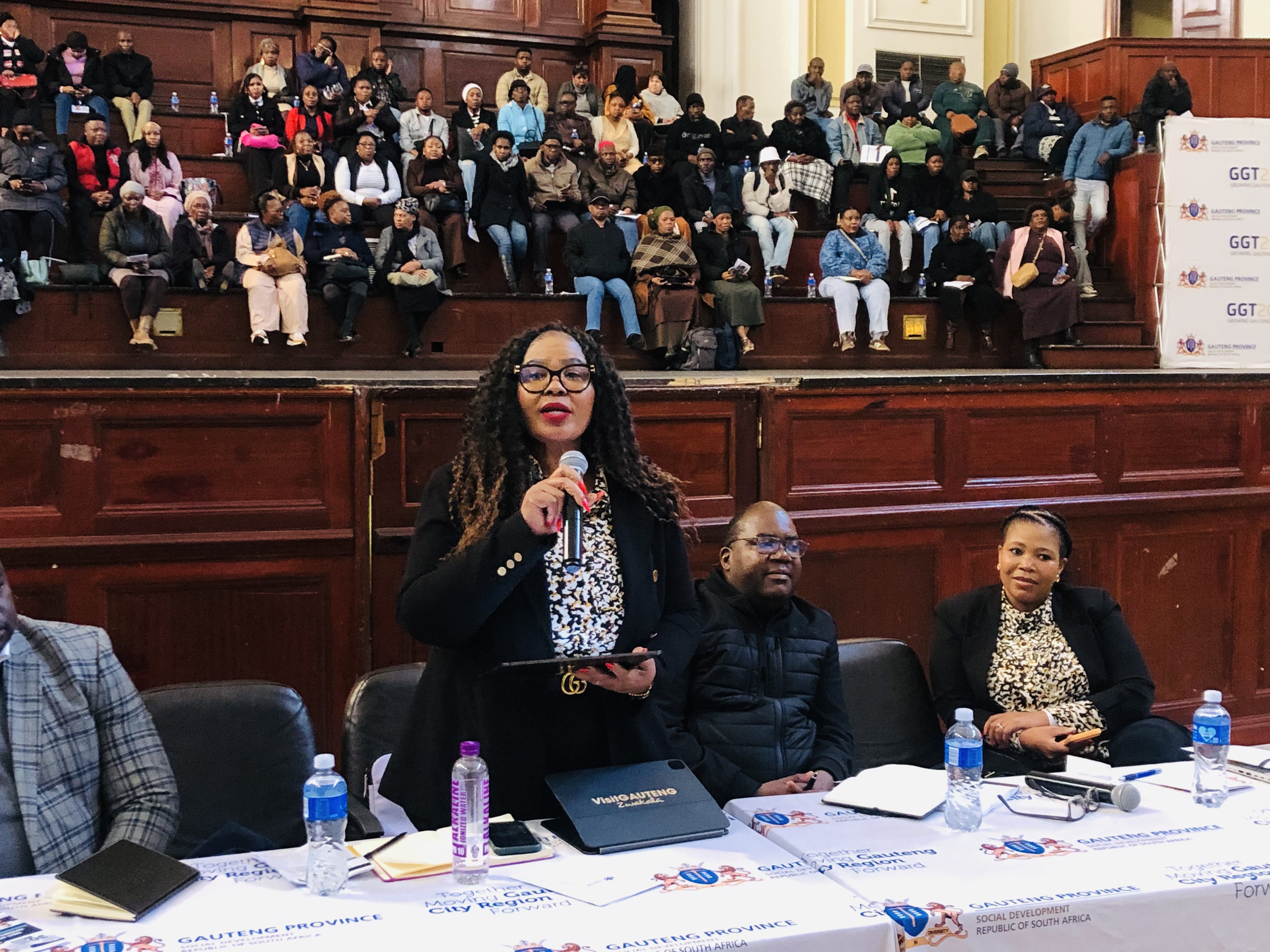
Gauteng Social Development MEC Nomantu Nkomo-Ralehoko addresses representatives of non-profit organisations at the Johannesburg City Hall on Thursday. Photo: Kimberly Mutandiro
Delays in subsidy payments by the Gauteng Department of Social Development are stretching the resources of social welfare organisations caring for the province’s most vulnerable people. In some cases, staff members have gone unpaid.
Tsepong Old Age Centre in Vereeniging, Sedibeng Region, provides breakfast, lunch and social activities for about 50 older people every day. Activities include knitting, sewing, games and other activities.
Centre manager Fedile Kubheka told GroundUp that their subsidy was late for the first quarter of the financial year, which started on 1 April. The subsidy for the second quarter, which started on 1 July, has not yet been paid. The organisation had no money for staff salaries this month, and did not have enough money to buy food for its beneficiaries.
Child Welfare’s Gelukdal/Tsakane branch — which handles cases of neglected or abandoned children, runs foster care supervision services, and assists in reunification and court-sanctioned parenting plans — only received its first quarter subsidy on 21 May, forcing staff to go without salaries in April, according to centre manager Melinda Cupido. They have not yet been paid for the second quarter.
In certain cases, payment delays make it difficult for organisations to spend their allocated funds in full by the end of each quarter. The department expects organisations to refund unspent funds. At the same time, the contracts prohibit organisations from taking out loans.
At a meeting with hundreds of representatives of organisations at the Joburg City Hall on Thursday, the director for NPO funding, Lerato Bob, confirmed that R246-million had been paid to organisations so far this quarter. This is less than half the budget for the quarter.
Bob said that it takes six to seven weeks for the department to pay the quarterly tranches to honour the 1,635 contracts the department has with compliant organisations (some organisations have more than one contract for different programmes). Bob claimed that the department does not have sufficient funds to pay all organisations at the same time because the provincial treasury releases funds to the department in weekly tranches.
GroundUp has not been able to verify Bob’s claims, and they appear to be inconsistent with previous comments from the department that there are no funding challenges. This article will be updated with comment from the provincial treasury when received.
There are also 79 contracts with organisations that are not fully compliant, bringing the total number of contracts to 1,714. “It’s impossible for any government entity to pay 1,714 contracts at the same time … the system would collapse,” said Bob.
Some of the “non-compliant” organisations have also raised concerns about the lack of support they receive from the department to become compliant. For example, Lifeline Vaal’s funding has been withheld due to not all staff members having been vetted against the sexual offenders register. The organisation says it is a costly and inefficient process. One board member received a firearm licence instead of a clearance certificate, four months after applying.
During a question-and-answer session at Thursday’s meeting, many organisations raised concerns about delays in being approved for funding, cuts to budgets for essential services, the shortages of food parcels supplied by the department, and that there have been no pay increases since 2023.
Some organisations said there have been system glitches when submitting applications online and bureaucratic challenges hindering the compliance process.
MEC Nomantu Nkomo-Ralehoko addressed the crowd, promising to reintroduce three-year contracts.
Three-year contracts were previously the norm, but this was cancelled in 2024 supposedly because it did not comply with funding regulations. Other provinces, like the Western Cape, fund organisations on a three-year basis.
Nkomo-Ralehoko urged organisations to meet all compliance requirements. She said the department had now introduced online compliance guidelines and will be making weekly visits to all organisations in Gauteng starting next week.
