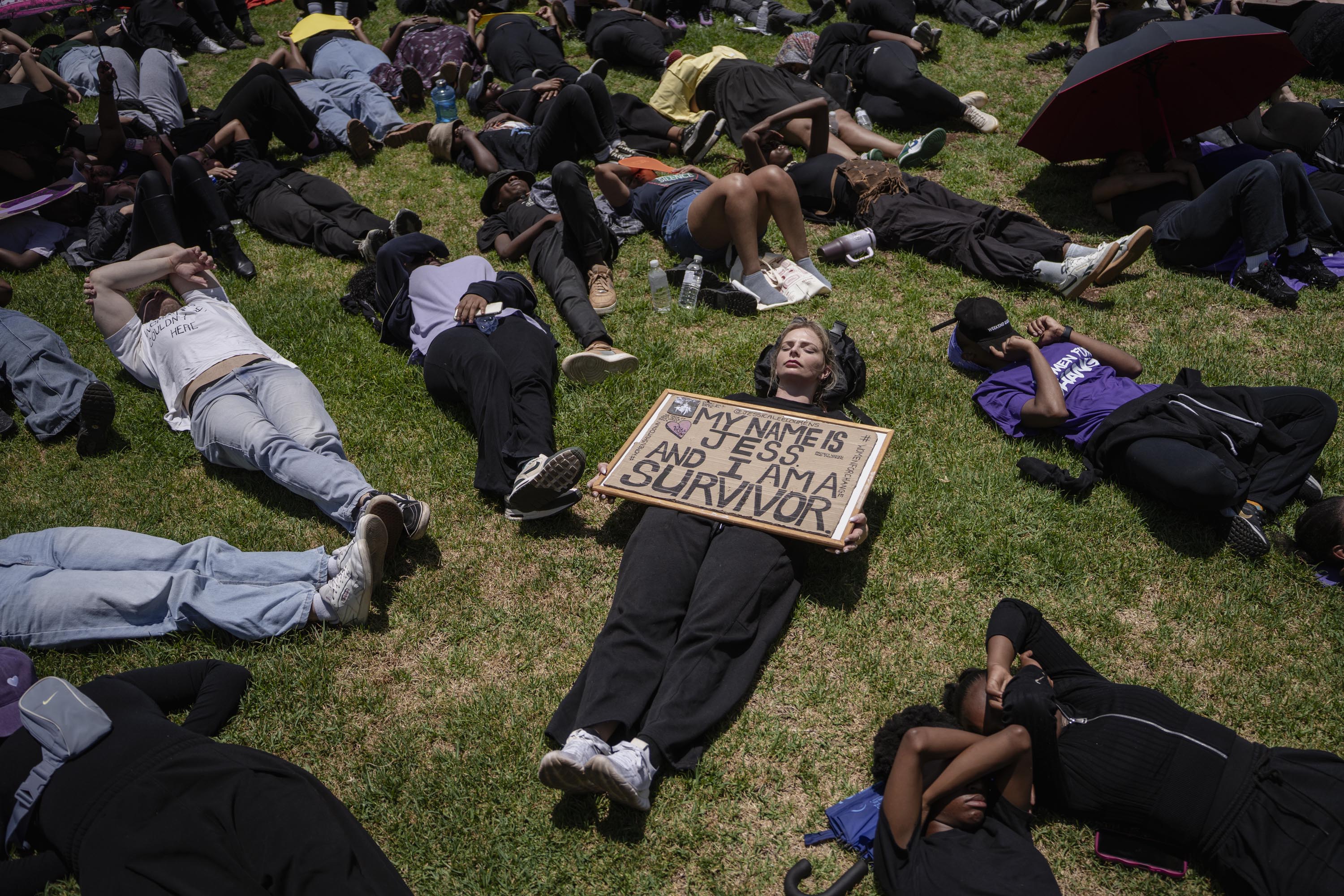
21 November 2026
Protesters lie down at Constitutional Hill for 15 minutes in remembrance of the approximately 15 women murdered every day in South Africa. This symbolic action forms part of a nationwide protest on Saturday against femicide. Photo: Ihsaan Haffejee
It’s been a year since gender-based violence and femicide (GBVF) was classified a national disaster. Crowds, led by Women for Change, took to the streets across the country on Saturday in protest.
“Women and children continue to experience violence, and serious concerns remain about the effectiveness of the institutions and measures intended to protect them. Despite this classification, South Africa still lacks a publicly accessible, fully costed national disaster implementation plan, supported by a dedicated budget and clear accountability,” the movement said in a statement.
In Braamfontein, Johannesburg, marchers, wearing black and purple, carried a casket filled with the names of victims still waiting for justice. The crowd, from the very young to the elderly, ended the march at Constitutional Hill where they handed a memorandum to Minister of Women, Youth and Persons with Disabilities, Sindisiwe Chikunga.
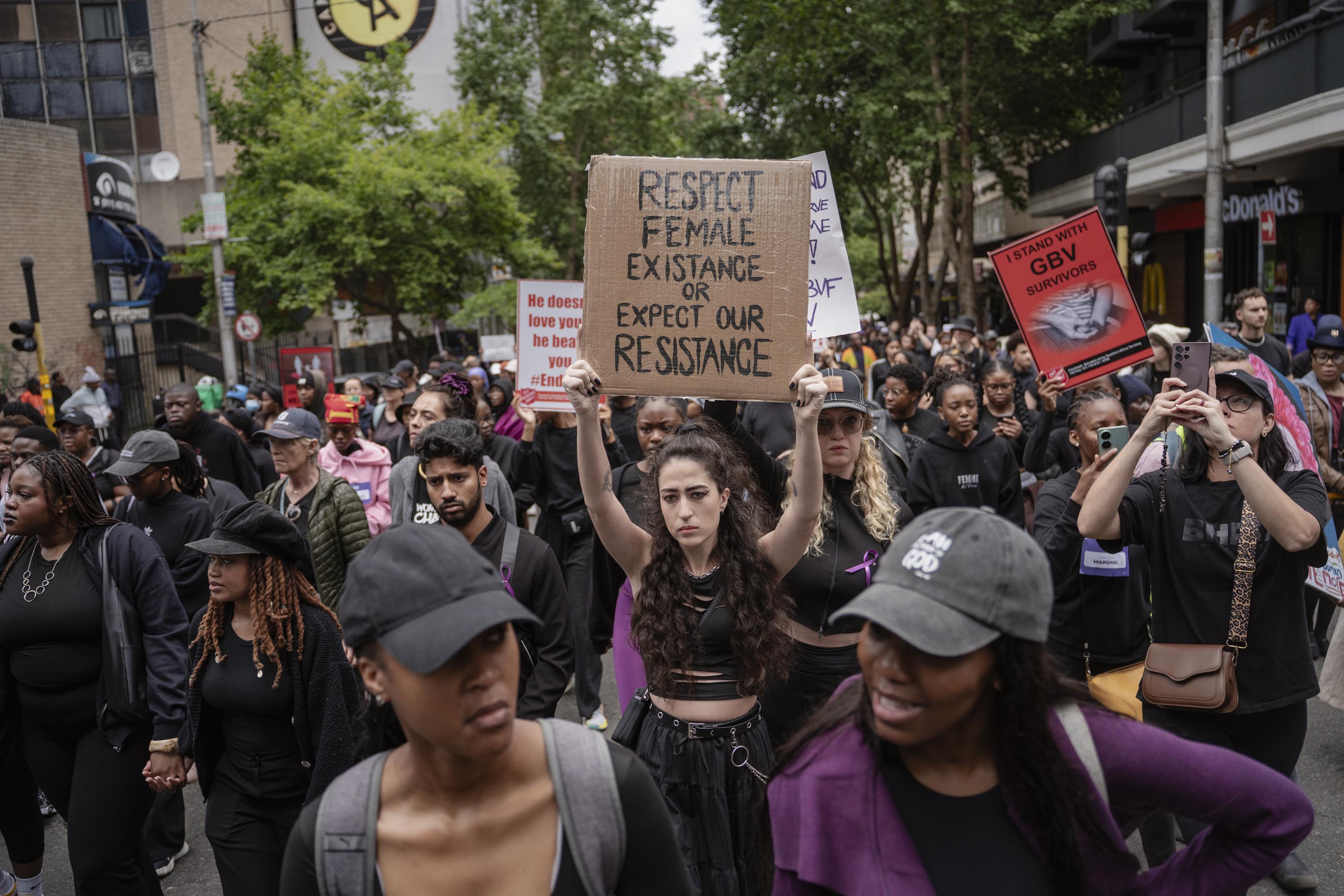
Marchers say they are demanding accountability and action. Photo: Ihsaan Haffejee
“Where is the implementation? where is the budget? and who is accountable?” asked Women For Change (WFC) founder Sabrina Walter. The movement’s petition for the GBVF classification garnered over 1.1-million signatures.
“How many times must we gather and mobilise? and how many times must we say that enough is enough?” Walter asked. “What does freedom mean if we cannot go for a run in our neighbourhoods, and what is dignity if we are not believed at a police station?”
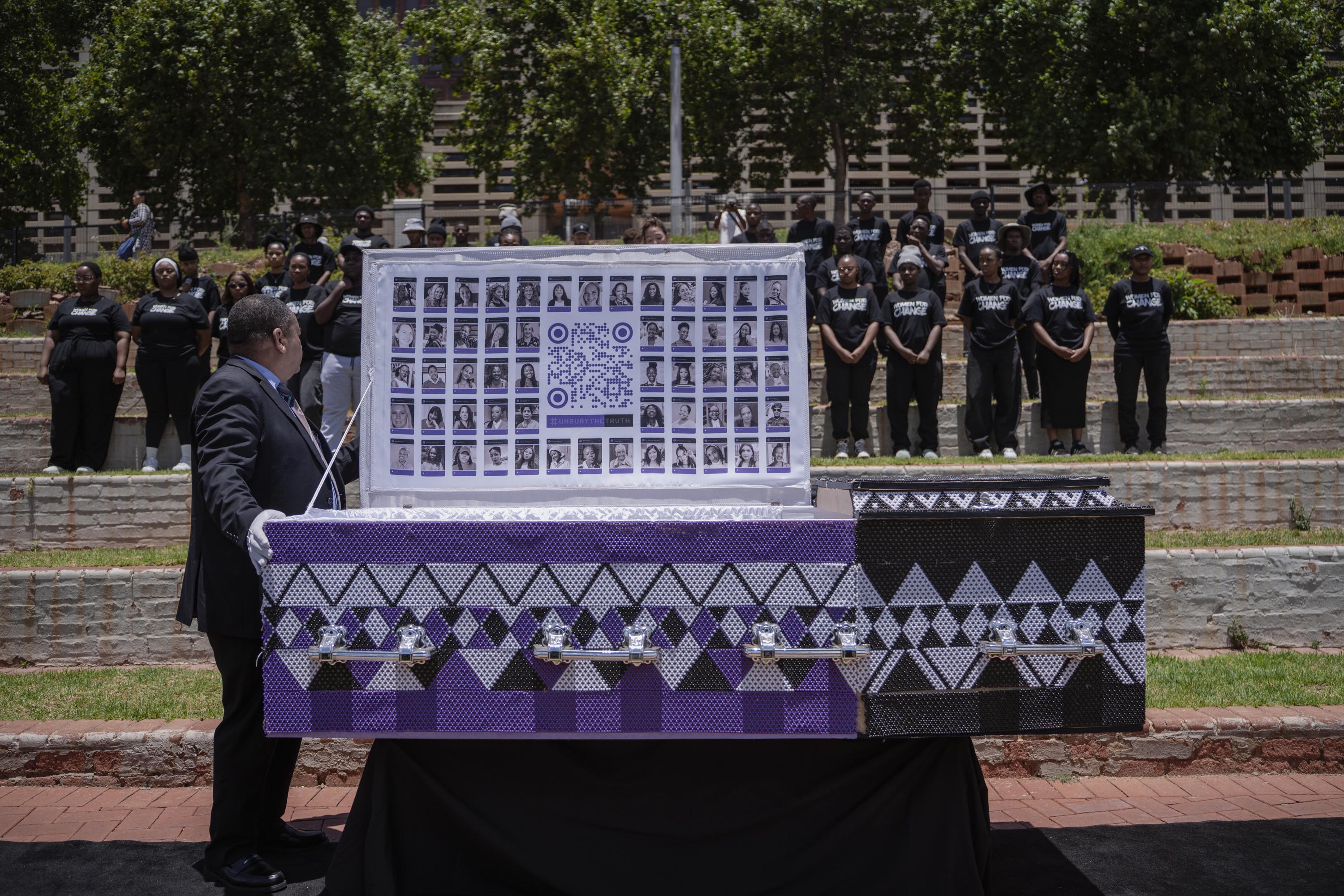
A casket was filled with the names and photographs of victims of gender-based violence. Photo: Ihsaan Haffejee
At midday, people lay in silent protest for 15 minutes as artist Zolani Mahola read out the names of women and children murdered since 20 November last year. She could not read all the names.
On Friday, the South African Police Service (SAPS) published its second quarter crime statistics for 2026/27 (July to September 2026). Police recorded the murders of 581 women and 149 children. Reports of rape came from 5,116 women and 4,362 children. These account for majority of reported rape cases.
Acting police minister Firoz Cachalia said police must improve their responses, protect survivors, strengthen investigations and ensure dockets are properly prepared. “There must be greater efforts to prevent this violence from occurring in the first place,” he said. “We all need to take responsibility for challenging… attitudes that normalise abuse.”
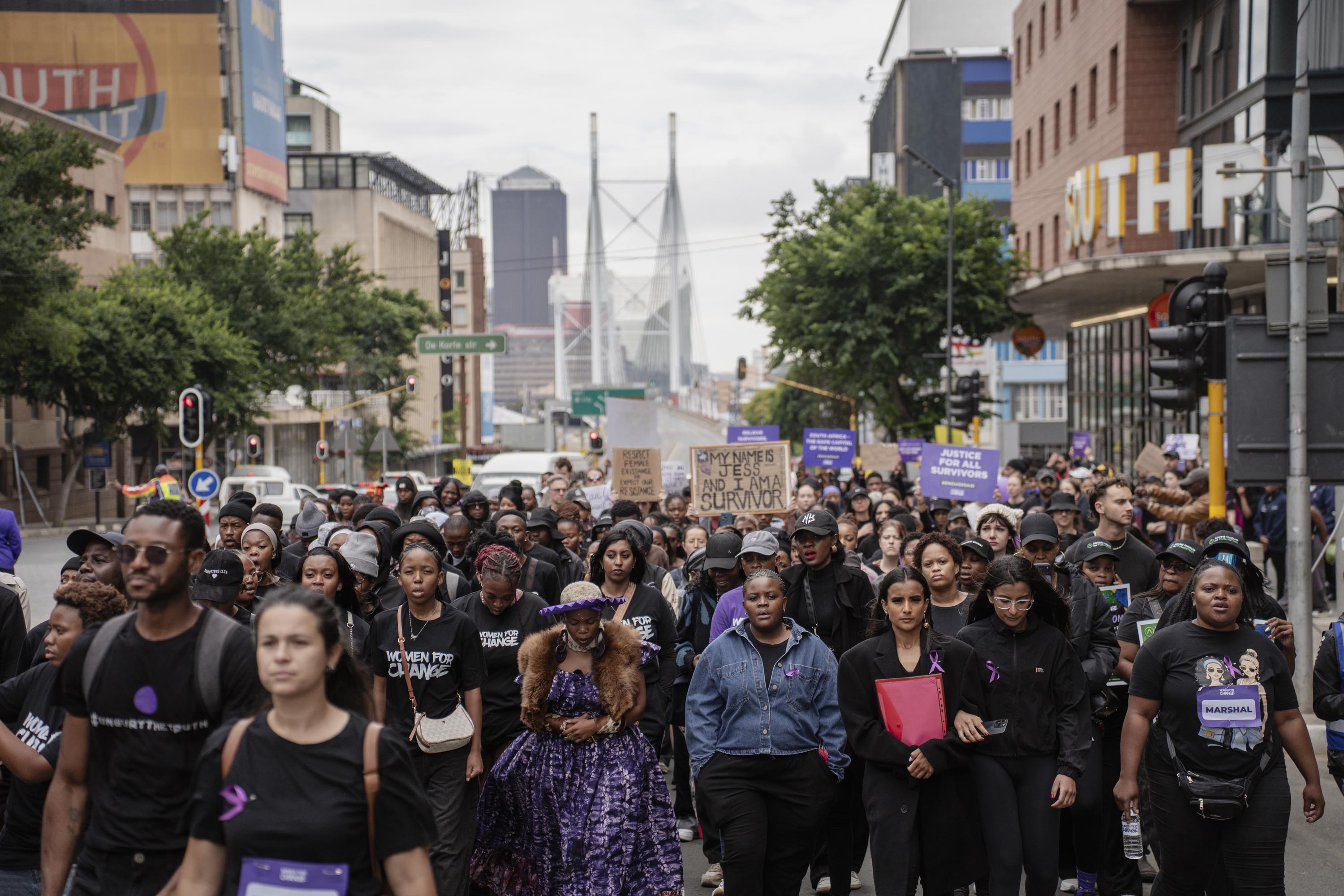
Hundreds of people, under the banner of Women for Change, march through Braamfontein as part of the nationwide protest demanding implementation, funding and accountability in the fight against gender-based violence. Photo: Ihsaan Haffejee
WFC’s memorandum calls on the Presidency to publicly account for the implementation of the country’s GBVF commitments. It demands a fully costed, time-bound plan with transparent funding, clear institutional responsibilities and accountable leadership.
The plan must include measurable 12-month targets, complete femicide and child murder statistics for 2024/25 and 2025/26, and quarterly public progress reports with independent oversight.
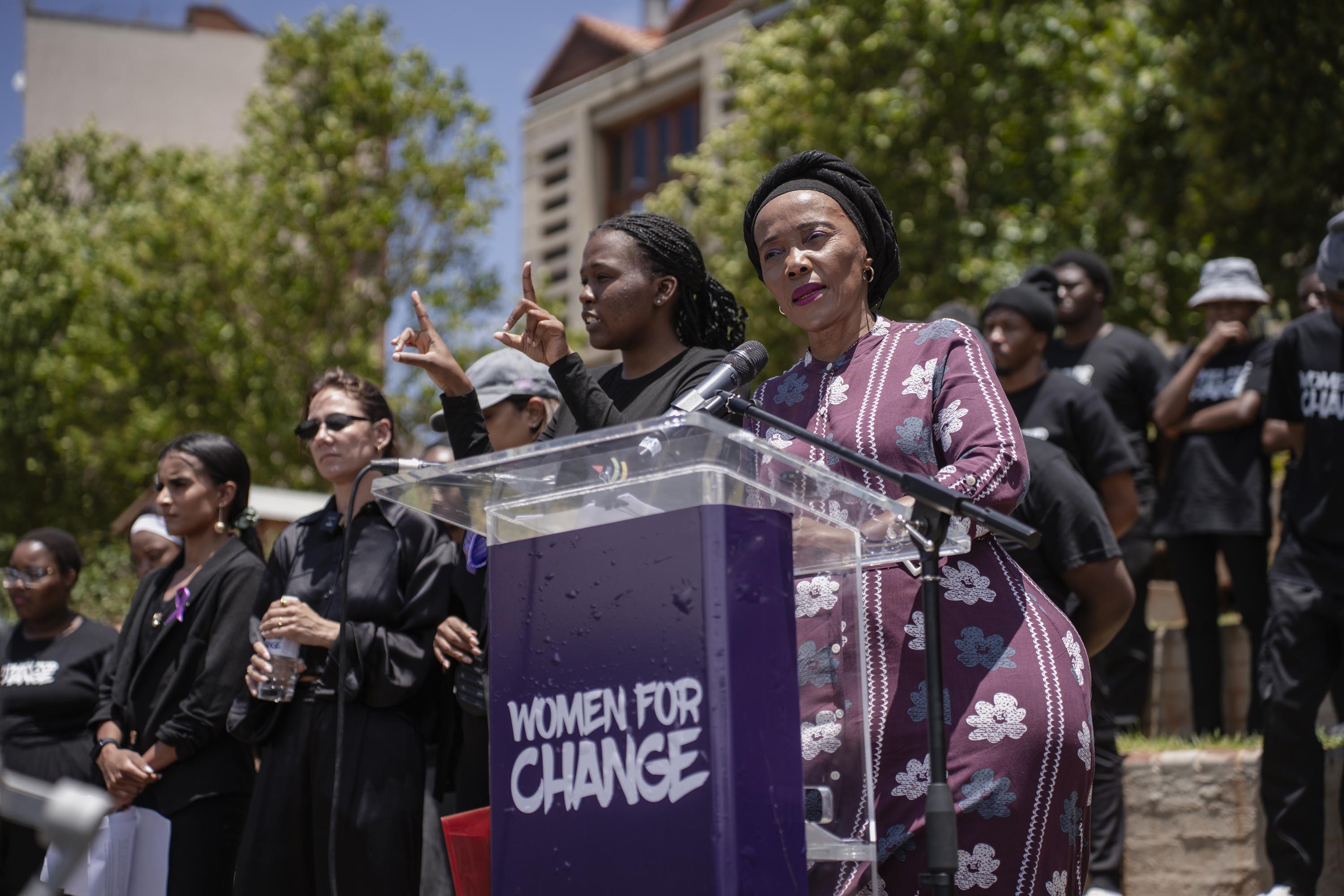
Sindisiwe Chikunga, Minister in the Presidency for Women, Youth and Persons with Disabilities in South Africa, addressed protesters on Saturday but did not receive a warm welcome after she called gender-based violence a ‘complicated issue’. Photo: Ihsaan Haffejee
Addressing the protesters, Chikunga said government is “taking the matter seriously”, with meetings convened. She committed to responding to the memorandum within 30 days.
Dozens in the crowd were unhappy with her address, expressing their frustration with government and chanting “release the lists”, a call for the sex offenders register to be made public.
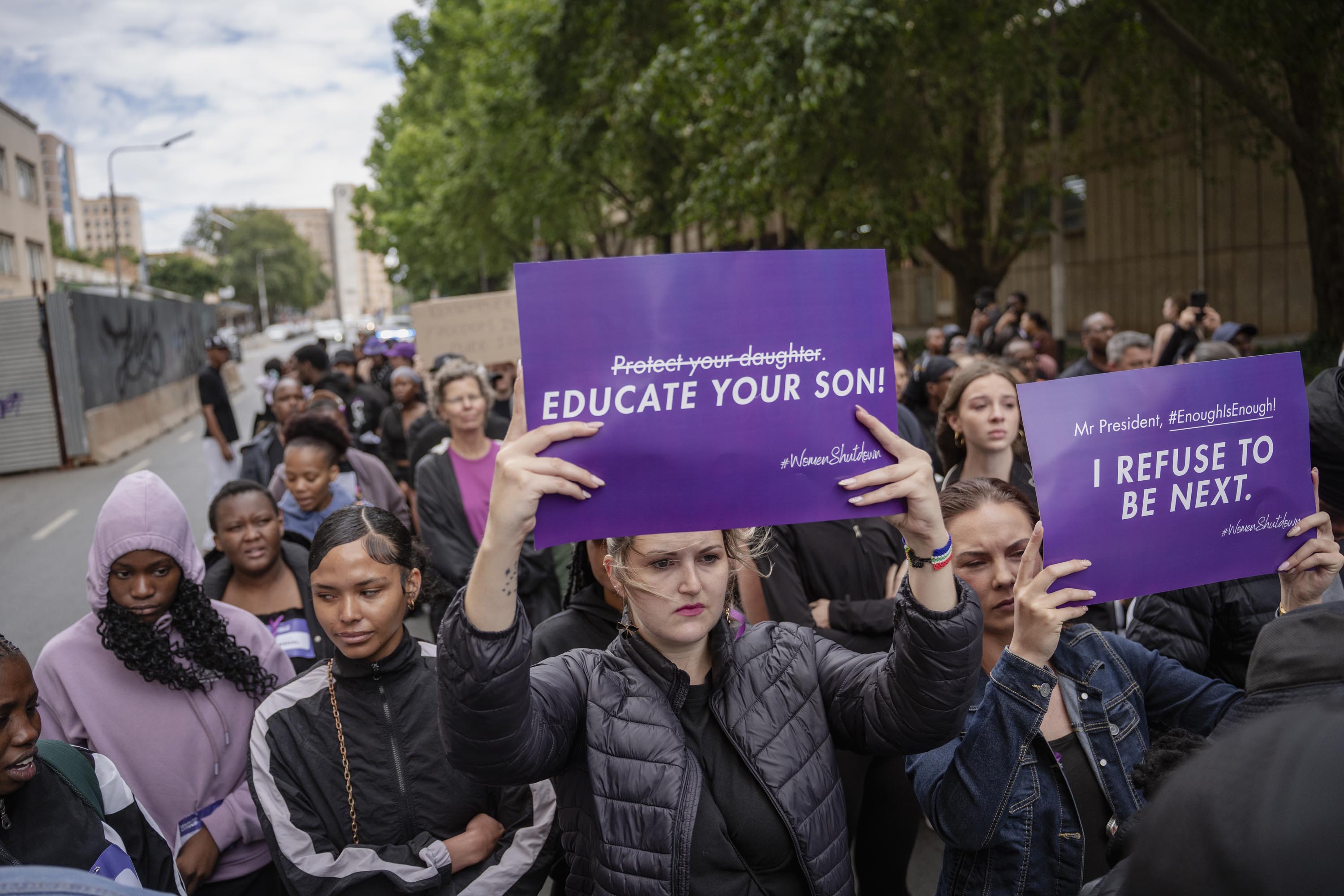
Women gather outside WITS University in Johannesburg from where they walked in a procession with a symbolic casket, honouring the lives of women lost to femicide. Photo: Ihsaan Haffejee
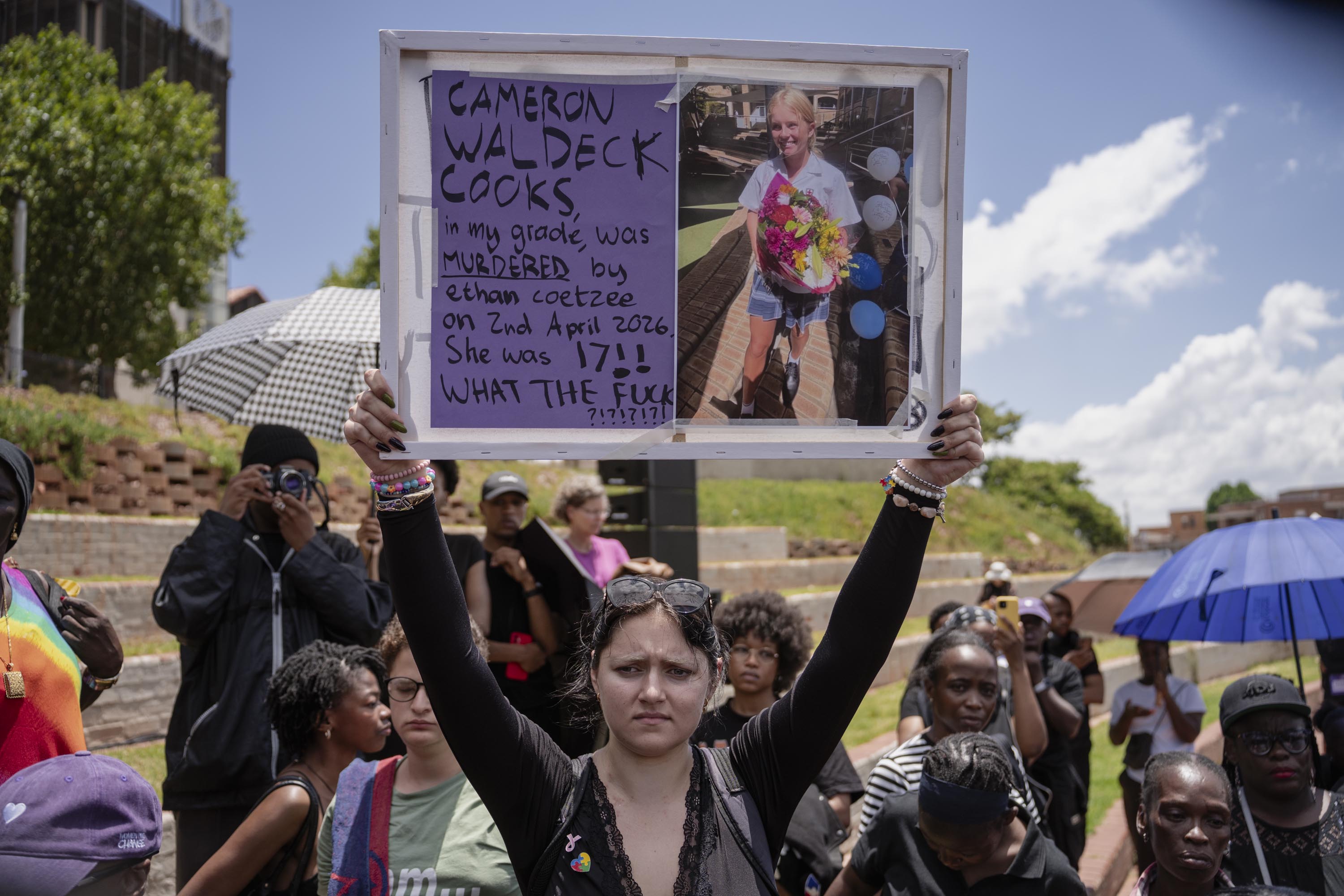
St Stithians learner Cameron Waldeck-Cooks was found dead at a lodge near Sabie, Mpumalanga, on 3 August 2026, the South African Police Service (SAPS) murder investigation into Cameron’s death remains active. Photo: Ihsaan Haffejee
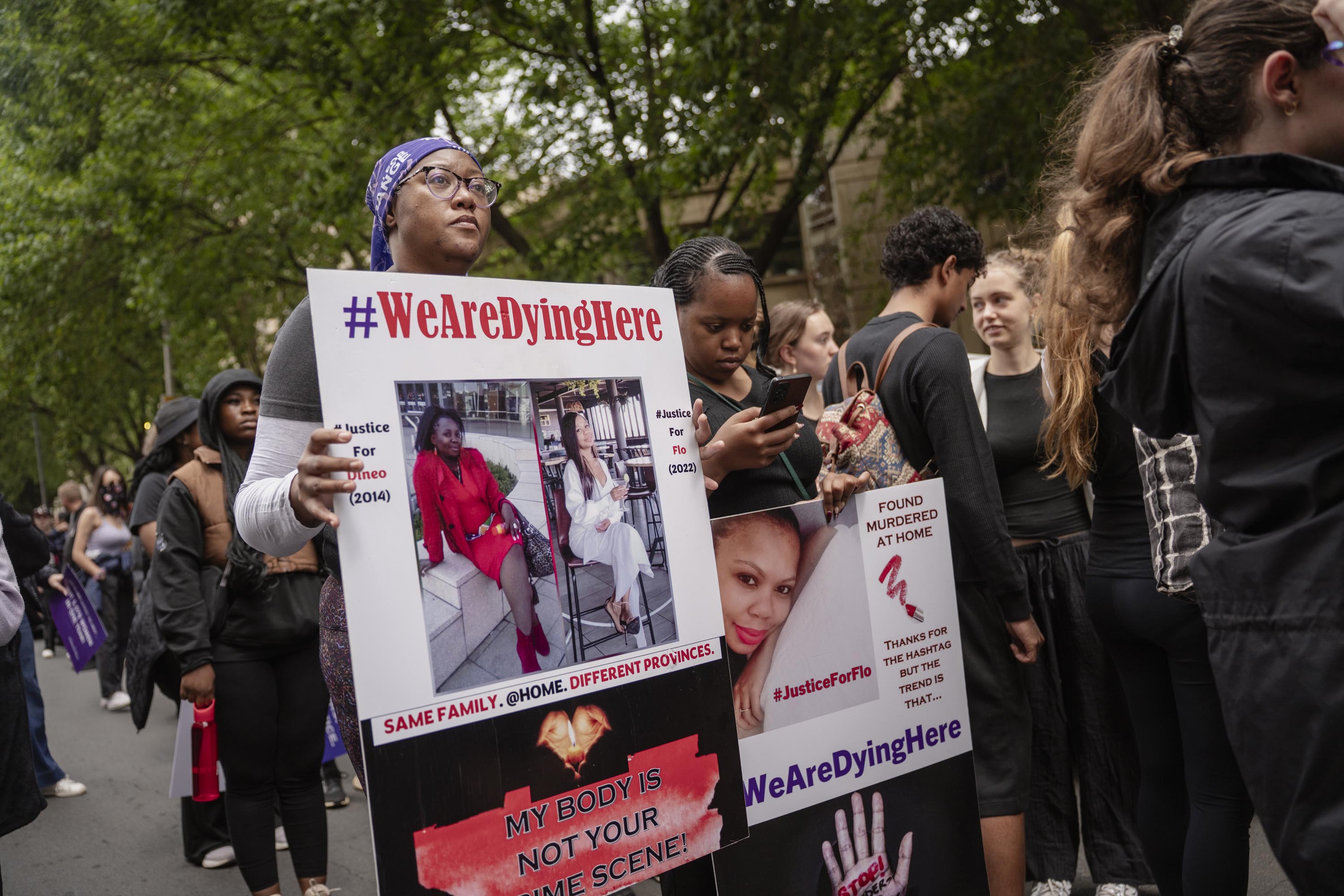
Dineo Medupe, 33, was brutally murdered with an axe by a man known to her in Rustenburg, North West, on 10 April 2014. In 2018, her murderer was convicted and sentenced to 22 years in prison for her murder. It is alleged that he served only four years before being released on parole, without a proper victim-offender dialogue. Photo: Ihsaan Haffejee
In Durban, marchers walked along North Beach. Marchers we spoke to said the government has not done enough to make women safe in South Africa.
Participant Avela Sizani said, “Many women are forced to stay silent in abusive relationship because some of them are financially dependent.”
Coordinator Sashnie Daslall said most of women still don’t feel safe when they are walking in street and their homes.
Women for Change said, “Ending GBVF is not only a matter of women’s safety. It is a matter of human rights, justice and democratic accountability. A democracy cannot promise equality, dignity and freedom while women and children continue to live under the constant threat of violence. Democracy belongs to the people, and its protections must be meaningful in everyday life.”
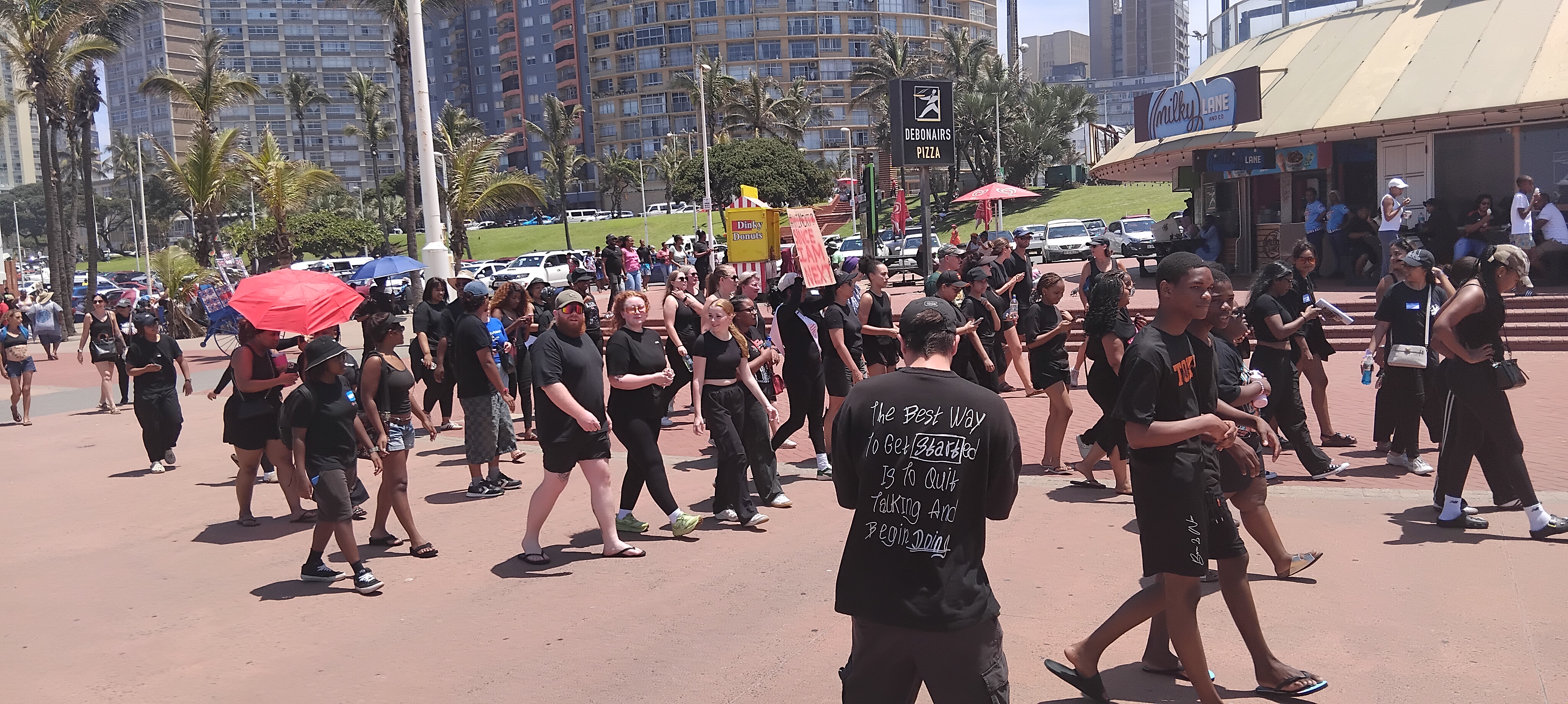
People march along North Beach in Durban on Saturday. Photo: Tsoanelo Sefoloko