17 April 2026
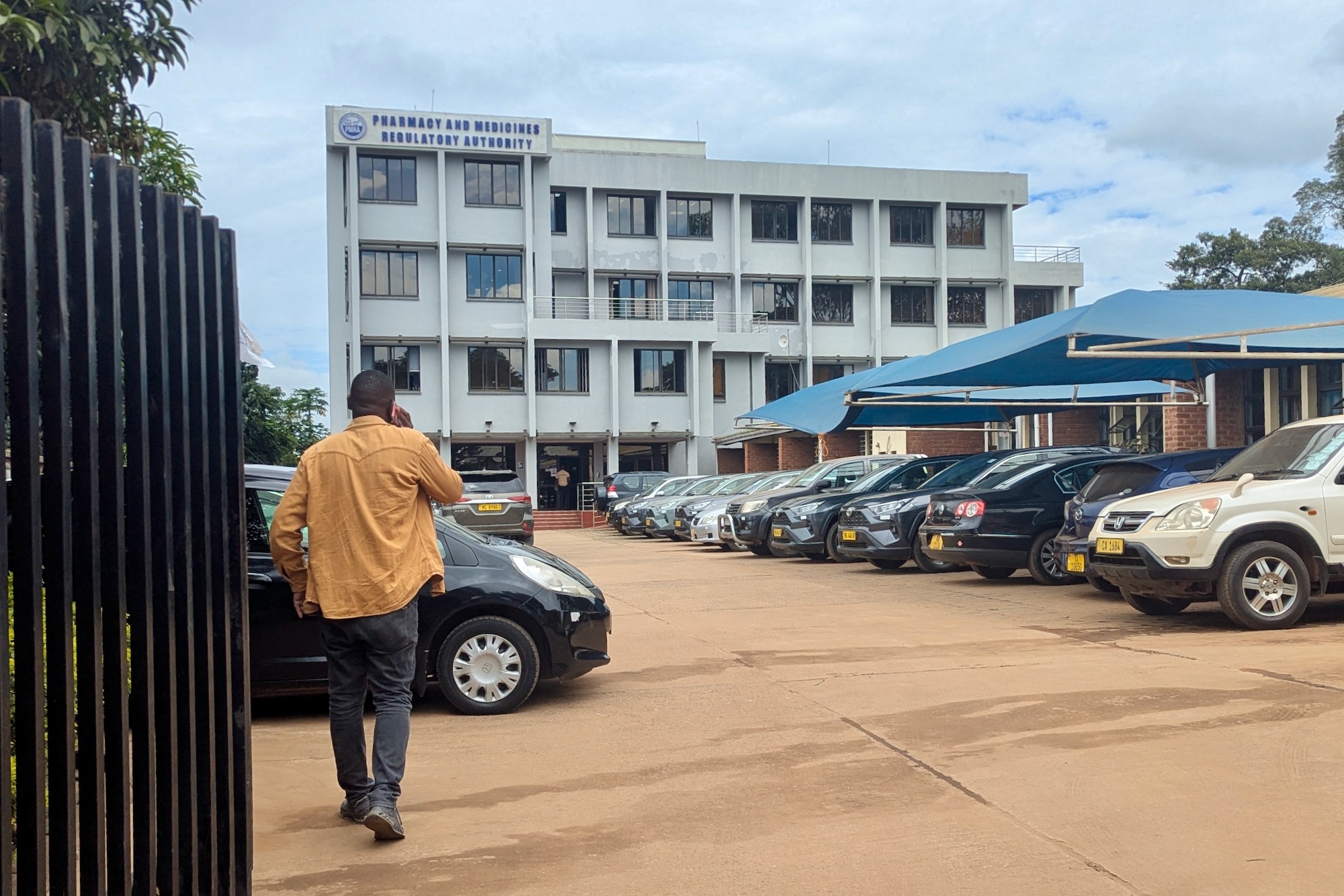
The Pharmacy and Medicines Regulatory Authority Head Office in Malawi. Photos: Golden Matonga
One of Malawi’s largest pharmaceutical suppliers has repeatedly supplied expired and falsified medicines to public hospitals for more than a decade, a Platform for Investigative Journalism (PIJ) investigation has found.
Documents show that a company currently operating as GPSL Wholesale Ltd is the same company previously going as Galaxy Pharmaceuticals and Surgical Logistics, which was shut down in 2013 for supplying faulty antibiotics linked to infant deaths at Mzimba District Hospital. The company recast itself as GPSL Wholesale (GPSL) in 2019 and once again engaged in selling defective medication. It is still operating.
The company has refused to respond to GroundUp’s questions.
Between January and March 2022, Malawi faced a critical shortage of insulin. GPSL Wholesale took advantage of the crisis.
Documents obtained by PIJ show that expired insulin stored at Queen Elizabeth Central Hospital (QECH) in Blantyre and awaiting destruction, was stolen and redistributed to state hospitals.
Strict procedures govern the disposal of expired medicines in Malawi. In this case, those safeguards failed. The insulin, according to minutes from a Pharmacy and Medicines Regulatory Authority (PMRA) investigation, appears to have been stored in a storeroom with a broken lock and no dedicated guard. A pharmacy technician at the hospital, Michael Lemeka, spent weeks smuggling insulin vials out of the hospital in his laptop bag.
Lemeka then contacted an illicit drug broker, Habib Goba, who was previously linked to the trade in stolen public medicines.
GPSL bought the stolen insulin at about K5,000 (K1 = R0.94) per ampule – well below the market rate of K7,500 from licensed wholesaler Worldwide Pharmaceuticals – and entered it into its books as if it had been legitimately sourced.
Under Malawian law, pharmaceutical wholesalers can only procure medicines from registered international suppliers. The brand of insulin in question had a single authorised distributor, Intermed Pharmaceutical. GPSL listed multiple local companies as suppliers. None of these were authorised to do so.
Documents trace how the expired insulin was then relabeled. Original packaging, showing an August 2021 expiry date and batch number JT6R236, was replaced with new labels indicating an October 2022 expiry date and a different batch number. The drugs were distributed to hospitals across the country, including Mzuzu, Kamuzu and Zomba Central hospitals. Ironically, nearly 1,000 vials were supplied back to QECH, the hospital from which they had been stolen.
The scheme began to unravel when clinicians noted that insulin supplied to Mzuzu Central as an emergency order was not effective. Also, an intern at Kamuzu Central Hospital (KCH) noticed labels peeling off refrigerated vials. Beneath them were the original expiry dates.
“KCH discovered that the insulin had expired at QECH and a technician stole and sold it to us,” hospital director Amos Msekandiana told PIJ.
The discovery triggered an investigation. Within days, the PMRA shut down GPSL offices in Lilongwe and Blantyre, and several people were arrested, including the directors, but the directors were not prosecuted.
Evidence suggested the operation extended beyond low-level staff. A PMRA report identified a company manager as a “central figure” who was “fully involved” in sourcing medicines from illegal dealers.
Expired insulin can become less effective, which can lead to poor outcomes for diabetics.
The PMRA’s disciplinary committee recommended revoking GPSL’s licence and making the sanctions public.
But the PMRA board did not act on the recommendation. Instead, it issued a warning to the company’s managing director and advised tighter internal controls.
The company continues to operate. PIJ reporters recently observed a state ambulance collecting medical supplies at the company’s Blantyre office.
The company and its executives faced few consequences. A hospital pharmacy head was suspended for failing to secure storage facilities. The technician who stole the insulin faces criminal charges. Two other company pharmacists were suspended for six months.
There were limited operational restrictions placed on the company. The Lilongwe office was closed, but the main base in Blantyre remained open.
“It’s a bewildering ruling. What stops a company based in Blantyre from supplying drugs anywhere else in the country?” one PMRA official observed to PIJ.
Allegations of political interference further cloud the case. Sources described pressure from senior officials and claims of attempted bribery during the PMRA disciplinary process, which appears not to have included a forensic review.
The regulator’s report only notes that “it was observed in the clinical departments that the product was not effective in the management of diabetic emergencies, which prompted hospital users to scrutinise the product”.
No findings of the PMRA investigation have been published as required by a PMRA board resolution.
The Ministry of Health told PIJ journalists that it is waiting for the courts to conclude the matter before taking further action.
The criminal case against GPSL for selling expired insulin has stalled for several reasons, including the deaths of key suspects, including Habib Goba.
A 2022 study by the Kamuzu University of Health Sciences found that more than 14% of antibiotics, antimalarials and antidiabetic drugs in Malawi were substandard or falsified.
George Jobe, executive director of the Malawi Health Equity Network, says the stakes could not be higher. “Medicines are meant to save lives. Any act that compromises their safety and quality is a grave violation of patient rights and undermines public trust.”
In 2019, Galaxy Pharmaceuticals and Surgical Logistics reinvented itself as GPSL. This was done by the son of the barred proprietor of GPSL, according to PMRA.
Online, GPSL Wholesale company employees still list Galaxy Pharmaceutical and Surgical Logistics Ltd as their employer.
Verinder Bali identifies himself as Head of Global Marketing at Galaxy Pharmaceuticals and not GPSL Wholesale on his LinkedIn profile.
When PIJ contacted him, he said he was not the company owner but confirmed that “Galaxy Pharmaceutical Company and GPSL are the same company.”
In a letter dated 11 May 2022, addressed to managing director Tarang Makhetcha, the PMRA refers to GPSL Wholesale Ltd as Galaxy Pharmaceutical and Supplies Ltd.
The insulin scam was not the company’s first offence.
Nearly a decade earlier, in 2013, GPSL, then trading as Galaxy Pharmaceuticals and Surgical Logistics, was implicated in supplying faulty antibiotics to Mzimba District Hospital. Doctors using the drugs noticed babies born to women treated with the chloramphenicol antibiotic GPSL supplied were dying.
“They had seen a trend of deaths, probably five or six babies. “They seized the product and brought it here,” recalled PMRA Director General Mphatso Kawaye, who was then registrar and who is now PMRA director general.
But, before the regulators could fully investigate, the drugs disappeared. GPSL removed stock from the hospital and issued a recall, but sources have told the PIJ that those batches also vanished before they could be tested.
With the evidence gone and the victims buried, regulators were left without definitive proof of what had gone wrong. Still, the PMRA found the company guilty of supplying faulty medicines and revoked its licence.
The company officially closed, but is now operating as GPSL Wholesale Ltd.
During a three-month investigation, PIJ journalists filed requests under Malawi’s Access to Information Act for records related to both the insulin and antibiotic investigations. While documents on the insulin case were released, records relating to the infant deaths were denied. The PIJ has established that the denial was because the case file was stolen from PMRA offices during the investigation.
Without those records, key questions remain unanswered. What exactly caused the deaths in Mzimba, and who was responsible?
The PIJ investigation raises fundamental questions about regulation, accountability and public safety in Malawi’s health system.
How did a company previously sanctioned over deadly drugs return under a new name and resume supplying hospitals?
Why were critical records allowed to disappear?
And why, after repeated violations, has the company been allowed to continue operating?
Until those questions are answered, the risk remains that the same system failures will continue, placing more lives in danger.
GPSL refused to respond to our questions.
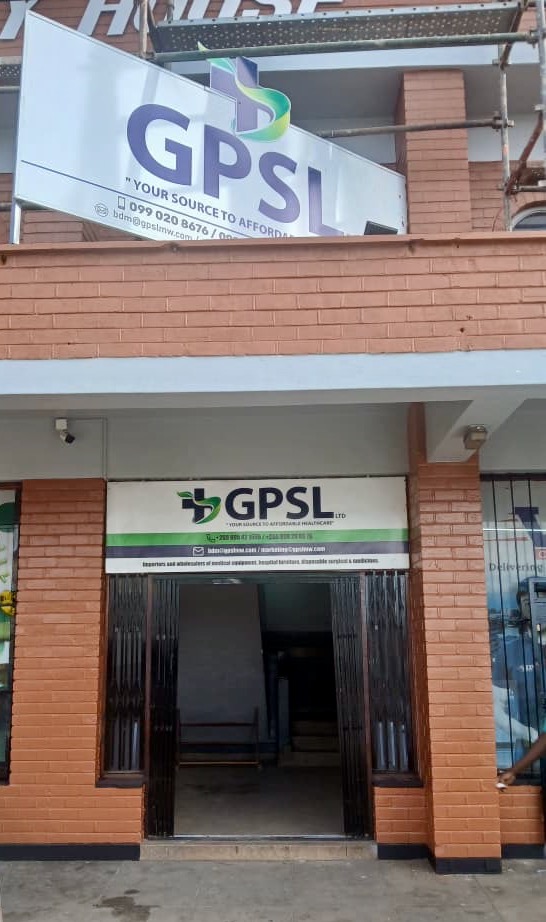
The GPSL building in Blantyre, Malawi.
