1 April 2026
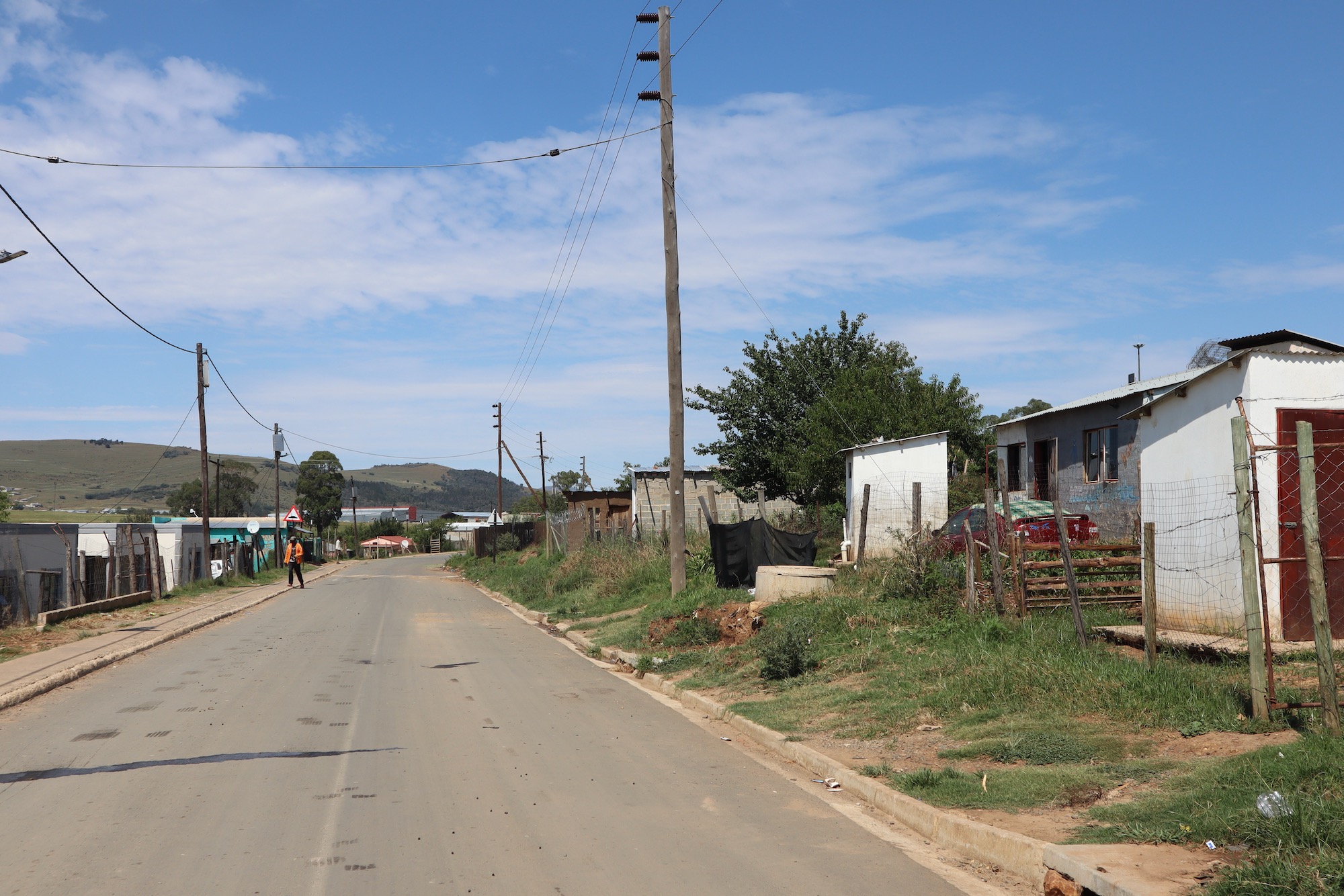
The road leading into Horseshoe outside Kokstad in KwaZulu-Natal. On the right are two outhouses that are a part of a R137-million sanitation project. Photos: Joseph Bracken
According to the Harry Gwala District Municipality, a R137-million project to replace pit latrines in Horseshoe, outside Kokstad in KwaZulu-Natal, is complete. But when GroundUp did a random inspection we found few working toilets, many without water, broken pipes and sewage spills, and a clear lack of maintenance.
The project, which began in 2008, to replace 1,451 pit toilets with flushing toilets was funded by a Municipal Infrastructure Grant from the Department of Cooperative Governance and Traditional Affairs (COGTA). It included reticulation and building pump stations and the outhouse structures for wash basins and toilets.
The project commenced with R29-million in 2008, and received additional funding of R52-million in 2017, R29.8-million in 2019, and R26.5-million in 2021. The total cost is to date has been R137.3-million with 19 tenders awarded to 13 companies, according to municipal spokesperson Ndabezitha Tenza.
Tenza said: “Upon completion of each structure all the plumbing items were installed, and the owners were satisfied.”
But, he said, vandalism had been frustrating the project.
In 2023, BM Consulting had identified issues and Yakhalungisa Engineering and Novuba Construction had addressed these.
Tenza said this left only 11 structures incomplete. These would be addressed through the upcoming R14-million Mahhagu Sanitation Project.
The project would also fix one of three pump stations built to service the outhouses, which has a broken pipe. Toilets belonging to houses on this line are blocked. Tenza did not respond to our query about how many toilets were affected by this broken pipe.
In a 2017 post on its official Facebook page, the municipality states the project will be “resuscitated”. Tenza said this was after years of vandalism, which had left the outhouses and infrastructure severely damaged.
According to the municipality’s 2016/2017 annual report, it had spent only less than 4% of its adjusted budget for the Horseshoe Sanitation Project.
Victoria Tshebi, a pensioner living in Horseshoe, said her top structure was built in 2008 but her toilet was only connected to water last year. She said it is now working.
But other residents have been less fortunate. Phula Mjwacu, a resident for 35 years, said her cistern was connected last year but the water is only a trickle. The tap doesn’t work and has a broken outlet pipe.
Dunoma Sabisa, a pensioner and resident for over 20 years, said her top structure was completed in 2019 but the toilet has never been connected to water. Her six grandchildren still have to use a longdrop pit latrine which is often full. She has to pay someone to empty it.
Residents have been complaining, but nothing has happened, said Sabisa. “[I’ve] told the councillor that there’s no water, but he didn’t take any action.”
Ward 1 Councillor Phumzile Nocanda (ANC) did not respond to WhatsApp messages or calls.
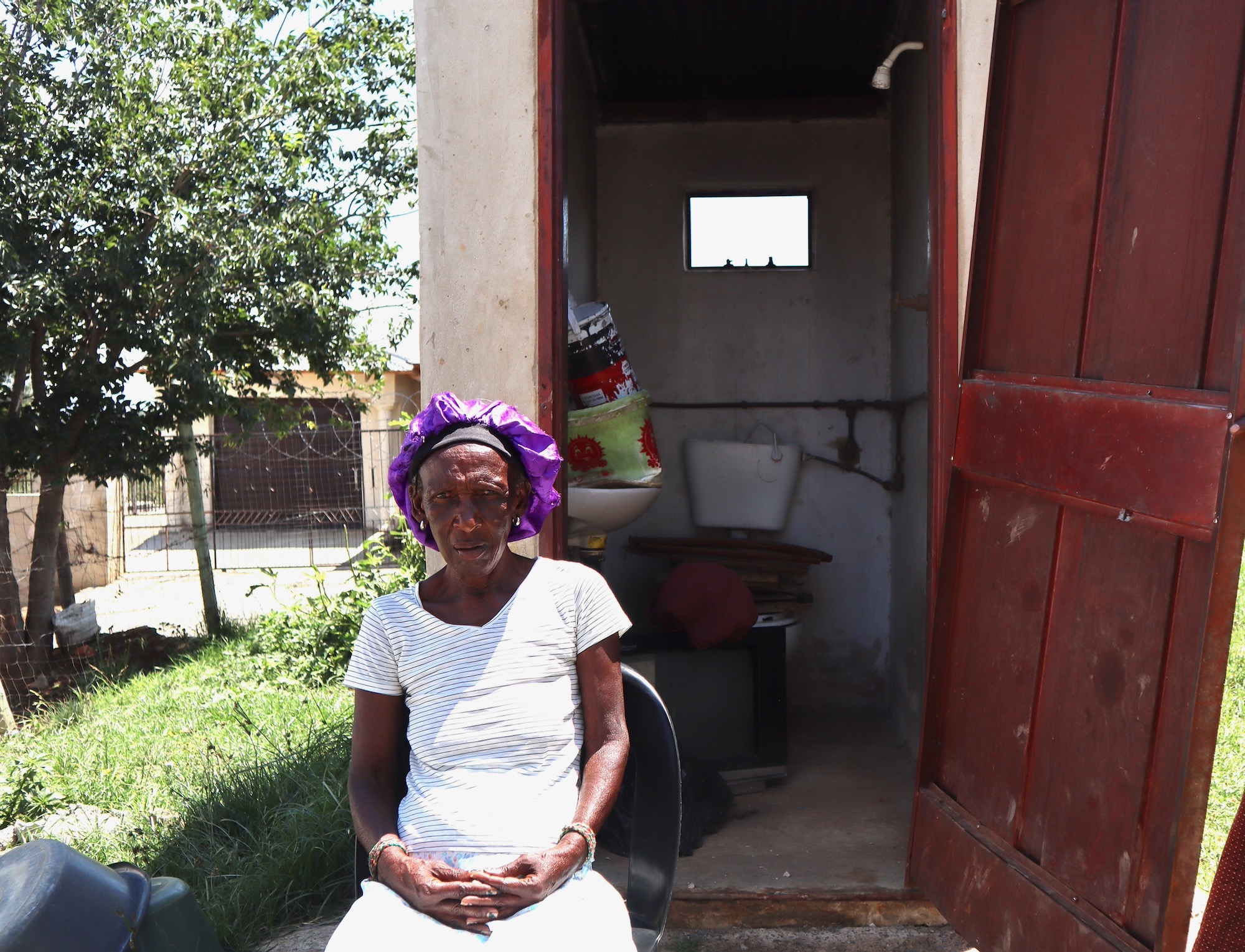
Dunoma Sabisa sitting in front of the outhouse that she now uses as storage.
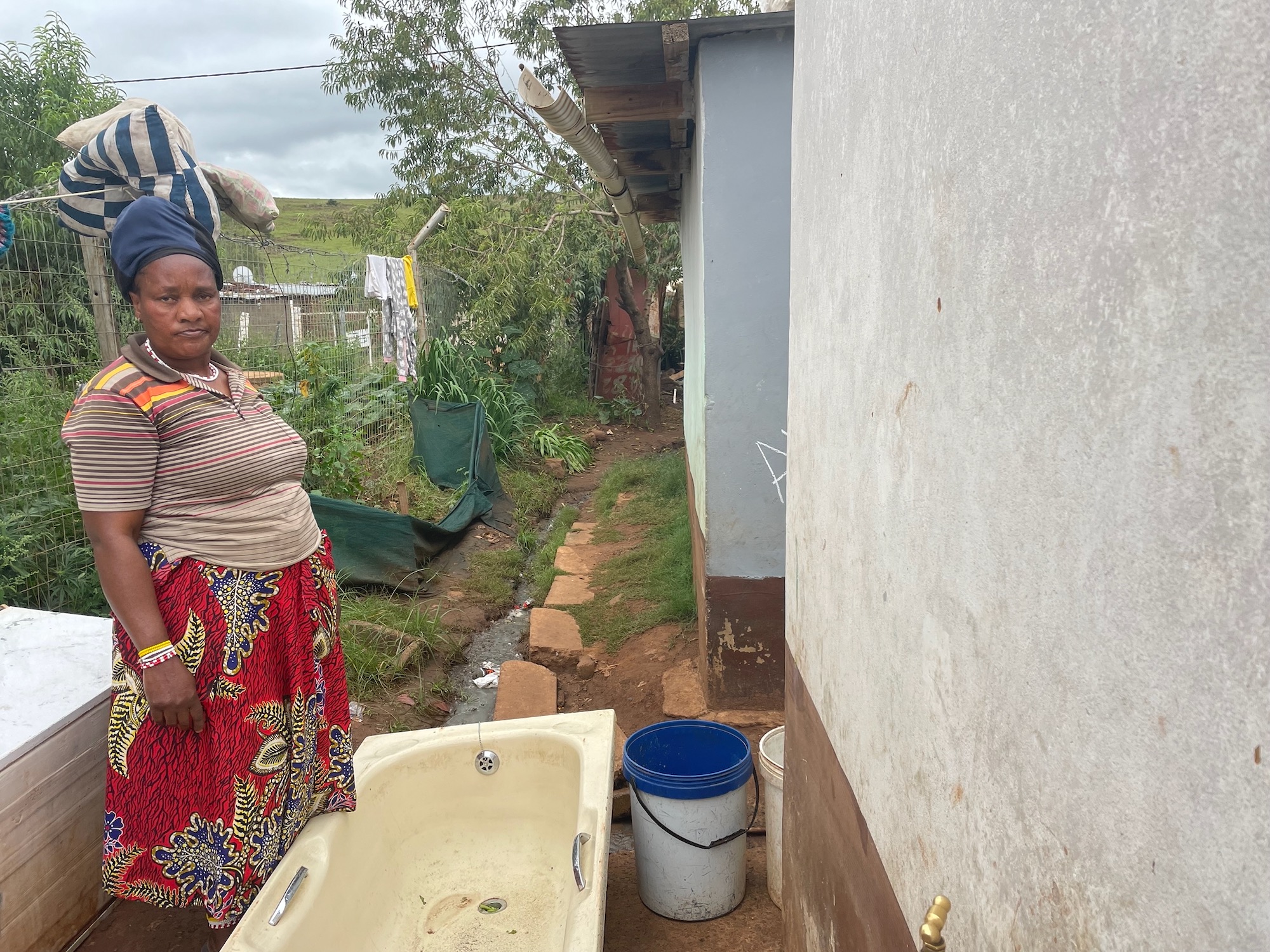
Princess Masangwana had her toilet connected for the first time since the outhouse was built in 2008. However, there was an issue with the piping, and now the wastewater from the toilet and basin flows directly into her garden. “The raw sewage flowing out of the pipe attracts rats to our home,” she said.
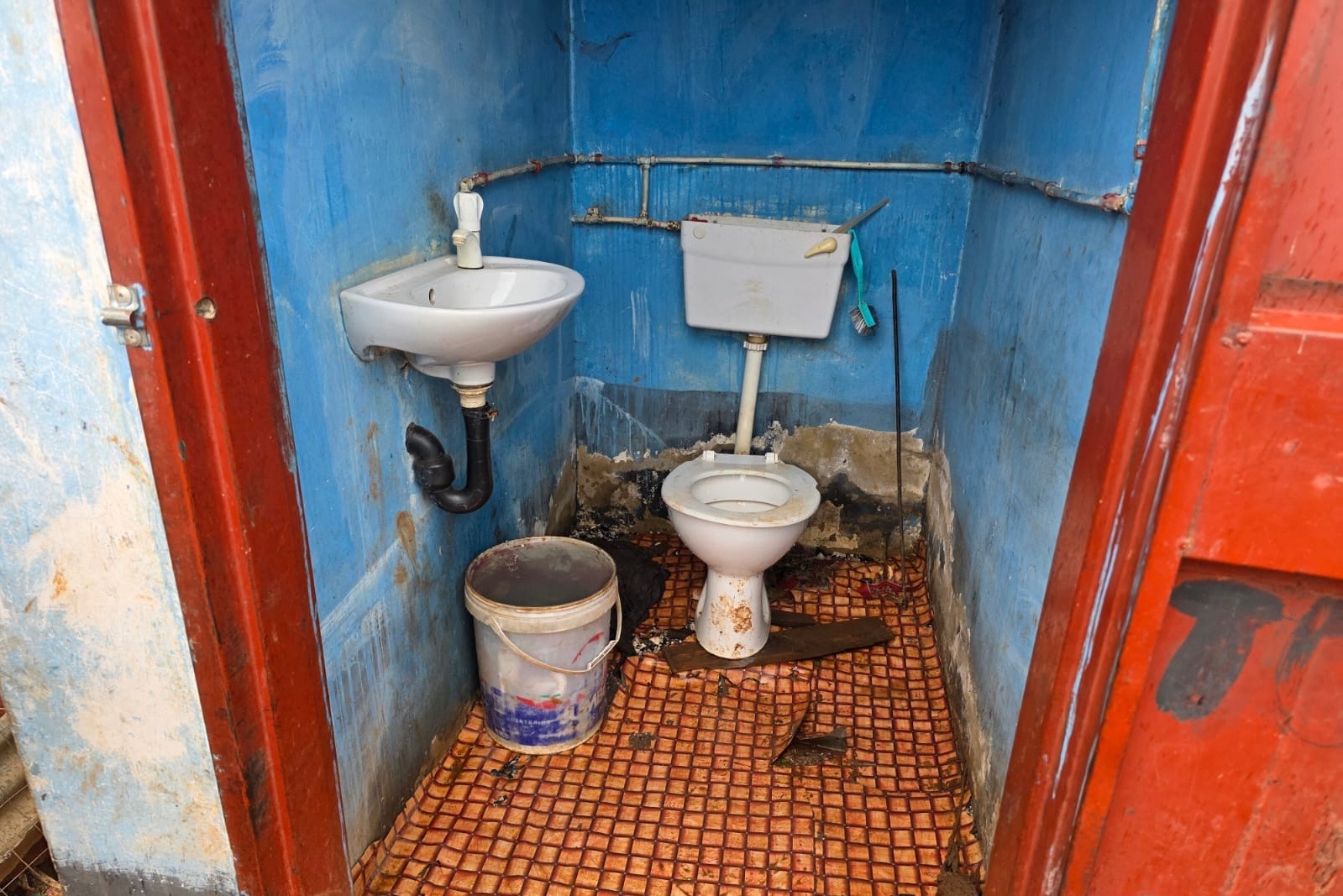
Nonceba Ubebeza said although she had warned the contractor, they still built her toilet – which has also never been connected to water – on top of the old pit latrine. When the ground beneath started to collapse, she and her family filled the hole with rubble and covered it with a plastic sheet.
