12 March 2026
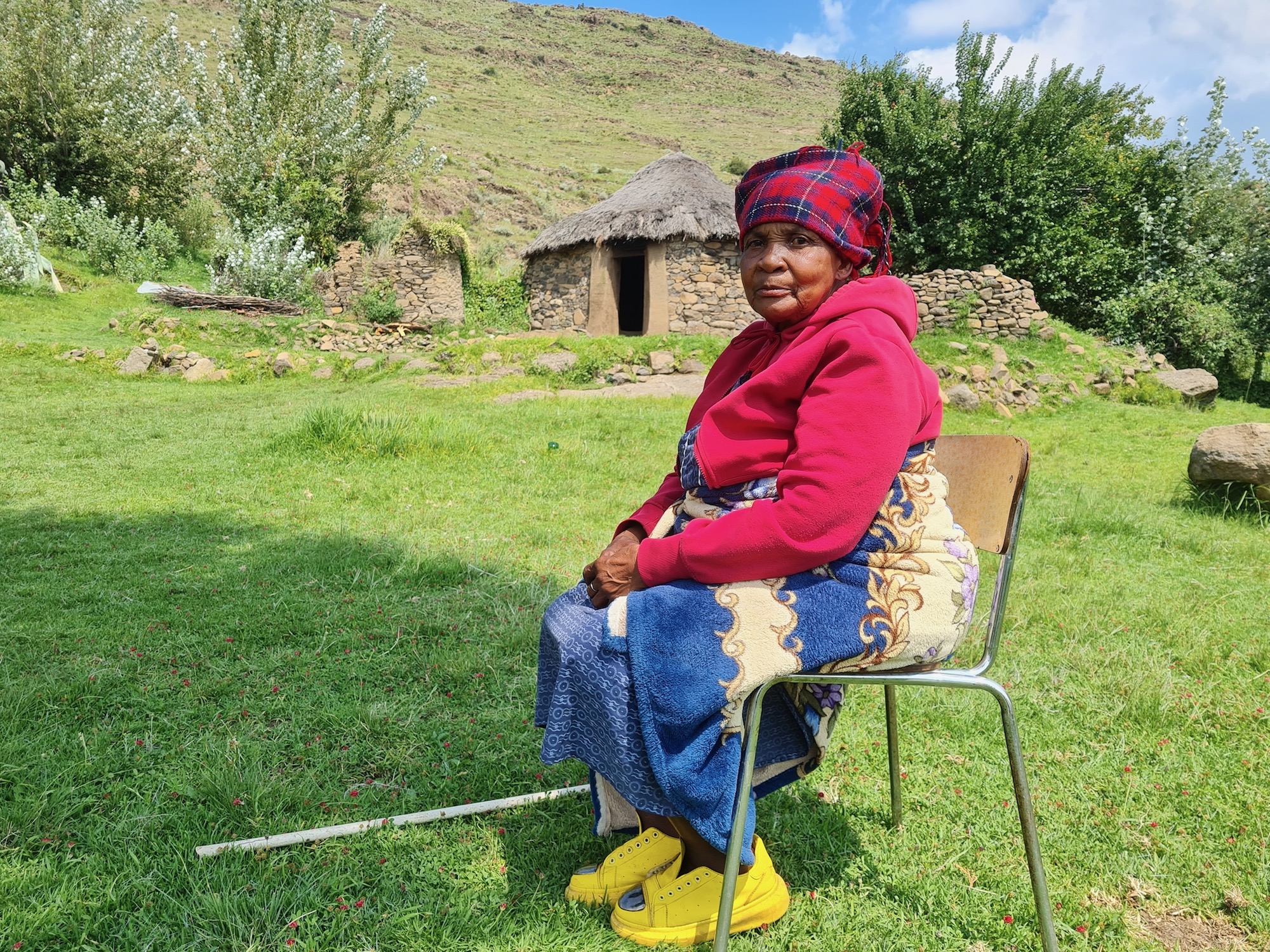
Macharles Mahlekele, 86, was among a group of elderly people who were stranded for days due to flooding. They had gone to Maseru to complete a verification process for their old age grants. Photos: Sechaba Mokhethi
When 86-year-old Macharles Mahlekele left her home in Ha Pitso, Lesotho, early on a rainy Monday morning last month, she believed she would return before sunset. Instead, her trip turned into a four-day ordeal.
Mahlekele was travelling to comply with a new government verification process required to continue receiving her monthly old-age pension of M950 (M1 = R1). Six people depend on her grant. She needed to go to Maseru to be photographed and confirm that she was still alive.
She said that in February, when she arrived at the usual pension pay point in Ha Khanyetsi, three kilometres from her home, “I was told I could not receive my grant until I went to Maseru”.
Ha Pitso is a remote village in rural Makhaleng. The return taxi fare to Maseru costs M150.
“People lent me the money so I could go,” she said. “I left home because we had run out of food since we last received the grants in December.”
The verification exercise is part of a pilot programme recommended by the World Bank, which warned that outdated pension systems can lose millions through fraud.
In February, Minister of Social Development Pitso Lesaoana said that of 18,429 registered pensioners checked, 14,270 were successfully verified. Payments to the remaining 4,159 are frozen until they present themselves with valid documentation.
For pensioners like Mahlekele, the requirement means travelling long distances to the capital. She was joined by five elderly people from Leqhili-qhili, a village only accessible on horseback. They had left their homes on Sunday, crossed the Likotopong River, which has no bridge, to reach Ha Pitso. The following morning they travelled together to Ha Khanyetsi to catch a taxi to Maseru.
In Maseru, they completed the verification process.
They then boarded a “Siyaya” minibus taxi for the 70km trip back to Ha Khanyetsi, a journey that takes about three hours because of the bad road.
But when they reached Likolobeng shortly before 6pm, they found the Makhaleng River had swollen.
“Water was flowing over the low concrete bridge, making it impossible to cross,” Mahleke said.
Likolobeng Councillor Nemase Matlhole said the culverts under the bridge are often blocked by sand and debris during heavy rains, causing water to to flow over the bridge.
Stranded, the pensioners decided to backtrack to a nearby police station to seek help. But the taxi got stuck on the muddy road and they had to spend the night in the vehicle.
“It was very cold,” said Mahlekele. “We were wet from the rain, and there was no heating … We slept on empty stomachs.”
Some missed their doses of chronic medication, including Mahlekele, who has high blood pressure.
The next day, a woman living near the river offered them shelter in her home.
Member of Parliament Lebohang Monaheng, whose constituency is Thaba Putsoa, gave them M500, which they used to buy bread and fat cakes. A senator, Tsukutlane Au, brought bread and drinks.
At the police station, they met another group of eight elderly residents, from Tsokotsa village, who were also stranded after travelling to Maseru for verification.
On the Thursday, the Department of Local Government brought a tractor-loader-backhoe to unblock the culverts. The bridge was re-opened, but their journey home was far from over.
One of the pensioners, 87-year-old Maliau Mafatle, only reached home in Leqhili-qhili on the Saturday. She was told to expect her February payment on 13 March. Her M950 pension supports her daughter, two grandchildren and two orphaned children.
“It finishes on the same day,” she said. “We buy maize meal and other basics, and then the money is gone.”
The Makhaleng River has long disrupted life for villages in the area. Three footbridges washed away between 2020 and 2021 and were never replaced.
Refiloe Ratsuba, chief of Ha Ntahli village, said most services, including clinics, schools, churches, shops and public transport, are on the other side of the river. During the rainy season children sometimes stay home for weeks or even months.
“Some children end up repeating the same grade many times,” he said. “You find a child doing Grade 1 for five years.”
The river has also claimed lives. In 2021, a minibus taxi attempting to cross Makhaleng bridge was swept away. Ratsuba said five people survived, but five others, including a baby, drowned.
“Last December, sheep, goats and donkeys carrying maize meal were taken by the river,” he said.
Even funerals become difficult when the river floods. Villagers must carry coffins for hours over the hills to avoid the flooded river.
“We sometimes walk five or six hours carrying the coffin on our shoulders,” Ratsuba said. “I recently had to take body of someone who had committed suicide, putting it in front of me on a horse to cross while the police waited on the other side of the river.”
Local councillors and chiefs said they have lodged repeated requests with MPs over the years to fix the footbridges. Monaheng did not respond to our queries in connection with this.
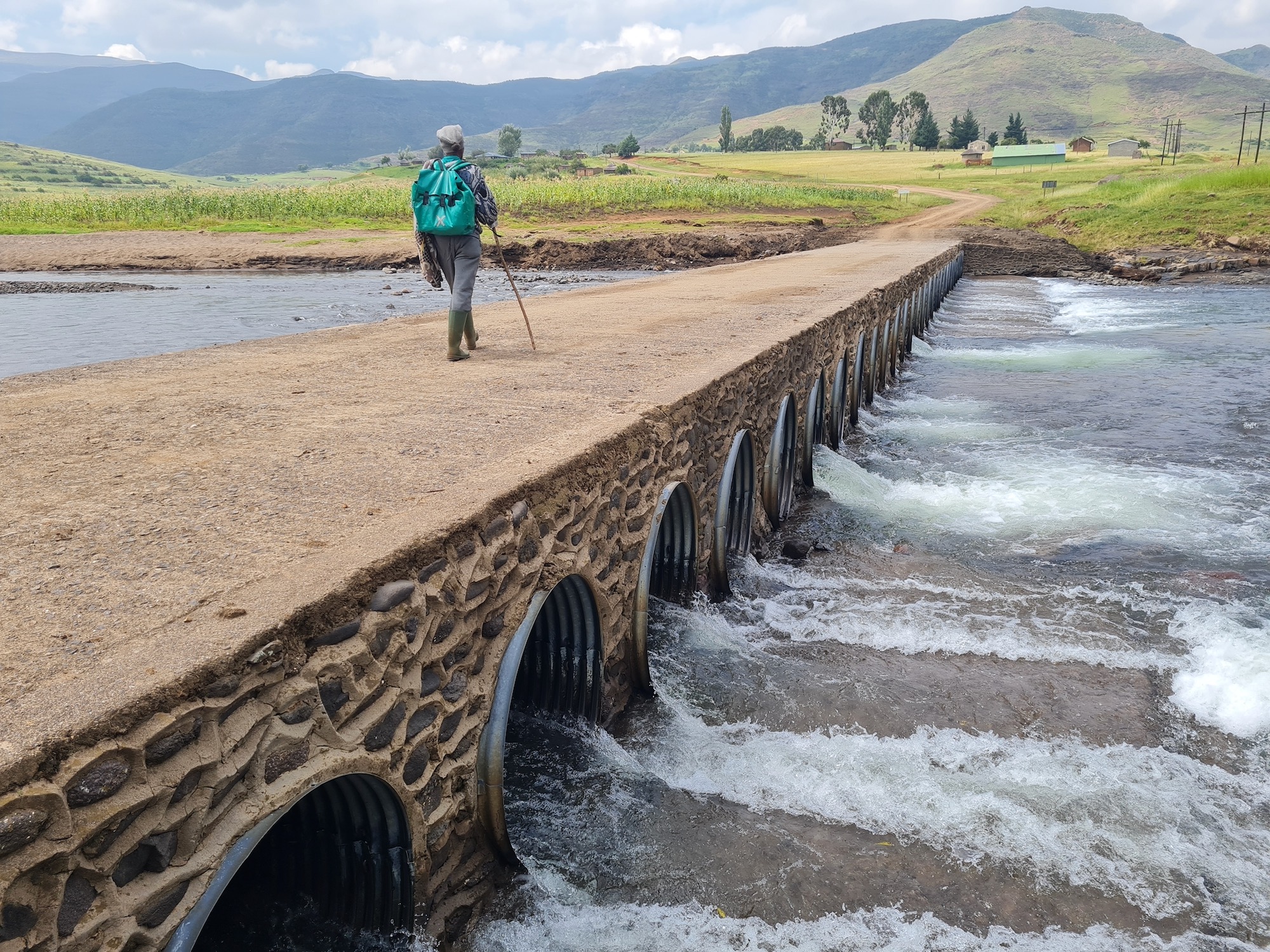
Makhaleng Bridge is frequently impassable when it rains.
