19 November 2026
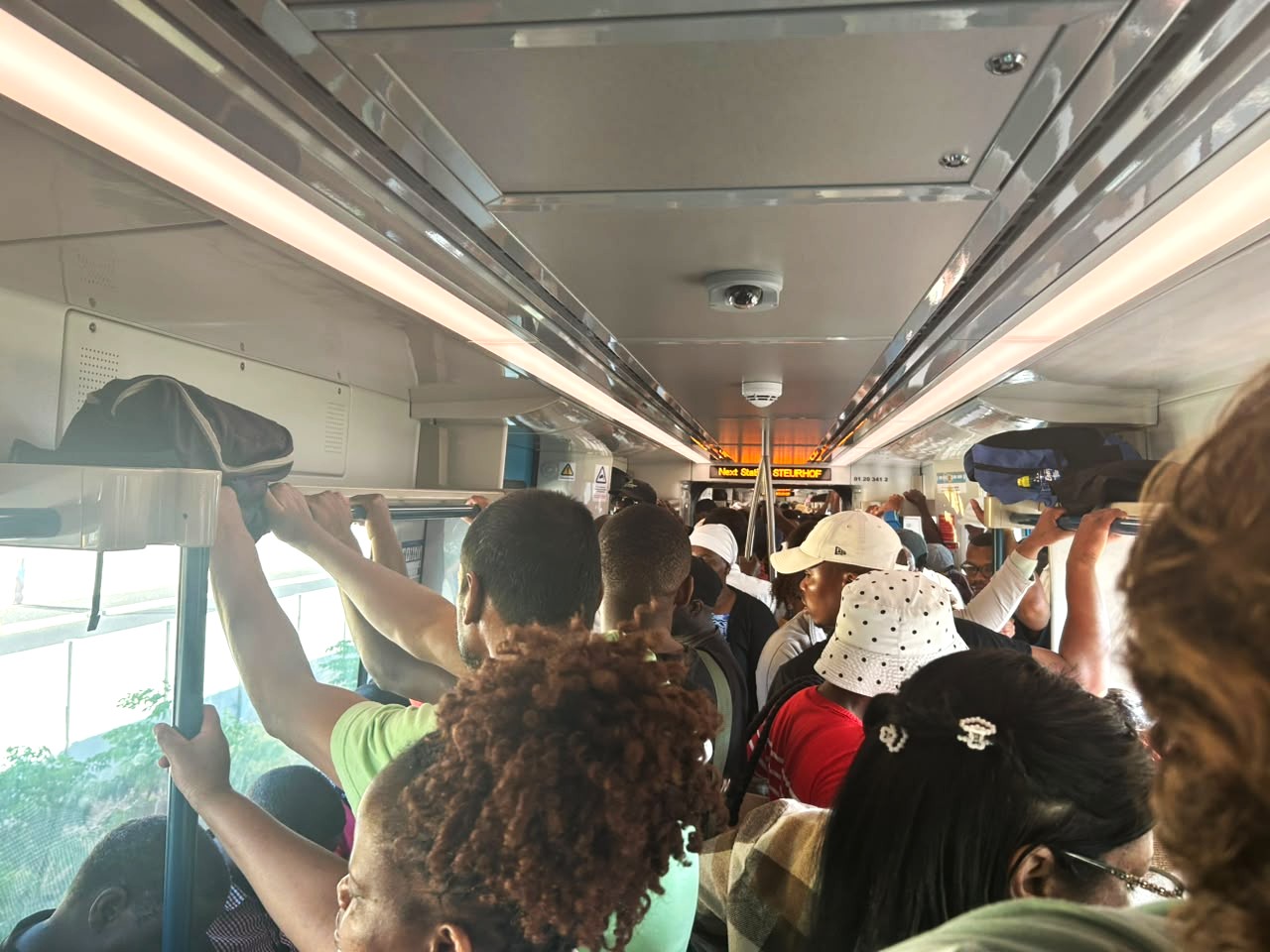
On Tuesday, 17 November, this train from Cape Town to Fish Hoek was cancelled, delaying dozens of passengers. The next two trains were severely overcrowded. Photo: Daniel Steyn
PRASA will increase Metrorail monthly ticket fares by between R35 and R46 from 1 December, according to a statement released on 19 November.
Single and weekly ticket fares, which last increased in August 2025, will not change for now.
The December increase is smaller than the increase PRASA initially proposed. Under that proposal, the monthly ticket would have increased by between R60 and R80.
From 1 December, the new monthly fares will be:
|
Distance |
Current fare |
Increase |
New fare |
|
1km to 15km |
R180 |
R35 |
R215 |
|
16km to 40km |
R220 |
R46 |
R266 |
|
41km to 60km |
R250 |
R41 |
R291 |
|
61km and more |
R280 |
R42 |
R322 |
Fares will increase again at a date still to be confirmed, but no earlier than 1 April 2027. That adjustment will be linked to the Consumer Price Index (CPI), and will apply to all ticket types, including single and weekly tickets. After that, PRASA intends to adjust all fares every year in line with CPI, at roughly 4% to 4.5%.
PRASA said the initial increases were approved by the national Department of Transport in 2025, after stakeholder consultations that ended in 2023.
But stakeholders raised concerns about the monthly ticket increases and further consultations were held.
United Commuters Voice (UCV) Western Cape provincial secretary Patrick Lugogwana said his organisation held a meeting with PRASA and the department on 16 October. The rail agency then agreed to reduce the increases and take a phased approach.
Lugogwana confirmed that the statement PRASA released on Thursday was in line with the agreement.
PRASA said in its statement that the extra revenue would help pay for energy, maintenance of trains and infrastructure, and safety and security at stations and on trains.
Fares cover only a small part of PRASA’s costs. According to its 2025/26 annual report, government subsidies of about R31-billion, including a R20-billion grant for infrastructure, made up about 92% of its R33.4-billion revenue. Fares brought in R805-million.
PRASA had an operating deficit of R3.4-billion, and its cash reserves fell from R4.8-billion to R3.2-billion.
The Auditor-General has warned of “material uncertainty” as to whether PRASA can continue as a going concern, as it did the year before.
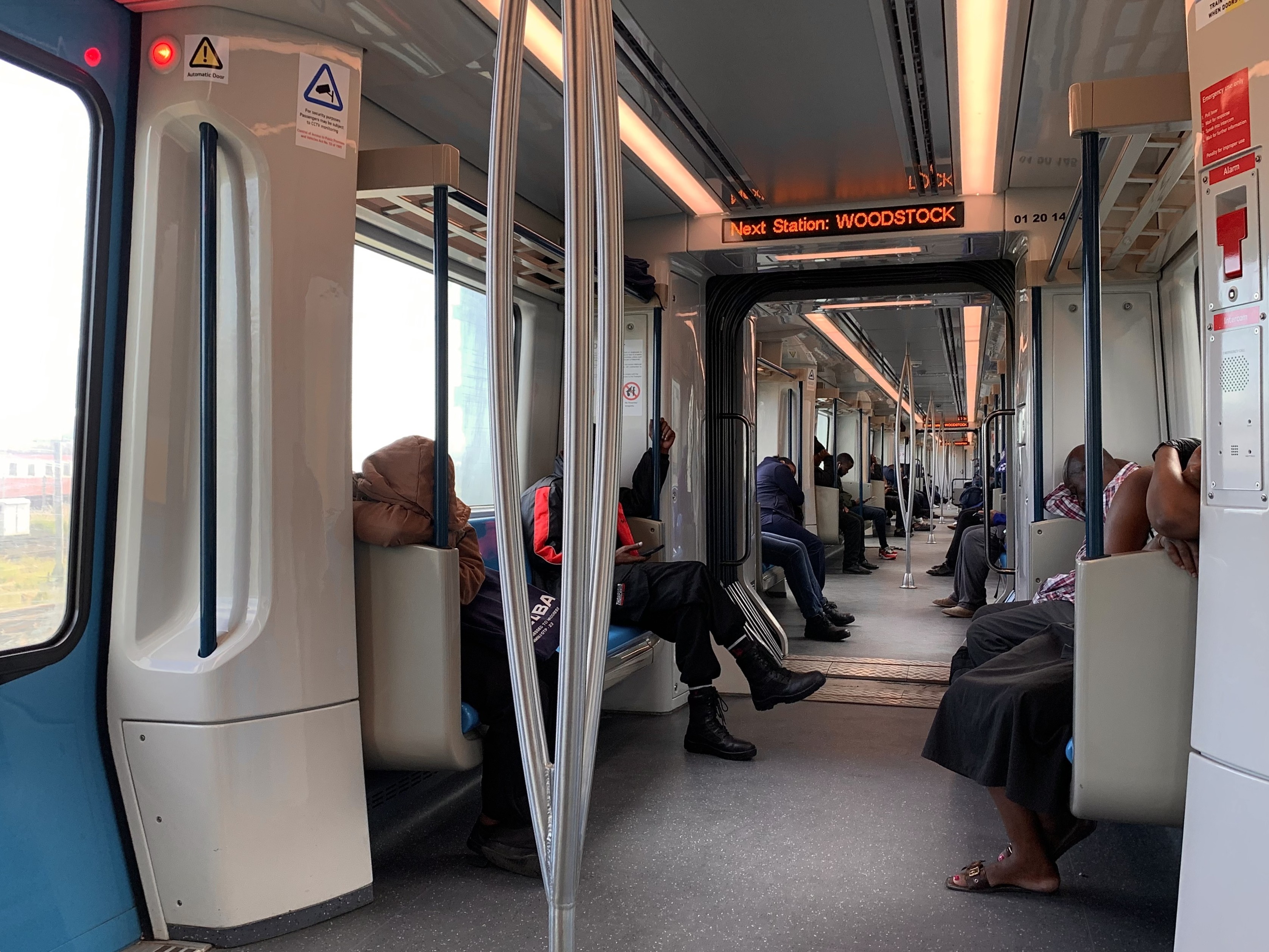
A sparsely occupied 8:30am train from Cape Town Station to Kapteinsklip on the Central Line. Photo: Laney van Wyk
While train services have recovered significantly since covid, when infrastructure was stolen and vandalised, commuters still have concerns.
It is seldom that tickets are checked at stations. Ticket offices are often closed or offline. There are sometimes card machines available, but mostly only cash is accepted.
The new blue trains, which have run since at least 2023, are already showing wear and tear. While they are mostly clean and functional, trains are often cancelled because of defects. Many windows are shattered or badly scratched, and are seldom replaced.
GroundUp has reported on issues with the Durban and Gauteng metro rail services. In Durban, passenger numbers fell by 41% in 2025/26, to about 33,000 a day, despite hundreds of millions of rands spent on rehabilitating the network. The Bluff line is still closed and other lines run partial services.
In Cape Town, the Southern Line runs on dual tracks, but the Central Line still faces single-track bottlenecks, overcrowding during peak times, and delays.
At Cape Town Station on 12 November, we saw packed morning trains coming in from Kapteinsklip on the Central Line. We took the train from Cape Town Station to Kapteinsklip, which was much emptier.
Although the trains were on time, Lugogwana said there were often bottlenecks on the line because informal settlements on the rail reserve blocked maintenance teams from repairing damaged electrical substations. In some areas, trains skipped stations such as Philippi entirely due to vandalism, he said.
PRASA Western Cape spokesperson Zino Mihi said that Netreg, Heideveld and Koelenhof stations were all closed due to vandalism.
Mihi said single tracks and manual signalling caused delays, and that restoring automated signalling and dual-track operations depended on finding “an appropriately skilled contractor”. She said PRASA was working to “address these challenges”.
Services on some lines remain severely limited. Commuters between Malmesbury and Cape Town have only two daily trips, at 5am and 6pm, while Worcester services remain suspended.
Mihi said any increase in Malmesbury trips depends on operational capacity, infrastructure readiness, resources and safety assessments.
She said the return of the Worcester service depends on work by Transnet, including technical and operational readiness assessments, and that no resumption date has been confirmed.
On the Southern Line, trains are frequently delayed due to overhead signal equipment outages. A delayed or cancelled train at peak hour puts significant pressure on other scheduled trains, leading to overcrowding. At other times, drivers do not adhere to the train schedule, arriving and leaving stations late, and disrupting commuters’ journeys.
Sometimes the trains’ screens display the wrong station, or don’t work at all. Air conditioning works intermittently. Electronic access gates and screens at most stations do not work.
