5 August 2026
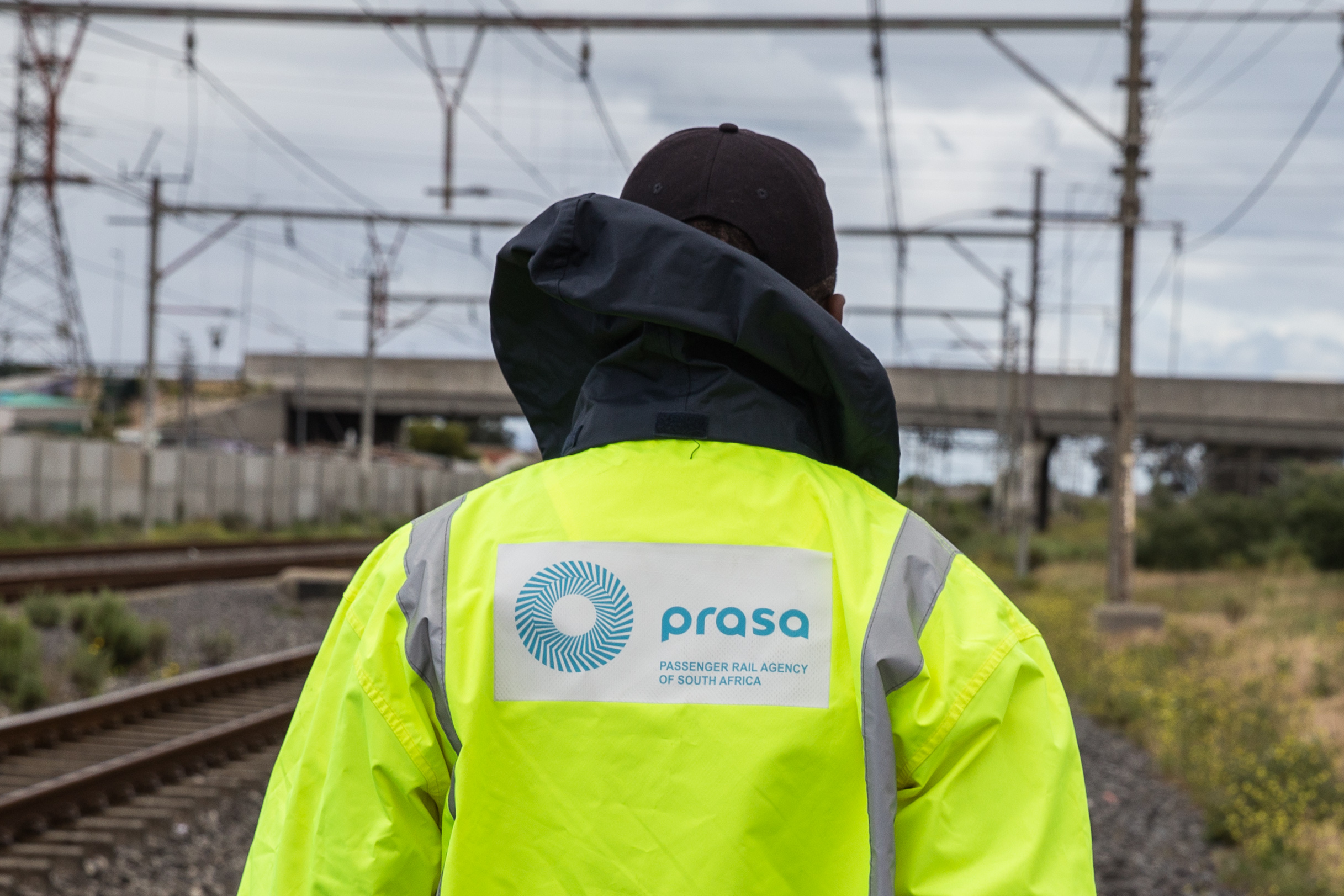
An independent investigation has cleared PRASA of subcontracting security companies linked to alleged gang boss Ralph Stanfield and his wife, Nicole Johnson. Archive photo: Ashraf Hendricks.
No payments were made to alleged gang boss Ralph Stanfield or his wife, Nicole Johnson, or their linked companies, during the reconstruction of PRASA’s central line in Cape Town. This is according to PRASA CEO Hishaam Emeran, who on Monday briefed Parliament’s Select Committee on Public Infrastructure and Minister in the Presidency on the status of investigations into alleged criminal infiltration of its security services.
In March, amaBhungane published a report on how companies associated with Johnson may have benefited from security subcontracts between November 2022 and May 2024. Contractors working to fix the line – running through Stanfield’s home turf – had faced extortion threats, including violent confrontations with masked, armed men.
Stanfield and Johnson have been charged under the Prevention of Organised Crime Act for murder, attempted murder, and other alleged crimes. They are expected to go on trial in October.
The central line, which according to PRASA board chairperson Nosizwe Nokwe-Macamo caters to 40% of prospective passengers in the city, stopped running in October 2019 after PRASA cancelled month-to-month security contracts that were irregular and probably illegal.
The line was then stripped and people moved onto the site during the covid lockdown in 2020.
Rehabilitation of the line was declared a Presidential reconstruction project and involved relocating thousands of people who had built shacks on the line.
Following amaBhungane’s report, the PRASA board commissioned Ningiza Horner Attorneys and advocate Siyabulela Mapoma to conduct an independent investigation into allegations that Stanfield and Johnson had benefitted from various subcontracts.
Emeran said the investigation covered “irregular subcontracting arrangements, improper influence over contractors, governance failures and alleged criminal infiltration of the project”.
“The purpose of the investigation was to objectively assess the substance of the allegations and determine whether there was any evidence of wrong-doing by PRASA and/or its officials,” he said.
“Interviews were conducted with PRASA officials, contractors and other relevant stakeholders identified in the published article,” he said, and documents, mostly related to supply chain management and contractual agreements, were reviewed.
He said 14 people had been interviewed or “invited to respond to written questions”. Only one contractor had declined to be interviewed.
Devices seized from the former head of security – presumably PRASA security chief Alexio Papadopulo who is mentioned 101 times in amaBhungane’s article – were not inspected as they were part of evidence in a parallel criminal investigation by SAPS.
Video footage referenced by amaBhungane was also not made available, nor were City of Cape Town officials and councillors interviewed.
Emeran told the committee that no evidence had been found to substantiate “the central allegations made in the article”.
He said there was “no evidence that PRASA entered into any direct contractual relationship with organised crime figures or entities they directly own”.
There was also “no documentary evidence that PRASA formally or unduly instructed contractors to appoint any specific subcontractor”, and “no evidence PRASA made any direct payments to organised crime figures or any entity they control”.
“The allegations are speculative and unsubstantiated,” he said.
Commenting on PRASA’s presentation, amaBhungane managing partner Sam Sole told Groundup it formed a very weak basis for dismissing the allegations in the article.
Sole said it was unsurprising that a “desktop investigation” by a firm of attorneys “failed to find any evidence of capture by organised crime”.
“By their own admission the investigators couldn’t access the laptop or email of PRASA’s head of security, the central character in the story.”
He said the investigation concluded that PRASA had not entered into any direct contracts or made direct payments to organised crime figures, but amaBhungane had never alleged this.
“What PRASA appears to have presented to Parliament is a very expensive straw man. Meanwhile the presentation confirms that there is a formal police investigation of the allegations and there was enough evidence for police to obtain a warrant and execute a search and seizure at PRASA.”
Committee chairperson Frederik Badenhorst noted that although the investigation cleared PRASA of wrongdoing in relation to the central line contracts, it did list ten reforms needed to address governance for future high risk projects.
“You’re telling Parliament there is no evidence of wrongdoing, but you have a long list of recommendations. My question is if your systems worked properly, why are so many governance reforms necessary?” asked Badenhorst. “Why do we come to this place every time if your systems are working properly?”
He said this pointed to “serious governance shortcomings” at PRASA.
Emeran said contracts were independently audited by the Auditor General annually and there was “continual business improvement” within PRASA.
He said PRASA’s improved audit outcomes showed the necessary checks and balances were being put in place.
Transport minister Barbara Creecy also addressed the committee. She focused on a report in the Sunday Times on the weekend that PRASA had paid a politically connected security group more than R1-billion in an unlawful piggybacking procurement deal.
The Sunday Times reported that Reshebile Aviation and Protection Services (RAPS) and Reshebile Aviation Solutions (RAS) were on the Airports Company of South Africa (ACSA) list of approved security companies.
The Sunday Times said it had seen documents showing that in July 2021 ACSA had “approved PRASA’s request to piggyback on its panel of security companies”, giving PRASA access to contractors already appointed through ACSA’s procurement process. But according to the newspaper, the National Treasury confirmed that the regulation which allowed this did not apply to PRASA or ACSA.
According to the Sunday Times, RAPS and RAS are reportedly led by ANC veteran and former Robben Island prisoner Paul Langa.
Creecy told Parliament that given the Sunday Times report, she had asked PRASA’s board to “immediately” appoint a forensic investigation into the allegations and a separate forensic company to conduct due diligence on all other active security contracts at the rail agency.
