13 October 2026
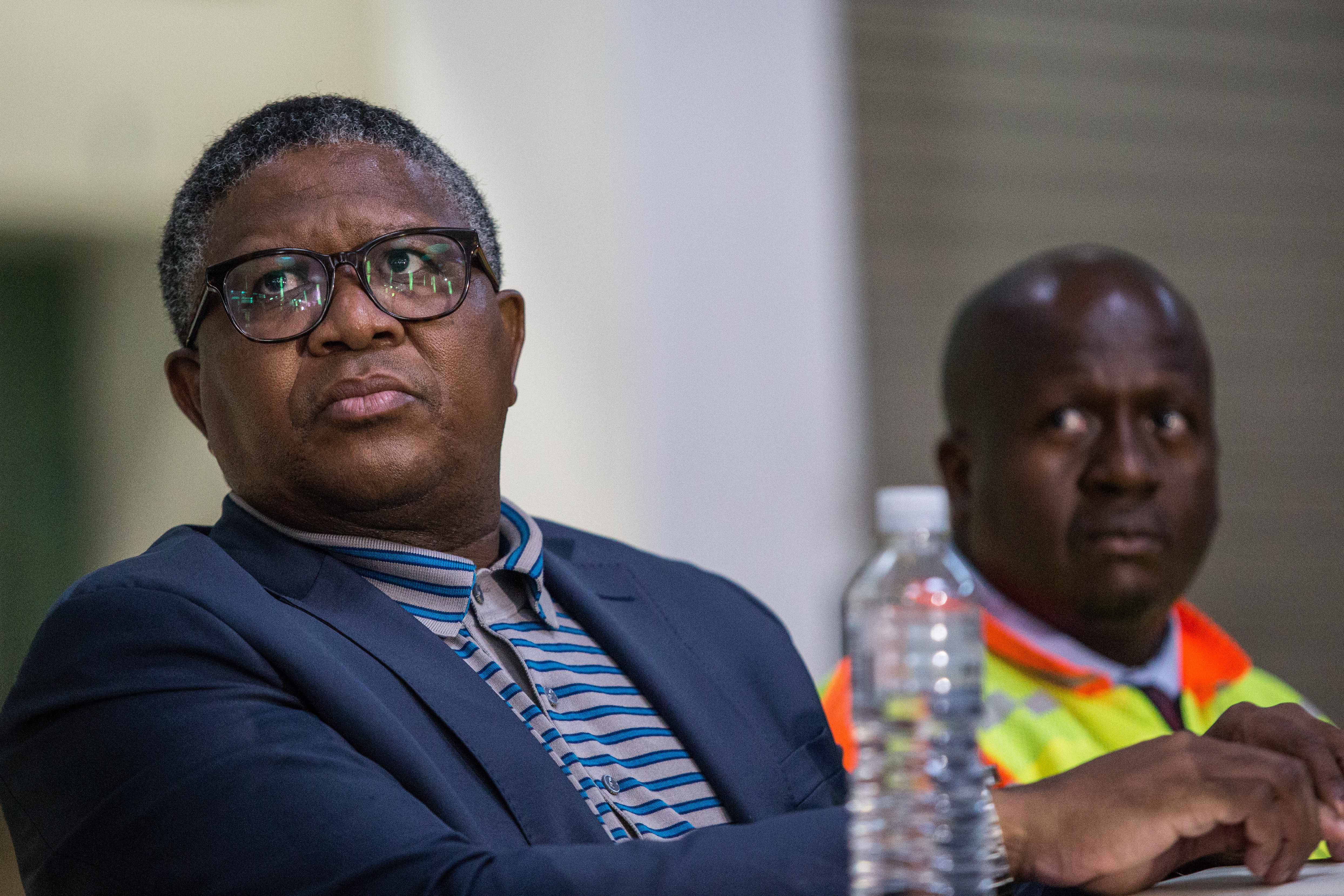
The Western Cape High Court has ruled that Parliament’s ethics committee must consider complaints against former transport minister Fikile Mbalula related to corruption at the Passenger Rail Agency of South Africa. Archive photo: Ashraf Hendricks
A decision by Parliament’s ethics committee to “close the files” in complaints laid by #UniteBehind against former Minister of Transport Fikile Mbalula and Chair of the transport Portfolio Committee Dikeledi Magadzi has been reviewed and set aside.
This means that the committee, which declined to deal with the investigative reports of the acting Registrar of Members Interests in April 2023 because the two had resigned as Members of Parliament, must now consider the reports and make a finding on whether they breached the ethical code.
Magadzi died last year. Mbalula is currently secretary-general of the ANC.
“An order setting aside the decisions to close the files therefore has a practical effect. It restores the complaints to the committee which is obliged to consider the registrar’s reports and to make findings,” a full bench of the Western Cape High Court ruled on Tuesday.
In the judgment, Judge Hayley Slingers (with two judges concurring), said the resignation of the two MPs did not absolve the committee of its responsibilities to deal with the complaints.
The court, however, dismissed an attempt by #UniteBehind for a similar order against Mosebenzi Zwane, a former MP who also chaired the transport committee at one time. The ethics committee had considered the registrar’s report and finally determined the complaint to be unfounded.
#UniteBehind had launched two related applications, seeking to hold politicians to account for their alleged role in corruption in the Passenger Rail Agency of South Africa (PRASA) as set out in the report of the Zondo Commission of Inquiry.
Though the two applications were eventually consolidated, they have a complicated legal history, which was compounded by Parliament adopting a new code of conduct for MPs in May 2024, without informing #UniteBehind and while the matters were pending.
This meant that #UniteBehind had to amend its pleadings to challenge the new code, which contained similar confidentiality provisions and clauses related to MPs who resigned.
But ultimately, the court declined to allow that.
The court criticised both #UniteBehind and the respondents (among them the ethics committee and the Speaker of the National Assembly) for contributing to the long delay between August 2025 (when the matter was argued) and the filing of further papers on the issue of whether or not a supplementary affidavit deposed to by activist group founder, Zackie Achmat, was admissible.
The court refused to grant condonation for the filing of the affidavit and dismissed the challenges to the new code of conduct because they were not properly placed before it.
On the issue of the complaints against Mbalula and Magadzi, lodged by #UniteBehind in September 2022, the ethics committee decided to close the files in April 2023, six weeks after they resigned. The committee had been informed by the registrar that reports and recommendations were in their document packs, because they had been tabled in previous meetings but never considered.
The registrar had recommended that the complaint against Mbalula was “unfounded”, but that the committee find Magadzi had breached the rules. The registrar also advised that the code of conduct could preclude the committee from dealing with the reports, because Mbalula and Magadzi were no longer MPs. The committee then voted to close the files.
Slingers said that, “for reasons undisclosed”, the registrar’s findings and recommendations had not been considered at two meetings in November 2022 “and were only tabled after Mr Mbalula and Ms Magadzi had resigned as members of parliament”.
However, the (old) code required that, should an MP resign at any stage of an investigation, the investigation must proceed, and the committee must make a finding, she said. It had not done so in these matters.
She said even the new code “did not relieve the committee of that obligation”.
On the issue of costs, the court ruled that in some of the applications, the parties should each bear their own costs.
While #UniteBehind had not been completely successful, “their challenge was not frivolous and raised important questions of public importance about parliamentary accountability”, and they should not have to pay the respondents’ costs.
Becuase it had been successful in the Mbalula and Magadzi review, and #UniteBehind is entitled to its costs, paid by the respondents