25 February 2026
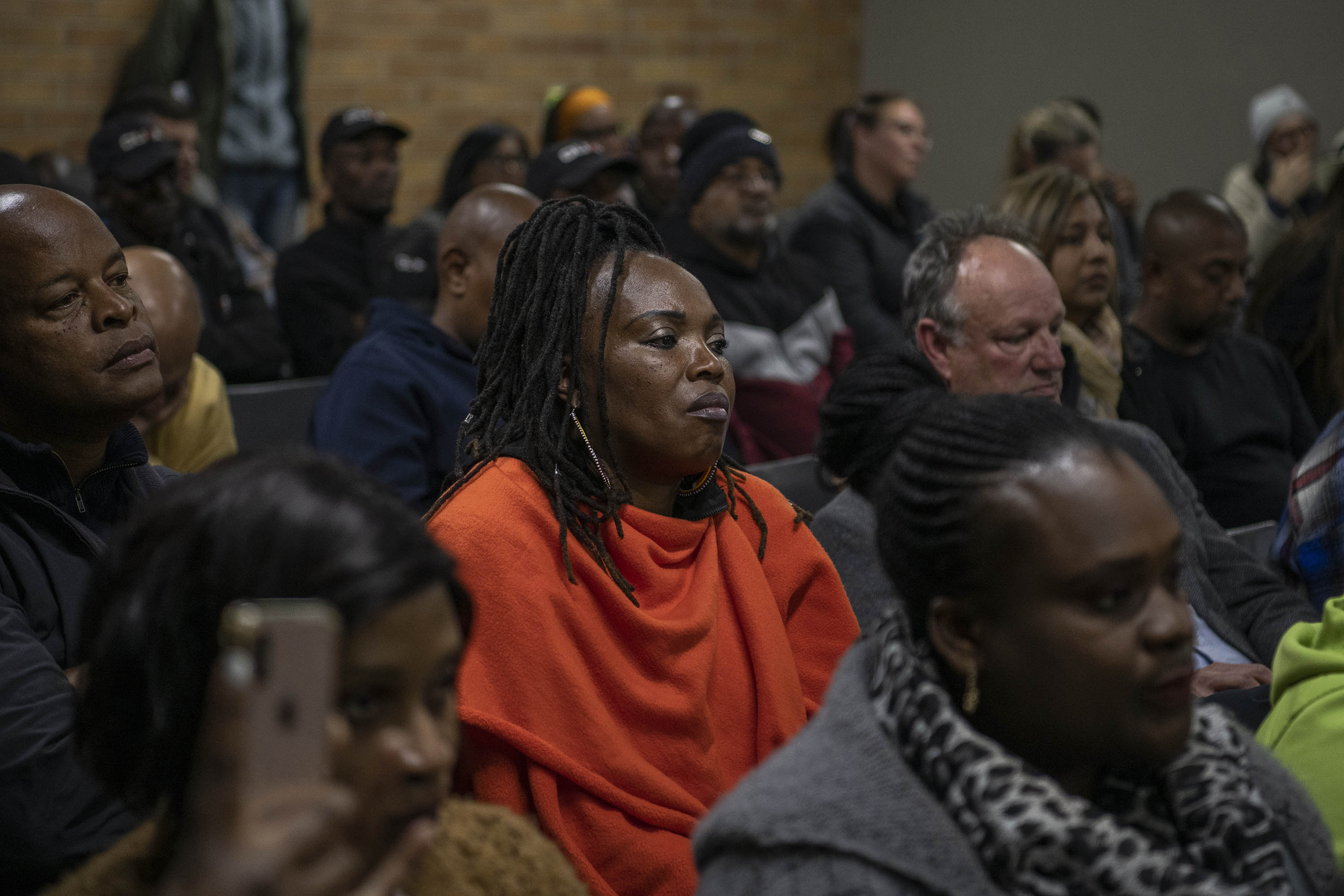
Martha Ngoye and Tiro Holele are, in a last-ditch effort, appealing to the Constitutional Court to overturn a Labour Appeal Court judgment. Archive photo: Ihsaan Haffejee
Whistleblower Martha Ngoye has approached the Constitutional Court to overturn a Labour Appeal Court judgment which left her without a job at the Passenger Rail Agency of South Africa (PRASA).
Ngoye, who was PRASA’s head of Legal, Risk and Compliance, has testified at the State Capture Commission about rampant corruption at the state-owned enterprise.
She was also a key witness at the judicial conduct tribunal probing allegations of misconduct against Judge Nana Makhubele, who served as the chairman of PRASA’s interim board after being appointed a judge.
Ngoye testified that she was sidelined by Makhubele, who then signed off on dodgy deals.
The tribunal and the Judicial Services Commission found Makhubele guilty of gross misconduct. She is facing impeachment.
But Ngoye, and her colleague Tiro Holele, who was head of strategy, have been without jobs since 2021 when they were dismissed.
In March 2021, the labour court ruled that their dismissal was unfair and ordered that they be reinstated.
But, in March 2024, this was overturned by the Labour Appeal Court (LAC). While agreeing that they were unfairly dismissed, the appeal court ruled that the labour court was not allowed, in law, to order that they be reinstated.
Ngoye and Holele have previously approached the apex court, seeking leave to appeal this ruling.
However, in December 2025, the court declined to hear the matter, saying “there were no prospects of success” and that the issues raised were already settled in law.
In a last-ditch attempt for justice, Ngoye has again approached the court asking that it reconsider its decision.
“We bring this application with hesitation and humility,” she said in her affidavit in which she and Holele are seeking a rescission of its ruling, that leave to appeal be granted and that the order of the LAC be set aside.
She cited the reasons for it as being: “The interests of justice and the truly exceptional circumstances (which) flow from the conduct of the LAC, the flaws in this court’s order and reasoning, and the intense impact this court’s decision has on us and other whistleblowers.”
“The perverse outcome in this case is that both the labour court and the LAC agreed that we were unlawfully dismissed. Yet we have been left with no remedy, and we have been required to pay PRASA’s costs.”
Ngoye said PRASA had terminated their employment because they had sought to uphold the rule of law and expose the abuse of power within the organisation.
And yet, while the courts had found PRASA had acted unlawfully, PRASA “had won”.
She said the impact of this was that they had been saddled with what was likely to be millions of rands of debt to PRASA for legal costs, “and we don’t know how we will pay that”.
Further, she said, the message the LAC judgment sends to other employers, particularly organs of state, is that they are free to dismiss troublesome whistleblowers, “litigate them to the ground” and avoid accountability.
In their previous application to the Constitutional Court, asking for leave to appeal the LAC ruling, Ngoye and Holele submitted that there was no basis in law or fact for the LAC to have interfered with the discretion of the labour court. The LAC had also set aside the cost order granted in their favour by the labour court, without giving any reasons for it.
Ngoye submitted that the Constitutional Court was wrong not to hear the appeal and had not given reasons why she and Holele should be left without a remedy, because two courts had found in their favour on the merits.
On the issue of costs, she said the court had regularly heard appeals on this issue only. In this matter, not only were they facing financial ruin, but the costs of litigation had been “deliberately weaponised against us to thwart us from exercising our rights”.
Ngoye said the only reason she was fired was that she had “blown the whistle” repeatedly on corruption and maladministration, and vocally opposed the appointment of an administrator to run PRASA after the then Minister of Transport disbanded the board. She had been viewed as having “gone rogue”.
She said after the Labour Court ruling, she had returned to work and had been immediately served with a disciplinary inquiry notice, and suspended on “trumped up charges”, some relating to her evidence at the state capture commission, “for bringing my employer’s name into disrepute”.
The disciplinary inquiry, after a year, found her not guilty on all counts. But when she returned to work, she was locked out of her office.
She said the victimisation was important because it supported her contention that there were “exceptional circumstances” justifying that the apex court consider the recission application.
PRASA has until mid-March to file opposing papers, after which the court is expected to consider the matter.