25 August 2026
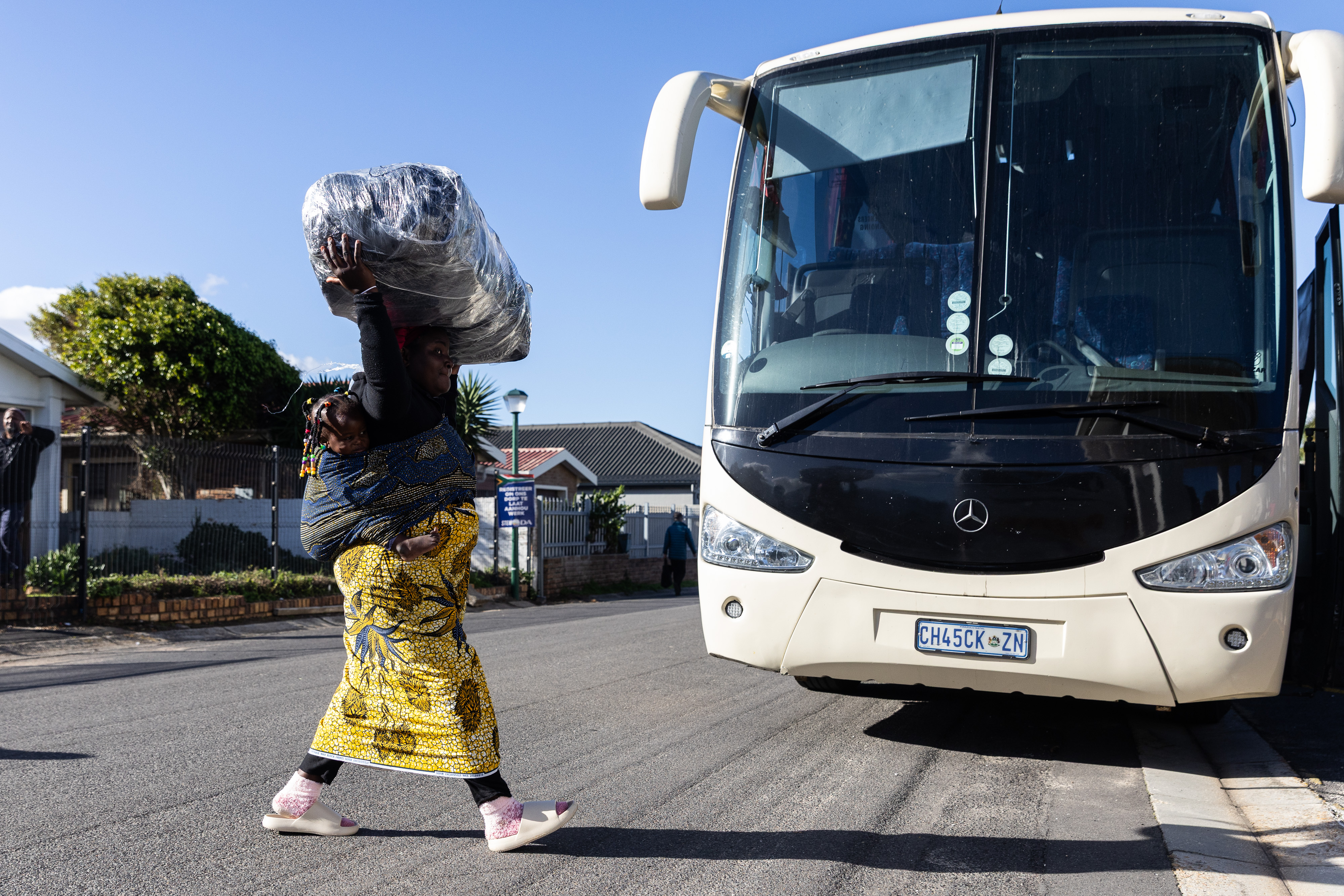
A mother and child boarded a bus arranged by the Malawian government in June 2026 in Hermanus. Archive photo: Ashraf Hendricks
The Department of Home Affairs (DHA) has spent R341-million on the repatriation and deportation of foreign nationals since June 2026. Almost 70% of this was spent on buses for immigrants fleeing xenophobic violence and a campaign by anti-immigrant group March and March.
About 100,000 foreign nationals have left South Africa, mostly at Beitbridge in Musina, Parliament’s Home Affairs portfolio committee heard on Tuesday. About 90,000 people were voluntarily repatriated between May and August, and 10,000 deported between April and July, according to Zamachonco Chonco, chief financial officer (CFO) of the Border Management Authority.
Most of those repatriated crossed Beitbridge and returned to Malawi (54,000) and Zimbabwe (28,000).
Breaking down the expenditure, Home Affairs CFO Gordon Hollamby said the highest expenditure was the cost of buses which stood at R233-million.
R48-million was allocated to the Department of Public Works and Infrastructure (DPWI) to establish temporary repatriation facilities at Musina. These have since closed.
About R10.7-million was reimbursed to eThekwini municipality for transport to Musina, and R3.8-million to the City of Cape Town for transport and repatriation facilities in Epping.
Further costs included overtime and accommodation for officials, chartered flights to the DRC, Ethiopia and Nigeria, and expenditure incurred by provinces.
Hollamby said the DPWI and metros’ assistance with facilities and transport “was all done in support of the department and as part of the humanitarian crisis given the scale and urgency of the project”.
He said DHA officials had worked “horrendously long hours” and R13-million in overtime was approved.
DHA director-general Tommy Makhode told the portfolio committee that reimbursements from other countries is being pursued through “diplomatic channels”. The DHA has written to the Department of International Relations and Cooperation for assistance.
Representatives of the Standing Committee for Refugee Affairs and the Refugee Appeals Authority (RAA) apologised for not having prepared their presentations but noted they had previously presented to Parliament.
During that 18 August meeting, RAA chairperson Zilpha Raphesu reported a backlog of 161,000 refugee appeals. These are handled by RAA after the DHA rejects an asylum application. Raphesu said 71,000 appeals are active and 90,000 inactive, meaning they have been abandoned or dormant for a long time.
The reasons for the large backlog includes operational challenges, postponement of appeal hearings, lack of in-house interpretation services, complex appeal cases, and capacity problems.
