1 December 2025
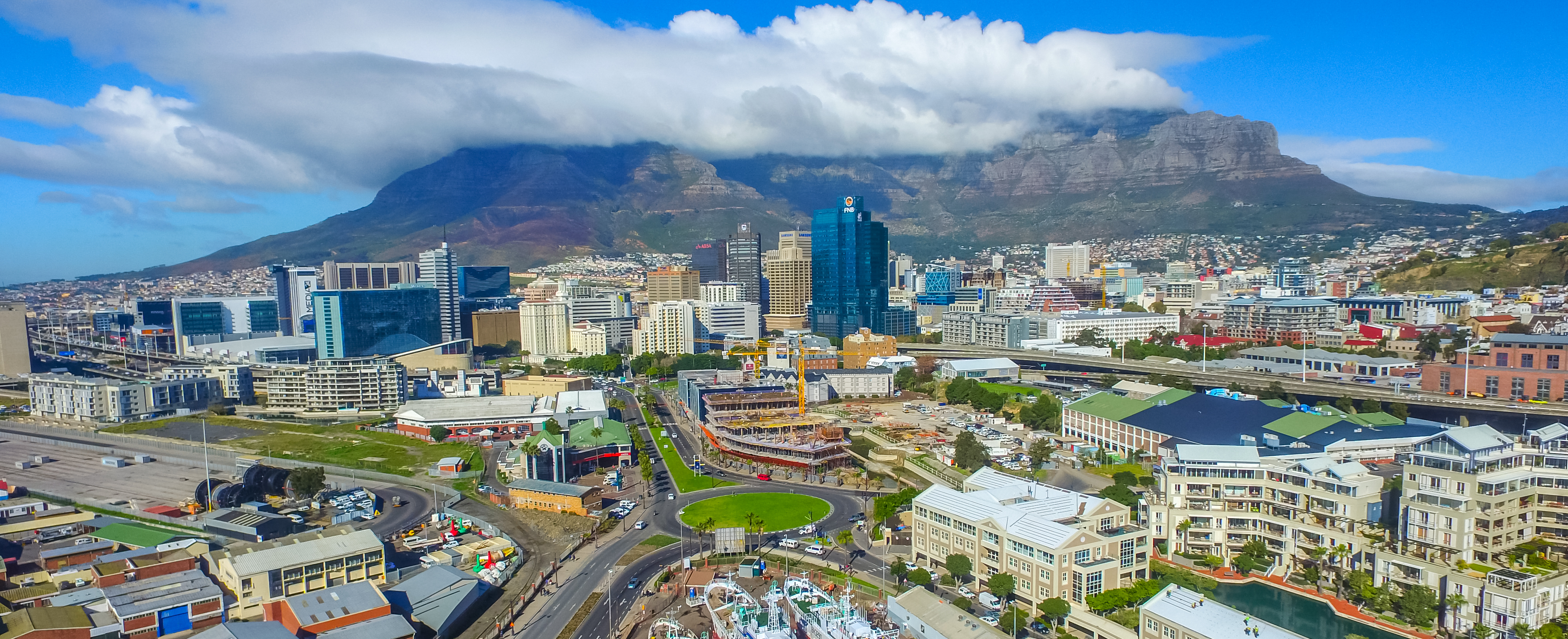
When governments freeze or cap rents, supply collapses, argues Cape Town Mayor Geordin Hill-Lewis. Photo: Wikimedia user
This is a response by the mayor of Cape Town to a call for rent control.
When it comes to housing costs, there is often a temptation in public debate to reach for quick fixes that sound like they promise relief, but without exception deliver only disappointment.
Every thriving global city confronts rising demand, limited land, and escalating prices - and Cape Town, a city whose growing appeal is undeniable, is no exception. So as frustration mounts, so do calls for rent caps, foreign-buyer restrictions, and heavy-handed interventions that have failed everywhere else they have been tried. At moments like this, the city deserves a discussion rooted in evidence and economic reality rather than political theatre.
The proposal to cap rental prices is an emotionally satisfying argument. But it is also wrong. And not just theoretically wrong, but demonstrably, repeatedly, historically wrong. This has been proven in every city that has tried to price-control its way out of housing scarcity.
Cape Town is an increasingly successful city, economically and culturally, and like every successful city in modern history, its biggest housing problem is simple: too much demand is chasing too little supply. The only solution to housing affordability is either to reduce demand - which would mean becoming poorer, less attractive, less safe, and less economically dynamic - or you increase supply by building more housing. That’s it. There is no magical third option.
And the fact that Cape Town’s desirability is rising is not a crisis. It is a sign that the city is doing many things right. Do you know where rent is cheap? Hillbrow. No one cites it as a model of success.
The reality is that rent control doesn’t fix scarcity, it actually worsens it. When governments freeze or cap rents, supply collapses. Berlin demonstrated this dramatically between 2020 and 2021, when its ambitious rent cap led to a 50% drop in available rental housing within months. Construction slowed, landlords pulled units from the market, and rents in the uncontrolled segment soared, so much so that the German Constitutional Court struck the policy down as unconstitutional.
San Francisco’s long-running experience produced the same result. A landmark Stanford study found that rent control shrank the rental market by 15%, as owners converted units into condos, sold them, or withdrew them entirely. And in New York, decades of frozen rents produced entire corridors of buildings that are now poorly-maintained because landlords cannot cover rising costs with artificially fixed rents.
Few policy proposals anywhere have such a well-documented and comprehensive track record of abject failure as this one. And yet, it keeps popping up in successful major cities around the world.
But the strongest argument against rent control is not only that it fails. It is that it actively entrenches inequality. Rent control protects whoever already has a lease, not the people who most need housing. It creates an insider class of protected tenants and an outsider class of shut-out newcomers. In every controlled city, the wealthy cling to artificially cheap units for decades, while the young, the poor, and the newly arrived face skyrocketing rents in the uncontrolled segment.
It is no accident that these outcomes repeat themselves across places, decades, and political ideologies. When you prevent owners from charging market rents, two things happen - always, everywhere.
First, supply drops. People stop building new units or withdraw existing ones. After Argentina scrapped rent control in Buenos Aires, the rental housing stock reportedly increased by nearly 195%, largely because previously withheld units re-entered the market. And those Argentinians who can finally access decent rental housing do not care that some of it belongs to foreigners; they care that it exists.
Second, maintenance collapses. If you can’t recover the costs of upkeep, you stop maintaining the building. Deferred maintenance compounds until it becomes too expensive to reverse. This is the unfortunate reality. This is how vibrant neighbourhoods become slums.
The moral narrative of rent control collapses once you look at who actually benefits. It achieves the opposite of social justice.
And this brings us to another important truth that the rent-control conversation often distorts: foreign buyers are not the villains in Cape Town’s story. Foreign ownership has increased since covid, rising from 2.5% to 4.3% of purchases between 2020 and 2024, and growing from 1.4% to 2.1% of total ownership over the past two decades. But foreign buyers overwhelmingly cluster along the Atlantic Seaboard and pockets of the Helderberg region. These are luxury neighbourhoods on mountainsides and coastlines. The kinds of areas in every leading global city where prices rise regardless, simply because they are highly desirable places to live.
While foreign buyers do push prices up at the very top end, they also inject capital into the city, support tourism-linked spending, and broaden the City’s rates base. Blaming foreigners is comforting, but it is not serious analysis.
The more complex truth is this: most of the pressure in Cape Town’s housing market comes from South Africans moving to Cape Town, not foreigners. Projections based on consumer retail data show a net inward migration of around 100,000 people from the rest of South Africa to Cape Town in the last 36 months alone.
The uncomfortable truth is that Cape Town’s housing stress is not foreign-made, investor-made, or Airbnb-made. It is supply-made. When a city grows, its housing stock must grow with it, in volume, in typology, in density, and in spatial spread.
And while even more can be done, Cape Town is a national leader in enabling affordable housing delivery, with more land released in the last two years than in the decade prior, and a pipeline of 12,000 well-located affordable housing units close to the CBD and other economic nodes of the metro.
Cape Town is also leading nationally with a suite of innovative affordable-housing reforms.
The City has introduced Land Discount Guidelines that allow City-owned land to be deeply discounted to maximise social-housing yield, a first in South Africa. The City is offering substantial utility and rates discounts for accredited social-housing projects, also a national first. Amendments to our Municipal Planning By-Law now make it easier for micro-developers to build affordable units more rapidly in townships, informal settlements, and lower-income suburbs. And to support this emerging sector, we are rolling out pre-approved building typologies and discounted development charges to encourage safe, compliant small-scale rental construction.
The seductive political temptation is that, if prices are high, force them down. Cap rents. Restrict increases. Regulate the market until it bends. But economics is not impressed by wishful thinking, and the world’s experiments with rent control are an archive of failure.
If we are serious about improving affordability, we must also be honest about where the blockages reside. Social housing is funded by national government through SHRA subsidies and Human Settlements grants, not municipal budgets. The City’s role is to create the conditions for delivery by releasing land on a discounted basis, streamlining approvals, providing bulk services, and offering incentives to social-housing institutions and micro-developers. Cape Town is doing this at a scale unmatched by any other metro.
What will not deliver affordability are the familiar political distractions such as rent caps, foreign-buyer restrictions, or attempts to regulate prices downwards. None of these measures build new homes. They have failed everywhere they’ve been tried and would fail here too.
We will solve our challenges by freeing up more building, more urgently and ambitiously. In housing, as in economics, you cannot regulate away scarcity. You can only outbuild it.
.jpg)