26 March 2026
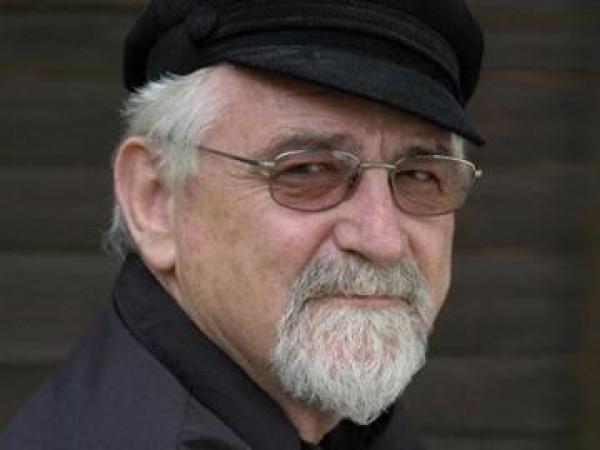
Award-winning journalist, author and activist Terry Bell died on Wednesday aged 84. Archive photo.
Award-winning journalist, author and activist Terry Bell died on Wednesday aged 84.
Terry committed his life to the struggle for justice and freedom. He fought against apartheid, paying for it with detention and 27 years of exile, in Zambia, the United Kingdom and later in New Zealand where he helped to build an anti-apartheid movement. The ANC sent him to Tanzania, where he and his wife, Barbara, ran the Solomon Mahlangu Freedom College for the children of ANC exiles.
On their return to South Africa in the early 1990s, Terry and Barbara threw themselves into building a new country, where all would be equal and thrive.
In widely-read, weekly columns on labour (many of them published in GroundUp), Terry tracked the ups and downs of the trade union movement which was so close to his heart but of which he was at times bitingly critical.
That fierce independence of thought characterised Terry.
Nelson Mandela famously described him as a “wayward boy” - a title of which he was modestly proud and which he gave to a series he wrote in the Daily Maverick on his life.
He described himself as “an ANC member who had strayed far from the fold”. But in truth, it was the ANC which had strayed from the principles which Terry and so many others believed in.
Terry liked to quote Italian revolutionary Gramsci’s dictum that a revolutionary should show pessimism of the intellect but optimism of the will. He had both; wherever he was, he threw himself heart and soul into the causes he believed in, from press freedom to early childhood development to workers’ rights. He could be found in the street holding a placard demanding freedom of speech, or at a book fair running a tiny stall with Barbara collecting signatures for a petition to remove VAT on books, or recently, as a regular participant in demonstrations demanding rights for the people of Palestine.
But he also did the hard intellectual “pessimistic” work. He brought an uncompromising stare to the activities of his friends and allies as well as his enemies.
Terry was a big man. He was big in size, he dwarfed his diminutive wife Barbara, the meticulous and indefatigable researcher behind much of his work. He was big in heart, and big in intellect. He was also a ballet dancer who danced well into his seventies; a fabulous story teller; a man who loved coffee and the surf and red wine and philosophical discussions; and a warm, loyal, funny friend.
He was a winner of the Nat Nakasa award for courageous journalism; the author of several books, including a book on the Truth and Reconciliation Commission, and one on trade unionist Moses Mayekiso, for whose release from an apartheid jail Terry and Barbara campaigned in London, a campaign which attracted the animosity of the SA Communist Party (which insisted that all anti-apartheid activity be approved by the party).
Soon before her death last year, he and Barbara completed a long-researched book on early childhood development. He also wrote “A hat, a kayak and dreams of Dar”, an hilarious account of the couple’s aborted attempt in the 1960s to kayak from London to Dar-es-Salaam and to retrieve a lost hat.
Terry wore a hat - a beret - everywhere. If you asked why on a hot day he was wearing a beret, he would explain that in the feudal system serfs had been expected to doff their hats in the presence of their lord. He, Terry, would wear a hat, and he would doff it to no-one.
Terry and Barbara Bell were a force for good in the world. They will not be forgotten.
