22 May 2026
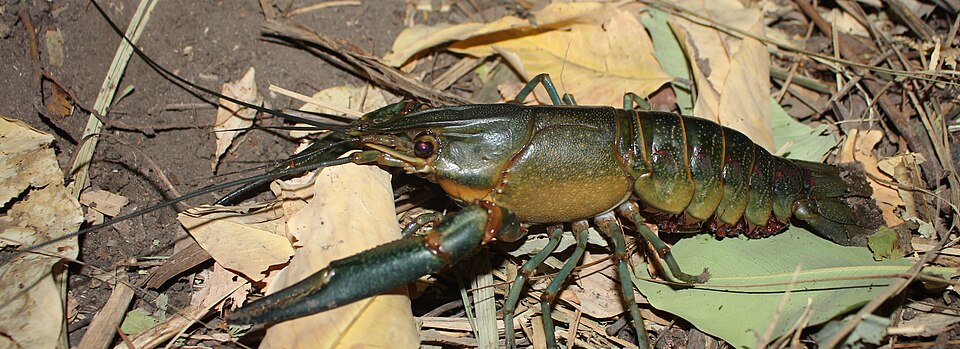
The invasive Australian red claw crayfish is spreading in southern Africa’s rivers. Photo: Nature Catcher | Wikimedia Commons
An out-of-control pest is invading southern Africa’s major river systems: the Australian red claw crayfish. Researchers warn this highly invasive species is moving dangerously close to the Okavango Delta.
The red claw crayfish (Cherax quadricarinatus), native to northern Australia and Papua New Guinea, was first introduced into southern Africa’s freshwater systems around 1993 for aquaculture.
Crayfish are believed to have escaped from failed aquaculture projects, including one in eSwatini affecting a dam within the Crocodile River catchment. This forms part of the broader Inkomati River system that ultimately flows east into Mozambique.
Since that initial entry point, the species has spread extensively through the region’s waterways at an alarming rate — averaging about 6 km a year, but reaching up to 49km a year downstream during flood events.
Based on these rates, Dr Josie South, associate professor at the University of Leeds, warns the crayfish could invade the pristine Okavango Delta within ten years, approximately 17 years since it first appeared in the Barotse floodplain.
South, who is also an honorary research associate at the South African Institute for Aquatic Biodiversity and Stellenbosch University’s Centre for Invasion Biology, has spent the last eight years researching crayfish invasions.
She led WWF Zambia’s Upper Zambezi Invasions Project between 2018 and 2020, helping to generate the most comprehensive body of work on the species in Africa to date. She is part of an international working group tackling red claw crayfish invasions across the world, collaborating with authorities and researchers in Texas, Indonesia, Martinique and Spain.
During a six-week expedition to survey the upper Zambezi basin in 2019, South and her team spent the first four weeks without finding any red claw crayfish.
However, everything changed when they reached the Barotse floodplain in Zambia.
During the dry season, the water on the floodplain concentrates into small pans near local villages. South said the water was only about ankle-deep. “We were just picking up crayfish as we walked. It was insane,” she said.
The invasion in these shallow waters was so severe it terrified locals, who referred to the alien crayfish as “cockroaches” or “Chinese crabs”.
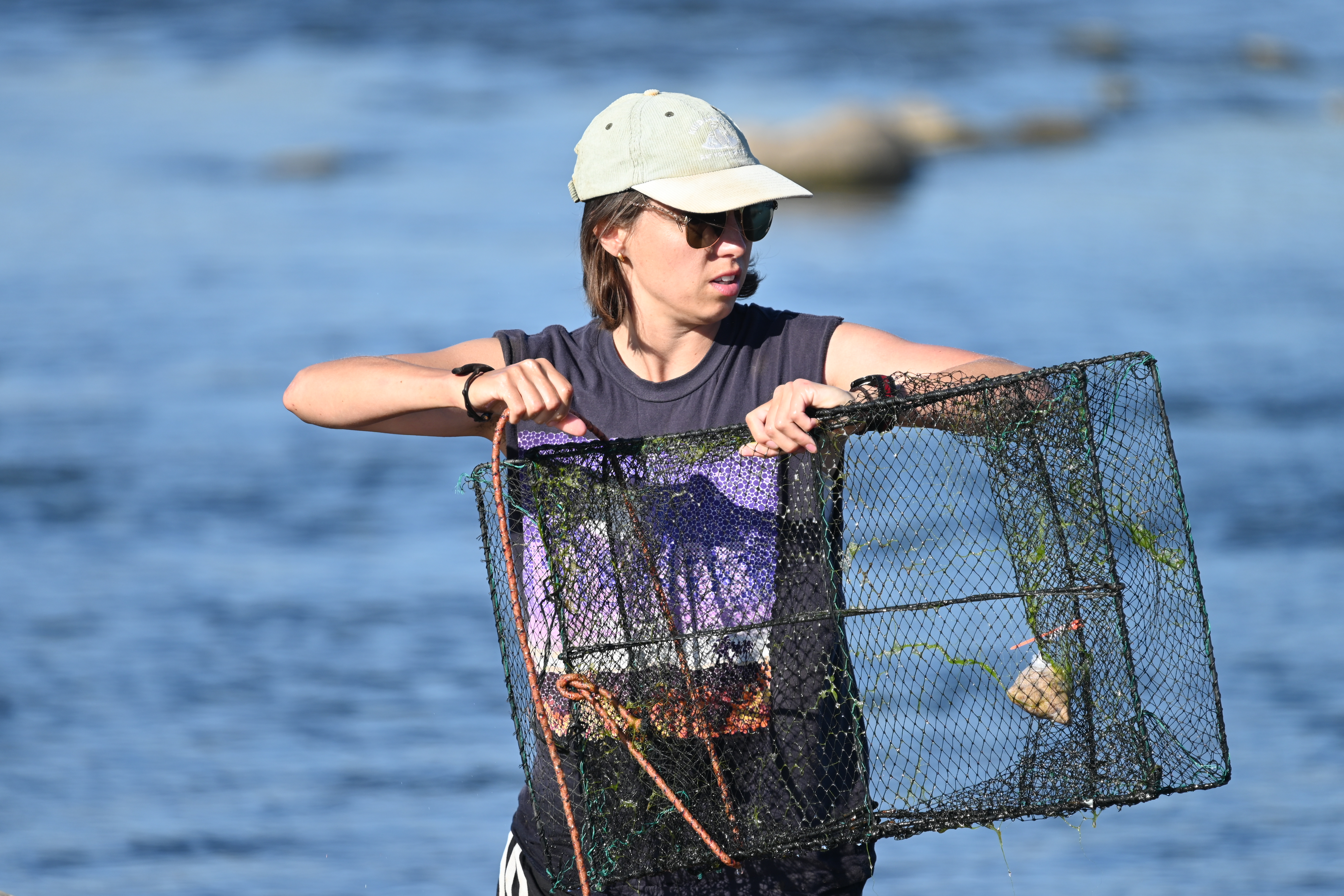
Dr Josie South setting crayfish traps in the Kruger National Park. Photo: Taylor Maavara
Red claw crayfish are inadvertently spread through raw water transfers and agricultural irrigation systems, she says; for instance when sugar cane farmers pump water from dams where crayfish are present.
In its native range, the Australian red claw crayfish has evolved within local ecosystems for thousands of years and is part of the natural food webs. It is prey for birds and larger invertebrates and is valued as a food species by people. This is not so in Africa — the only continent, aside from Antarctica, that has no native freshwater crayfish. Entering systems that have not evolved with it, the species faces few natural predators and little competition.
The crayfish acts as a “shredder species”, chopping up leaf litter and pumping excess nutrients into the water. It is able to outcompete or prey on local species as it moves into new waterways, says Dr Dumisani Khosa, a freshwater ecologist at South African National Parks.
“They are aggressive predators that consume everything from aquatic plants and snails to fish eggs and juvenile fish,” he says.
Khosa notes that in Kruger National Park, the crayfish’s presence may be leading to declines in native species like tilapia and yellowfish, simply because the eggs and young native fish cannot escape the predators.
Dr Moses Chibesa, a lecturer at the Copperbelt University in Zambia, says in areas like Itezhi-Tezhi on the Kafue River, fishers are suffering significant losses.
“The major concern is the crayfish eating fish caught in nets and damaging fishing gear,” he says.
These nets are expensive, and their destruction dramatically increases the cost of fishing for vulnerable communities.
Researchers have also detected high levels of heavy metal contamination in crayfish in the Phongolo floodplains.
“This may cause human health issues and further exacerbate public health risk from food insecurity,” says South.
The financial damage is staggering, says South: scavenging by the crayfish costs the Zimbabwean side of Lake Kariba an estimated $500,000 annually, while fisherfolk in the Barotse floodplain, around Mongu, lose around $250,000 a year.
Because eradicating the crayfish from large, complex African river systems is practically impossible, researchers and practitioners are now focused on how to suppress its abundance and continue to reduce its spread.
South advocates exploring a highly targeted, artificially created virus, which would be host-specific, designed to switch off the reproductive genes of the red claw crayfish without posing any risk to native wildlife. However, this technology requires stringent testing and is probably at least a decade away from being a viable field solution.
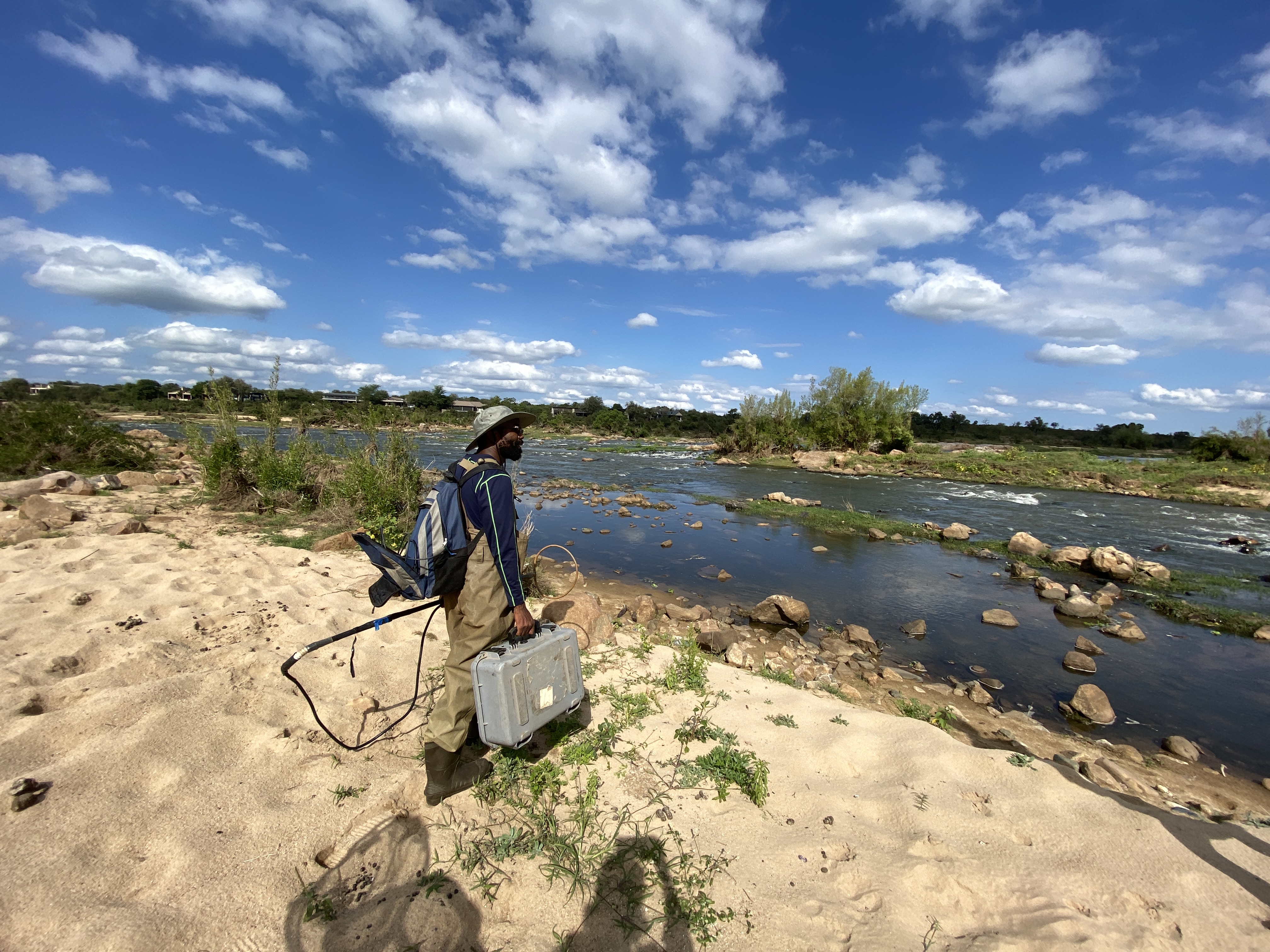
Dr Dumisani Khoza surveying a monitoring site on the Crocodile River. Photo: Josie South
While scientists wait for advanced biological controls, experts warn that a “do-nothing” approach will leave fisheries decimated. Dr Matthew Burnett, principal scientist at the Institute of Natural Resources, says heavily invaded areas must now be managed as “altered ecosystems”.
To address the immediate crisis, Burnett advocates for “community-enhanced alien species control”. By equipping local fisherfolk to actively harvest the crayfish, communities could suppress the pest’s numbers while generating income by supplying global eco-tourism lodges, or by using spoilt crayfish for fertiliser.
But South is sceptical of so-called “pest to plate” solutions. She points out that commercialising the species simply monetises the pest. If it is seen as valuable, people might smuggle and seed crayfish into new water bodies in the hopes of making a profit — a trend already observed by border authorities intercepting live crayfish en route to Botswana, Malawi and South Africa.
There is also serious concern about human health, with an ecotoxicological study conducted by North West University researchers in the Pongola floodplains showing a higher accumulation of heavy metals and toxins in crayfish than in some native fish.

Dr Takudzwa Madzivanzira taking a break from sampling crayfish in the Kabompo River in Zambia. Photo: Josie South
Fisheries in Africa are already under immense pressure from climate change, increasing demand, and collapsing fish stocks. Chibesa notes that native fish stocks had been heavily depleted long before the crayfish arrived, driven by severe environmental degradation – such as a major mining acid spill in the upper Kafue River – and relentless overfishing.
As traditional catches declined, people resorted to exploitative practices, such as using mosquito nets intended for malaria protection to trawl rivers, leaving no breeding stock to survive. It was against this backdrop of collapsing inland fisheries that governments initially promoted the introduction of the red claw crayfish as a substitute protein source.
Instead of providing resilience, the alien invader compounded the crisis, ravaging what little remained of the fishers’ yields. Now, with traditional fish stocks decimated, desperate communities are increasingly forced to eat the crayfish out of pure necessity.
Chibesa and Burnett see wild-harvesting in the most badly affected areas as a win-win interim solution.
“We are not proposing aquaculture or the large-scale commercialisation of the crayfish. The focus would strictly be on small-scale, wild-caught capture within invaded areas to help stem the spread of the alien species,” says Burnett.
Burnett says eating the crayfish is a necessary, pragmatic response to the devastation. But rolling out such plans requires overcoming massive logistical hurdles for small-scale fishers, particularly the lack of cold storage and refrigerated transport needed to safely move the highly perishable catch to nearby eco-lodge markets.
“But we have to start somewhere,” says Burnett.
In the meantime, the reality remains unchanged across southern Africa’s river systems: fishing nets continue to come up shredded, and with them, the fragile livelihoods that depend on them.
