19 May 2026
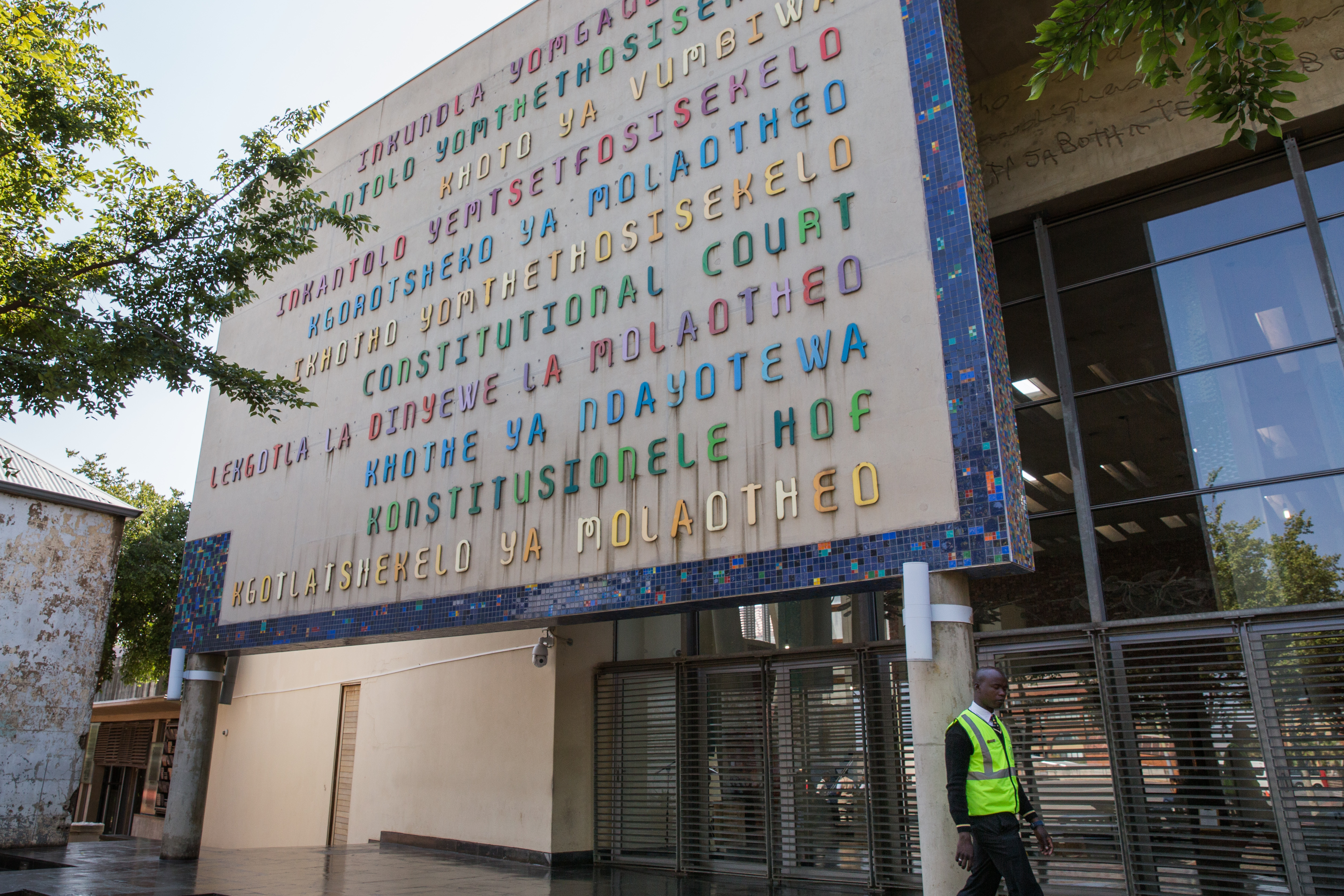
The Constitutional Court is facing a deepening institutional crisis, says Freedom Under Law. Archive photo: Ashraf Hendricks
Non-profit organisation Freedom Under Law (FUL) has warned that South Africa’s Constitutional Court is overwhelmed and facing a deepening institutional crisis. Backlogs are mounting and rulings are increasingly being handed down late. This is in part because the court is dealing with floods of appeals, as litigants turn to the court as their “last roll of the dice”. The court’s constitutional role, as a guardian of the rule of law, is under threat.
On Tuesday, FUL released a research paper which aims to stimulate discussion on how best to strengthen the court’s effectiveness. The paper has been given to judicial leadership, relevant ministers, and legal practitioners.
At a media briefing, FUL executive officer Judith February cited last week’s “Phala Phala” judgment – which took the court 17 months to hand down – as an example of problems at the court .
The research paper argues that the apex court has become “overburdened and undercapacitated” following the expansion of its jurisdiction more than a decade ago. The average period between hearing a matter and delivering judgment has more than doubled over the past decade.
“The court’s ineffective management of its caseload under its expanded jurisdiction has compromised its ability to discharge its specialist constitutional function,” the report says.
A 2012 constitutional amendment transformed the court from a specialist tribunal, dealing only with matters that raised constitutional issues, to a general court with the power to adjudicate legal matters raising “arguable points of law of general public importance”.
FUL researcher Chris Oxtoby said at the briefing that the number of applications filed at the Constitutional Court each year has more than tripled since 2010, with the Court now receiving close to 400 applications annually.
Most of these matters do not raise constitutional issues or important legal questions.
“At the same time, the average period between hearings and judgments has more than doubled over the past decade, while applications for leave to appeal often remain unresolved for months,” he said.
The report unpacked the reasons for this.
One of the issues, it says, is that the court still uses outdated processes, procedures and rules designed for a much lighter workload.
Another issue is that the 11-member court has to sit en banc (all together) when hearing cases, and a minimum of eight justices have to decide how to treat every new application. FUL proposes a constitutional amendment to reduce the number of justices needed.
The report further notes problems with the “interests of justice” test — the discretionary standard used to decide whether appeals should be heard.
The test, the report says, is currently too open-ended and unpredictable, encouraging speculative appeals from litigants who see the Constitutional Court as a “last roll of the dice”.
FUL proposes that the court gives fuller reasons for its decisions to refuse leave to appeal to give guidance to lawyers on prospects of success. While this may initially create more work for the court, it could in the long term reduce the number of applications.
The report also proposes a shift to more “rule-based” decision-making for leave to appeal and providing reasoned judgments when leave to appeal is refused, “signifying which cases are not deserving of attention”.
Court filings should also have stricter page limits, and court rules should be enforced more tightly, the report proposes.
In the long term, FUL says decision makers could look to the “German model”, where 16 justices sit in separate chambers for constitutional and general matters. This could mean merging the Constitutional Court and the Supreme Court of Appeal into a single apex court.
The German court was also assisted by a large, highly qualified professional staff complement, which provided a “sophisticated filtering process”.
“The court’s ability to protect the rule of law depends not only on the substance of its judgments but on its capacity to decide cases promptly, predictably and transparently.
“Whatever the approach, the time has come for a coherent programme of reform, one that preserves the court’s authority, restores its efficiency and ensures that it can continue to discharge its role,” the report said.
