22 October 2026
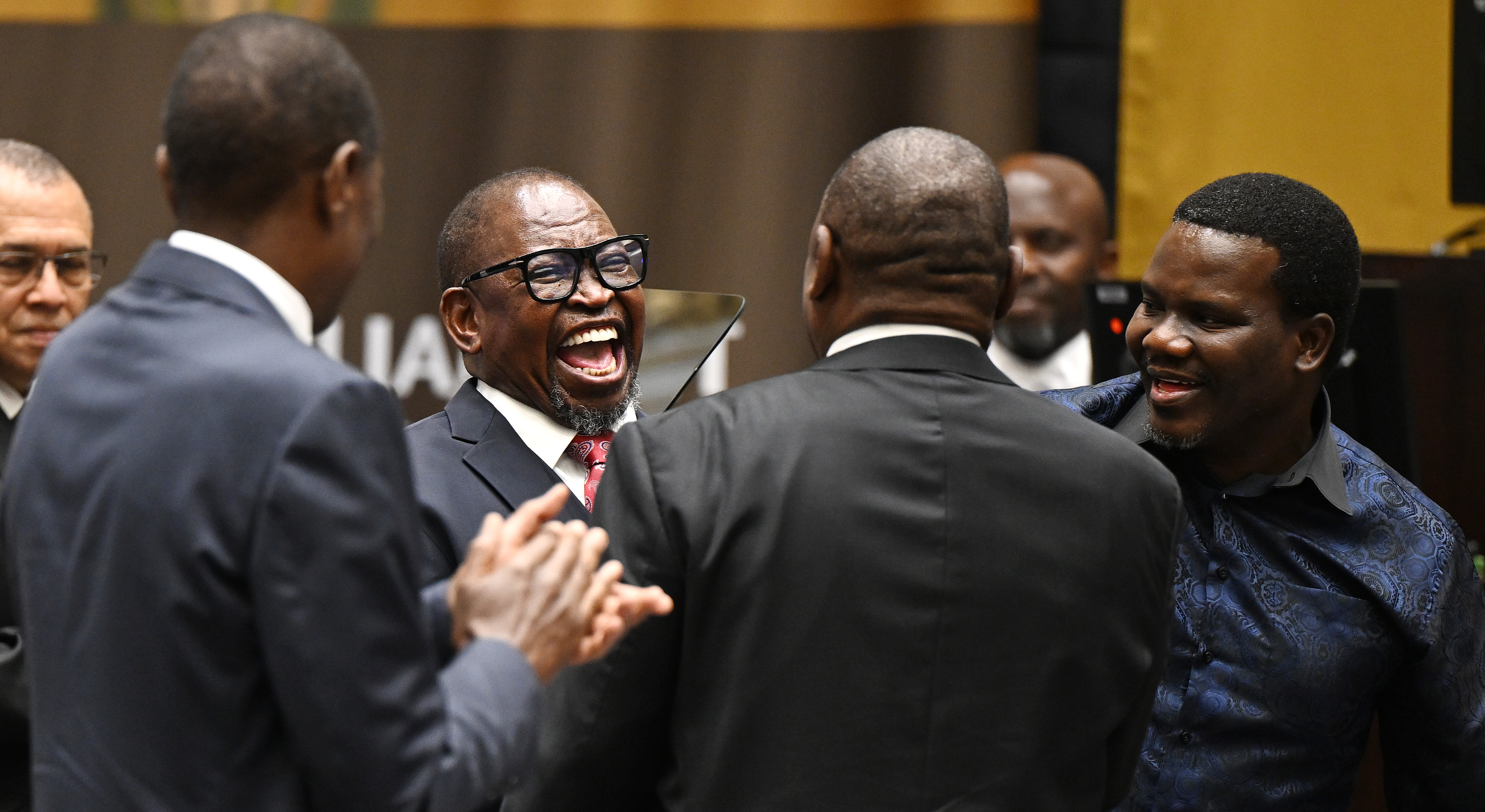
Minister of Finance Enoch Godongwana announced an allocation of R1.6-billion over the next three years to combat child stunting and malnutrition. Photo: Phando Jikelo/Parliament
The government has allocated R1.6-billion over the next three years to combat child stunting and malnutrition, with interventions focusing on pregnant women and their babies during their first 1,000 days of life.
This targeted nutritional support will be extended into pre-birth care nationally, though specific details are not yet available.
Minister of Finance Enoch Godongwana announced the injection of funding during his Medium-Term Budget Policy Statement (MTBPS) on Wednesday.
David Harrison, CEO of the DG Murray Trust, which advocates for a maternal support grant and improved child nutrition, described the R1.6-billion allocation as “a foot in the door”, but added that “the amount needed is far greater than what has been allocated, but it is welcome”.
“Without yet seeing the breakdown, this is the first time that the focus has shifted into pregnancy, providing targeted support to at-risk pregnant women and mothers of low-birth-weight babies. It is the first step towards a more comprehensive strategy to reduce stunting,” he said.
The scale of the challenge is significant. In his State of the Nation Address in February, President Cyril Ramaphosa announced a national campaign to tackle childhood stunting, which he said affects more than a quarter of South African children under five. This places them at increased risk of illness and affects their ability to learn and develop.
Ramaphosa described childhood stunting as a national crisis and pledged to end it by 2030. He then established a special task team chaired by Saul Musker, the Presidency’s head of strategy and delivery support. The president said the government would focus on the first 1,000 days of life, a period covering pregnancy and a child’s first two years.
The president also promised targeted interventions to ensure pregnant women and babies born with low birth weights receive the protein and nutrients they need. Wednesday’s allocation demonstrates a commitment to fund that promise.
“Stunting and malnutrition denies our children from fully reaching their growth and learning potential,” Godongwana said on Wednesday.
National Treasury confirmed that the R1.6 billion allocated over the next three years will be channelled to provincial health departments through the District Health Programmes Grant. The funding will support nutrition services, including micronutrient supplementation for pregnant and breastfeeding women and children at primary healthcare facilities.
Treasury said no funding had been set aside for a maternal support grant.
Stunting occurs when children experience impaired growth, often because of prolonged inadequate nutrition, repeated infections and poor living conditions. Its effects can extend beyond physical development, affecting learning and health outcomes.
The R1.6-billion forms part of a broader reprioritisation of government spending, with National Treasury identifying savings in social grant expenditure that will be redirected towards combating gender-based violence and supporting child malnutrition interventions. It also comes as the Department of Basic Education expands its focus on early childhood development.
In May, basic education minister Siviwe Gwarube announced that an early childhood development (ECD) nutrition pilot is being implemented, beginning with ECD centres in the Eastern Cape. She said the initiative responded to findings from the Thrive by Five study, which identified stunting among children attending early learning programmes.
The ECD nutrition pilot and the R1.6-billion allocation are separate initiatives, but it remains unclear how the departments of health and basic education will coordinate their efforts.
Harrison said the DG Murray Trust had been working with the Presidency to reduce the number of babies born with low birth weights through multiple micronutrient supplementation and ring-fenced nutritious foods.
He pointed to the Khulisa Care Programme in the Western Cape as a promising model. The pilot, implemented in partnership with the provincial government, DG Murray Trust, Grow Great Campaign and Shoprite, aims to improve maternal nutrition and reduce childhood stunting. While existing interventions focus from birth, this programme targets underweight pregnant women and women at risk of delivering low birth-weight babies.
Harrison said the organisation plans to mobilise private donors to match the government’s R1.6-billion allocation within the next three months.
The DG Murray Trust is among a network of organisations that have been researching and lobbying for nutrition programmes, and the extension of the child support financial grant into pregnancy in the form of a maternal support grant through the Social Development Department. This is not yet happened.
While the additional nutrition funding signals a commitment to addressing childhood malnutrition, questions remain about implementation.
National Treasury and the Department of Health have yet to clarify how they will divide the allocation, whether it will support existing nutrition services or new interventions, and what measures will be used to determine whether fewer children are experiencing stunting.
Godongwana’s speech made no mention of other early learning and ECD allocations.
Gwarube is on record stating that around 1.2-million children aged three to five currently access early learning, leaving a gap of about one million children. “One million children not accessing any ECD programme is not a statistic we can become comfortable with. It is the distance we still need to cover,” she said this week at the 2026 Bana Pele Leadership Summit.