16 March 2026
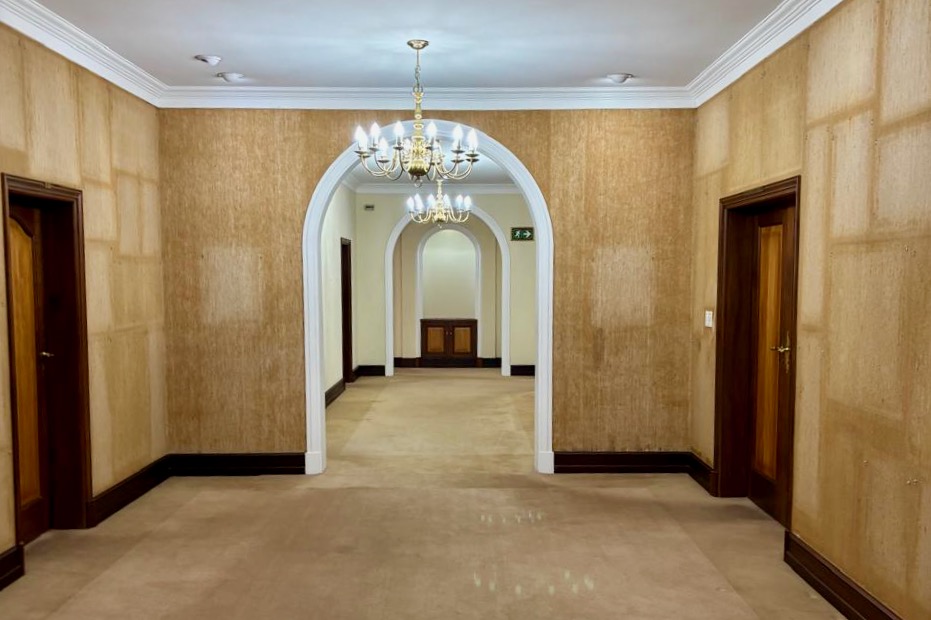
Tongaat head office stripped of expensive paintings and antiques ahead of a possible visit by liquidators. Photo supplied
Vision Investments, Tongaat Hulett Limited’s controlling creditor, has denied that it triggered the sugar giant’s liquidation by scuppering its own business rescue plan for the company. Instead, Vision blames the government.
Tongaat went into business rescue in October 2022. After this failed, the business rescue practitioners (BRPs) launched a liquidation application on 12 February to provisionally wind up the company.
Thomas Funke, CEO of SA Canegrowers, previously told GroundUp: “All parties involved understand what is at stake should Tongaat Hulett face an unfunded liquidation or even temporary stoppage of work: the majority of South Africa’s small- and large-scale sugarcane growers will immediately lose market access, leading to devastating income and job losses in rural KwaZulu-Natal.”
Initially, Vision adopted a “neutral” stance on the liquidation. But now it has filed an “explanatory” affidavit.
This comes after the BRPs, Trade and Industry Minister Parks Tau and the Industrial Development Corporation (IDC), which provided R2.3-billion in bridging finance, have all accused Vision of reneging on the terms of its own rescue plan, which was adopted by Tongaat Hulett’s creditors in January 2024.
Vision has been accused of not investing any of its own money and imposing additional conditions, such as reform of the sugar industry, scuppering the deal that would rescue the company.
Late last year, the BRPs approached the IDC for a further R600-million to tide the company over until the deal with Vision was concluded.
But the IDC countered that it wanted Vision to invest at least R200-million of its own money. Vision refused. The rescue plan lapsed.
The BRPs, in their affidavit, claimed that Vision’s “take it or leave it approach” had left them with no alternative but to proceed with liquidation.
Vision director Rutenhuro Moyo, in his affidavit on Friday, denied that his company was to blame. Instead, he challenged the minister and the IDC to “come to the party”.
Moyo said that, since the liquidation application was filed, Vision had been engaging with King MisiZulu kaZwelithini, the IDC, small-cane growers and unions to “find a lasting solution”.
Vision had then engaged with the IDC to consider a revised proposal which would enable the company to be rescued, rather than liquidated.
“To date no definitive response has been received from the IDC on the proposal,” Moyo said.
He said that, throughout the business rescue process, Vision had “consistently sought to identify and develop a restructuring solution” to ensure Tongaat remained a viable and sustainable enterprise.
But the turning point came with the emergence, at a late stage in the implementation of the rescue plan, of the need for an additional R600-million. This was caused by a surge in imported sugar flooding the market last year, and the company’s projected profitability collapsing. Moyo blamed the government for not implementing industry reforms.
He said the minister and the IDC had statutory mandates to “save the sugar industry”.
Moyo said Vision was not prepared to take on an additional R200-million of the R600-million, as requested by the IDC.
“A liquidation application which will have devastating consequences not only for the region, but for the country, has been brought. It is opposed by government (the minister and the IDC). Yet government is coy about what it is offering to make good on its opposition.”
“It has not assisted Vision,” he said.
“And it does not place before the court any concrete funding framework, capable of addressing the immediate liquidity constraints identified by the BRPs.”
The liquidation application is to be heard in the Durban High Court on 16 and 17 April. These dates coincide with the scheduled opening of the milling season.
