25 March 2026
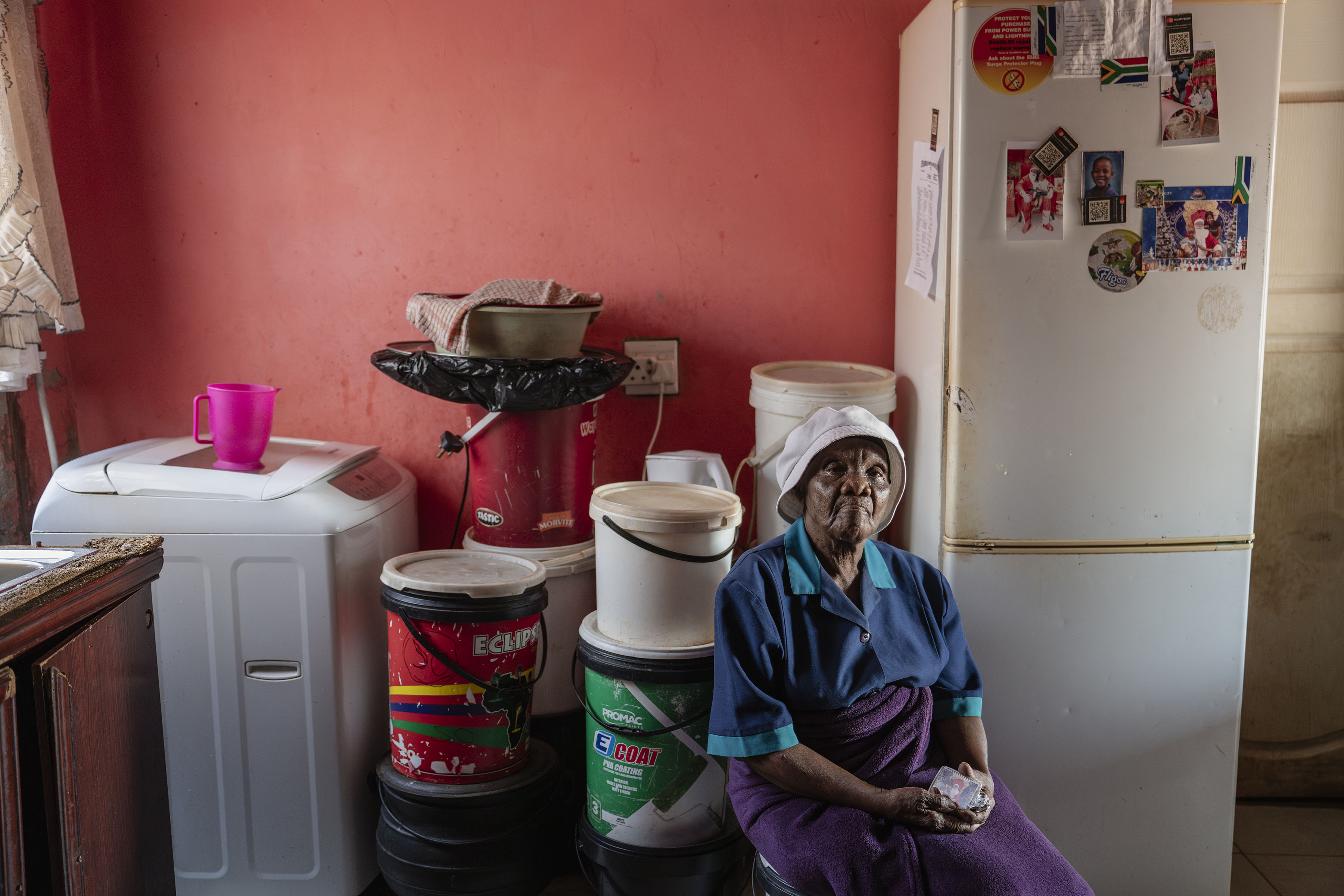
79-year-old Lehae resident Dorothy Harvey sits on the plastic buckets she uses to store water for her daily needs. Photos: Ihsaan Haffejee
Lehae, a township in the South of Johannesburg, is experiencing persistent water outages.
The area was developed in the 2010s with about 5,000 houses.
Residents told GroundUp that water supply has been unreliable since 2014 and water outages have become unbearably frequent in the past few years.
One part of Lehae, called Phase 1, is particularly affected because it is at a higher altitude. “We can go weeks without water, and no one seems to care,” said Phase 1 resident Muzi Nkosi.
Nkosi said the community has contacted officials at Johannesburg Water, and told to liaise with the ward councillor. “We have tried speaking with our councillors and the municipality, but they ignore us all the time,” he said.
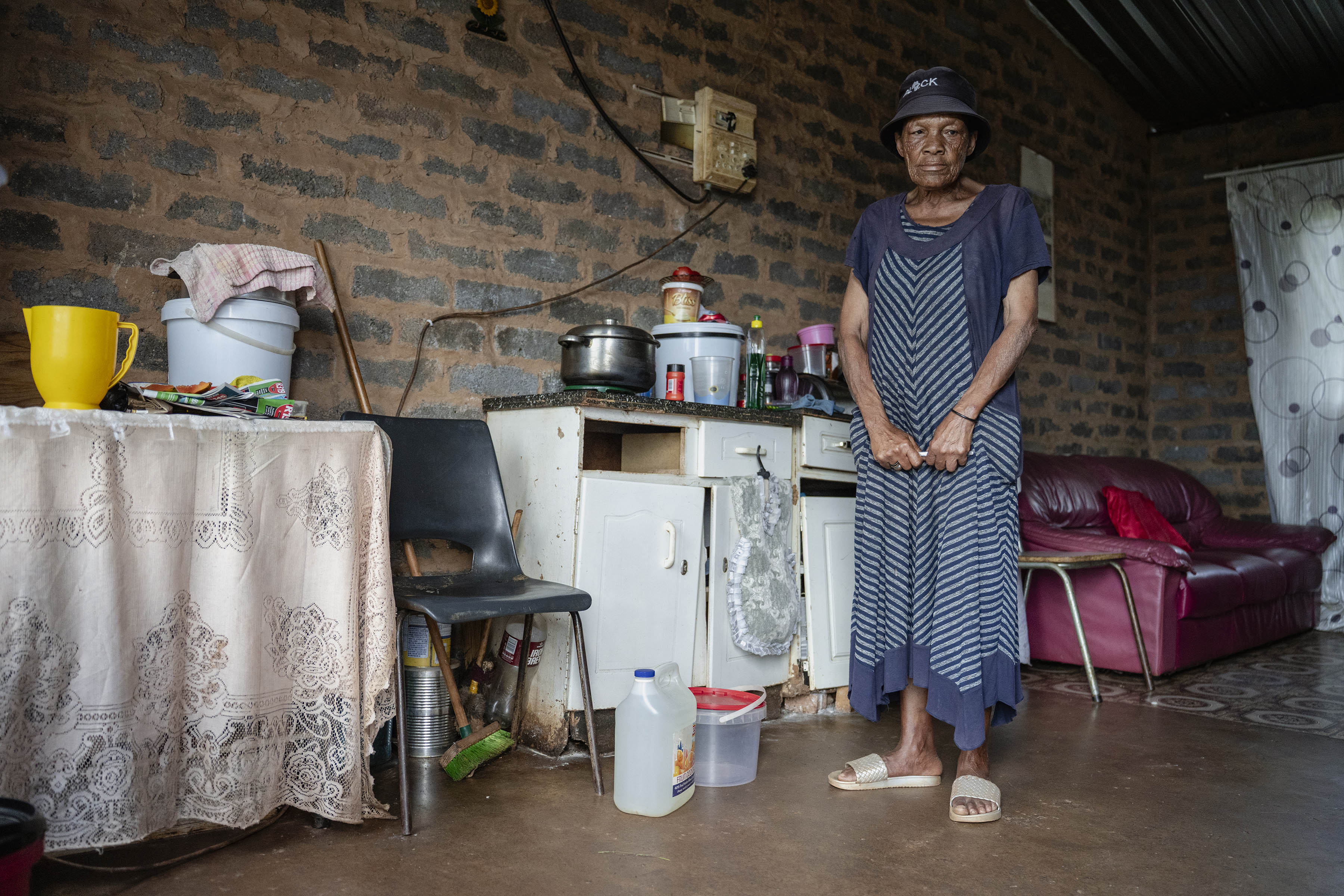
70-year-old Pinky Chakela, from Lehae, says she is too old to carry a 20-litre bucket. She uses a 5-litre bottle and often makes multiple trips a day to collect water.
Phase 1 resident Esther Tshabalala, who is in her fifties, walks with crutches because of a problem in her hips. This makes it extremely difficult for her to carry buckets of water to and from collection points.
“I have fallen and hurt myself trying to carry a water bucket home. I don’t always have people to help me collect water for cooking and especially for the toilet. How can I survive?” said Tshabalala.
She said elderly and disabled residents like her often have to pay youngsters from the neighbourhood between R10 and R20 for them to collect and deliver one 20-litre bucket of water.
Asked about the upcoming local government elections, Tshabalala was sceptical. “Voting? Voting for what? For who? We are not going to vote because nothing changes. Things are only getting worse. They can’t even provide us with the most basic thing, which is water,” she said.
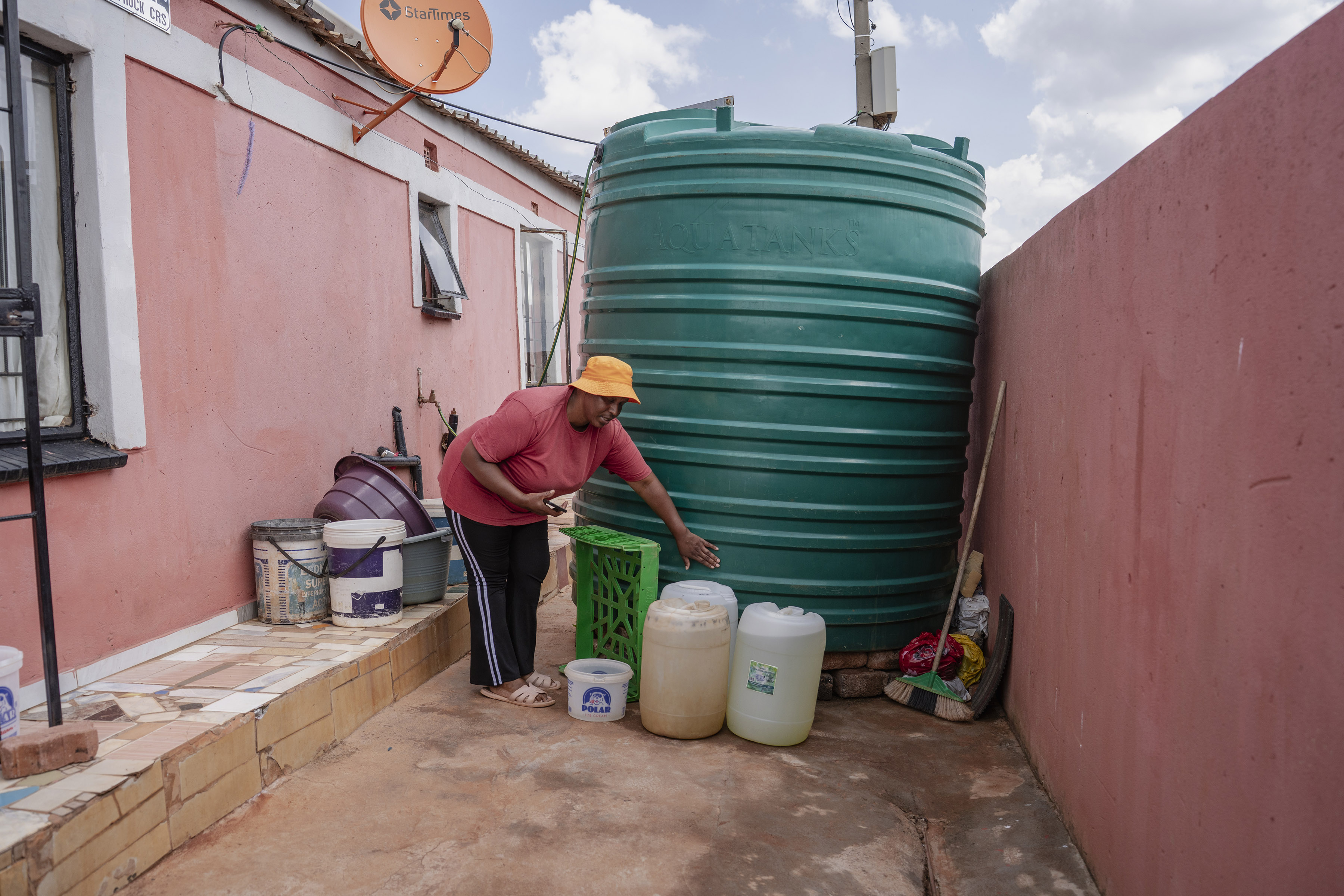
Resident Nomsa Mofokeng shows the water tanks provided by Johannesburg Water. Residents say the tanks are not big enough and haven’t been filled since December.
Two water tanks were provided by Johannesburg Water, but these have not been filled since December, and residents say they are not big enough.
“We have to pick and choose carefully what we use our water for,” said Mesesi Kubheka.
“Cooking, cleaning and toilet come first, and then I can do some laundry if I still have some water left over,” she said. She has about 60 litres of stored water in containers.
Ward 122 councillor Sithembiso Zungu, who also serves as the City of Johannesburg’s mayoral committee member for Group Corporate and Shared Services, acknowledged that reliable supply was an issue.
“Residents do receive water, but it comes on very early in the morning, so people need to get up early to get water. So the situation is not as we would like, and we are engaging with Johannesburg Water to work on a solution,” said Zungu.
Johannesburg Water spokesperson Nombuso Shabalala said the issues in Lehae are caused by illegal water connections, which have placed strain on the Lenasia Water Supply System.
“As part of capacity management measures, the Hospital Hill and High-Level Reservoirs are isolated twice daily to allow for system recovery. During these isolation periods, areas such as Lehae are affected, leading to reduced pressure or intermittent water supply.”
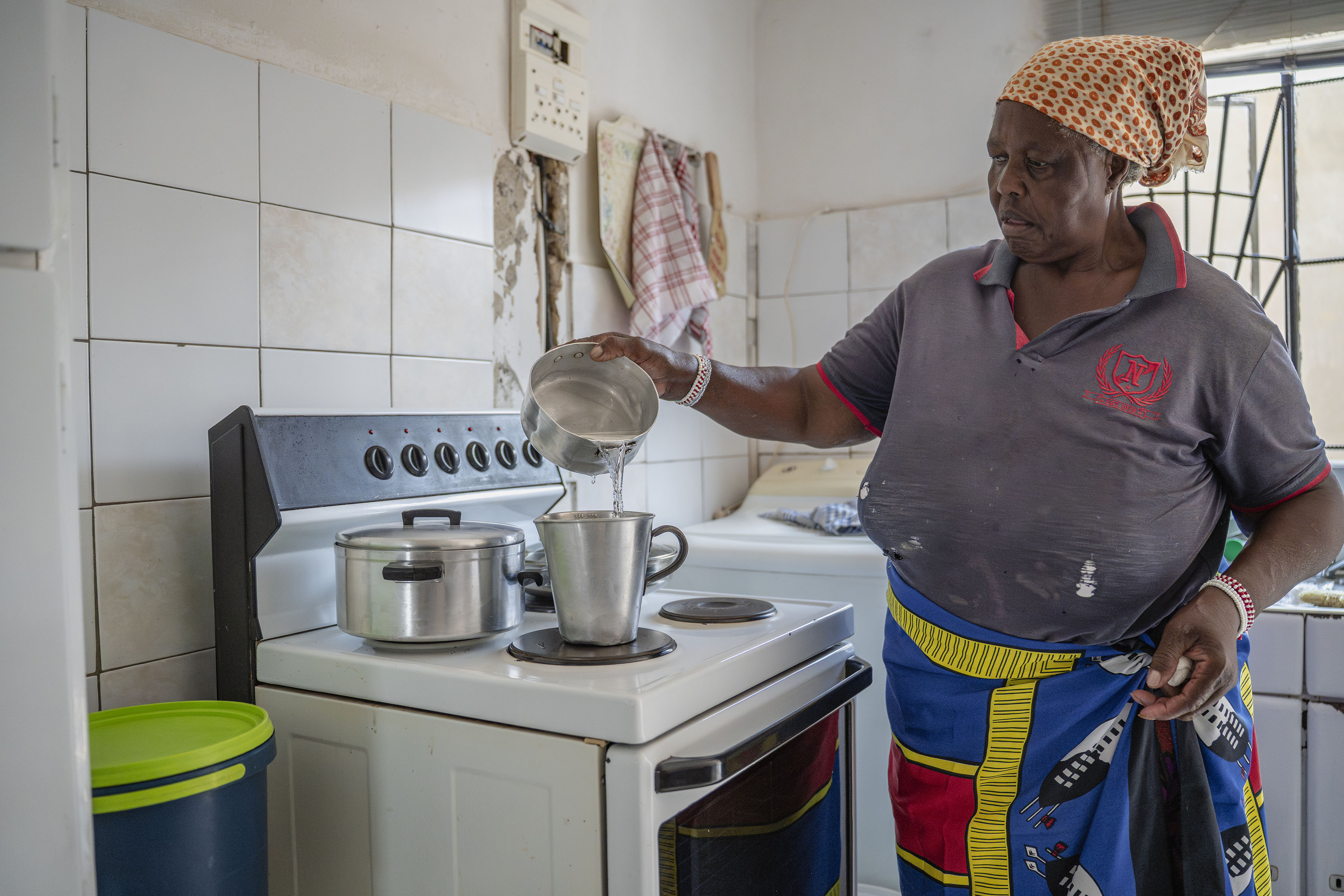
Masesi Kubheka, 67, who is diabetic, says she has to preserve water carefully for her daily needs.
