22 April 2026
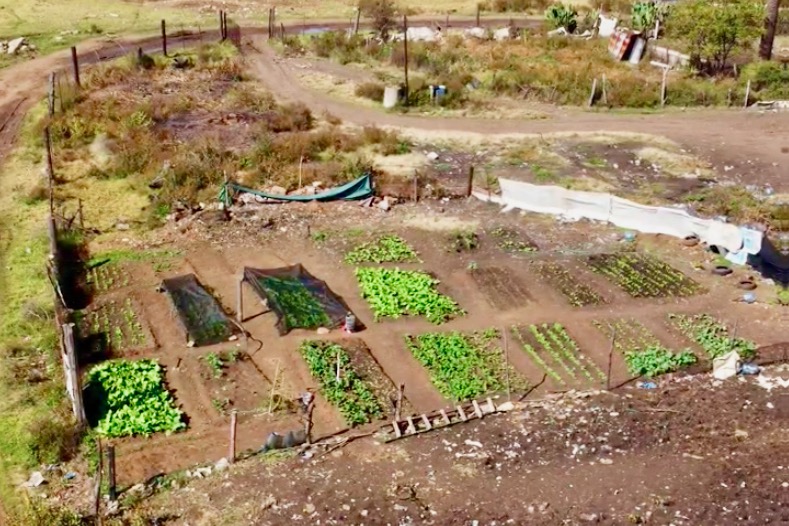
A community vegetable garden in Slovo Park. Photos supplied by SERI.
On 15 April, at an event marking ten years since the High Court handed down its judgment in favour of Slovo Park’s residents (the Melani case), Lerato Marole, chairperson of the Slovo Park Community Development Forum (SPCDF), noted that despite the court victory, informal settlement residents remain marginalised.
In April 2016, the High Court found that the Upgrading of Informal Settlements Programme (UISP) is binding on municipalities and ordered the City of Johannesburg to take steps to develop Slovo Park under the UISP.
However, a decade later, the City admits having “little to show for the ten years”. Apart from electrifying Slovo Park in 2018, residents continue to lack proper access to water, sanitation, and adequate housing.
In such a context, where unemployment and poverty are rife, food insecurity is acute. Recent research by the Socio-Economic Rights Institute (SERI) confirms that millions of South Africans lack access to adequate food due to poverty, unemployment, and rising living costs.
The 2025 General Household Survey found that approximately 14 million people went to bed hungry in 2024, representing over 22% of households.
While government interventions, such as the Social Relief of Distress (SRD) grant, have provided some relief, they remain insufficient.
Food insecurity is not experienced equally; it is both deeply gendered and fundamentally about class. Women, who are often primary caregivers, carry the responsibility of feeding their families, managing households, and caring for children. As food prices rise and incomes remain unstable, this burden intensifies.
Consultations conducted with women in Slovo Park by SERI revealed that in extreme cases, some have been forced to resort to transactional sex in exchange for food or money, exposing them to risks, including gender-based violence. Hunger not only weakens the body but also deepens vulnerability and inequality.
Increasing food insecurity prompted the South African Human Rights Commission (SAHRC) to initiate a National Inquiry into Food Systems in South Africa. Among those who made oral submissions was the Slovo Park Community Development Forum (SPCDF), alongside organisations affiliated with SERI, who made a joint submission. The message was clear: addressing food insecurity requires more than short-term relief; it requires structural change.
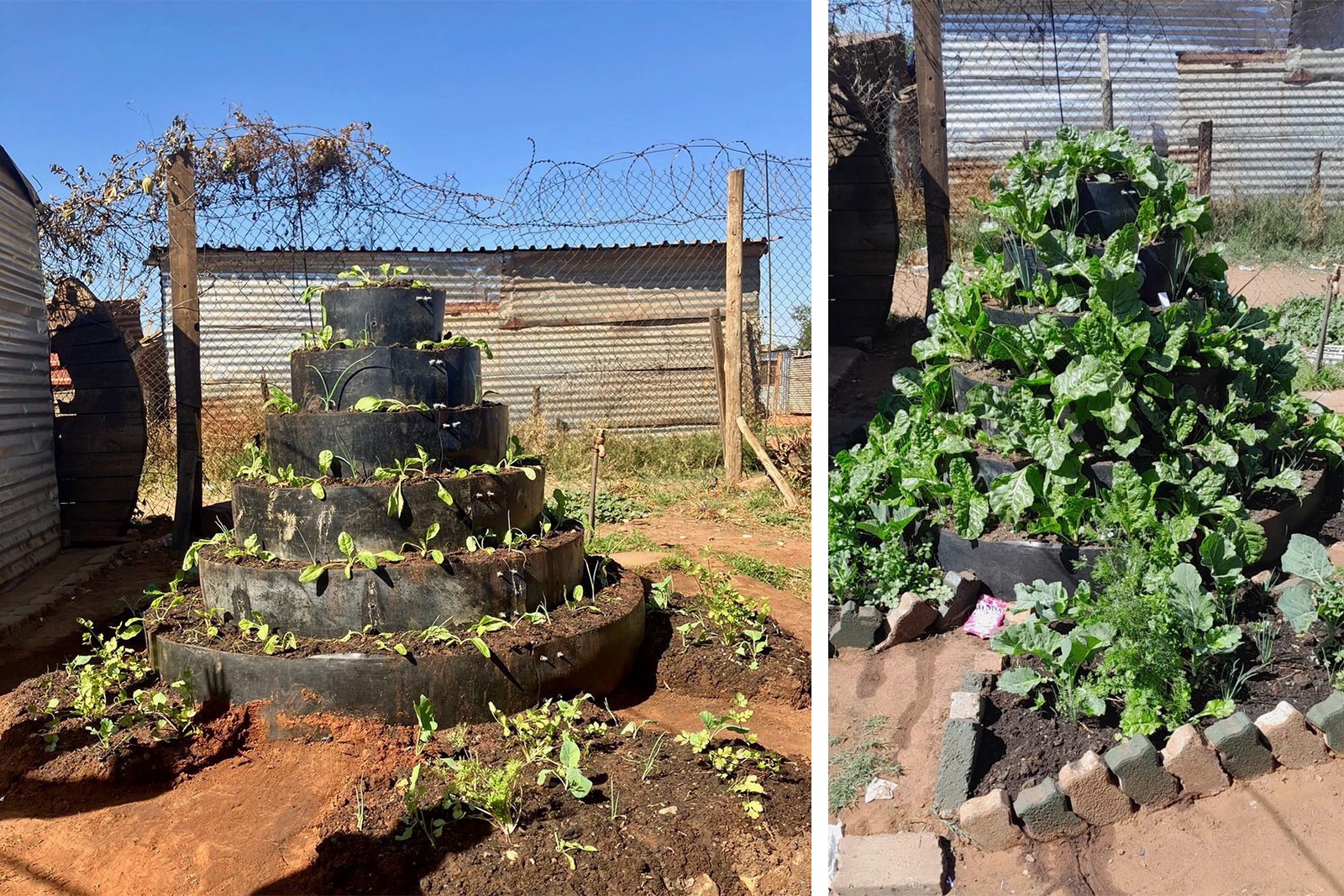
Innovative cone gardens that maximise space in Slovo Park informal settlement.
A key proposal is the need to link land reform with food security. Because of South Africa’s history of land dispossession, access to land remains highly unequal. For residents of informal settlements, this inequality limits opportunities to produce their own food.
The joint submission specifically notes that “direct access, or growing one’s own food, is a crucial micro strategy at an individual or household level”.
In Slovo Park, for example, small groups have started urban food gardens, using innovative methods such as cone gardening to grow crops in limited spaces. In 2024, more than 20 residents received training from the Nairobi-based Mazingira Institute.
Since then, they have successfully produced food in backyard spaces and on underutilised land. As one resident, Nomazulu, says, “We should not only depend on money to buy food, but also produce food with our hands … but without water it is not easy.”
These initiatives are doing more than feeding households, they are also creating livelihoods. Women have been able to sell surplus produce within the community, generating small incomes and supplementing social grants.
With widespread and extreme poverty in informal settlements, urban agriculture is emerging as a practical pathway towards both food security and livelihood sustainability. If community-led initiatives such as these are to succeed and expand, greater state support is essential.
However, these efforts face significant constraints. Access to land remains critical, and water shortages make it difficult to sustain these food gardens. The slow pace of Slovo Park’s upgrading is preventing residents from realising their constitutional right to food. A decade after the Melani judgment, the City has yet to secure the additional land needed for de-densification. Land acquisition is a critical component of informal settlement upgrading and needs to be addressed early in the process.
The upgrading of Slovo Park must be accelerated and community food gardens should be recognised as essential urban infrastructure, rather than optional add-ons. The UISP must incorporate gender-sensitive approaches to land use and food production as part of livelihoods planning. This requires coordinated action across government departments, including housing, agriculture, and local economic development, especially at the municipal level where implementation occurs. Improving access to water, enhancing soil quality, and supporting community-led agricultural training must be prioritised.
Addressing food insecurity and ensuring access to basic services in South Africa requires recognising that it is carried disproportionately on the shoulders of women. By transforming small pieces of land into sources of nutrition and dignity, the women of Slovo Park are demonstrating what is possible even under difficult circumstances. However, they cannot do it alone. The state needs to play its part in ensuring that Slovo Park’s residents are finally recognised as people to whom South Africa belongs.
Views expressed are not necessarily those of GroundUp.
