2 November 2026
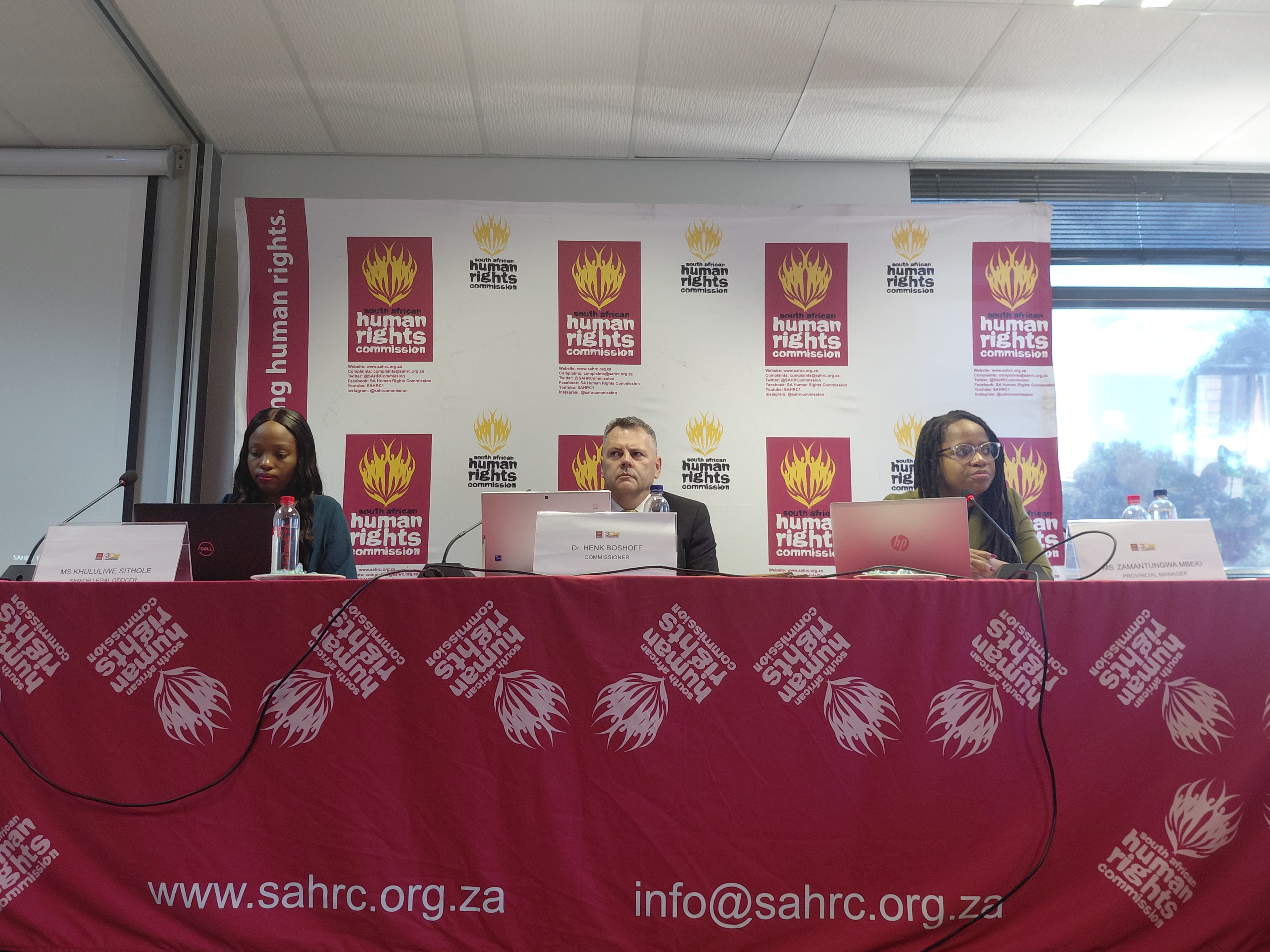
SAHRC senior legal officer Khululiwe Sithole, Commissioner Henk Boshoff, and Gauteng SAHRC provincial manager Zamantungwa Mbeki addressing the media at the release of the investigative report on Monday. Photos: Seth Thorne
Gauteng’s water outages and sewage spills do not come from a lack of water, but rather from failures across delivery networks, according to the South African Human Rights Commission (SAHRC).
This was revealed on Monday when the Chapter 9 institution published the final report on its inquiry into water and sanitation in the province. The report was delivered to Gauteng Premier Panyaza Lesufi on 30 October.
Zamantungwa Mbeki, the SAHRC’s provincial manager, addressed municipal officials, civic organisations, the media and other role players at the commission’s offices in Parktown on Monday. She said their investigation showed how deep-seated administrative, technical, and financial deficits have violated the constitutional rights of residents.
“It’s about dignity, health, education and the ability to live a decent life,” said Mbeki, adding that a large number of complaints “required us to look beyond individual incidents, and examine the systemic challenges affecting water and sanitation”.
The inquiry sat from 19 to 21 May in Johannesburg, chaired by Commissioner Henk Boshoff, and included representations from various communities, civic groups and municipal officials from nine municipalities: Johannesburg, Tshwane, Ekurhuleni, Lesedi, Merafong, Midvaal, Mogale City, Emfuleni, and Rand West City. Rand West didn’t appear in person despite a subpoena and only made written submissions.
The commission found “ageing and deteriorating infrastructure, high levels of water losses, insufficient storage and pumping capacity, electricity interruptions, bulk water failures” and weaknesses within the municipal distribution systems.
Residents faced prolonged interruptions, leading to a reliance on expensive water tankers and static tanks.
Municipal failures across the board have seen wastewater treatment failures, sewage pollution from blocked or broken municipal infrastructure and the “deterioration of water resources”.
The SAHRC described municipalities as “cost shock absorbers” because they sit at the end of the water supply chain and bear the consequences of failures that often start elsewhere.
This was evident when Rand Water’s bulk supply was interrupted in January and February. Municipalities were left managing empty reservoirs, water tankers and complaints long after the water returned.
The same pattern applies to electricity cuts, vandalism, polluted rivers and rapidly growing informal settlements. According to the commission, each “emergency” drains money, engineers’ time and administrative capacity that could go towards repairs.
Another recurring theme was the growing gap between identifying problems and taking action to resolve them. “Another meeting will not fix the pipe,” said Mbeki during the briefing.
In parts of Gauteng, water tankers now operate on regular routes, which the commission called a “road-based water distribution network”.
“We’ve also identified the fact that municipal infrastructure is being sabotaged deliberately by service providers,” Boshoff said.
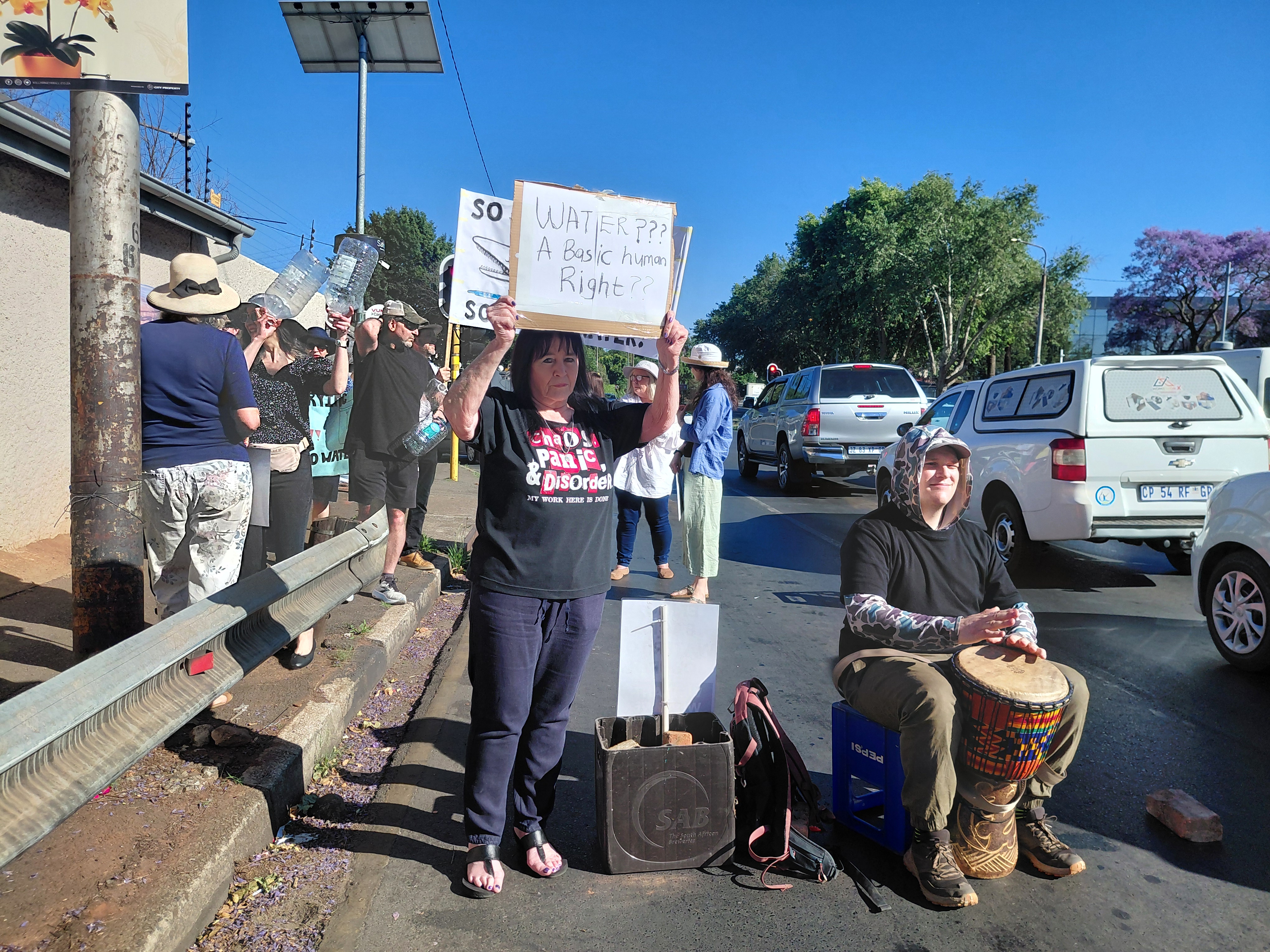
Residents of Parktown in Johannesburg, near the SAHRC Gauteng offices, took to the streets on 30 October to protest prolonged water interruptions.
The report found that Tshwane carries a R23-billion infrastructure backlog, loses 39% of its water and has R22.8-billion in unauthorised, irregular and wasteful expenditure. Sewage from its Rooiwal works has polluted raw water, though the plant is being upgraded.
It stated that Johannesburg has strong technical capacity but faces a R27-billion renewal backlog and about 45% losses. Two of its treatment works keep discharging non-compliant effluent.
Ekurhuleni’s water quality and wastewater compliance are good, but a quarter of its reservoirs hold under 24 hours’ storage, making supply unstable.
The picture is bleaker in the south and west. Emfuleni’s capital budget for water and sanitation was R0 for two years. The municipality loses 57% of its water and has about R7-billion in unauthorised, irregular and wasteful expenditure.
Rand West, which defied its subpoena to appear before the commission, loses 58% of its water.
Merafong owes Rand Water R1.5-billion, which contributed to a 40% bulk restriction.
Midvaal, which had a clean audit, still battles ageing pipes. Lesedi and Mogale City supply safe drinking water, but their failing treatment works, Devon (Lesedi) and Flip Human (Mogale City), are polluting nearby waterways.
The report makes eight recommendations:
The commission said it will report which institutions implement them, and the reasons for any refusal. The commission will consider litigation where recommendations are not followed.