17 July 2026
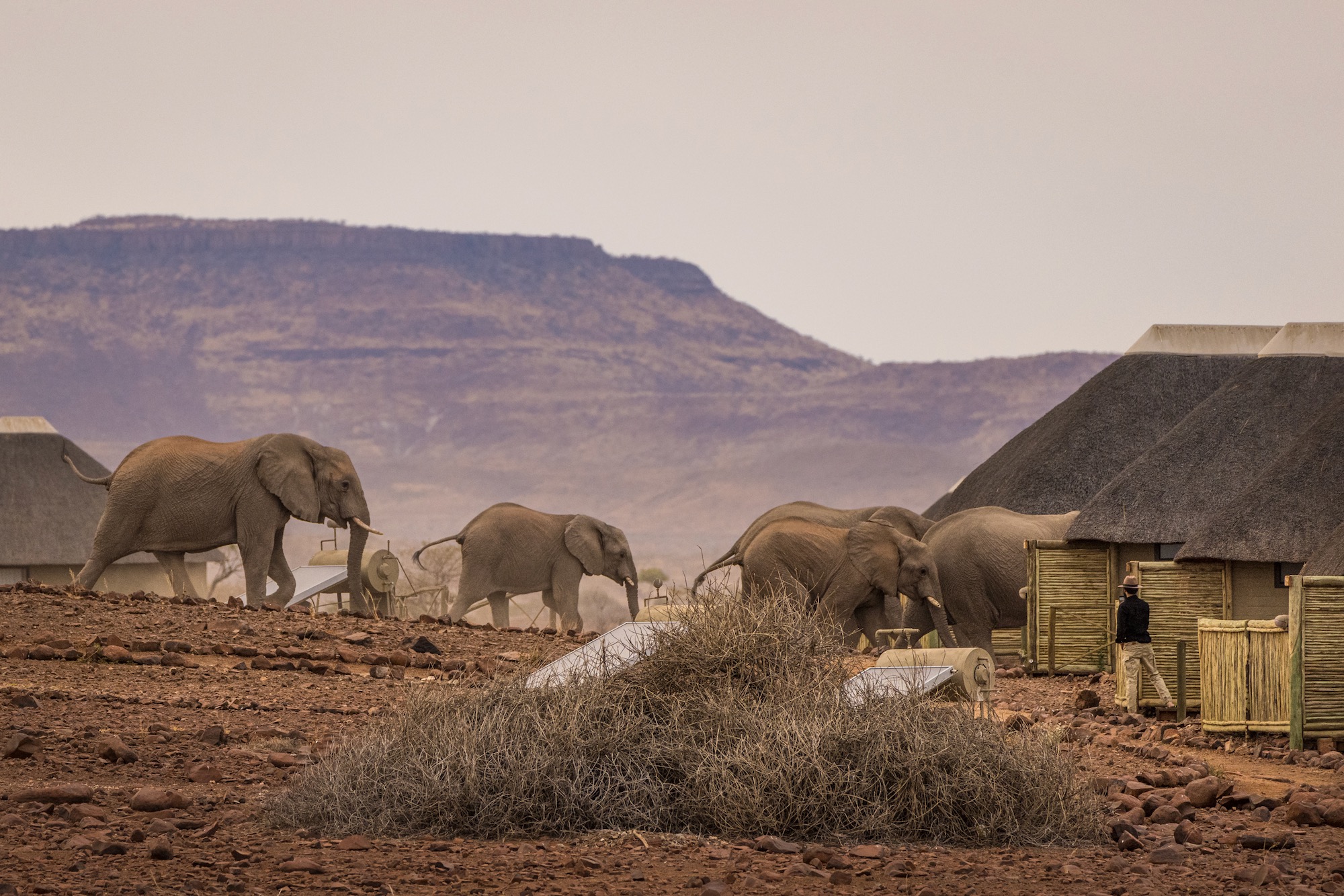
A herd of elephants moves through a rural Namibian village. Photos: Morgan Hauptfleisch.
A single elephant’s journey highlights a central tension in African conservation today: the clash between roaming wildlife and fenced landscapes.
A collared desert elephant bull in Namibia moved north into communal conservancies and then Etosha National Park.
“He moved through commercial farms, broke through many, many, many fences … In two weeks, he moved about 600 kilometres in a very targeted way,” says conservation scientist Morgan Hauptfleisch.
Hauptfleisch believes the journey was shaped by inherited patterns of movement that long predate modern borders.
“Perhaps there’s a memory, there’s an old memory of a certain plant that fruits at a time, where there’s been a particular type of rainfall,” says Hauptfleisch.
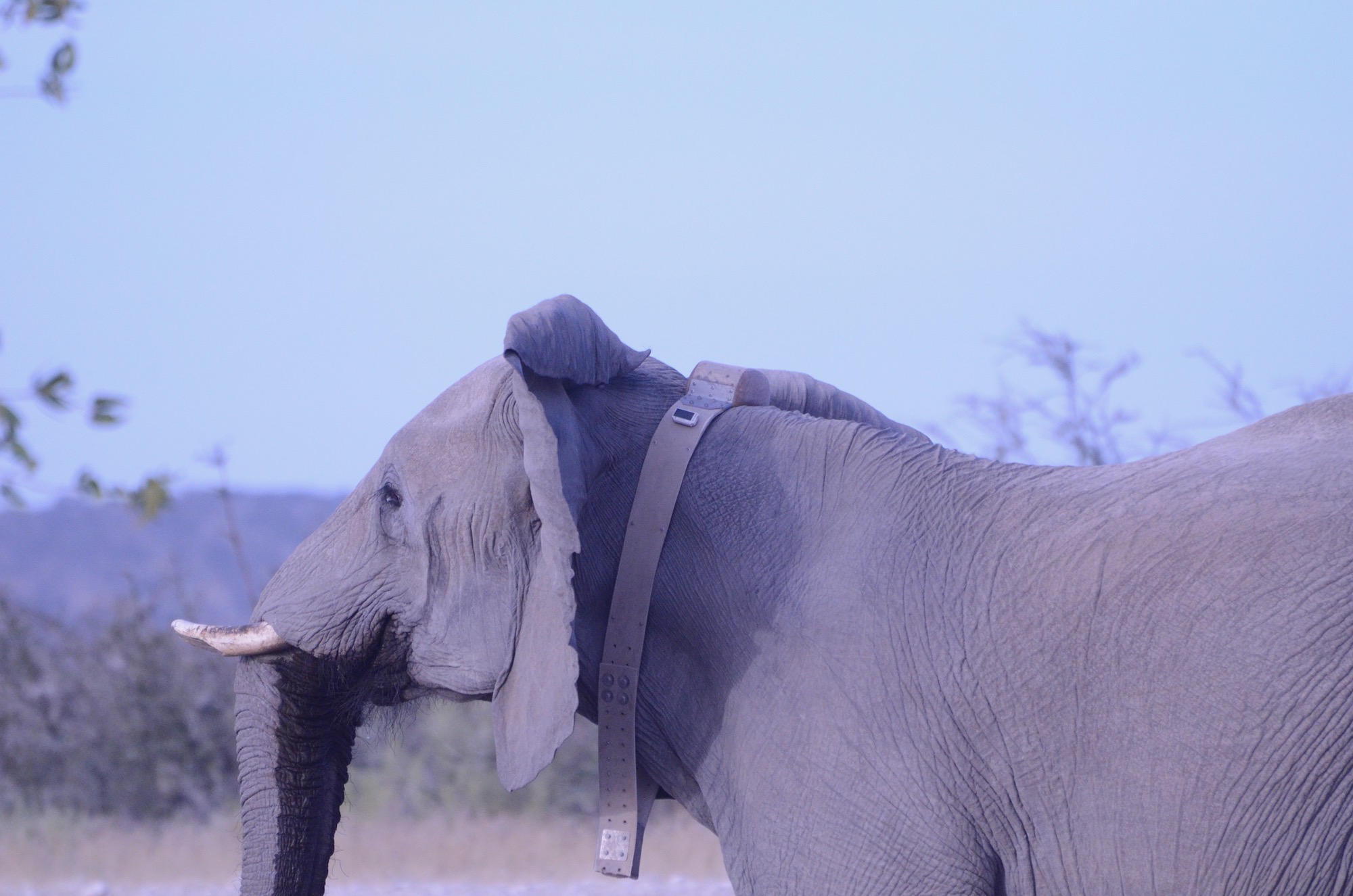
A collared desert elephant in Namibia. GPS tracking data recently revealed how one bull elephant travelled 600 kilometres in just two weeks, bulldozing through commercial farms and fences in a highly targeted search for resources.
In arid environments like Namibia, rainfall is not only scarce but variable, creating temporary pockets of water and grazing across a vast landscape.
“We always have these patchy resources which wildlife have to survive on,” says Hauptfleisch. “And they do that through being able to move.”
Historically, wildlife followed these shifting opportunities across enormous distances. Then came fences.
Originally erected to protect wildlife and manage agriculture, fences became a cornerstone of “fortress conservation.” Over time, they have fundamentally altered ecological systems.
The problem, Hauptfleisch argues, is not fences alone. In many protected areas, managers also introduced artificial waterholes. The result was that species that once migrated seasonally no longer needed to move.
“We took a migratory species, and we made it sedentary,” says Hauptfleisch.
Confined within fixed systems, animals begin to over-browse, break trees, and reduce biodiversity — turning once-resilient ecosystems into ecological traps.
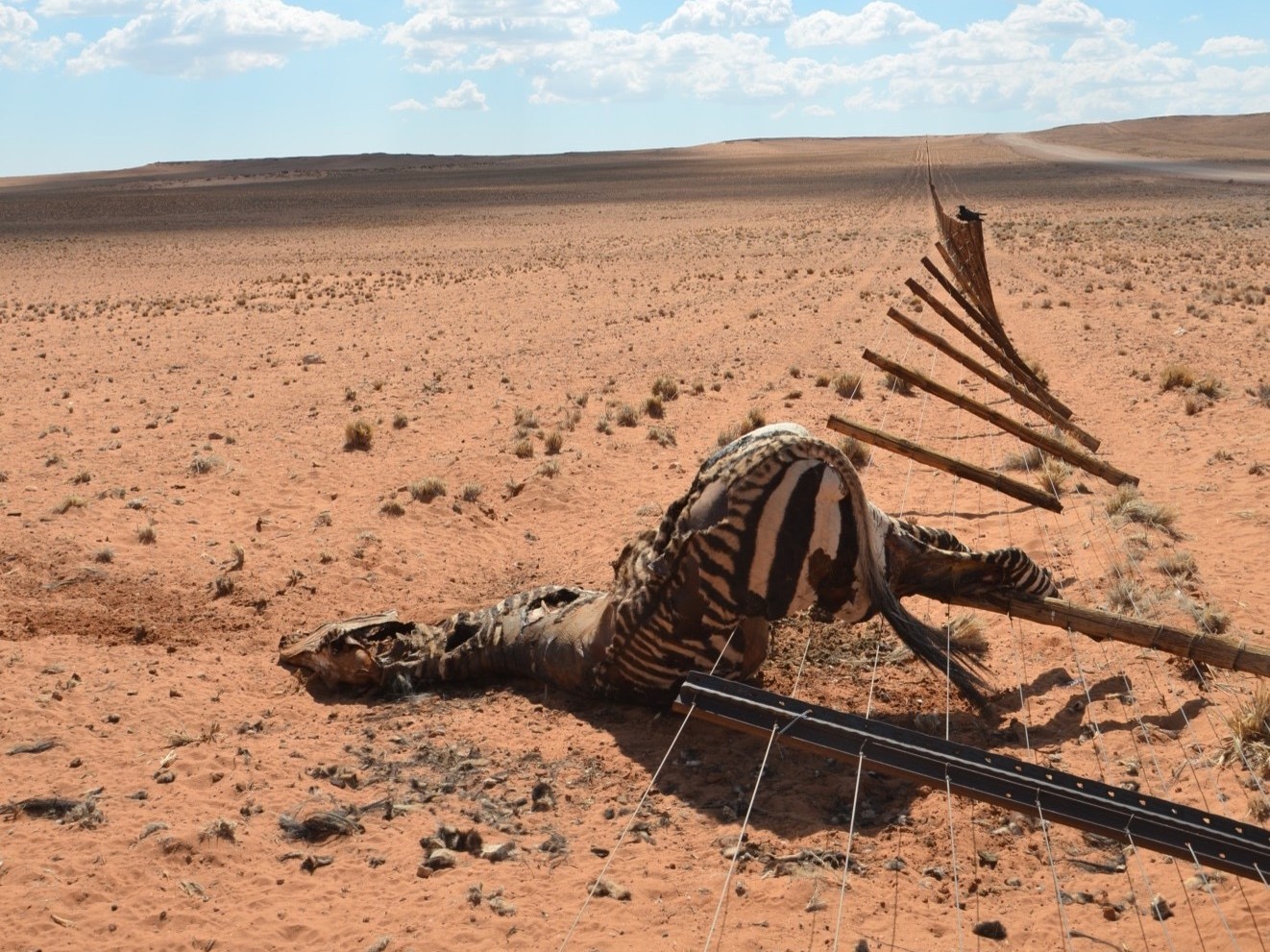
A zebra lies dead after becoming entangled in a fence in Namibian drylands. As rainfall becomes increasingly erratic, fences are preventing species from reaching food and water, turning once-resilient ecosystems into deadly traps.
As director of research at the Namibia Nature Foundation, Hauptfleisch leads a team of researchers, working in the harsh, dry scrublands, tracking animal movement and behavioural ecology across a three-million-hectare landscape.
The Damara community in the remote, mountainous Kunene Highlands west of Etosha have deep knowledge of a high-altitude population of elephants whose movements and feeding habits long eluded researchers.
“The information that people living in those areas have is scientific information,” says Hauptfleisch.
His colleague, Michael Wenborn, enlisted local community members as para-scientists, providing daily observations and generating valuable and rigorous ecological data long before researchers arrived with notebooks and GPS collars.
“If you sit down with some of the Damara and Herero people at their homesteads, and you talk to them about nature, they know much more about nature than what I do,” says Hauptfleisch.
Some of this knowledge reflects a deep attentiveness to subtle ecological change. In drylands, even faint disturbances persist for decades.
“If you drive into the Namib and look around you, you’ll say there’s nothing,” says Hauptfleisch. “Where, in fact, life is actually extremely extravagant, and important, and very sensitive.”
Jeremiah Amutenya, a former ranger and current PhD student under Hauptfleisch, points out that while local people hold unparalleled knowledge, conservation only works if communities benefit.
“If we do not ensure that the people that are living with these resources are benefiting, I don’t think conservation will be successful,” he says. “The cost of living with the wildlife needs to be less than the benefits that they are getting out from it.”
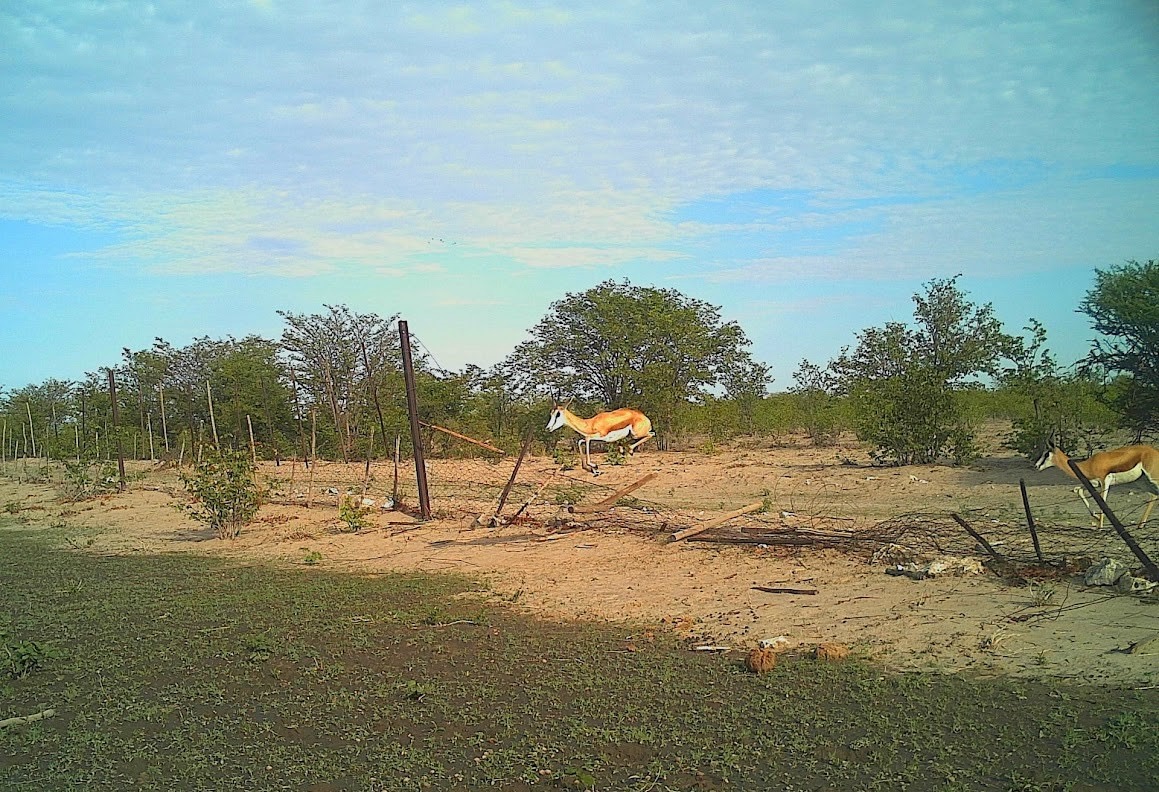
A camera trap photo captures a springbok jumping over a broken fence line. In arid environments where rainfall is wildly variable, wildlife survival has historically depended on the freedom to move across vast distances.
Monika Shikongo, a PhD student and Landscapes Coordinator for the Ministry of Environment, Forestry and Tourism, points to Namibia’s Black Rhino Custodianship Programme as an example of what can be achieved when government and private landowners share responsibility for conservation.
Launched in the early 1990s, the programme places state-owned black rhinos on carefully selected private properties under custodianship agreements with the Namibian government.
While ownership remains with the state, landowners take responsibility for protecting and monitoring the animals, extending conservation beyond national parks.
The model is now regarded as one of Namibia’s greatest conservation successes. By expanding secure habitat across a wider landscape, it has helped the country maintain the world’s largest population of the south-western black rhino subspecies.
For Shikongo, whose research is supported through the Benjamin Raymond Oppenheimer Trust (BRO Trust) Fellowship in People and Wildlife, the programme illustrates how conservation succeeds when responsibility is shared across connected landscapes rather than confined within park boundaries.
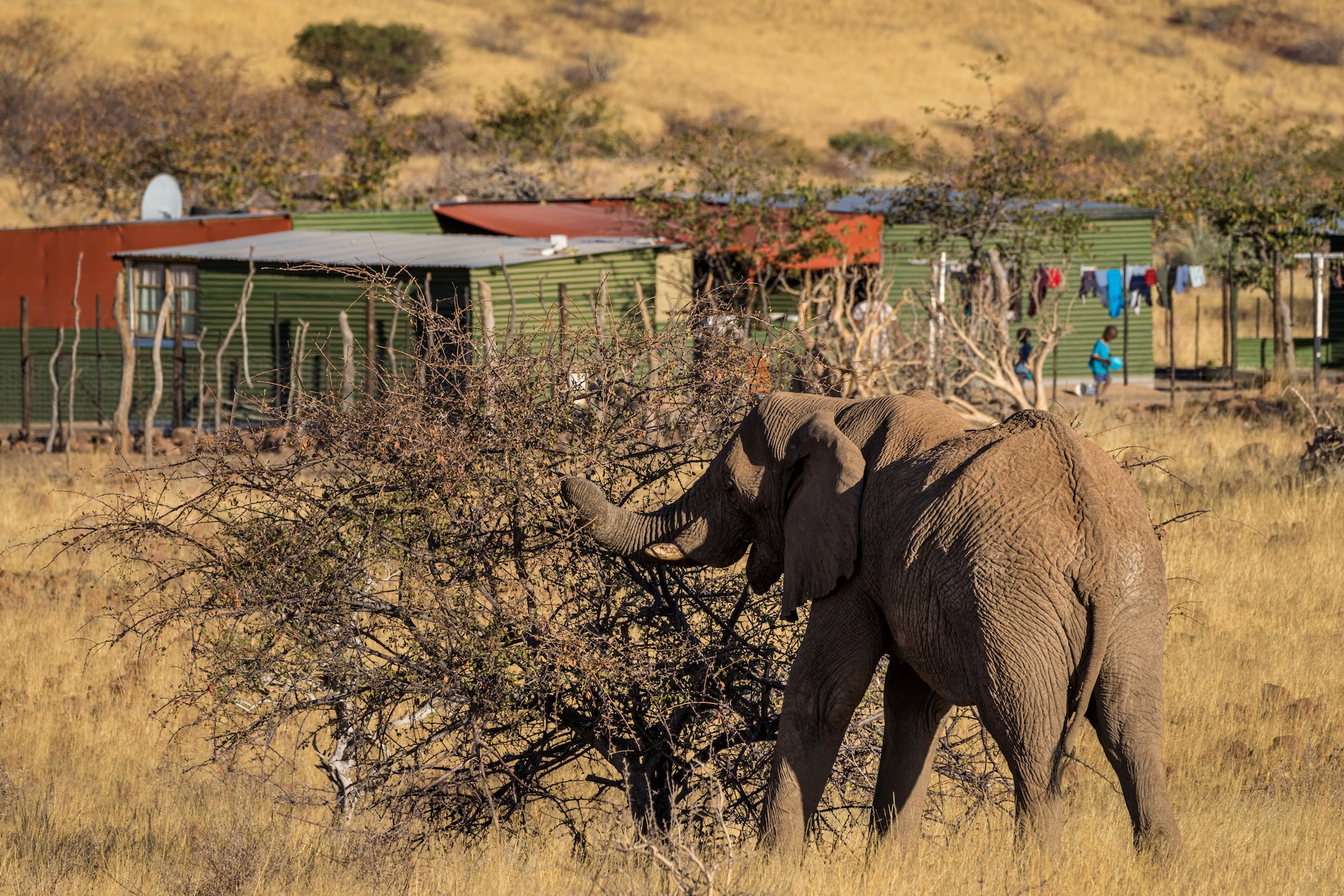
An elephant browses just metres from a local settlement. As migratory routes are cut off, human-wildlife interactions intensify, often leaving local communities to bear the costs of damaged infrastructure and lost crops.
Shikongo notes that as climate change makes rainfall increasingly erratic across southern Africa, many species will need the freedom to move across larger landscapes in search of food and water.
Yet fences still serve important purposes — particularly in areas with dense human populations, high poaching risk, or where disease control and livestock management are critical. Removing them is not a simple solution.
Removing fences, Amutenya says, brings its own complications. Elephants and predators do not recognise property boundaries, and communities living alongside wildlife often bear the costs through damaged crops, lost livestock and threats to human safety.
To solve the fence dilemma, Hauptfleisch and Amutenya argue that conservation must increasingly shift toward larger, interconnected landscapes — such as the Kavango-Zambezi Transfrontier Conservation Area — that allow animals to move across national borders in response to changing environmental conditions.
But building those landscapes requires governments, conservation agencies, private landowners and rural communities to cooperate across vast areas and even international borders.
For such more open systems to succeed, local communities must derive meaningful benefits from wildlife.
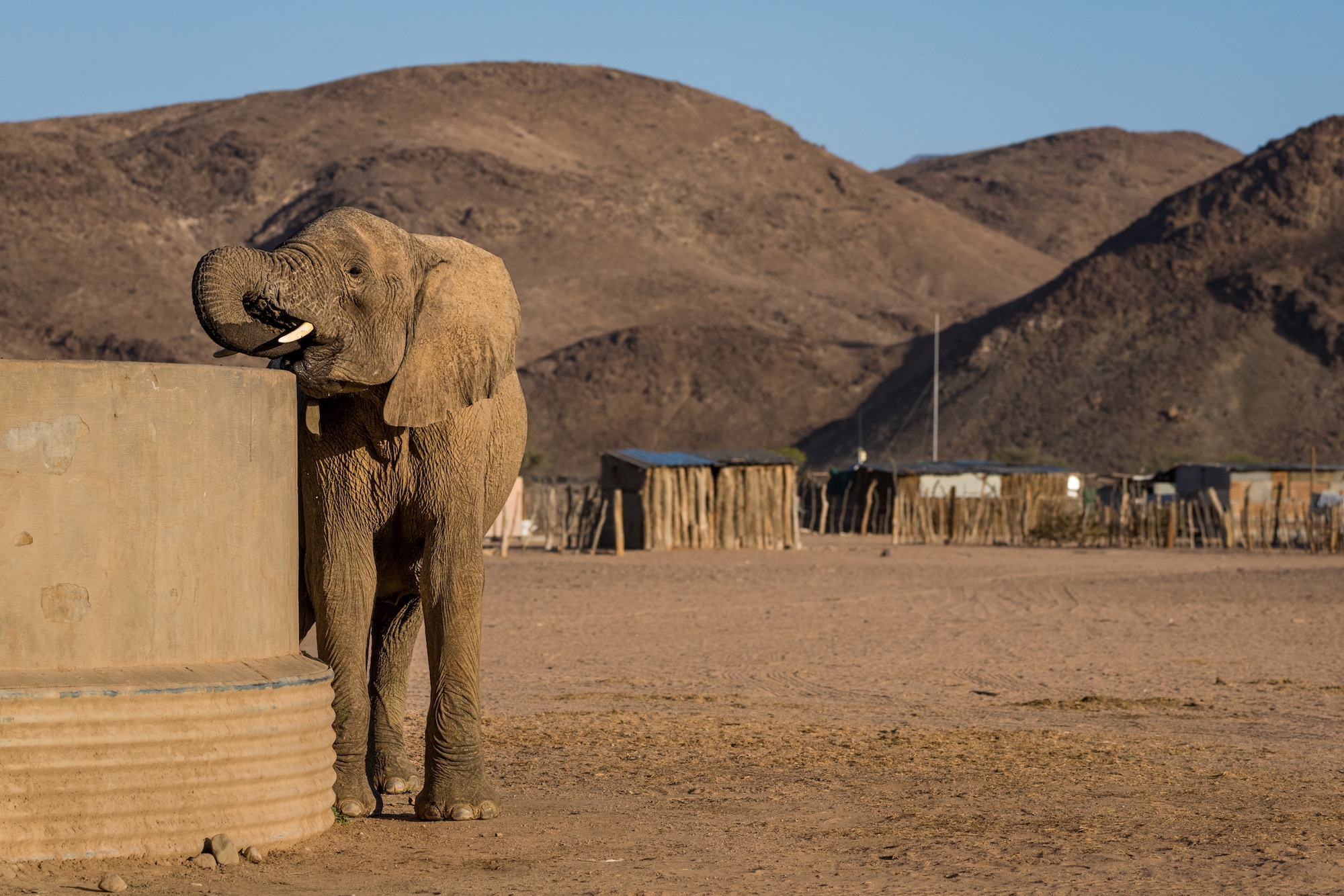
A desert elephant drinks from a concrete reservoir.
As climate change makes rainfall less predictable and resources more patchily distributed, the pressures driving the need for connectivity are increasing.
Hauptfleisch says the evidence is already visible in the movement of animals.
“The elephants are showing us where the resources are,” he says.
Returning to the story of the collared elephant, Hauptfleisch says the bull didn’t stay very long at Etosha.
He crossed fences again, retracing the same fragmented landscape in reverse, passing other elephants along the way. The barriers humans built to organise the landscape meant little to him.
“We’ve seen the same happen — maybe not in such an extreme way — with herds of elephants with young calves, moving hundreds of kilometres in similarly directed movements.”
Long before maps, property boundaries and veterinary fences, wildlife survived these drylands by moving. As climate change reshapes southern Africa, that ancient strategy may prove more important than ever.
