
60 years since District Six declared whites-only area
Many families are still waiting for restitution
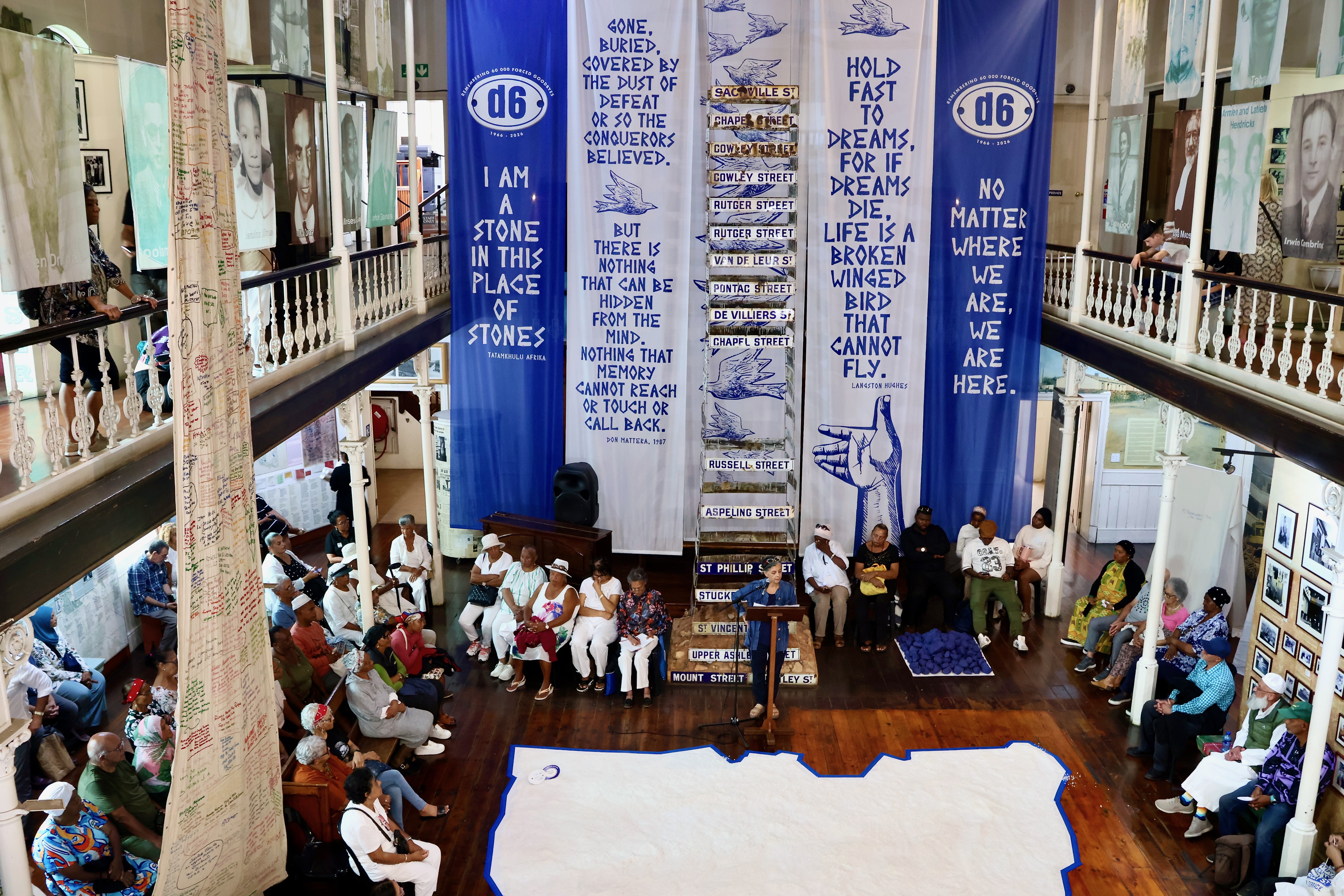
Commemorating 60 years since the declaration, families who were forcefully removed from the community gathered at the District Six Museum in Cape Town on Wednesday. Photos: Matthew Hirsch
On 11 February 1966, District Six was declared a whites-only area. Families marked this historic day on Wednesday.
Commemorating 60 years since the declaration, people gathered at the District Six Museum and shared memories of the past and their hopes for the future of the community.
A trumpeter played the hymn “Abide with me” while families who were forcefully removed from the community placed small stones on the ground, a symbolic local tradition.
“The land is an open festering wound. A blight on our landscape, reminding us of our past and of what is not being done in the present,” said Courtney Haas, whose grandfather was one of the land restitution claimants.
She said her family “was one of the lucky ones” after they moved back to District Six in 2022. However, her grandfather died before getting the chance to see justice.
“[My grandfather] constantly reminisced about District Six. About the markets, the games, the convenience, all the friends and the sense of community … 60 years later, and people are still dying waiting,” she said.
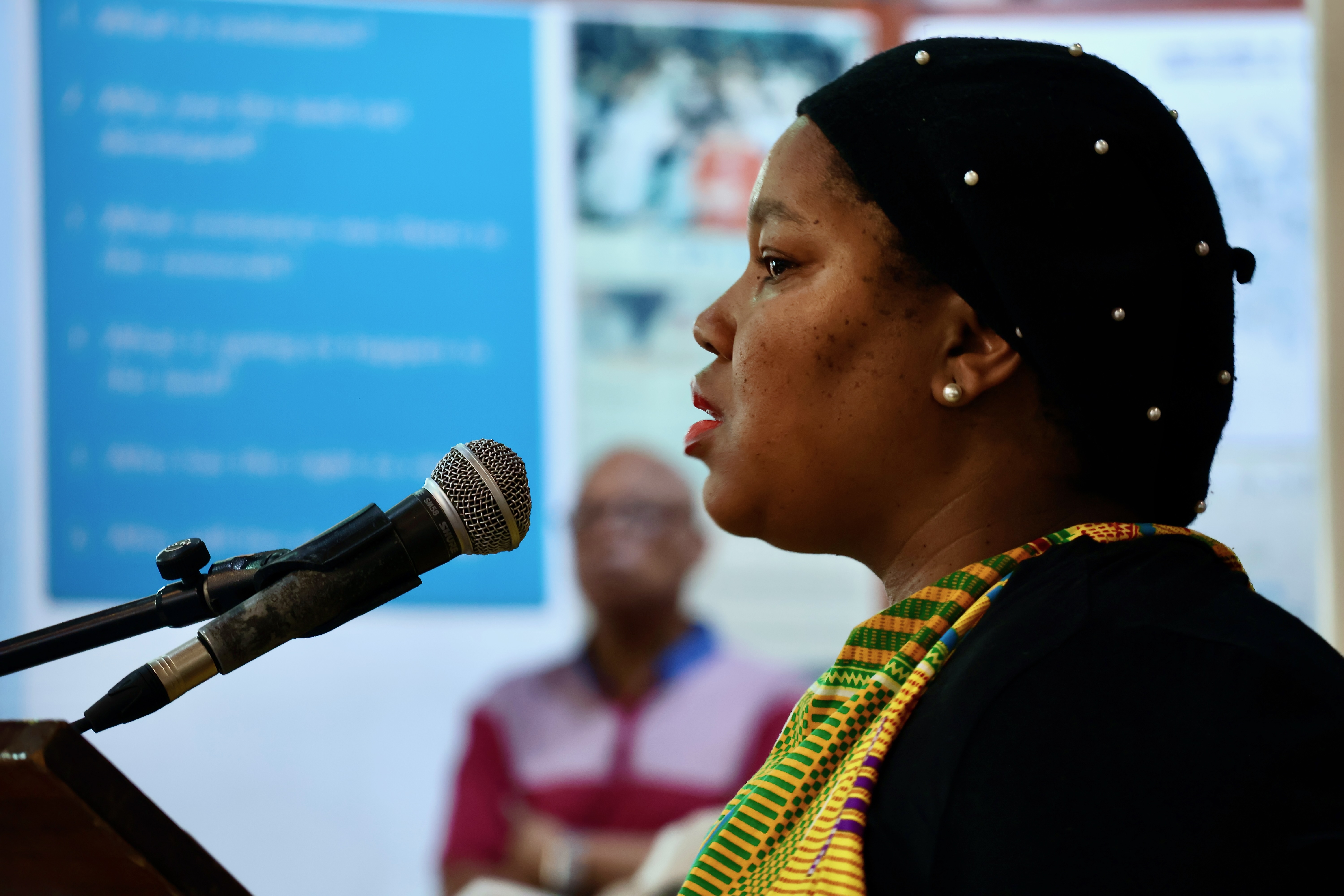
Asanda Ngoasheng, chairperson of the District Six Museum’s board, says they continued to stand in solidarity with communities affected by forced removals.
Russell Rhoda, who now lives in Bridgetown, became tearful speaking about his family’s relocation from the community. “That trauma is still there,” he said. Rhoda said he hoped his son and daughter would benefit from his family’s claim.
Over 2,700 people who lodged claims for District Six before the initial 1998 deadline have either been compensated financially, resettled in the area, or promised new houses in the area. When a new application window opened between 2014 and 2016, another 749 people submitted claims. But a Constitutional Court order prohibits the government from considering new claims until all outstanding claims are settled.
Asanda Ngoasheng, chairperson of the museum’s board, said: “We continue to be in solidarity with the communities of people, who are still to this day, waiting for housing to be delivered.”
At a separate event, mayor Geordin Hill-Lewis met national land reform minister, Mzwanele Nyhontso, in District Six. “I was encouraged by Minister Nyhontso’s update that the next phase of housing for District Six beneficiaries is ready to go out on construction tender,” he said.
During the walkabout, Hill-Lewis was doorstopped by protesters, demanding he intervene in the Searle Street eviction and for it to be stopped.
“That is a private eviction. It has nothing to do with the City nor with the department,” Hill-Lewis told GroundUp.
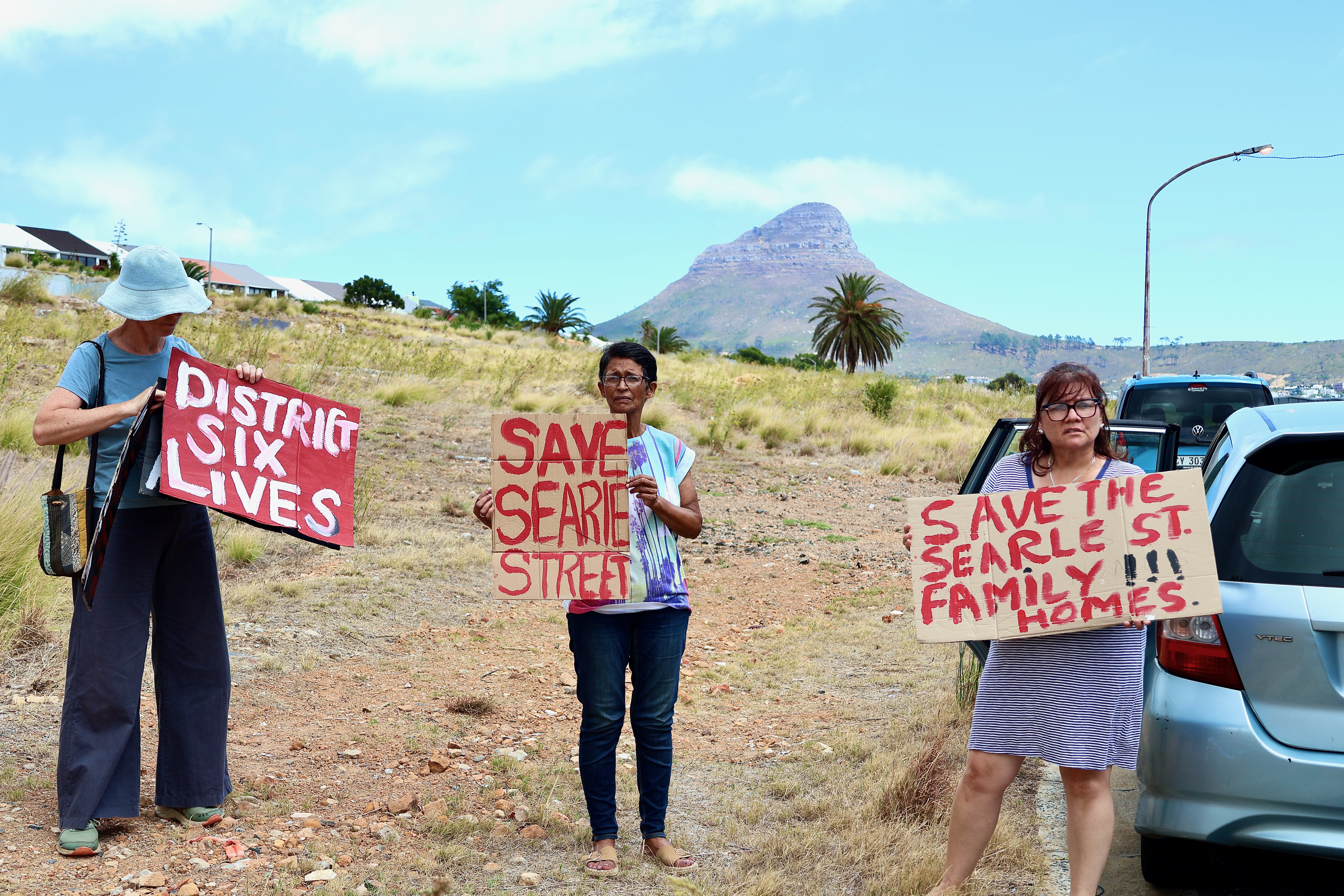
Searle Street residents facing eviction and their supporters picketed where Cape Town Mayor Geordin Hill-Lewis and Minister of Land Reform and Rural Development, Mzwanele Nyhontso, met to discuss progress on the District Six development.
Support independent journalism
Donate using Payfast

Don't miss out on the latest news
We respect your privacy, and promise we won't spam you.
Letters
Dear Editor
This whole story reminds me of Gaza, as a young girl I attended Trafalgar Primary Cchool, in Cape Town. We lived opposite the famous dentist ,our house was on corner Hope street. In 1977 I had to move to live with my granny because of school.
I changed schools seven times throughout the removal. It affected me, I did not understand. I feel for those people in Searle street and the rest of District Six.
May we all find peace, protection and happiness again in Cape Town.
© 2026 GroundUp. This article is licensed under a Creative Commons Attribution-NoDerivatives 4.0 International License.
You may republish this article, so long as you credit the authors and GroundUp, and do not change the text. Please include a link back to the original article.
We put an invisible pixel in the article so that we can count traffic to republishers. All analytics tools are solely on our servers. We do not give our logs to any third party. Logs are deleted after two weeks. We do not use any IP address identifying information except to count regional traffic. We are solely interested in counting hits, not tracking users. If you republish, please do not delete the invisible pixel.