
A brilliant example of the state succeeding
Limpopo agriculture department is making a big effort to tackle foot-and-mouth disease
 Add GroundUp on Google
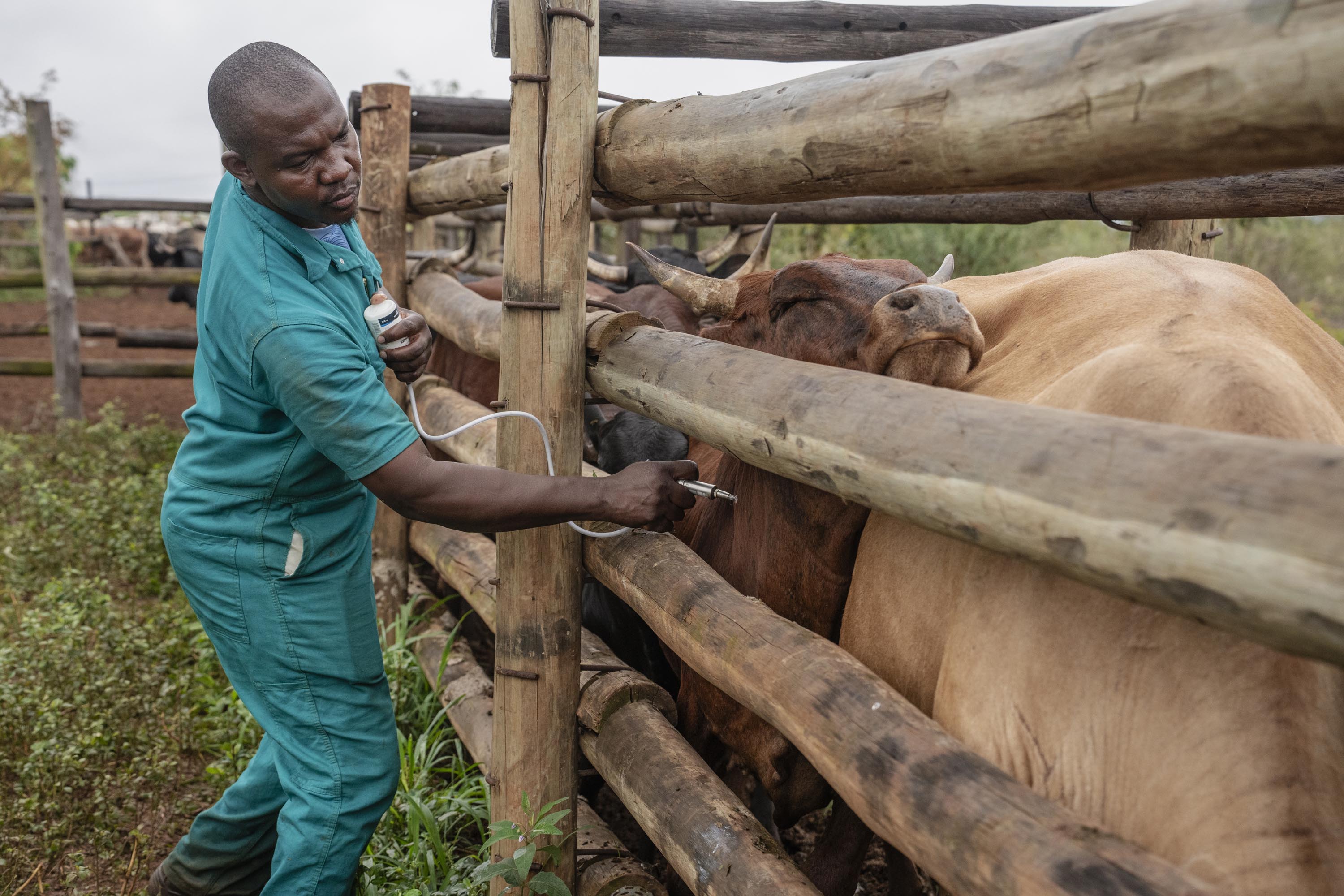
Innocent Muleya, an animal health technician with the Limpopo Department of Agriculture and Rural Development, injects a cow with the vaccine to protect the animal against foot-and-mouth disease in the village of Maphophe close to the Kruger National Park in Limpopo province. All photos: Ihsaan Haffejee
Bovines bellow. Their collar bells ring. They crap carelessly. Some bulls try to hump cows. Men crack their whips to usher the animals along.
These cattle belong to small-scale farmers in the village of Maphophe, less than 20km from the Kruger National Park’s Punda Maria gate. They are getting their booster shots against foot-and-mouth disease (FMD).
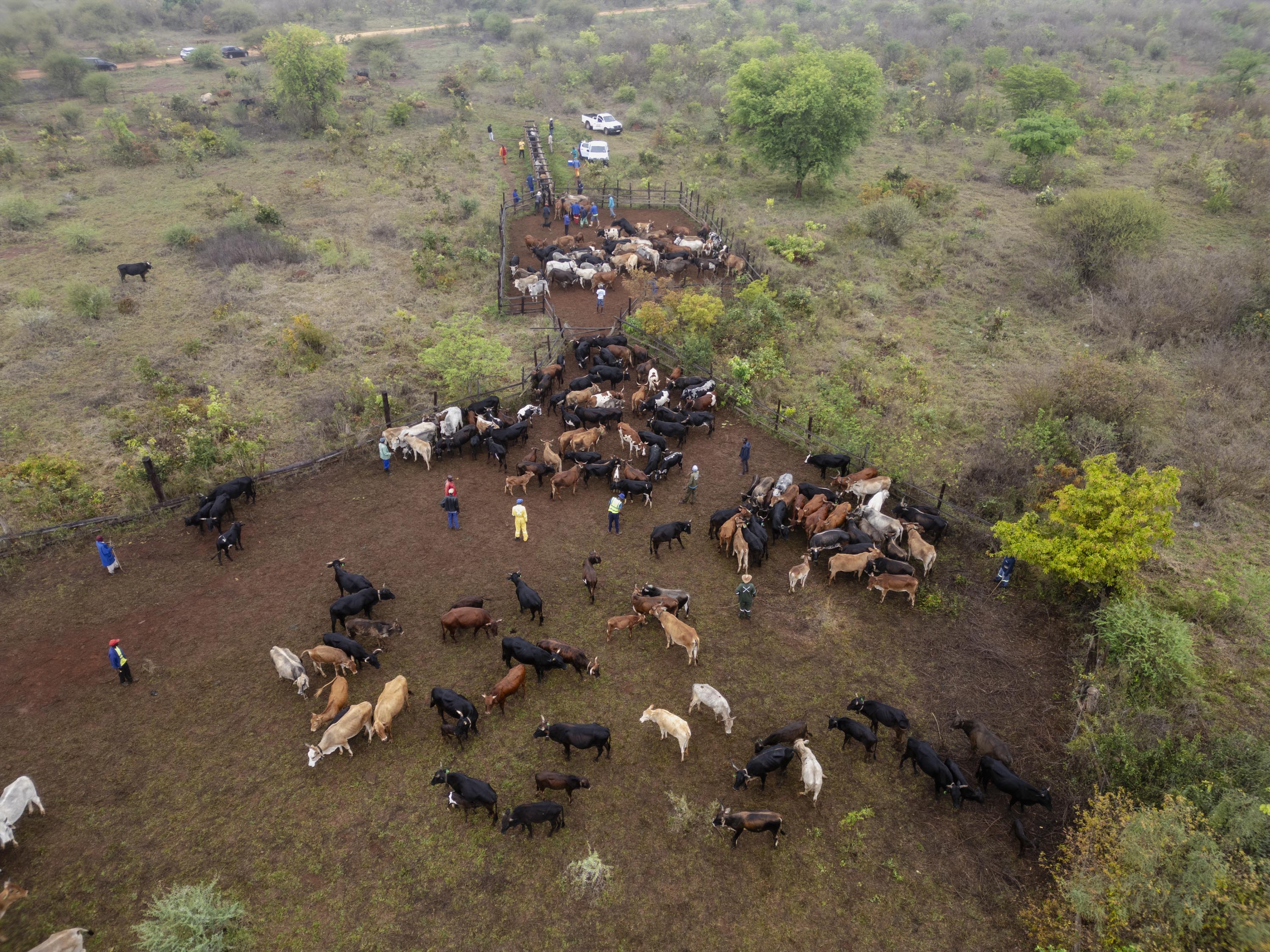
A drone photo shows how the system works. Small-scale farmers bring their herds to a kraal which starts with a large paddock, serving as a waiting area. Then a herd will be moved to the second smaller paddock and, when it’s that herd’s turn, the cattle will be ushered single file into the long narrow structure, a crush pen, at the top of the photo. There they get vaccinated by Innocent Muleya.
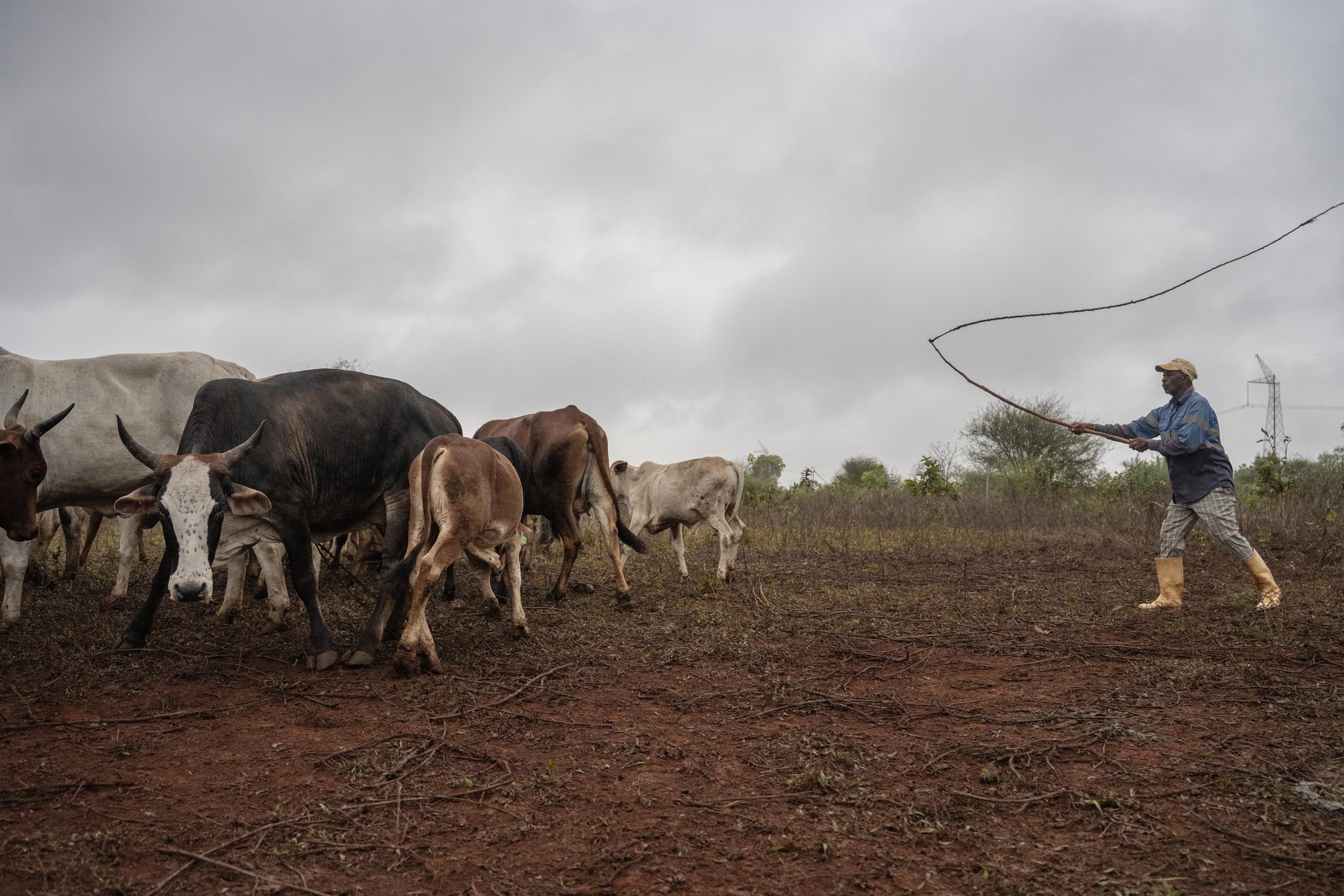
Ellian Mabasa cracks his whip as he herds his cattle inside the kraal.
GroundUp and other news outlets have reported the state’s failures that led to the worst FMD epidemic in South Africa’s history. But at Maphophe in Limpopo, we witnessed provincial agriculture department officials doing their job effectively.
Innocent Muleya is an animal health technician with the department. Every weekday he and his team go to a crush pen at one of five villages. They start their work just after sunrise and end at about noon.
Sometimes the cattle are dipped to get rid of ticks and are checked for disease. But this week they are getting their FMD booster vaccines. These animals, Muleya tell us, received their first shots about six months ago.
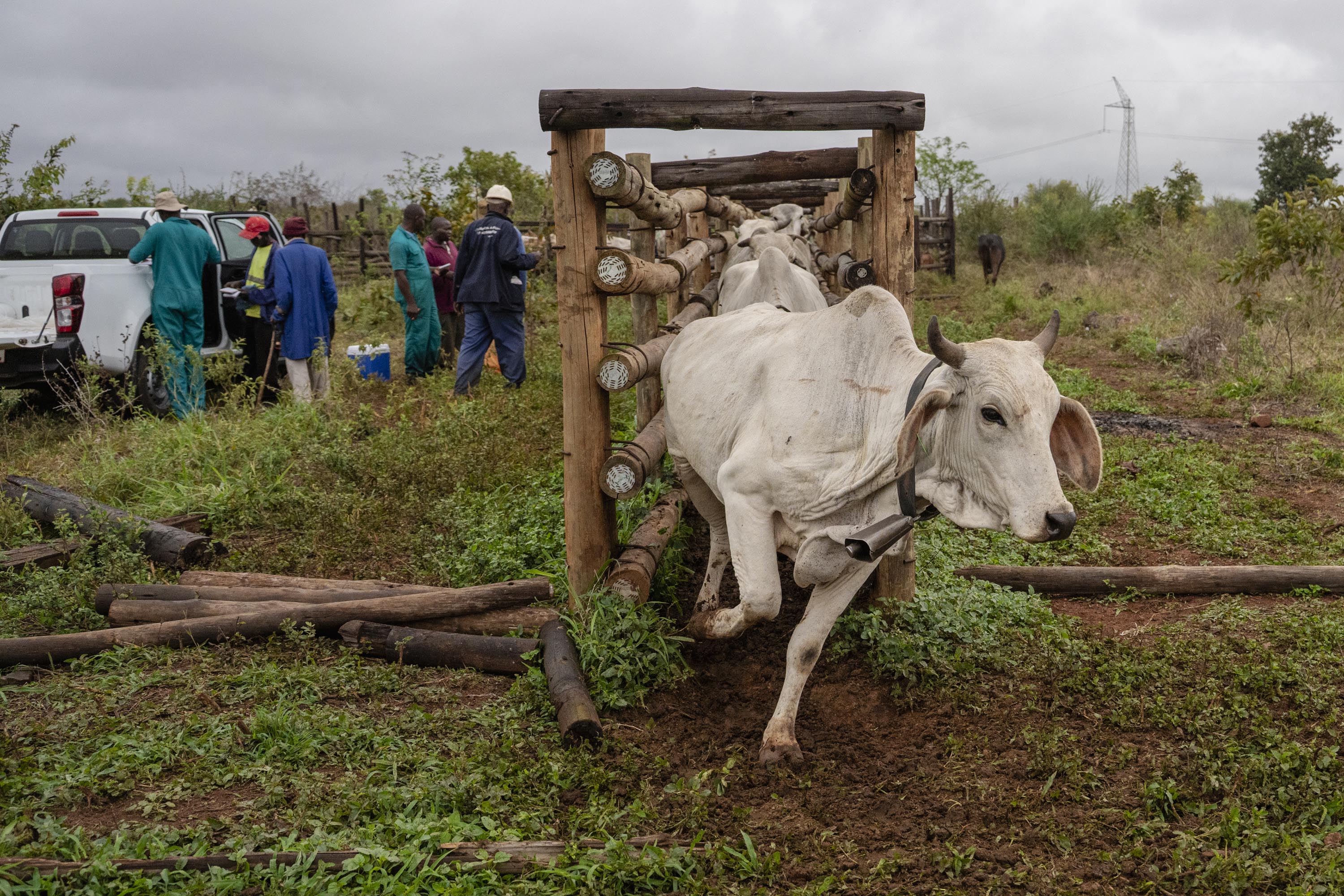
Just vaccinated, an animal exits the crush pen. Usually the animals are dipped for ticks. But no dipping took place the day we were there. Instead the cattle were given FMD booster shots. About 20 cattle are vaccinated at a time.
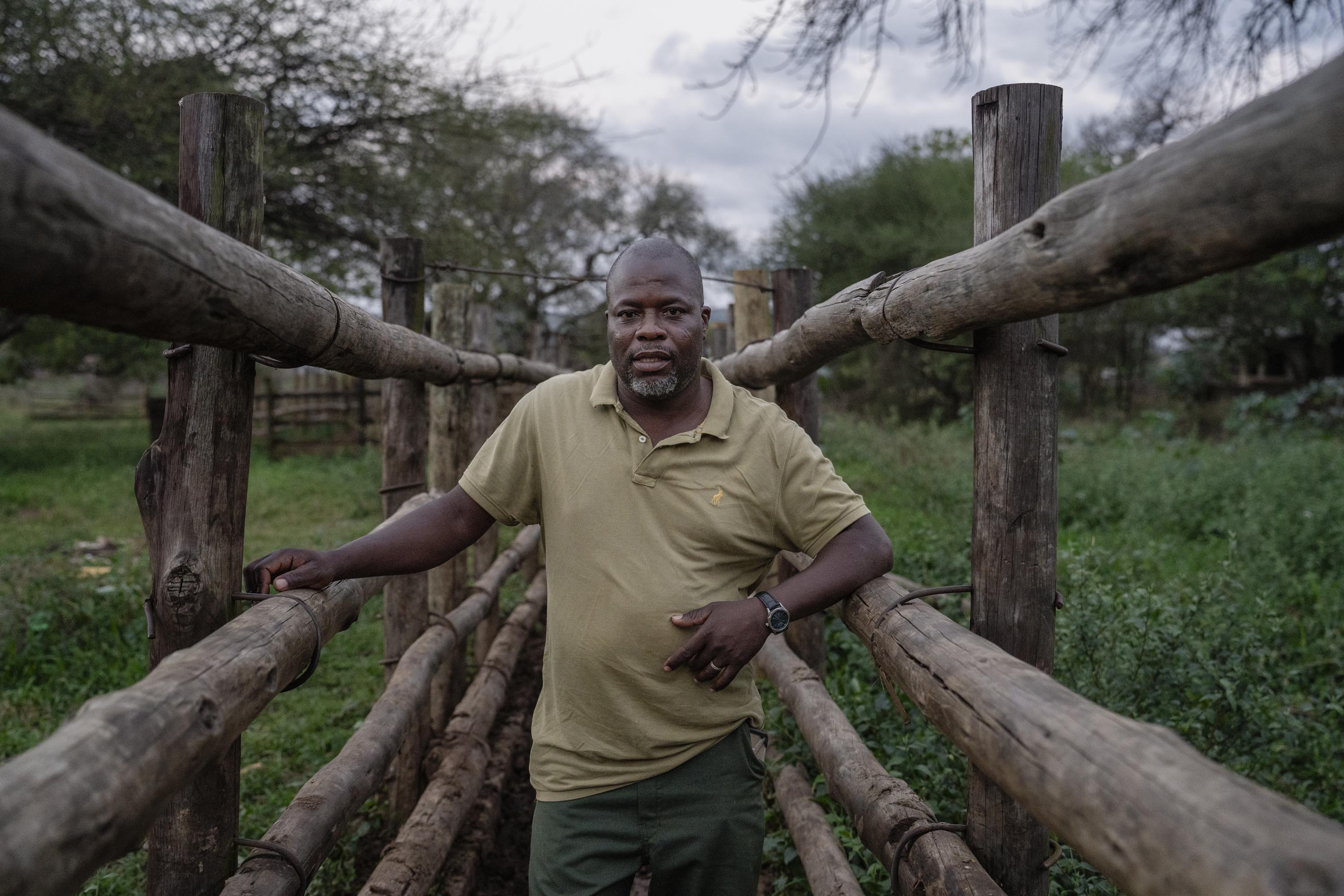
Herman Maluleke has about ten animals. We came across him in Matiyani just outside the Kruger National Park. He alerted us to the vaccinations that would take place the next day in Maphophe. His animals had been vaccinated the previous day in the crush pen pictured here. A schedule is circulated on a WhatsApp group to the cattle owners.
The previous evening, last Wednesday, we had come across Herman Maluleke crossing the road with about ten animals in Matiyani, the first village outside Kruger. He showed us the communal crush pen and explained that vaccinations had taken place there on the Tuesday.
Maluleke is on a WhatsApp group for small-scale farmers where they can see the vaccination schedule and know which day to come. It showed that Thursday’s vaccinations would take place in Maphophe, and that’s how we knew to be there the next morning.
It was hard to count, but it’s possible over a thousand animals were vaccinated the day we were there. Muleya will be back this week to vaccinate any cattle that missed out.
Farmers from the area usher their cattle to a kraal that starts with a large paddock. The farmers wait their turn and then usher their bulls, cows and calves into a smaller paddock. Then, the animals move into a crush pen, which is a long, narrow wooden structure, where they have to stand in single file, awaiting their vaccines.
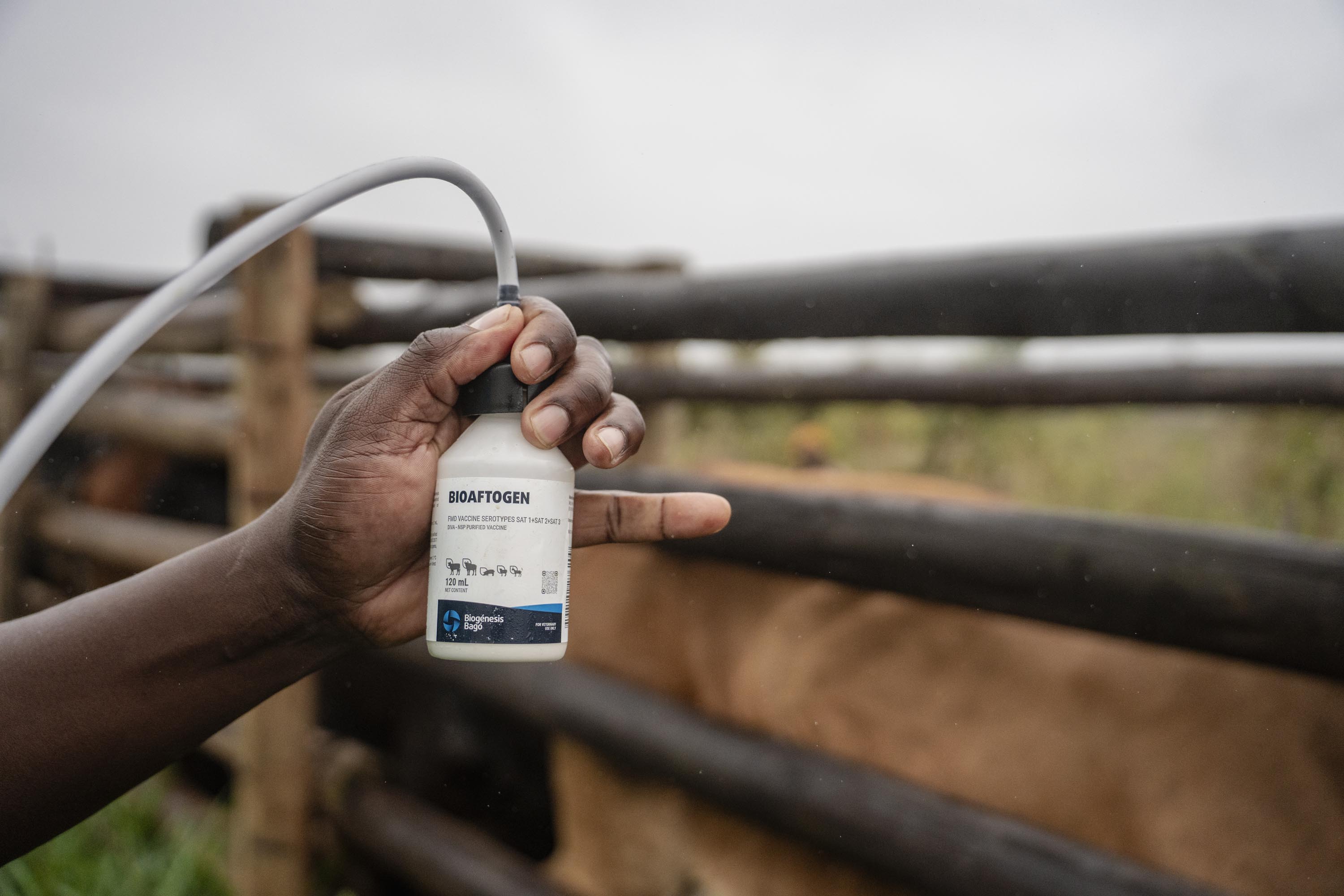
Muleya shows the Bioaftogen FMD vaccine manufactured by Biogénesis Bagó, an Argentine company, which he administers to cattle.
Muleya has a syringe connected to the FMD vaccine manufactured by Biogénesis Bagó, based in Argentina. South Africa has imported millions of vials from this company, with each dose costing about R46. The vaccine works, but ideally it needs to be boosted on first-time recipients a month or so after the first injection, and administered twice yearly on all cattle for optimal efficacy. The logistics of this are not easy: vaccines have to be imported, stored and distributed properly, vehicles need to work and have fuel, schedules need to be drawn up and stuck to, officials need to pitch up to work, and farmers need to be notified and encouraged to come. But even getting it mostly right is beneficial.
Muleya simply has to lightly poke the skin of a bovine for the vaccine device to automatically inject it, giving the animal a small but harmless jolt.
He and his team also check for any signs of FMD, but there were none while we were there. One by one Muleya injects each of the animals in the crush pen. Once he’s finished a herd, the crush pen’s gate is opened and the animals are released back to their lives of free-range grazing on the Lowveld.
Muleya and his team take notes and keep a record of the vaccines. The farmers themselves have stock cards, which record the vaccines their animals have received. We are told every animal has a unique identifier. The vaccines for the day are kept in an official-looking cooler box.
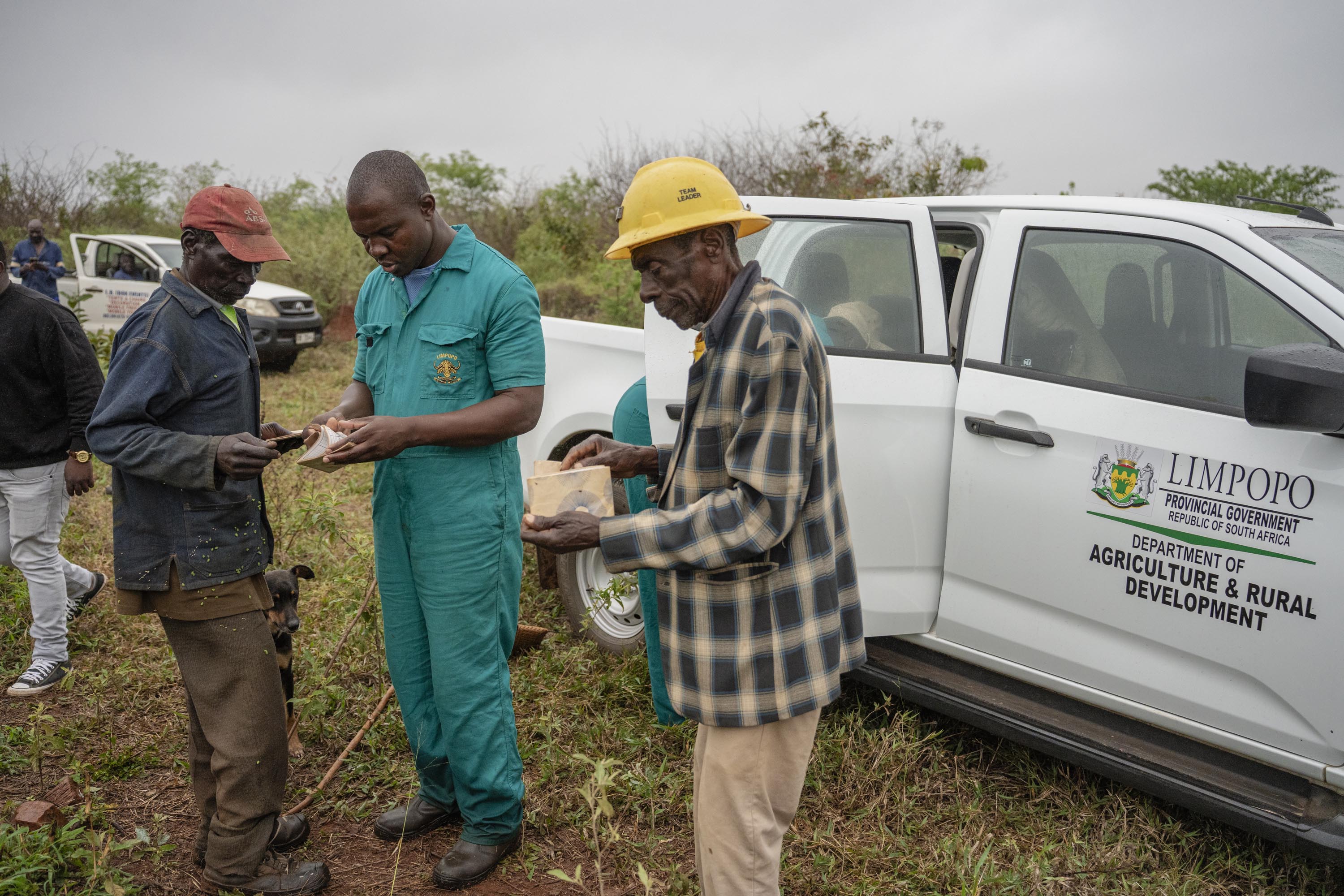
Muleya checks the stock cards of the farmers who have brought their cattle to get vaccinated.
Solomon Chauke is over 60. He has ten cattle. He started farming more than 20 years ago with one cow that he bought, and he has never bought another. Since then, he has sold many animals. He says they can each fetch about R14,000. He says his cattle have not had FMD because he made sure they were vaccinated. He says he also uses home-made remedies on his animals.
“We come here every Thursday to vaccinate and to clean ticks. This is very helpful to us,” he says.
He mainly farms cattle and chickens. He says his biggest problem is livestock theft. Four of his cows have been stolen.
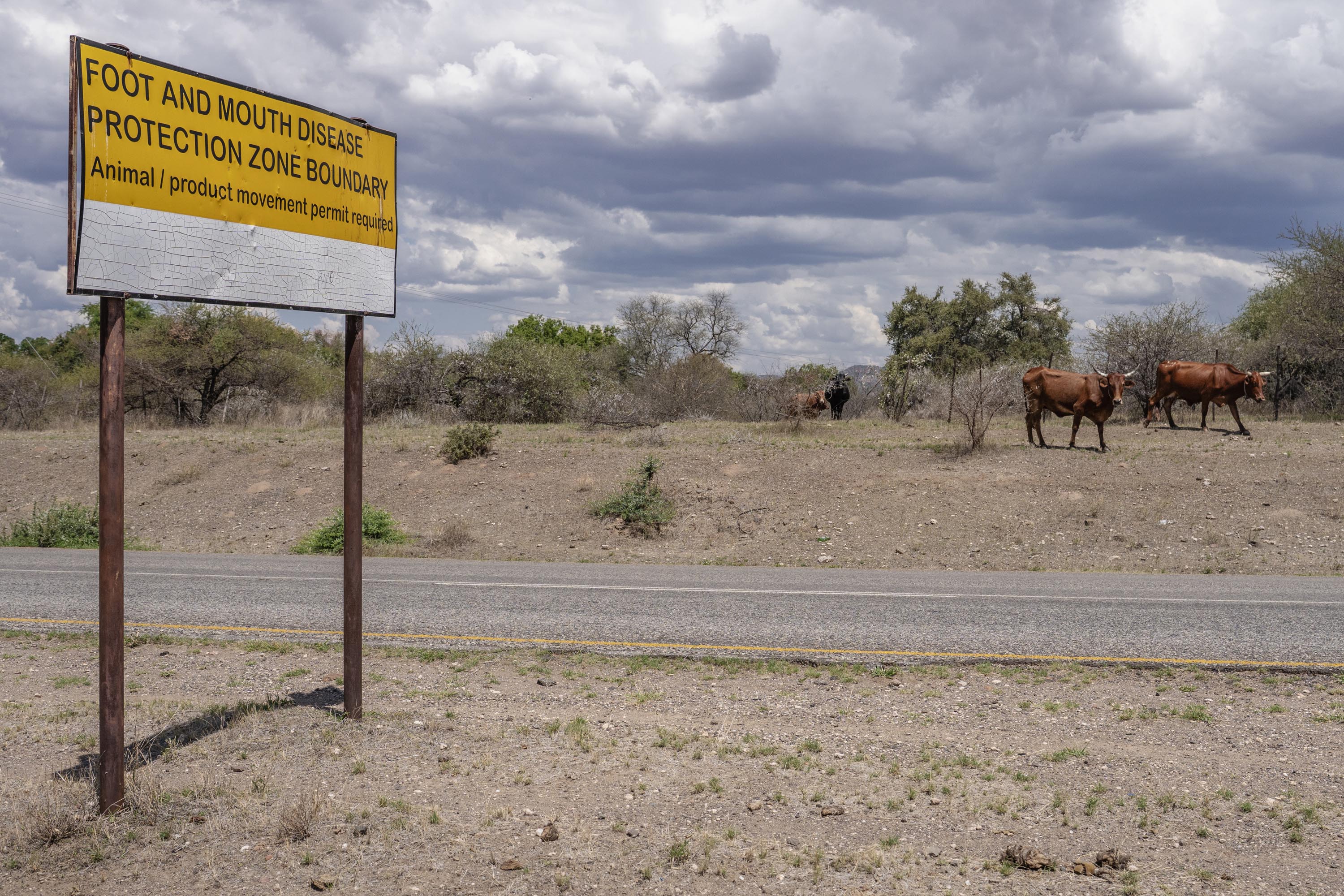
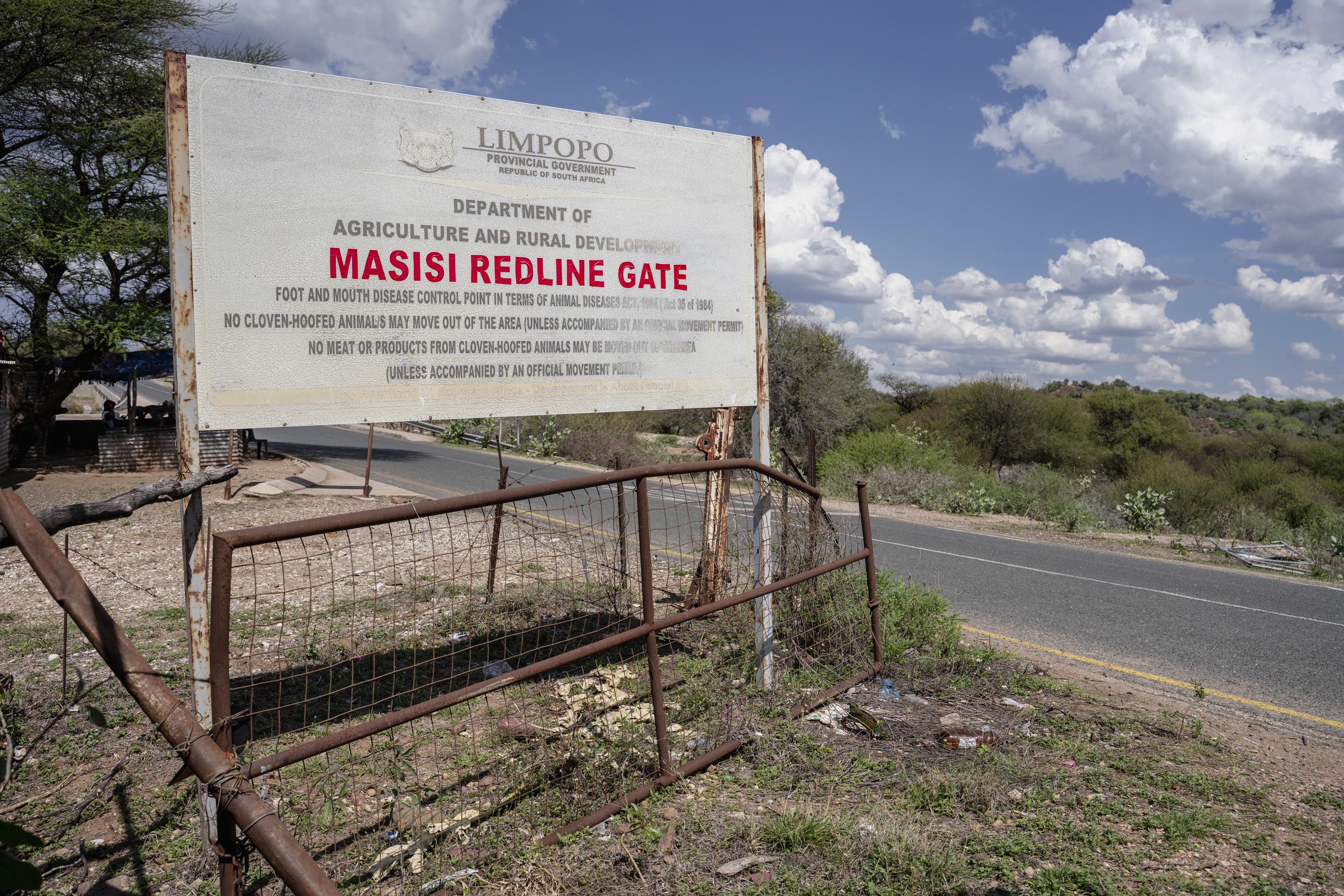
These signs near Masisi, a village close to Pafuri, the northernmost gate of the Kruger National Park, show that this is the foot-and-mouth disease protection zone.
Matiyani and Maphophe are in the FMD protection zone. This is an area bordering the Kruger, where buffalo carry the virus. The state is supposed to monitor this area and the borders with neighbouring countries for FMD outbreaks.
As we explained previously this system had totally broken down by 2019, resulting in the major epidemic we now have across the country. But from what we saw, and also based on the detailed responses we received from the Limpopo agriculture department, a valiant effort is being made to bring the disease under control in the province.
The department told us that FMD vaccinations have reached all the districts in the province. Over a million doses have been administered. About 75% of cattle have received their first vaccination, and booster doses are now in progress. The province is also hoping to vaccinate other cloven-hoofed animals (pigs, goats, sheep) that are susceptible to FMD.
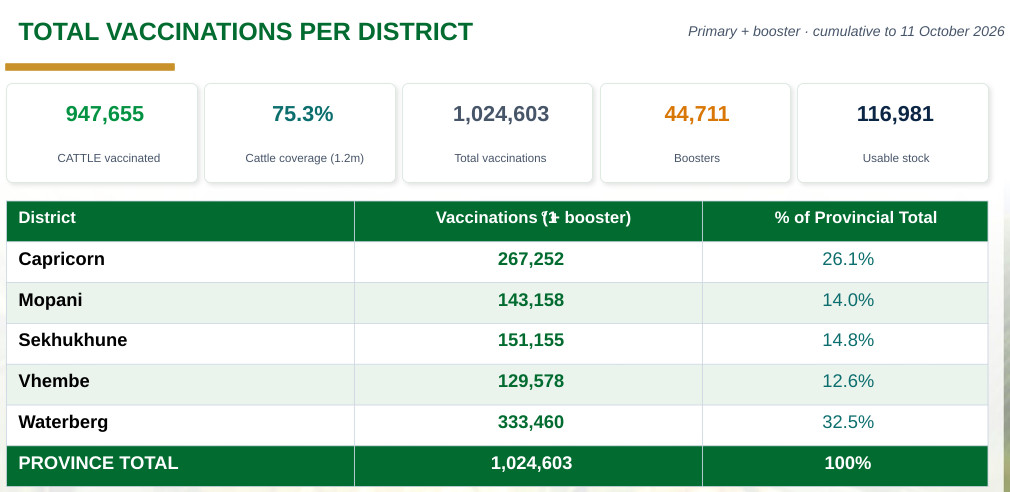
The table, by Gerhard Coetzer of the Limpopo agriculture department, covers 2 December 2025 to 11 October 2026.
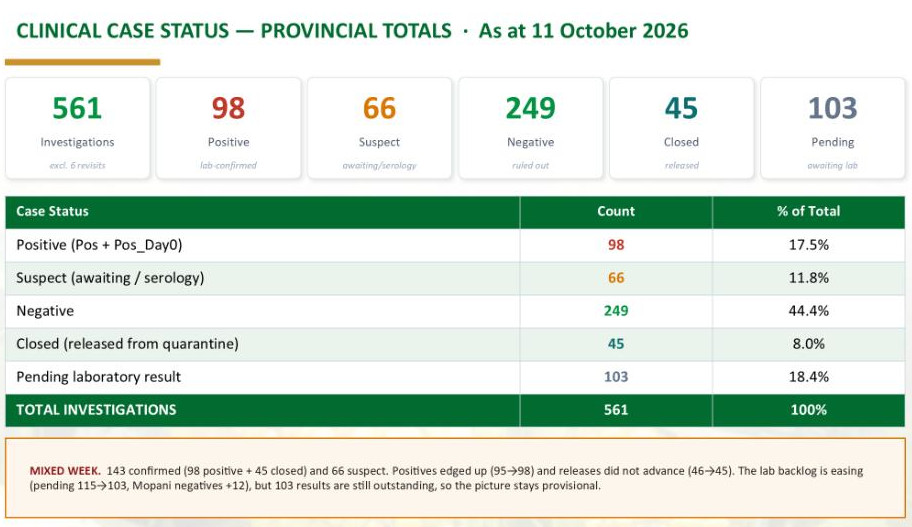
FMD is still active in Limpopo (and the rest of the country). The table, by Gerhard Coetzer of the Limpopo agriculture department, shows that 561 commercial farms in the province have been investigated for FMD. Of these, 98 have been confirmed to have FMD and are still under quarantine. 66 are suspected of having FMD (clinical signs but no lab results yet), 249 are confirmed with lab tests not to have FMD, 45 had FMD and were under quarantine but are now clear of the disease, and 103 were sampled for FMD despite having no clinical signs but are still awaiting lab results.
To get FMD under control, what we saw in Maphophe will have to be replicated in villages in all nine provinces. The herds of small-scale farmers, as with large commercial ones, need to be vaccinated twice a year, ideally in the same two-month period, for the foreseeable future.
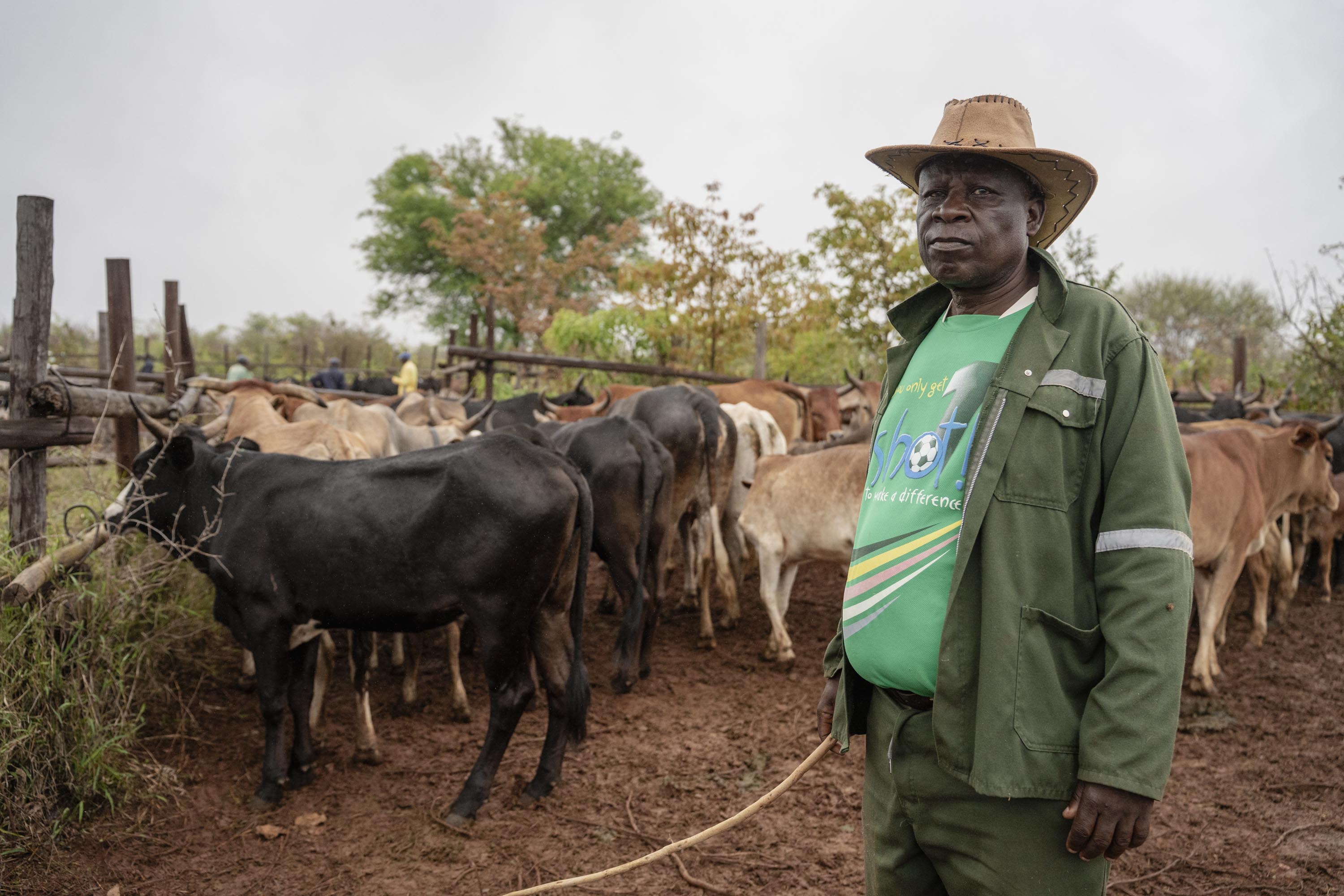
Phineas Hobyane gathers his cattle at the kraal to get vaccinated against FMD.
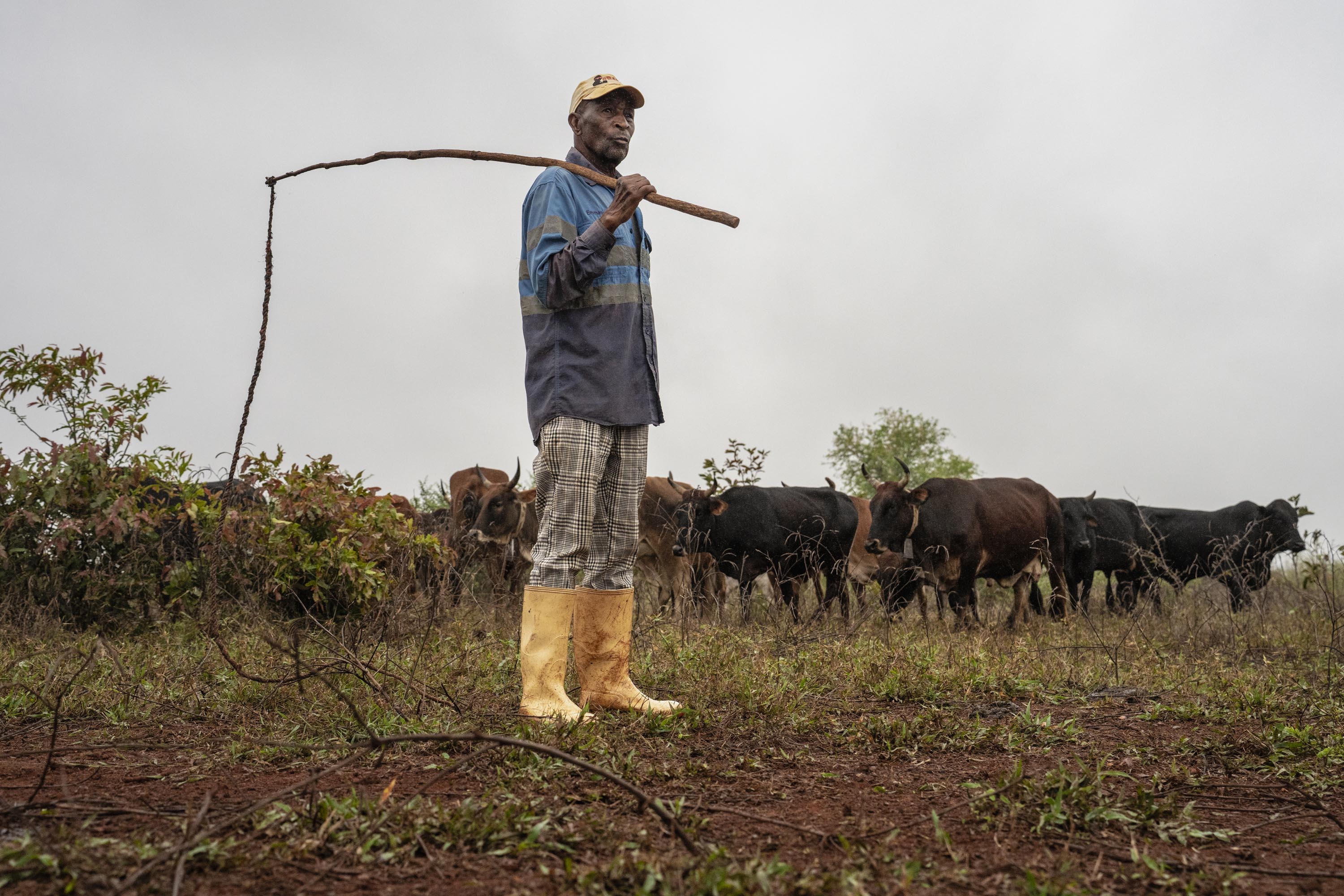
Ellian Mabasa, cattle whip in hand, waits for his animals’ turn to get vaccinated.
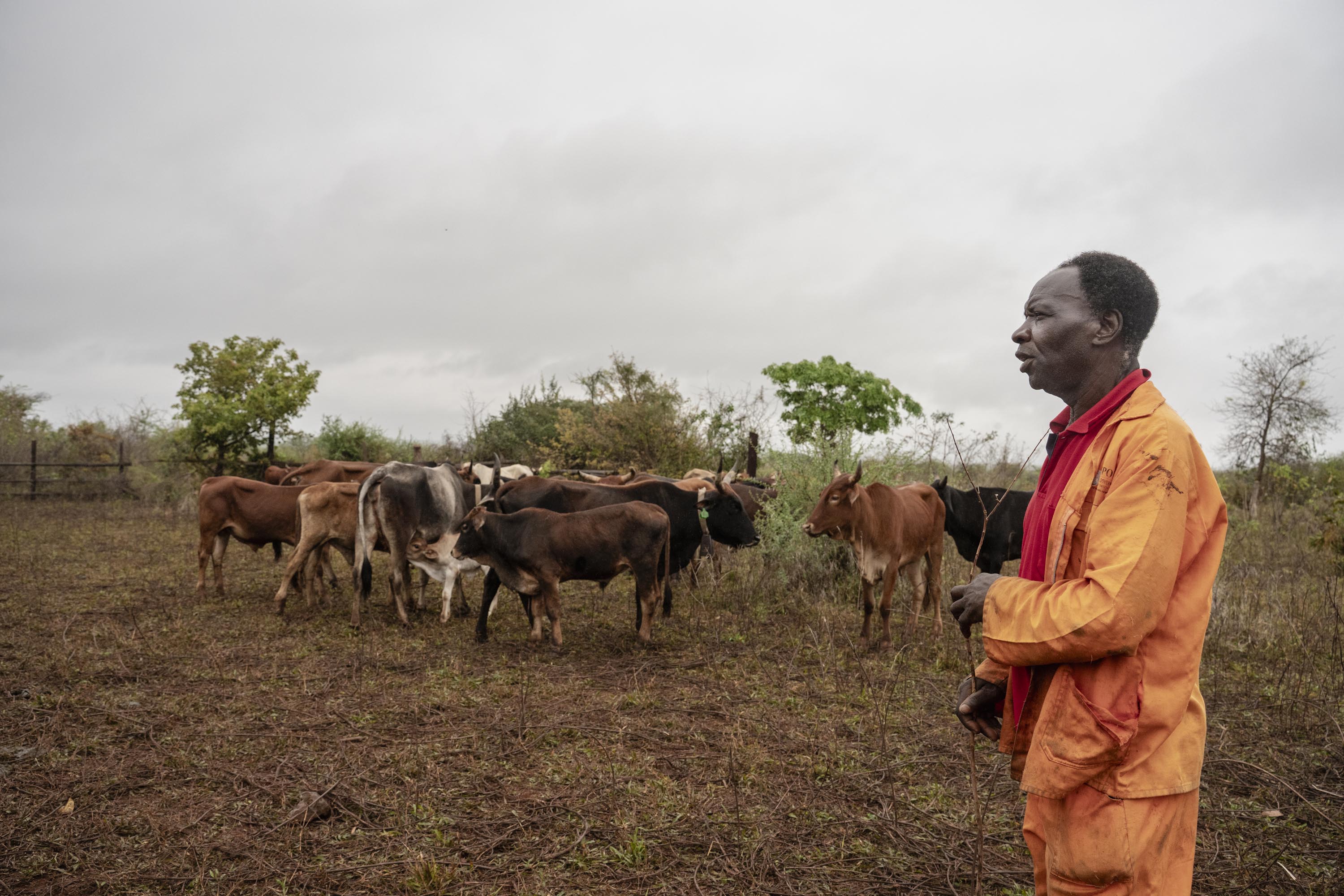
Samson Shirinda tends to his cattle which had just arrived at the kraal to get vaccinated.
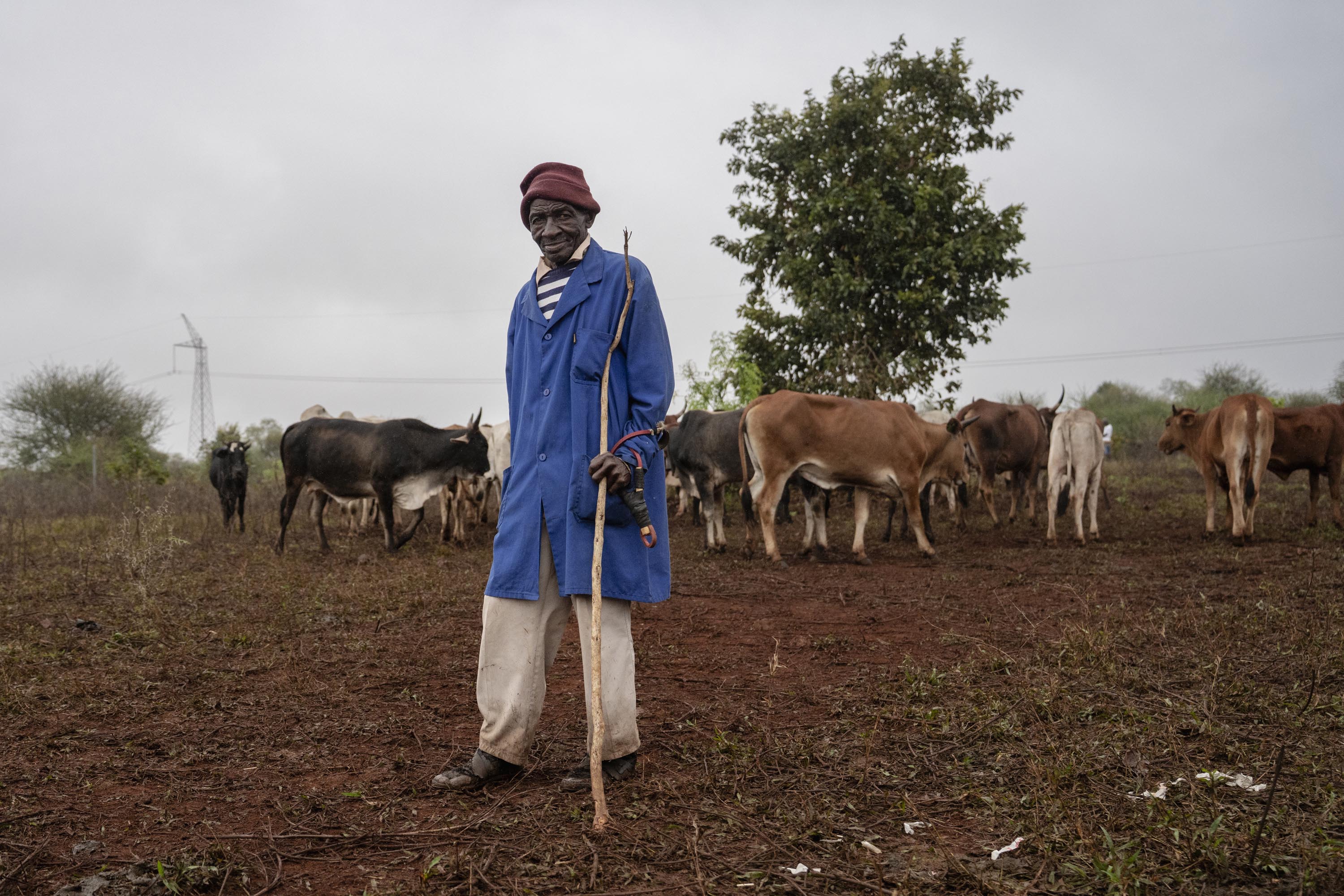
Restkon Bila is 76. Here he is with his cattle which have arrived at the kraal to get vaccinated. Most of the small-scale farmers seem to have about ten to 20, or even up to 30 animals.
Support independent journalism
Donate using Payfast

Don't miss out on the latest news
We respect your privacy, and promise we won't spam you.
Previous: COSATU congress ends with compromise
© 2026 GroundUp. This article is published under the GroundUp Republication Licence Version 1.0. Email [email protected] to request permission to republish.