
Action plan to save SA’s most endangered bird
With only 340 adults left, the Botha’s Lark faces extinction
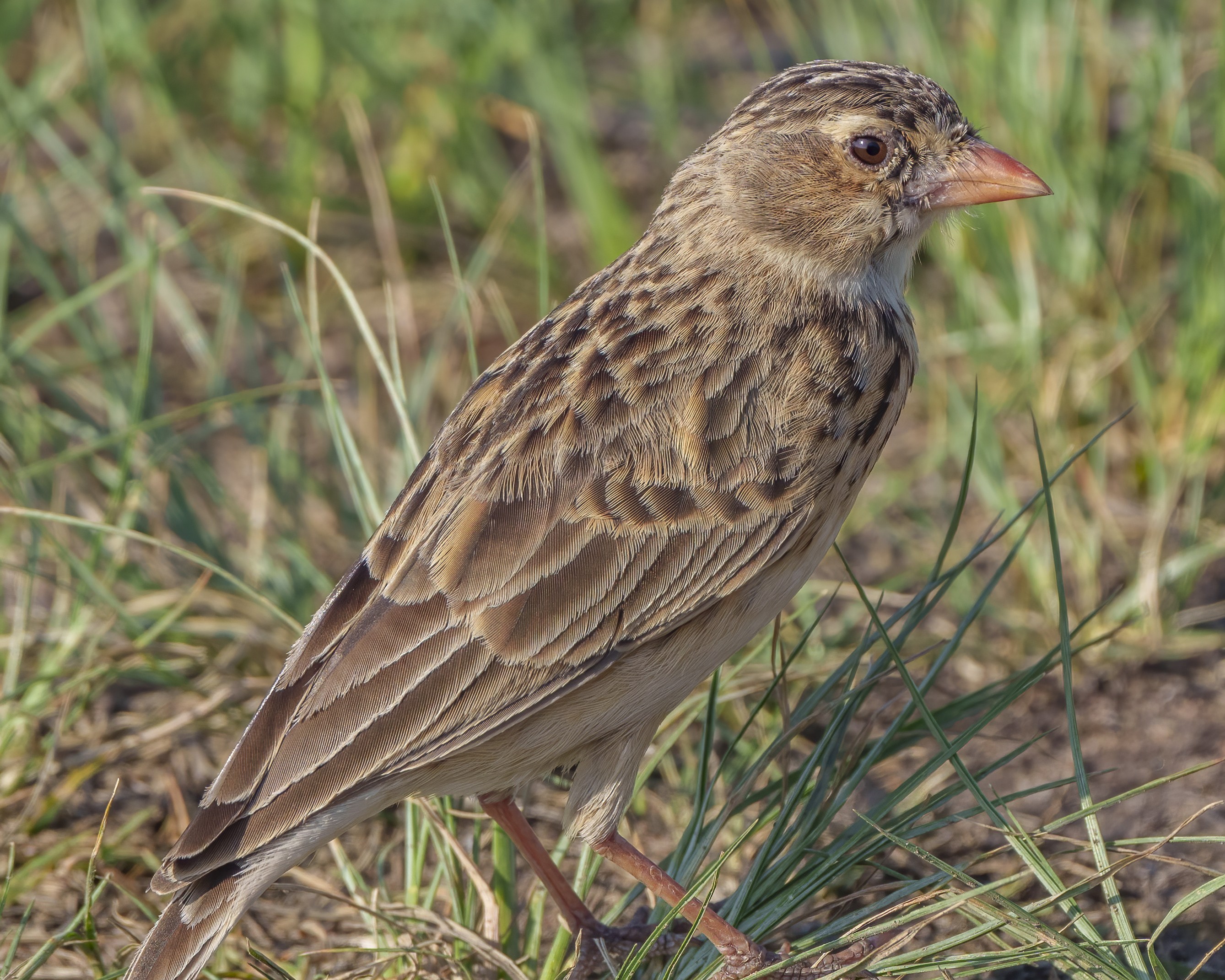
The Botha’s Lark, a small ground-nesting bird, is South Africa’s most endangered bird. Photo: Julius Falck/BirdLife SA.
- A new action plan aims to save South Africa’s most endangered bird, the Botha’s Lark.
- Its population has crashed, from 20,000 to an estimated 340 adults.
- Almost a third of the endemic grassland the bird needs to survive has disappeared due to agriculture and urban development.
Conservationists at BirdLife SA have pinned their hopes on a new action plan to save South Africa’s most endangered bird – the Botha’s Lark.
There are fewer than 340 mature individuals left in the wild.
The Botha’s Lark is a small, ground-nesting bird which is endemic to the high-altitude grasslands of southern Mpumalanga and the eastern Free State.
Centred around the town of Wakkerstroom, the bird’s population has fallen from 20,000 in 1983 to just an estimated 340 today. But BirdLife SA’s project manager for the region, Roy Robertson, says there may be even fewer birds.
“We haven’t found 340 of them,” he says, “We’ve seen a hell of a lot less.”

There are several reasons for the almost 90% decline. A third of the endemic grassland the bird needs to survive has disappeared due to agriculture and urban development.
“This little bird is an indicator of grassland health,” says Robertson. “It’s not going to bring the end of days if it goes, but it’s an important little piece of the puzzle. A canary in the coal mine.”
Changes in the climate have also made the birds’ survival more precarious. In the past two years, heavy rains have washed away the lark’s ground-based nesting sites.
“[The rainfall has] been double, if not triple, what is normal,” says Robertson. “So any ground nesting bird is going to be very uncomfortable.”
In addition, the Botha’s Lark eggs tend to have a relatively low survival rate because of predation.
“It’s not a charismatic species, and so it wasn’t properly studied,” says Robertson “We just don’t know enough.”
A dedicated research centre was established in Wakkerstroom in 2024 and its research and surveys have revealed more about this understudied bird.
BirdLife’s new species action plan, published a few weeks ago, is designed to stabilise the lark’s population and increase its numbers in the next ten years.
The aim is to have several populations which can survive without human intervention. “That would be a conservation win for us”, says Robertson.
In the short term, local farmers and landowners will be encouraged to adopt “lark-friendly” land management. This includes leaving portions of native grassland cut shorter to encourage breeding, as well as adopting a controlled burning strategy, which would allow birds to nest in recently burnt veld.
So far, the response has been encouraging. “We haven’t had a single farmer who wasn’t interested. It’s been a total buy-in”, says Robertson.
But protecting the lark in the long-term will mean greater legislative protections.
“We don’t want a quick fix – where they come back for a season and then they’re gone,” says Robertson. “We need to keep it continually protected.”
That will require a push to declare the endemic grassland of the area a “protected environment”, which would hold landowners legally responsible for conservation.
“Grassland is one of the most under-protected environments in the country,” says Robertson. “We have 17 Kruger Parks’ worth, and most of it is developed beyond repair. But luckily here [Wakkerstroom] it hasn’t been ploughed up yet.”
Without protected status, the region is open to development. The area around Wakkerstroom has been proposed for the Sheepmoor Wind Energy Facility and there is a continued legal battles around the Yzermyn Underground Coal Mine.
“We face a lot of development pressure,” says Robertson. “But ecologically, this area is just too sensitive. A mine is probably the worst thing you could have.”
For Robertson, the pressure makes each Botha’s Lark sighting something to remember.
“When you see one, you might be one of the last people to ever observe these birds,” he says, “I find that a bit jarring.”
Support independent journalism
Donate using Payfast

Don't miss out on the latest news
We respect your privacy, and promise we won't spam you.
Next: SARS’s record-breaking tax collection
Previous: A billion tiny insects are getting the better of the Hartbeespoort hyacinth
© 2026 GroundUp. This article is published under the GroundUp Republication Licence Version 1.0. Email info@groundup.org.za to request permission to republish.