
Botched permits spoil start to crayfish season
West Coast small-scale fishers demand answers from fisheries department
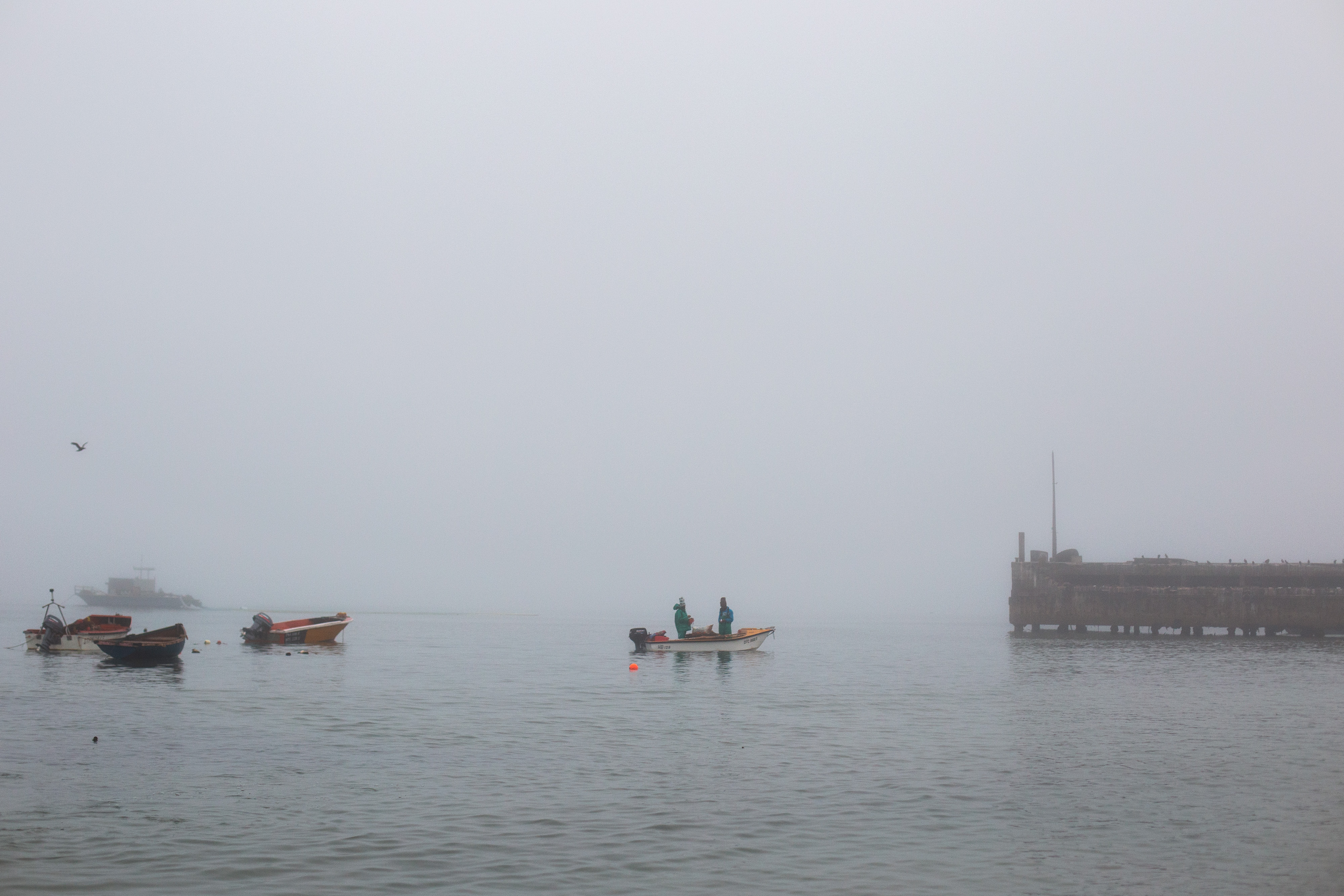
Small-scale fishers leaving the harbour in the early morning to harvest West Coast rock lobster. Photo: Ashraf Hendricks
- West Coast small-scale fishers say the crayfish season has been marred by administrative turmoil after the Department of Forestry, Fisheries and the Environment issued erroneous permits with reduced quotas for some West Coast cooperatives.
- The department also changed fishing areas, contradicting a legally binding exemption allowing the small-scale fishers to harvest nearshore.
- The Legal Resources Centre says commercial lobster fishers meanwhile received huge increases in their quota for the same areas.
West Coast small-scale fishers are demanding answers from the Department of Forestry, Fisheries, and the Environment (DFFE) after they were issued erroneous permits and received reduced quotas for West Coast rock lobster (kreef or crayfish).
The West Coast Small-Scale Fishers Cooperative Forum, which has 17 cooperatives and over 1,000 members, says the start of the crayfish season has been marred by “administrative turmoil” and “legal confusion”. The forum says the DFFE issued incorrect permits and offered no clarity, despite repeated urgent requests from legal representatives of the fishers.
This comes a few months after an announcement by former-DFFE Minister Dion George that the crayfish total allowable catch (TAC) would substantially increase – by 58%. GroundUp previously reported how the decision was welcomed, but concerns remained about the shortening of the fishing season from six to four months.
Yet several West Coast cooperatives received lower quotas than last year. On 12 November, the Legal Resources Centre (LRC) wrote to the DFFE regarding the lowering of allocations for West Coast cooperatives, while there were significant increases for the commercial sector and some other small-scale cooperatives.
The LRC received no response. But on 14 November, several cooperatives were notified that there had been an “error” in the permits issued and that a correction had been made.
The department issued the corrections, and said that “continued progress will be made in promoting transparency and consultation regarding the processes related to the allocations”.
The LRC wrote again on 17 November that the new quotas “reflected varying increases” for West Coast cooperatives, but the adjustment seemed to have been made by decreasing allocations for five other cooperatives on the West Coast.
The LRC asked the DFFE for its data and for clarification on the reasons for its allocations.
It’s an administrative nightmare, says Hilda Adams, chairperson of the West Coast Small-Scale Fishers Cooperative Forum. Currently, about 11 cooperatives are waiting for their new permits. Without them they may not go to sea. Meanwhile, the crayfish season started a few weeks ago.
The fishers are demanding to meet with new DFFE Minister Willie Aucamp. They want immediate correction of all permit errors, a confirmation of “legally compliant” offshore harvesting areas, and a “public explanation for the repeated administrative failures and document recalls”.
Offshore vs nearshore
In a third letter to the DFFE, sent on 1 December, the LRC raised concerns about the DFFE changing the fishing areas allocated to several West Coast cooperatives.
Previously, small-scale fishers were allowed to catch nearshore with hoop nets. This is primarily because small-scale fishers use smaller boats and offshore fishing requires more resources. The fishers received an exemption from the DFFE at the beginning of 2025, valid until January 2027, allowing them to harvest their offshore allocation in the nearshore. But the department’s corrections allocated this offshore quota to area 7, where there is no nearshore allocation.
“This means that the cooperatives will not be able to utilise the exemption to catch the [crayfish] in Area 7’s nearshore,” said the LRC.
In a statement, the West Coast Forum said, “These instructions directly contradict a legally binding exemption signed by the previous minister.”
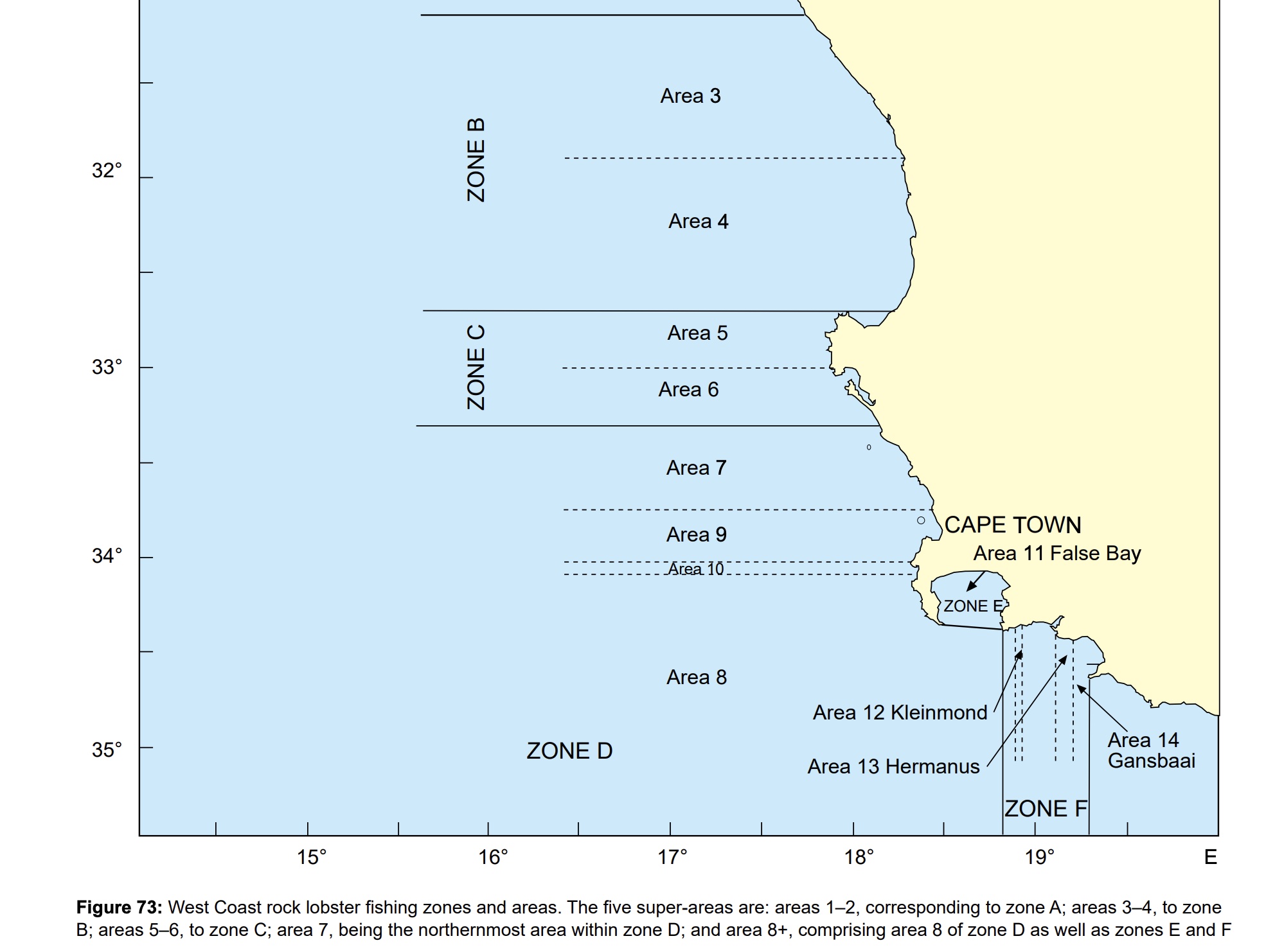
Graphic from the DFFE report: Status of the South African Marine Fishery Resources 2025
At the time, the department made the exemption, it said it aimed to “support the economic sustainability of small-scale fishing cooperatives”.
Adams says the recent change means that fishers will lose their “main income” and “food security”.
“We won’t be able to go [offshore] because of all the expenses,” said Adams.
The LRC also raised issues around the landing site for area 7, which is in Saldanha Bay. It would mean significant fuel expenditure.
The LRC said previously the cooperatives were allowed to harvest offshore in areas 5 and 6, and “the harvest was plentiful”.
Wilmien Wicomb, of the LRC, said, “The crux of the matter is, they seem to again be treated unequally with the commercial sector.”
“The commercial lobster [fisheries] in the same areas got huge increases and in particular nearshore increases. The small-scale [fishers] should have preferential access to the nearshore. It’s their lifeblood, and where they can operate.”
Wicomb reiterated that it was difficult to understand how the department made decisions, because it had not provided any reasons or underlying data.
The DFFE had not responded at the time of publication. Its response will be added when received.
Support independent journalism
Donate using Payfast

Don't miss out on the latest news
We respect your privacy, and promise we won't spam you.
© 2025 GroundUp. This article is licensed under a Creative Commons Attribution-NoDerivatives 4.0 International License.
You may republish this article, so long as you credit the authors and GroundUp, and do not change the text. Please include a link back to the original article.
We put an invisible pixel in the article so that we can count traffic to republishers. All analytics tools are solely on our servers. We do not give our logs to any third party. Logs are deleted after two weeks. We do not use any IP address identifying information except to count regional traffic. We are solely interested in counting hits, not tracking users. If you republish, please do not delete the invisible pixel.