
Budget 2026: Godongwana takes aim at badly-run municipalities
Finance Minister warns budgets will be cut if performance targets are not met
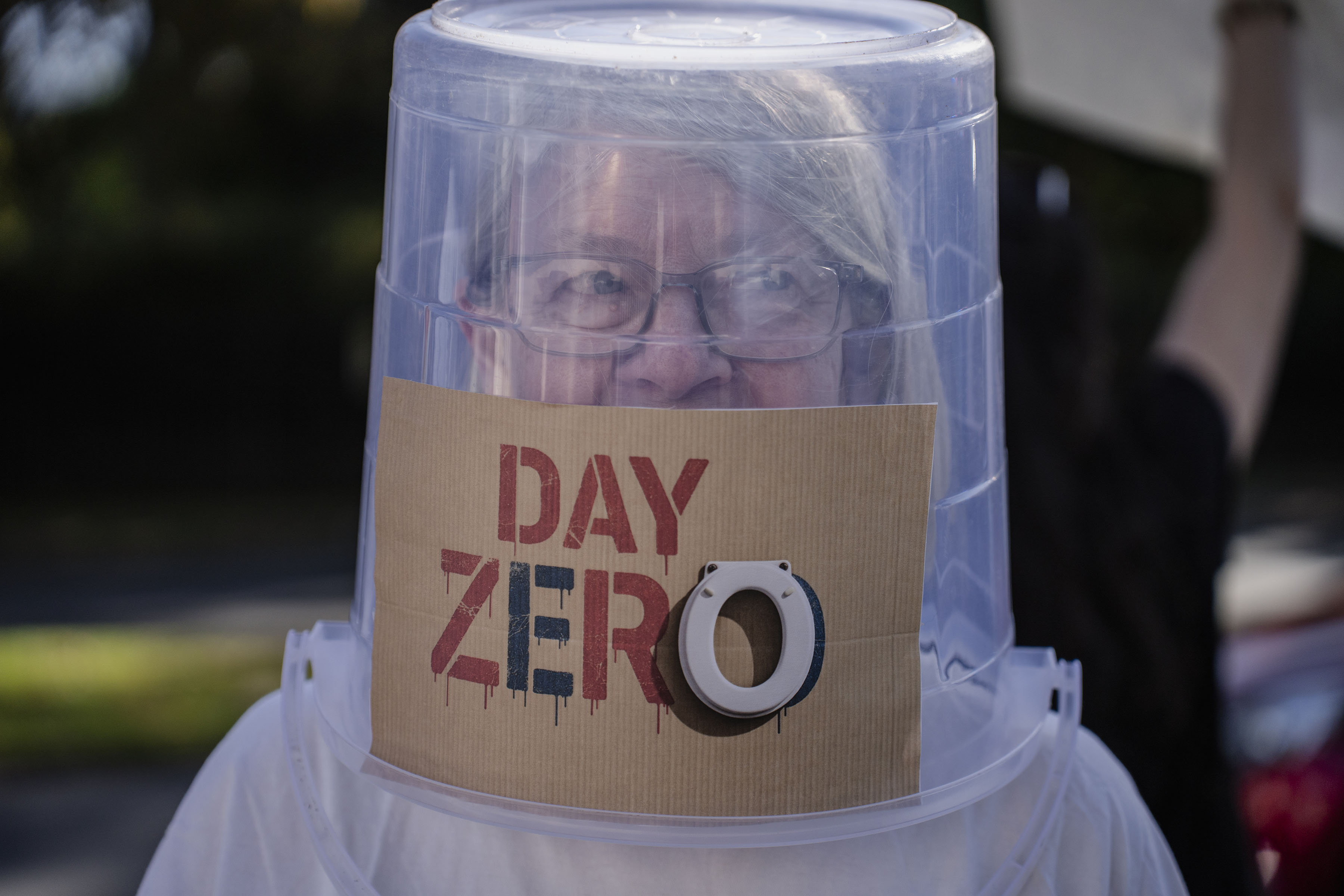
The City of Johannesburg’s revenue from water is R11.9-billion, but only R1.3 billion is allocated to Joburg Water for capital expenditure, Minister of Finance Enoch Godongwana said on Wednesday. Revenue collected for a specific purpose had to be used for that purpose, he warned. Archive photo: Ihsaan Haffejee
Finance Minister Enoch Godongwana issued a stern warning to badly-run municipalities on Wednesday: clean up your act or risk budget cuts.
In his budget speech to Parliament, Godongwana said R86.9-billion had been allocated to local government to support the provision of free basic services to 11.2 million households.
“Local government is the sphere where communities experience the state most directly. Yet many municipalities are in financial and operational distress and therefore unable to deliver services as they should,” he said, pointing out that 63% of South Africa’s municipalities were in financial distress.
Godongwana said various structural reforms were underway, including “a comprehensive review of the local government fiscal framework”.
He warned that revenue collected for a specific purpose had to be used for that purpose.
“In reality, this principle is consistently flouted. For instance, Johannesburg’s water revenue is R11.9 billion, but only R1.3 billion is allocated to Joburg Water for capital expenditure. This has contributed to the massive backlog of R64-billion that is needed to fix water supply problems in the city.”
He said that over the next three years, R27.7-billion had been allocated to a performance-based reform of metro trading services in electricity, water, sanitation and solid waste. “This is the first step towards matching revenue collection to reinvestment in the same service”.
Failure to meet targets would result in budget cuts, Godongwana warned.
The municipal infrastructure grant was also being reformed. Municipalities with proven capacity will continue to receive funding directly. “However, where there are serious capacity or governance failures, the delivery will shift to an indirect model,” he said.
“The intention is to protect citizens from persistent municipal dysfunctions that have long undermined effective service delivery.”
National government will be shifting from “oversight” to “active structural intervention” to improve local government finances.
Operation Vulindlela, which has focused mainly on national electricity and freight rail, will be expanded to improve municipalities.
Support independent journalism
Donate using Payfast

Don't miss out on the latest news
We respect your privacy, and promise we won't spam you.
Next: Patients have to queue before sunrise at this rural Limpopo hospital
Previous: Budget 2026: Ten takeaways from Godongwana’s speech
© 2026 GroundUp. This article is licensed under a Creative Commons Attribution-NoDerivatives 4.0 International License.
You may republish this article, so long as you credit the authors and GroundUp, and do not change the text. Please include a link back to the original article.
We put an invisible pixel in the article so that we can count traffic to republishers. All analytics tools are solely on our servers. We do not give our logs to any third party. Logs are deleted after two weeks. We do not use any IP address identifying information except to count regional traffic. We are solely interested in counting hits, not tracking users. If you republish, please do not delete the invisible pixel.