
Claremont could be Johannesburg Water’s big blind spot
Suburb is among several expecting a very dry Christmas
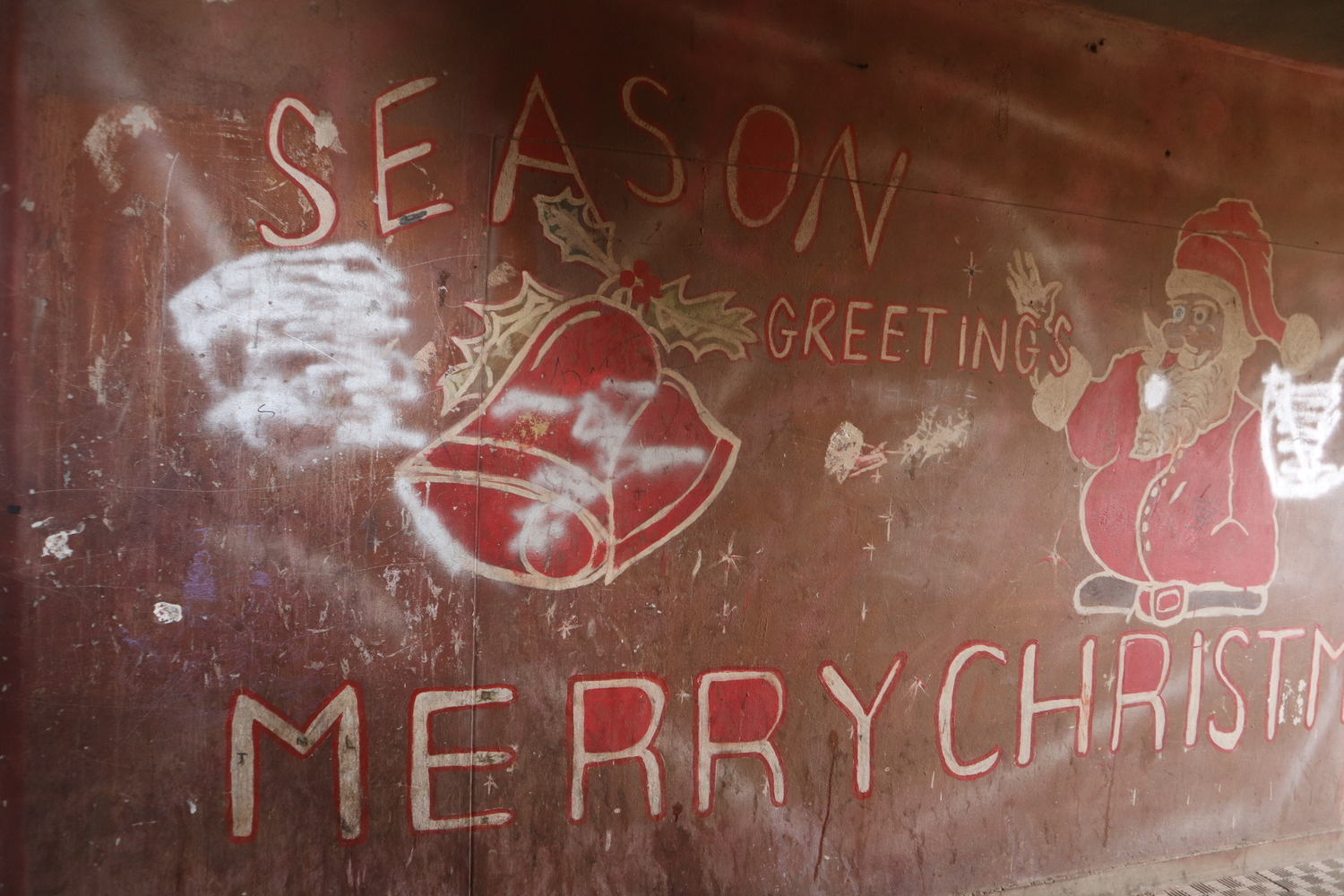
A wall in Claremont, Johannesburg. Families living on Antoinette Street expect another Christmas without water. Photos: Sean Christie
On a night in November, Claremont resident Claudette Abrahams woke to the smell of fire – two palm trees alongside her block on Antoinette Street were alight.
“We had no water in the block, so they just burned. In previous years we’ve had fires inside the block that did more damage than they would have if there had been water in the taps. We’ve had water issues for more than 12 years,” she says.
All the old Johannesburg suburbs west of the city centre have experienced water supply issues in the last decade, but some have fared worse than others.
“Among the suburbs to the west and south-west of the city centre, Claremont, Newlands, Coronationville and Westbury have had more problems than Bosmont, Crosby and Northcliffe,” says WaterCAN executive director Feriall Adam. Claremont, she says, “seems to exist in a service delivery blind spot.”
The suburb — an apartheid-era low-cost housing development — comprises several low, honey-brick tenements, built on a hillside that runs down to the Roodepoort to Johannesburg railway line and the Newclare shacklands.
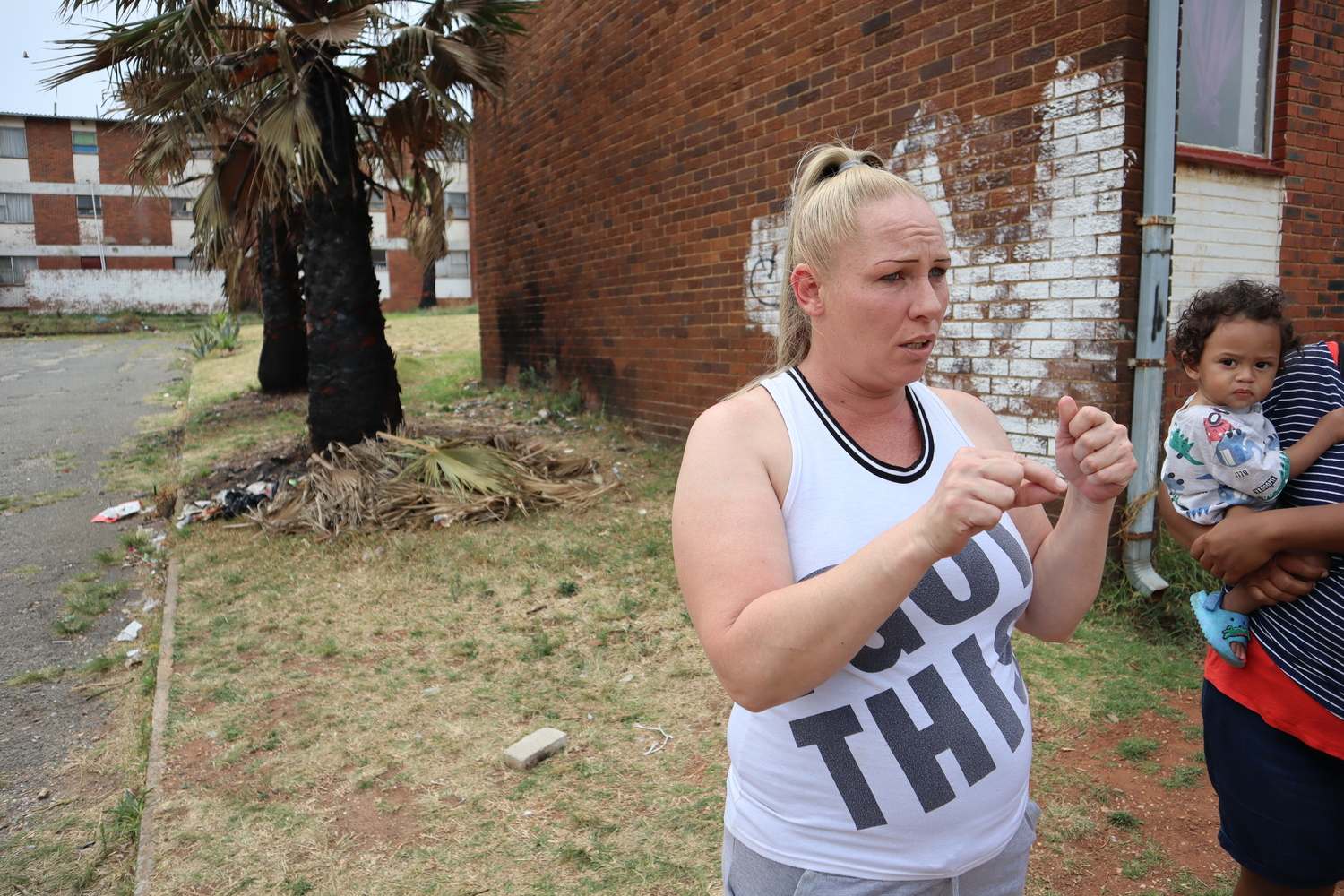
Claudette Abrahams outside her block of flats.
“The issue for most is a lack of water pressure, and for some a complete lack of water,” says Abrahams, who has repeatedly reported these problems to local councillors and directly to Johannesburg Water.
“For years nothing was done, then in early September this year there was a series of protests which resulted in a visit from the mayor and promises of an interim solution from Johannesburg Water. Water tankers appeared to fill JoJo tanks and buckets. For two whole weeks in October we received water at my block on Antoinette Street. Then, nothing. Water completely stopped flowing during the day, and the tankers stopped coming. We are back to square one, back to the bucket system,” says Abrahams.
According to Johannesburg Water’s Nombuso Shabalala, most of Claremont is fed by Hursthill 1 reservoir, a reservoir within the Commando system that developed leaks.
“Due to these defects, the reservoir had to operate at a reduced top water level for safety reasons. Operating at this lower level meant that it could no longer generate sufficient pressure to supply the high-lying parts of Claremont, especially during peak demand. Recently, the reservoir was taken out of operation altogether, and the zone is currently being supplied through a bypass. This has made the situation even more challenging, as the bypass does not provide enough height or pressure to push water up to the higher blocks of flats. Under normal conditions, when Hursthill 1 operates at its full reservoir level, it can create adequate pressure,” she said.
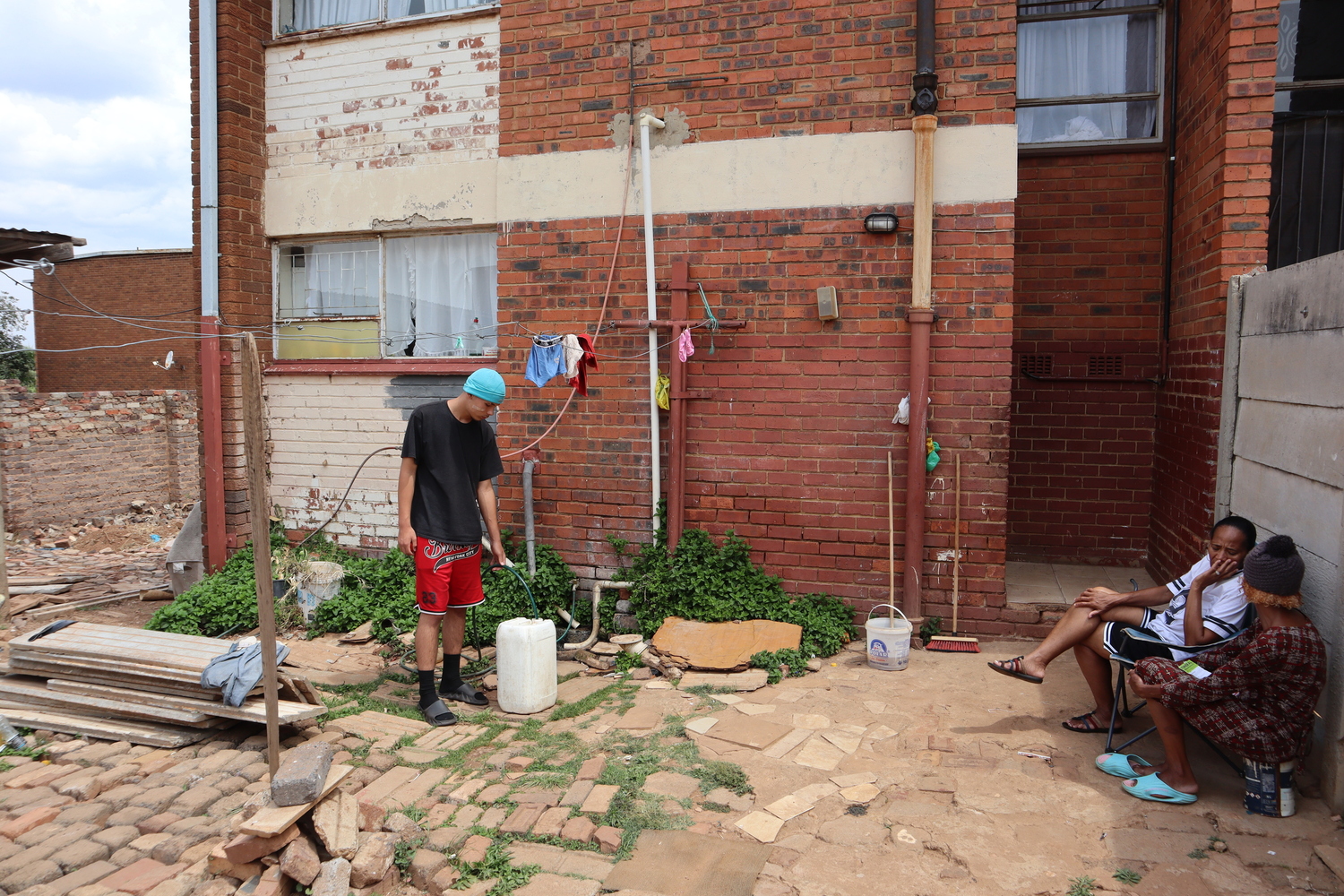
Claremont resident Luciano Abrahams fills a jerry can from a tap in a neighbouring block of flats
Johannesburg Water has explained in numerous meetings that the infrastructure in Johannesburg’s older suburbs has reached the end of useful life and needs replacing, but there is no budget to do this. As of 30 September, Johannesburg Water owed R102-million to suppliers on new projects and R161-million to suppliers on maintenance work.
“I know of several communities to the west of the CBD where contractors have simply walked off site due to non-payment,” said Adam.
Abrahams says the community has come to distrust what they are told by Johannesburg Water.
“They say that the pressure weakens the higher up the water goes, but it doesn’t add up,” she says, pointing at Claremont Flats, which is at the lower end of Claremont but rises up 12 storeys.
“Before it was condemned, they often had decent water pressure all the way to the top floor. This is higher than a lot of the surrounding blocks, where water pressure is next to nothing. How do you explain that?” she says.
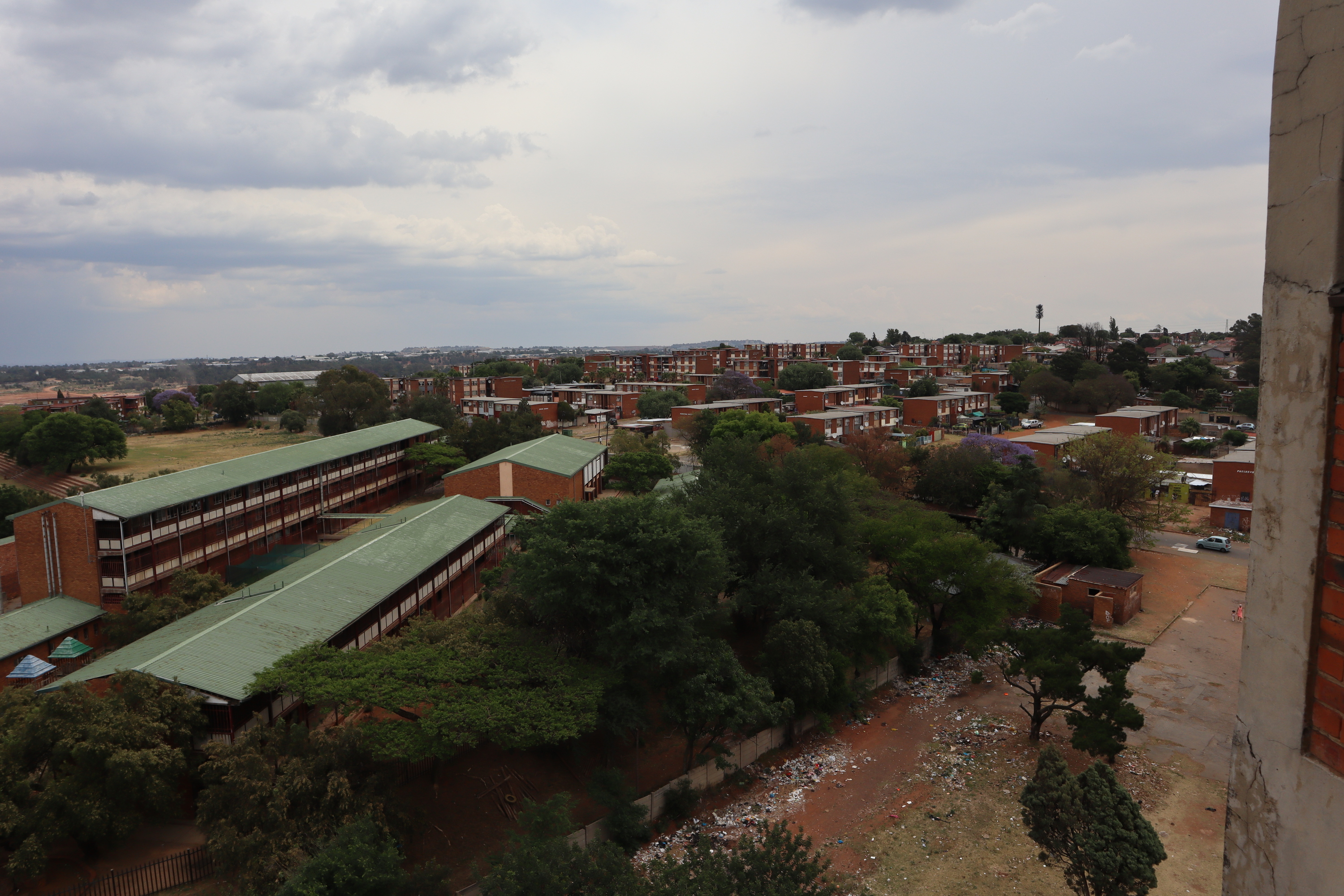
Claremont, seen from the 12th storey of Claremont Flats, which often receives water at decent pressure when much lower blocks have hardly any water pressure at all.
Using a basic pressure gauge bought from a hardware store, Abrahams mapped the pressure in various parts of Claremont, and sent her data to water expert Richard Holden, who believes Abrahams may be on to something.
“Maxwell Court has water virtually the whole time, up to the top floor, whereas Frederick Court, which you look down on from Maxwell Court, has very intermittent supply and low pressure. Unless there is some sort of blockage, this is a physical impossibility. There is also a bakery there, where the owner put in a borehole because of issues with the water supply, but 50 metres down the street they have no water problems,” says Holden, who sent the video evidence to Johannesburg Water.
Shabalala says the water entity inspected the system “and confirmed it to be hydraulically open, with no blockages affecting flow.” She also disputed Abrahams’ claim that blocks on Antoinette Street are without water.
“The area is not in a prolonged ‘no water’ state. Instead, the supply has been restored through continuous operational management and system balancing to mitigate the effects of the bypass and the absence of reservoir storage,” she said, adding that the long-term plan to stabilise and regularise water supply throughout Claremont and the broader Commando system “includes the rehabilitation of Hursthill 1 reservoir, which is critical for restoring the storage capacity and pressure head needed to reliably supply the zone.”
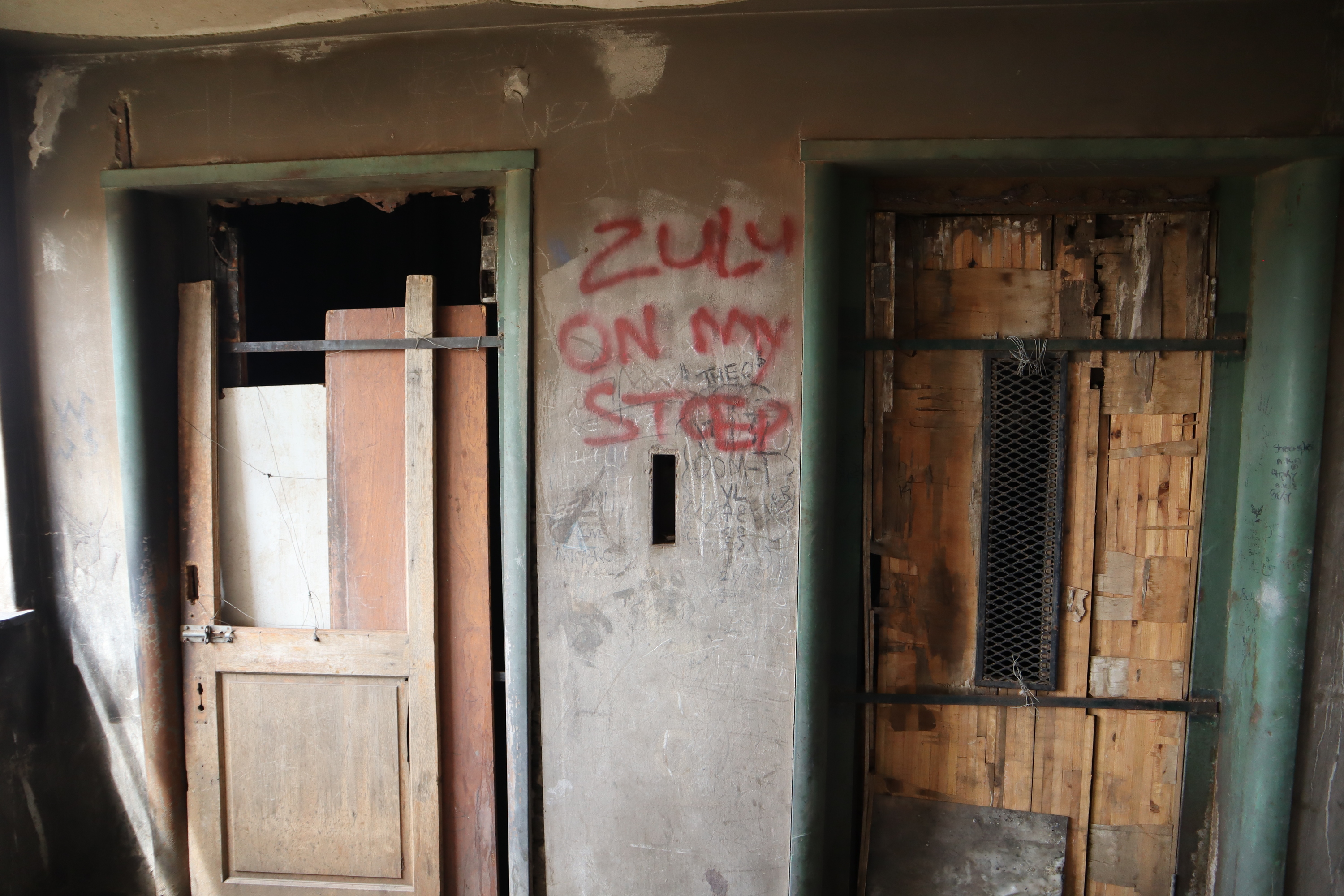
Claremont is a community beset by social issues, rooted in apartheid. “We are nobody’s priority,” says resident Claudette Abrahams.
Abrahams retorts, “if it is true that supply has been restored, then why am I still fetching water from the blocks behind us in a bucket?”
And with that, her phone pings with feedback from the morning’s joint Johannesburg Water and Rand Water briefing. Rand Water has announced that it will conduct routine maintenance at several pumping stations in December 2025 and January 2026. Communities fed by Johannesburg Water’s Commando System, “must realistically prepare for reduced pressure; intermittent water; full outages in higher-lying or end-of-line streets; a 3-5 day recovery period after pumping resumes,” reads a statement issued by local councillors.
“That’s us, happy Christmas,” says Abrahams.
Support independent journalism
Donate using Payfast

Don't miss out on the latest news
We respect your privacy, and promise we won't spam you.
Next: What the latest tests say about beach water quality
Previous: How a cycling group is trying to make Cape Town’s roads safer
© 2025 GroundUp. This article is licensed under a Creative Commons Attribution-NoDerivatives 4.0 International License.
You may republish this article, so long as you credit the authors and GroundUp, and do not change the text. Please include a link back to the original article.
We put an invisible pixel in the article so that we can count traffic to republishers. All analytics tools are solely on our servers. We do not give our logs to any third party. Logs are deleted after two weeks. We do not use any IP address identifying information except to count regional traffic. We are solely interested in counting hits, not tracking users. If you republish, please do not delete the invisible pixel.