
Cleaners for luxury property rentals go on strike in Camps Bay
Company says: no work, no pay
 Add GroundUp on Google
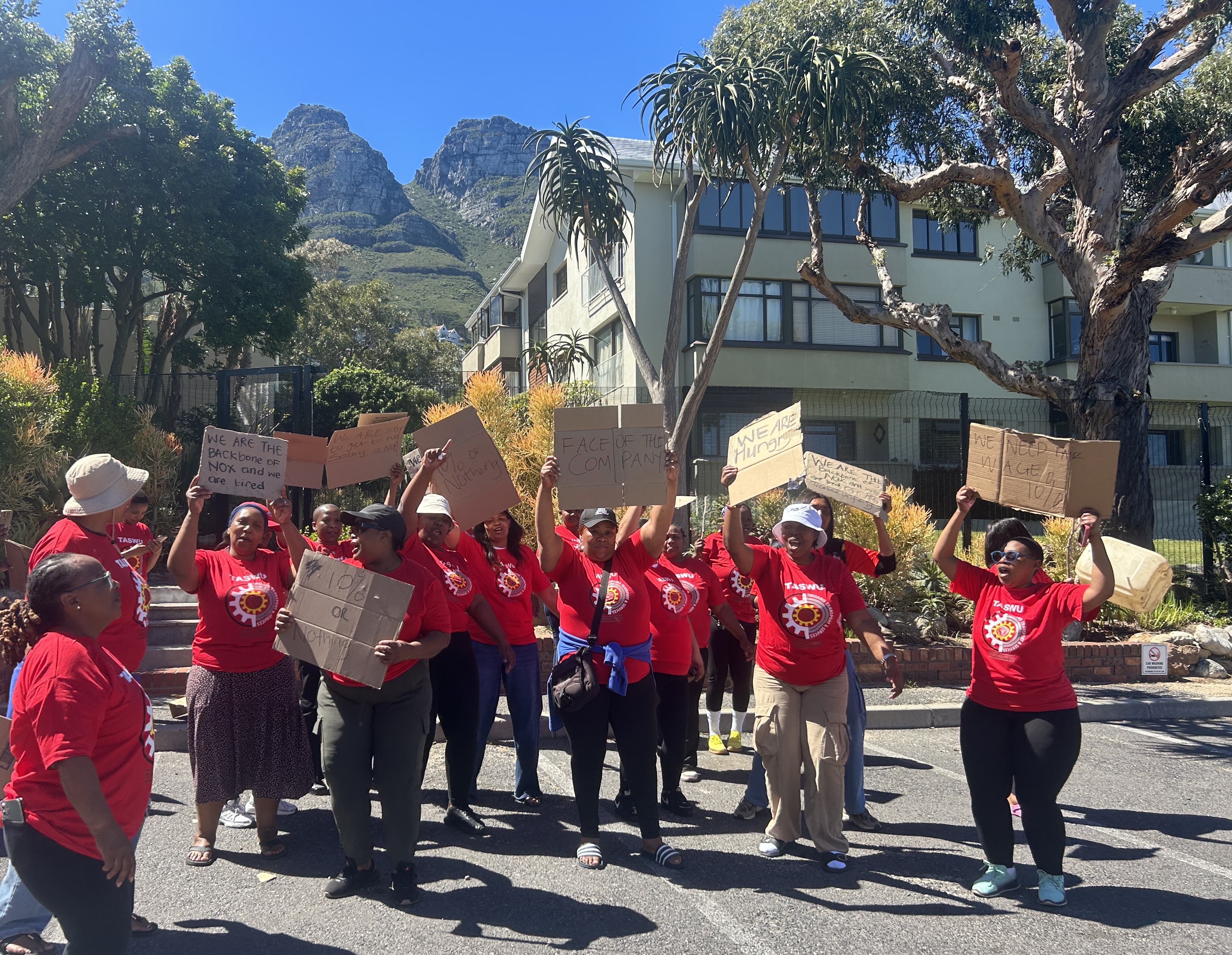
Housekeepers picket outside the Nox Cape Town office in Camps Bay on Wednesday. Photo: Alice Scott
- About 20 housekeepers at Nox Cape Town, a holiday rental company, have gone on strike for a 10% wage increase.
- They earn R7,000 a month, working 9am to 4pm six days a week, and some say transport alone costs them up to R2,500.
- The company is offering 5% and says most housekeepers have accepted it.
- In a message to housekeepers before the strike, the company said those on strike would not be paid for the days they don’t work.
Around 20 housekeepers employed by Nox Cape Town, a luxury property and holiday rental company, embarked on a protected strike on Wednesday, calling for a 10% increase in their wages.
The company has about 100 properties located across Cape Town’s Atlantic Seaboard, including Camps Bay, Sea Point, Clifton and Green Point.
The workers, represented by the Tirisano Transport and Services Workers Union, began protesting outside the company’s Camps Bay office at 9am on Wednesday.
They say the company’s current offer of a 5% increase is not enough and they have been left struggling to afford necessities amid rising living costs.
Union official Victor Langa said the dispute began in June when they asked for a 15% raise. Langa said the housekeepers decided to lower their ask to 10%. The company offered a 5% wage increase, leading the housekeepers to pursue a strike .
The housekeepers say they work Monday to Saturday from 9am to 4pm at various properties and earn about R7,000 a month.
Shop steward Vivienne Francisco, who said she has worked with Nox for 11 years, said the company has not increased housekeeper salaries enough given rising costs of living.
Francisco said housekeepers struggle to afford transport. Many travel long distances to get to work. “Everything went up because of this Middle East crisis,” Francisco said. “Petrol, taxi fare — everything.”
Veliswa Masinimi, a housekeeper from Khayelitsha, said she spends R1,500 of her R7,000 monthly salary on a MyCiTi bus pass. But when the bus is full or late, she has to spend extra on a taxi or the train.
Portia Mika, also from Khayelitsha, said she spends about R2,500 a month on transportation to and from work. Her rent has also become more expensive, she said.
Mika said she is left with little money to support her child and pay for groceries. She sometimes relies on food that guests leave behind for her, she said.
“We’re the first people that meet the guests,” Mika said. “We get to deal with difficult guests. We get to deal with difficult guests’ moods. They [Nox] get good reviews. Instead of thanking us, they treat us like trash.”
GroundUp has seen a message circulated to housekeepers before the strike, informing them that workers on strike would not be paid for the days they do not work.
“No work means no pay. You are paid R269.23 for each working day, so that amount is not paid for each day you do not work,” the message said.
“To the rest of the team, thank you for coming to work and for supporting our guests during this difficult time. We really appreciate you.”
Francisco said several members resigned from the union on Tuesday following the message. But she said the members who have remained plan to continue their strike until their demands are met.
The company said in a statement that it respects employees’ right to participate in protected strike action and remains committed to managing the dispute lawfully and respectfully.
Nox Cape Town managing director Nick Taylor told GroundUp the company pays at or above the market rate paid by other housekeeping and hotel businesses.
He said the company has provided 5% raises to its housekeepers every year since the end of Covid, which he noted was higher than the annual inflation rate.
(In September, the annual inflation rate was 4.5%, though in the Western Cape it was 5.5%.)
The company said more than 75% of housekeepers have accepted the 5% raise offer. Francisco said some housekeepers may have agreed out of necessity. She said that, before the strike, housekeepers received a message reminding them that those who did not work would not be paid.
Francisco said the company’s efforts are not enough to make up for past losses. She said housekeepers went without raises between 2019 and 2022. In 2023, they received a 5% raise, of about R350, but were compelled to contribute this to a pension fund, effectively cancelling out a take-home pay increase, she said.
Taylor said that the lack of raises between 2019 and 2022 was due to Covid decimating the hospitality industry.
Richard Marshall, the company’s owner and founder, said the company had introduced pension payments to encourage a savings culture, and that the company matched employees’ contributions. But after hearing concerns from employees that they weren’t feeling the benefits, the company cancelled the programme.
Support independent journalism
Donate using Payfast

Don't miss out on the latest news
We respect your privacy, and promise we won't spam you.
Next: Health workers take insourcing demand to the CCMA
Previous: Fruit farmers take Premier to court
© 2026 GroundUp. This article is published under the GroundUp Republication Licence Version 1.0. Email [email protected] to request permission to republish.