
Community fights to reopen primary school
Policy to close small schools forces children to walk far to get to school
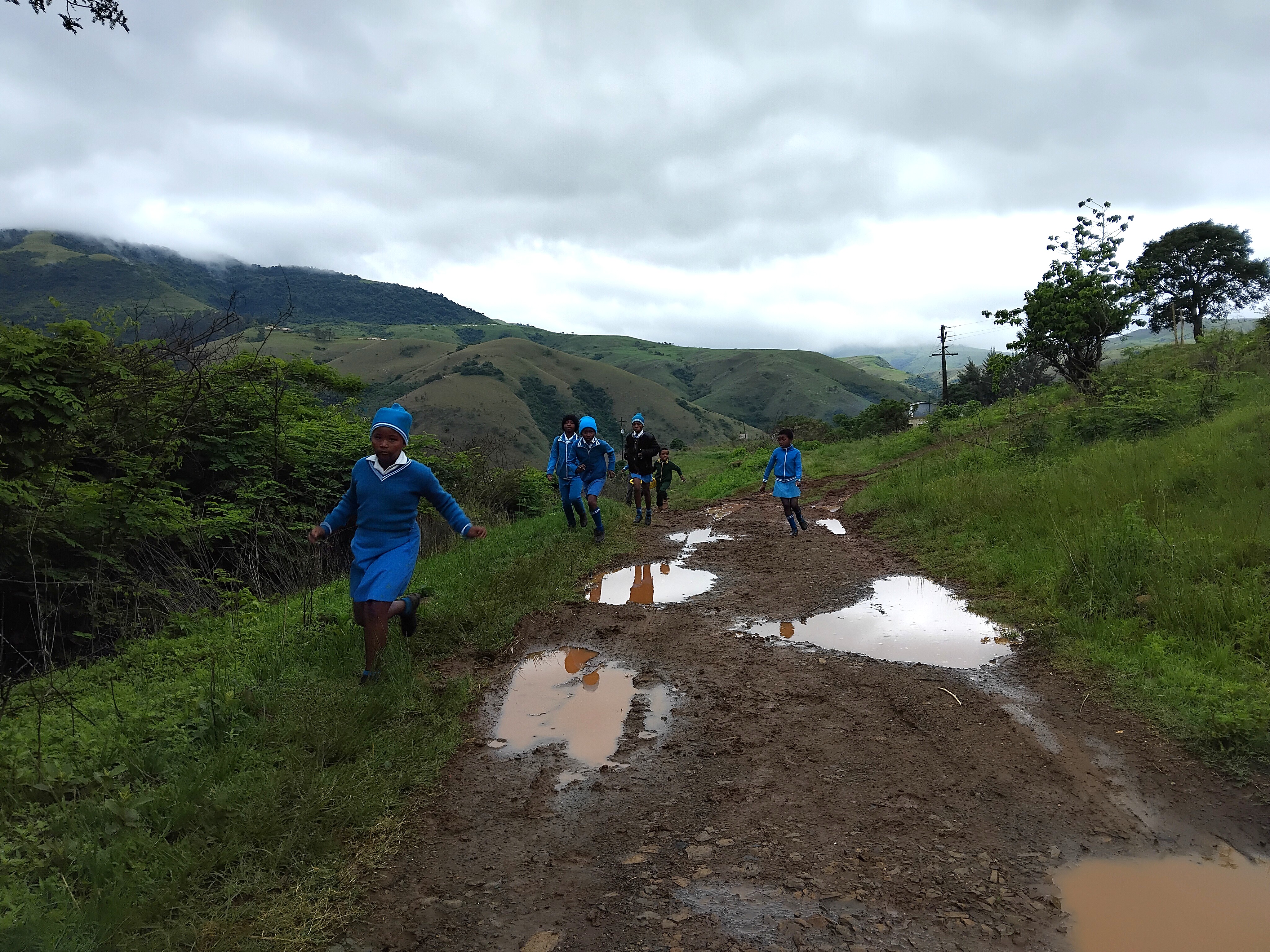
When it rains, roads are unsafe and scholar transport doesn’t operate. Children from Skhwane village need to walk about 15km to school. Photos: Bongane Motaung
Residents of Skhwane, a rural village in Nkandla, KwaZulu-Natal, want their primary school reopened.
Lungelani Primary School was closed this year after only 28 learners enrolled. Parents say they had started taking their children out of the school last year because there were only two teachers left, and the principal would be drunk at work.
Learners have to travel about 15km on gravel roads to get to the nearest schools. They can walk 4km to access scholar transport. But the service doesn’t operate when it rains because the roads are unsafe, so they either skip school or walk all the way.
Skhwane residents blocked the D878 road on 17 November, demanding that the education department reopen the school.
During a meeting at the school on 28 November, officials told parents the school would reopen, but only for Grade R to 2. But community members say they will continue fighting until all grades are reopened.
South African Democratic Teachers Union (SADTU) provincial secretary Nomarashiya Caluza said the school closure was part of a department policy to build new classrooms while closing or merging small and non-viable schools to improve education quality.
Caluza said SADTU had supported the policy, but many promises linked to it — including boarding schools and water transport for learners crossing rivers — never materialised.
At least 135 learners will have to enrol for the school to reopen, said Caluza, but the community has only been able to confirm 85 learners.
Ward 12 councillor Sibusiso Sithole said criminals have started taking advantage of the unoccupied buildings.
Grandparent Mandlenkosi Nxumalo spends part of his old-age grant on petrol to transport his grandchildren. “I retired from work, but it still feels like I am working because I wake up at 4am,” he said.
GroundUp walked with learners along muddy forest paths where they cross the Gomonco, Manyeke and Mful’omkhulu rivers.
Learners Senamile Xaba and Zekhethelo Nxumalo said they sometimes fall asleep in class because they are exhausted.
The KwaZulu-Natal Department of Education did not respond to questions.
Equal Education’s Ayanda Sishi-Wigzell said: “Equal Education doesn’t condone the closing of any schools or the issues that arise as a consequence.”
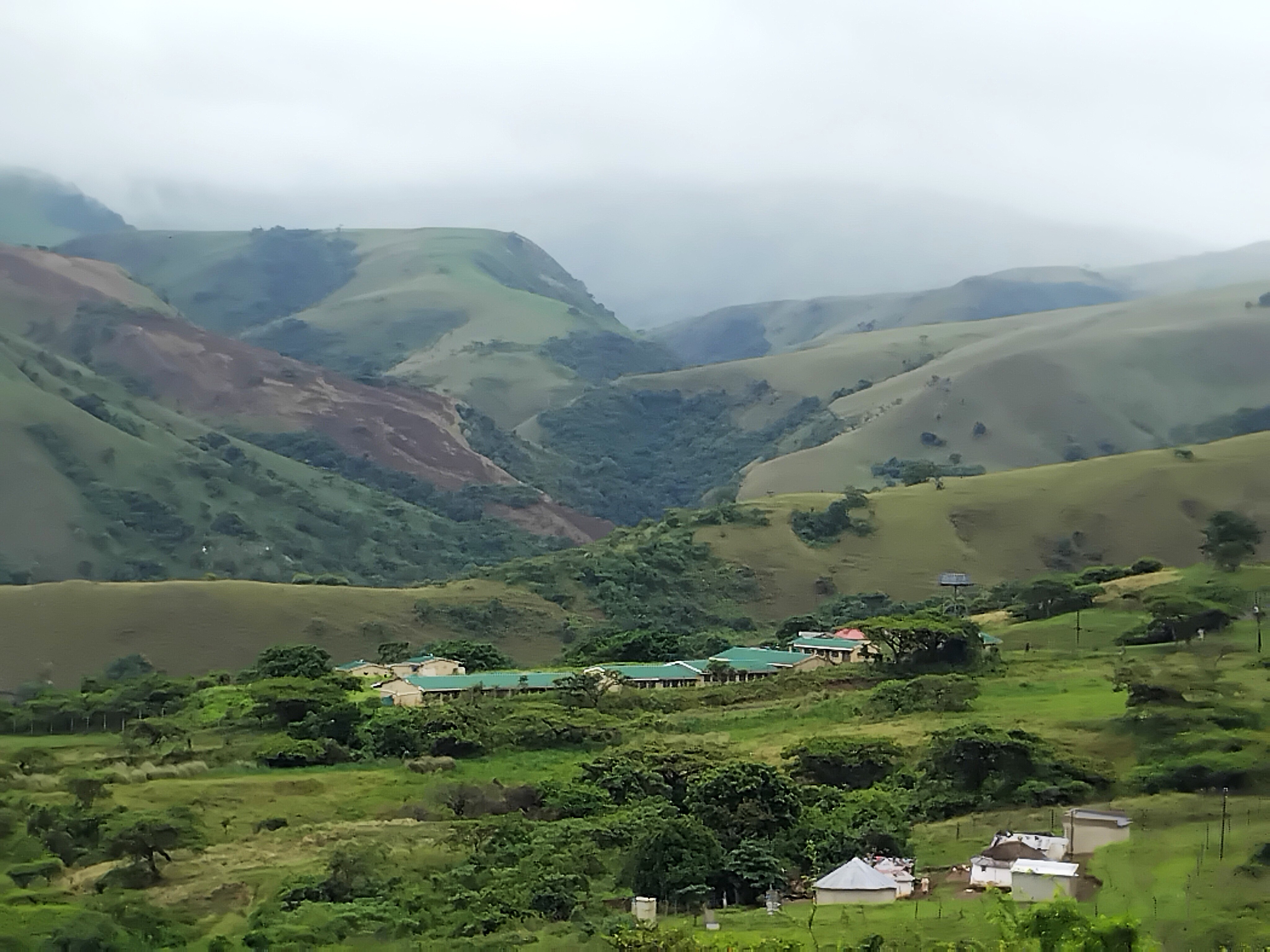
Lungelani Primary School in Nkhandla has been closed since early 2025.
Support independent journalism
Donate using Payfast

Don't miss out on the latest news
We respect your privacy, and promise we won't spam you.
Next: In Photos: Young Joburg ballerinas dazzle audiences
Previous: Special Tribunal hammers KZN education officials for corrupt contract
© 2025 GroundUp. This article is licensed under a Creative Commons Attribution-NoDerivatives 4.0 International License.
You may republish this article, so long as you credit the authors and GroundUp, and do not change the text. Please include a link back to the original article.
We put an invisible pixel in the article so that we can count traffic to republishers. All analytics tools are solely on our servers. We do not give our logs to any third party. Logs are deleted after two weeks. We do not use any IP address identifying information except to count regional traffic. We are solely interested in counting hits, not tracking users. If you republish, please do not delete the invisible pixel.