
Constitutional Court rules asylum seekers once rejected cannot reapply
The majority judgment found that the Refugees Act is silent on reapplications and the court would come dangerously close to legislating if it allowed these
 Add GroundUp on Google
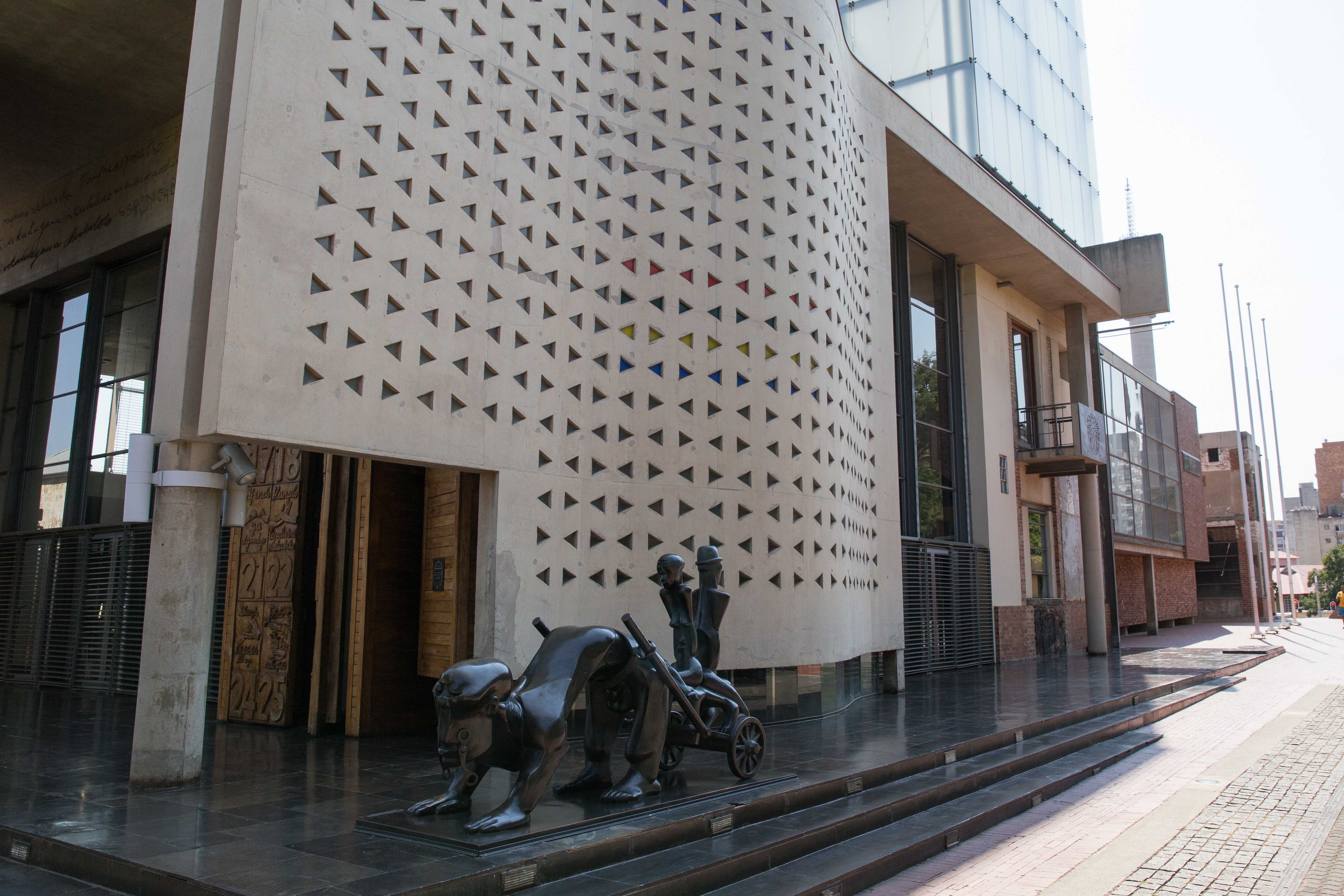
The Constitutional Court has ruled that rejected asylum seekers cannot reapply. Archive photo: Ashraf Hendricks
- The Constitutional Court has overturned a Supreme Court of Appeal ruling, by finding that people whose asylum applications have been rejected cannot submit new applications.
- The case was brought by two Burundian nationals who argued they had become “sur place” refugees — people who became refugees after leaving their country.
- A dissenting judgment argued the majority’s ruling created arbitrariness and violated the principle of non-refoulement, which prohibits returning people to countries where they face persecution.
The Constitutional Court has ruled that people whose asylum applications have already been rejected cannot submit fresh applications based on new reasons for claiming asylum.
At the heart of the case was whether the Refugees Act protects so-called “sur place” refugees — people who were not refugees when they left their countries, but who later became refugees because circumstances changed in their home country.
In a majority judgment written by Justice Jody Kollapen, the court found that the Act protects first-time “sur place” applicants, but not people whose earlier asylum applications had already been rejected.

The ruling means that a person may only apply once for refugee status in South Africa.
Burundi asylum seekers rejected
The case was brought by Burundian nationals Amina Irankunda and Arava Niyonkuru. They applied for asylum in South Africa in 2008 and 2012 respectively, citing fears of political persecution in Burundi due to events at that time in that country. Their claims were rejected in 2014 as “manifestly unfounded”.
In 2015, political violence escalated in Burundi after then-president Pierre Nkurunziza announced he would seek a third term in office.
Irankunda and Niyonkuru argued that the worsening situation made it unsafe for them to return. In 2018, they submitted fresh asylum applications on the basis that they had become “sur place” refugees.
The Department of Home Affairs rejected the applications, arguing that the Refugees Act does not allow someone whose asylum claim has already been rejected to apply again.
In November 2018, the pair approached the High Court on an urgent basis to compel Home Affairs to consider their fresh applications as sur place refugees.
The High Court rejected their case, finding that allowing repeated applications could create “a never-ending cycle of applications for asylum”.
The pair then appealed to the Supreme Court of Appeal (SCA). That court ruled in their favour in June 2024.
The SCA found that once a sur place claim had been made, there was no basis to force asylum seekers to return to their country while the application was being decided, or to reject the application because an earlier application had failed.
The Constitutional Court overturned the SCA ruling.
The majority judgment distinguished between first-time sur place applications and later applications made after an earlier claim had already been rejected.
The court ruled that the Refugees Act does permit first-time sur place claims, because these were the same as any other asylum claim based on persecution. But because the Act did not entitle someone to re-apply, a subsequent sur place claim is not allowed.
The court said the Refugees Act is silent “on the possibility of subsequent applications”, or how such applications were to be considered and processed.
The court noted that countries such as the UK, Canada and members of the European Union have specific legal procedures dealing with repeat refugee applications, while South Africa does not.
The majority said that if the court were to force the department to consider repeat applications, it would mean the court would be “stretching the bounds of interpretaion [of the Act] to impermissible limits”, and would mean the Court would be legislating.
The court did not make a decision on whether the Act was unconstitutional for not allowing a person to re-apply. The only question before it was one of interpretation: does the Act permit such claims or not.
The majority upheld Home Affairs’ appeal. Each party was ordered to pay their own costs.
Dissent warns ruling undermines legal principles
Justice Owen Rogers and Acting Justice Caroline Nicholls dissented.
They argued that the Refugees Act should be interpreted in line with the principle of non-refoulement, which prohibits returning people to countries where they may face persecution or serious rights violations.
Because asylum seekers are often accompanied by dependent children, the principle that a child’s best interests are paramount also had to be respected.
Using a hypothetical scenario of two asylum seekers in identical circumstances being treated differently, the dissent argued that the majority’s conclusion created arbitrariness and undermined equal protection under the law.
“In our view, an interpretation that the Act allows for reapplications is a tenable interpretation that does not strain the language of the Refugees Act”, the dissent concluded.
The two justices would have rejected the appeal.
The paragraph on the constitutionality was rephrased to read more accurately: "The court did not make a decision on whether the Act was unconstitutional for not allowing a person to re-apply. The only question before it was one of interpretation: does the Act permit such claims or not."
Support independent journalism
Donate using Payfast

Don't miss out on the latest news
We respect your privacy, and promise we won't spam you.
Next: Homes of over 5,000 people still flooded in Khayelitsha
Previous: Report into R66-million netball lottery grant recommends litigation to recover funds
© 2026 GroundUp. This article is published under the GroundUp Republication Licence Version 1.0. Email [email protected] to request permission to republish.