
In photos: Homes destroyed in KZN storm
“I saw the corrugated iron roof blowing off”
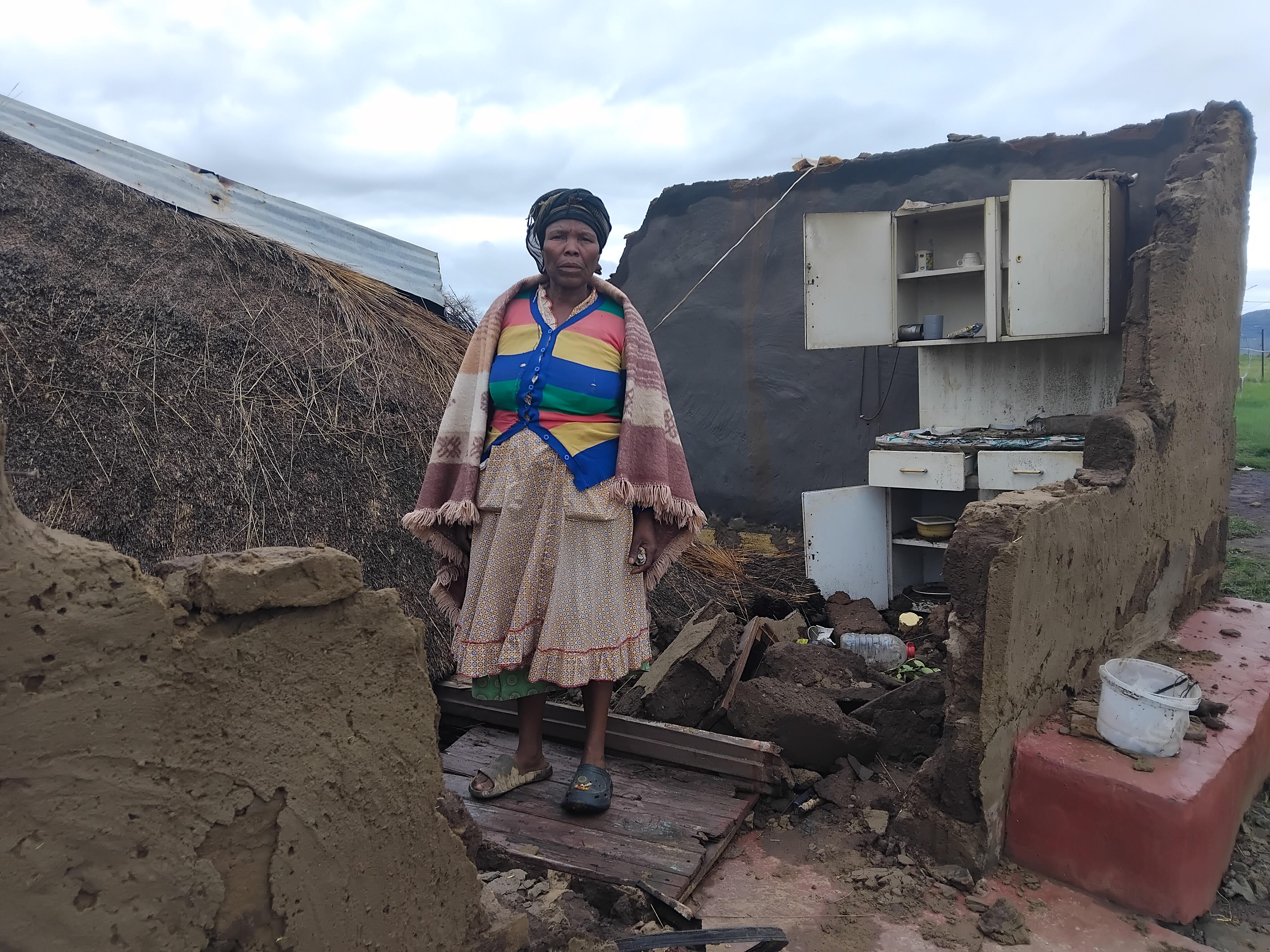
Qondeni Buthelezi’s, whose three family homes were completely destroyed, said it is the third time storms have battered her homes. Photos: Bongane Motaung
A storm swept through parts of Northern KwaZulu-Natal on Tuesday afternoon, destroying several homes.
On Wednesday, GroundUp visited the rural community of Ngwetshana, where most people live in mud huts with thatched roofs.
Qondeni Buthelezi’s family had three mud houses, which are now all destroyed. It was the third time their homes had been hit by storms in recent years, said Buthelezi.
Buthelezi, who survives on child care grants and selling thatch for roofs, says the family’s festive season plans included a traditional wedding ceremony over the new year, but they are now left destitute.
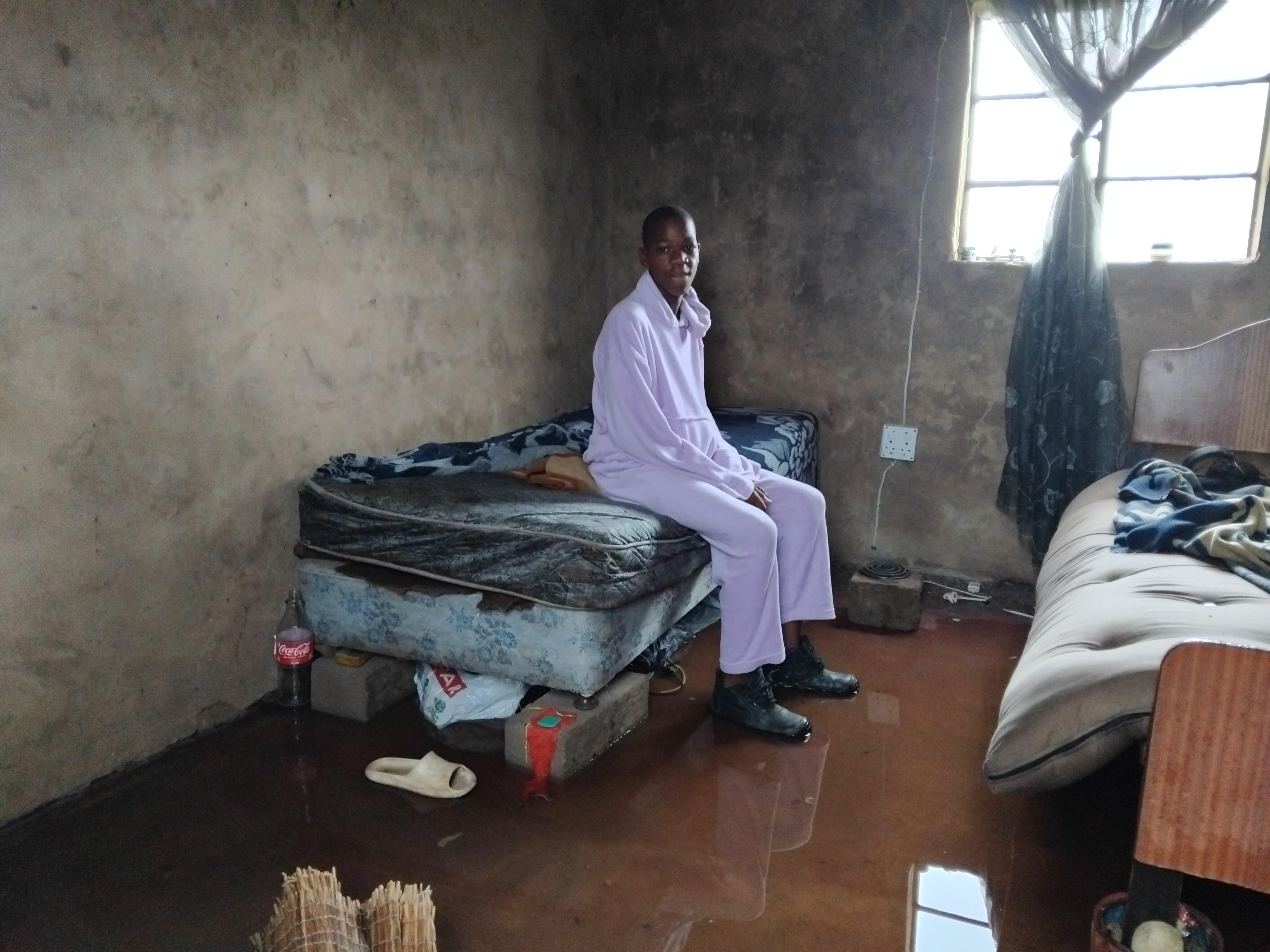
Thobani Mbatha sits in the place he was sitting when the storm hit and water started streaming into the house.
Thobani Mbatha says he and his brother barely escaped when their two-room house got caught in the storm.
“We were so scared, and the door of the house refused to open because we had locked it with a nail. Suddenly, it became very dark, a strong wind blew, water streamed into the house, then I saw the corrugated iron roof blowing off, and the electricity was also cut,” said Mbatha.
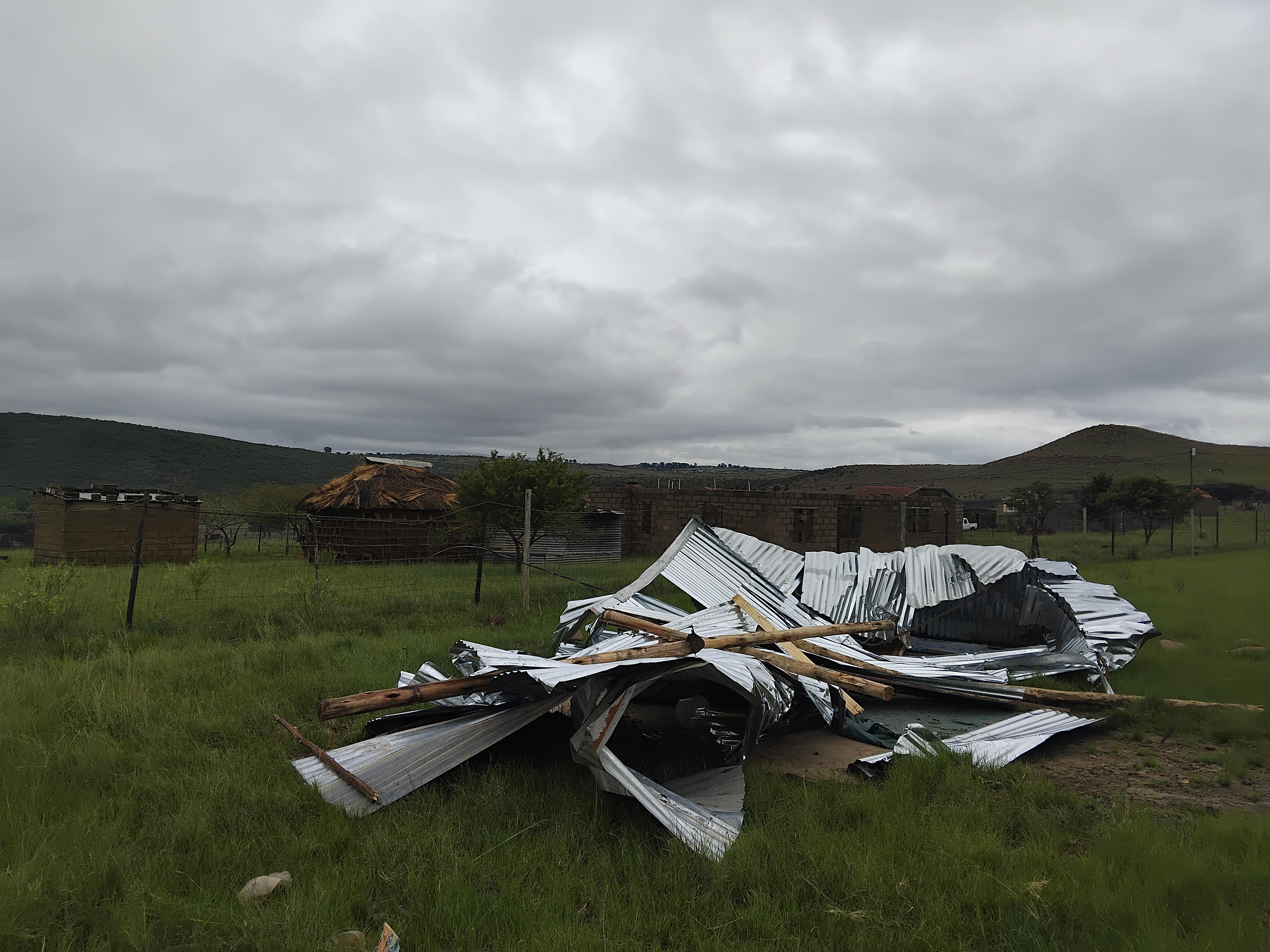
The remains of Qondeni Buthelezi’s corrugated iron roof.
Mahadi Mosea’s thatched roof was torn off by the strong winds. She says the roof and all her furniture are beyond repair.
Nquthu mayor Lindokuhle Shabalala told GroundUp that there were no injuries. “We provided temporary needs to the five most affected families,” he said.
A woman in nearby Dundee was swept away by floods on Saturday. The South African Western Service last week issued a level 4 warning of heavy thunderstorms in the area. More heavy storms are expected in the province throughout the festive season.
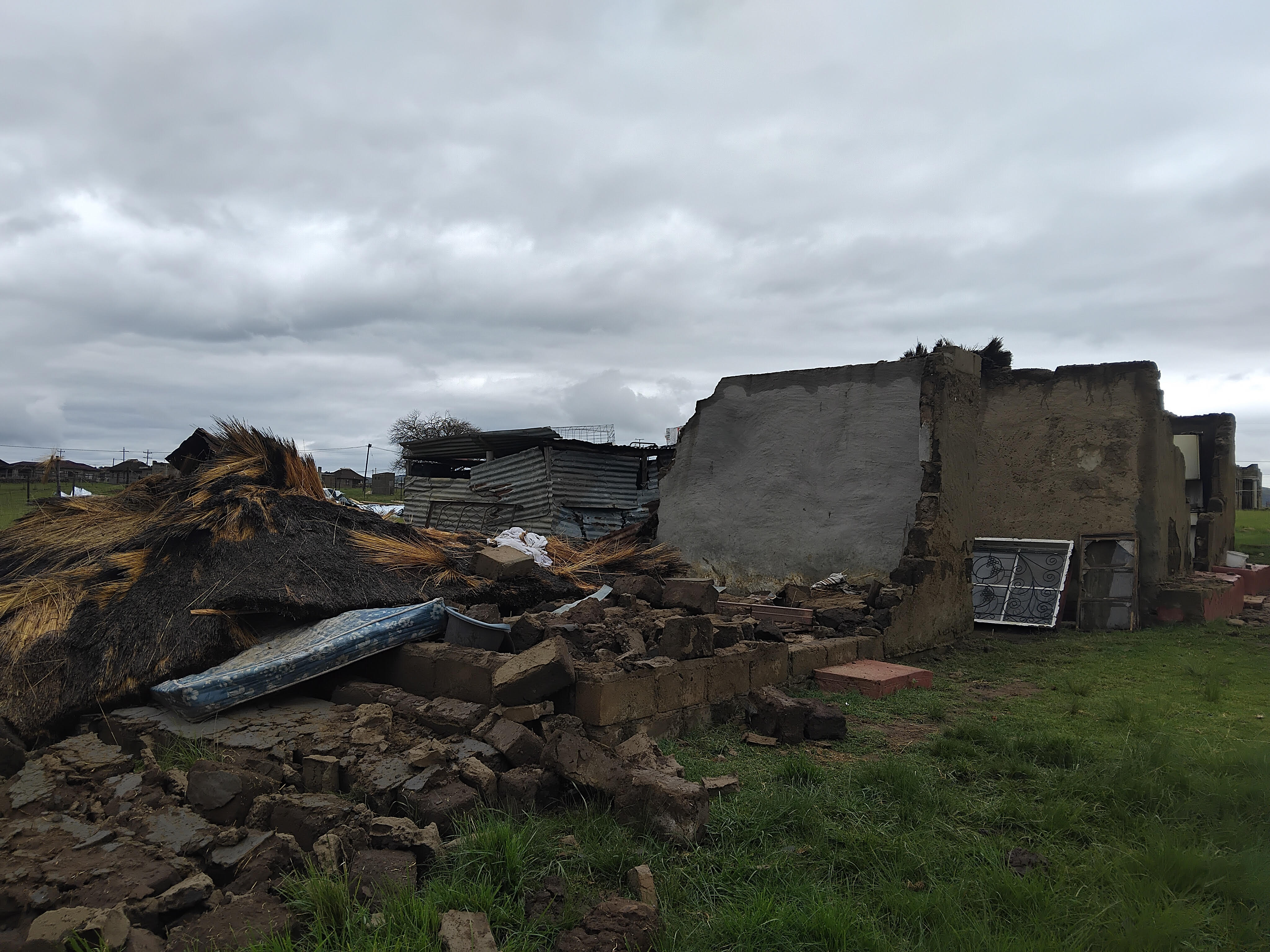
Qondeni Buthelezi’s home lies in ruins.
Support independent journalism
Donate using Payfast

Don't miss out on the latest news
We respect your privacy, and promise we won't spam you.
Next: “A soap opera with bodyslams”: meet Cape Town’s pro wrestlers
Previous: Broken promises: Sarah Baartman Centre is a case study in government failure
Letters
Dear Editor
The recent storm damage reported in your area is a reminder that the climate crisis is already a lived reality for poor rural communities. These households have contributed least to the emissions driving global heating, yet they face the harshest “loss and damage” when storms, floods and high winds destroy fragile homes and livelihoods. The article notes that a severe weather warning was issued and that further heavy storms are expected through the festive season.
Emergency relief must therefore be paired with timely risk information, organised evacuation, and practical adaptation. When severe warnings are issued, the municipality should activate a clear early-warning protocol that reaches everyone: locally trusted communication channels, real-time updates, and community-level coordination with traditional leadership and ward structures. Evacuation should not be ad hoc. High-risk zones must be mapped in advance, safe shelters must be identified and equipped, and transport arrangements must be ready so that families can relocate before roofs lift and rivers rise.
Climate resilience also requires long-term measures: strengthening housing against wind and heavy rain, upgrading drainage and stormwater pathways, maintaining culverts and access roads, protecting wetlands and river buffers, and integrating climate-risk planning into the IDP, disaster management plans, and infrastructure budgets. Relief provided to the most affected households is welcome, but preparedness and resilience must cover the whole community, not only those already in crisis.
I call on the municipality, provincial disaster management, and civil society partners to act together—mobilising emergency materials now, while also building the systems that prevent avoidable harm. Community support, including assistance so families can still celebrate weddings and give children small Christmas gifts, can restore dignity—but government must lead with planning, coordination and accountability.
© 2025 GroundUp. This article is licensed under a Creative Commons Attribution-NoDerivatives 4.0 International License.
You may republish this article, so long as you credit the authors and GroundUp, and do not change the text. Please include a link back to the original article.
We put an invisible pixel in the article so that we can count traffic to republishers. All analytics tools are solely on our servers. We do not give our logs to any third party. Logs are deleted after two weeks. We do not use any IP address identifying information except to count regional traffic. We are solely interested in counting hits, not tracking users. If you republish, please do not delete the invisible pixel.