
Foot-and-mouth disease hits Limpopo
Three recent outbreaks pose a threat to small-scale farmers’ livelihoods
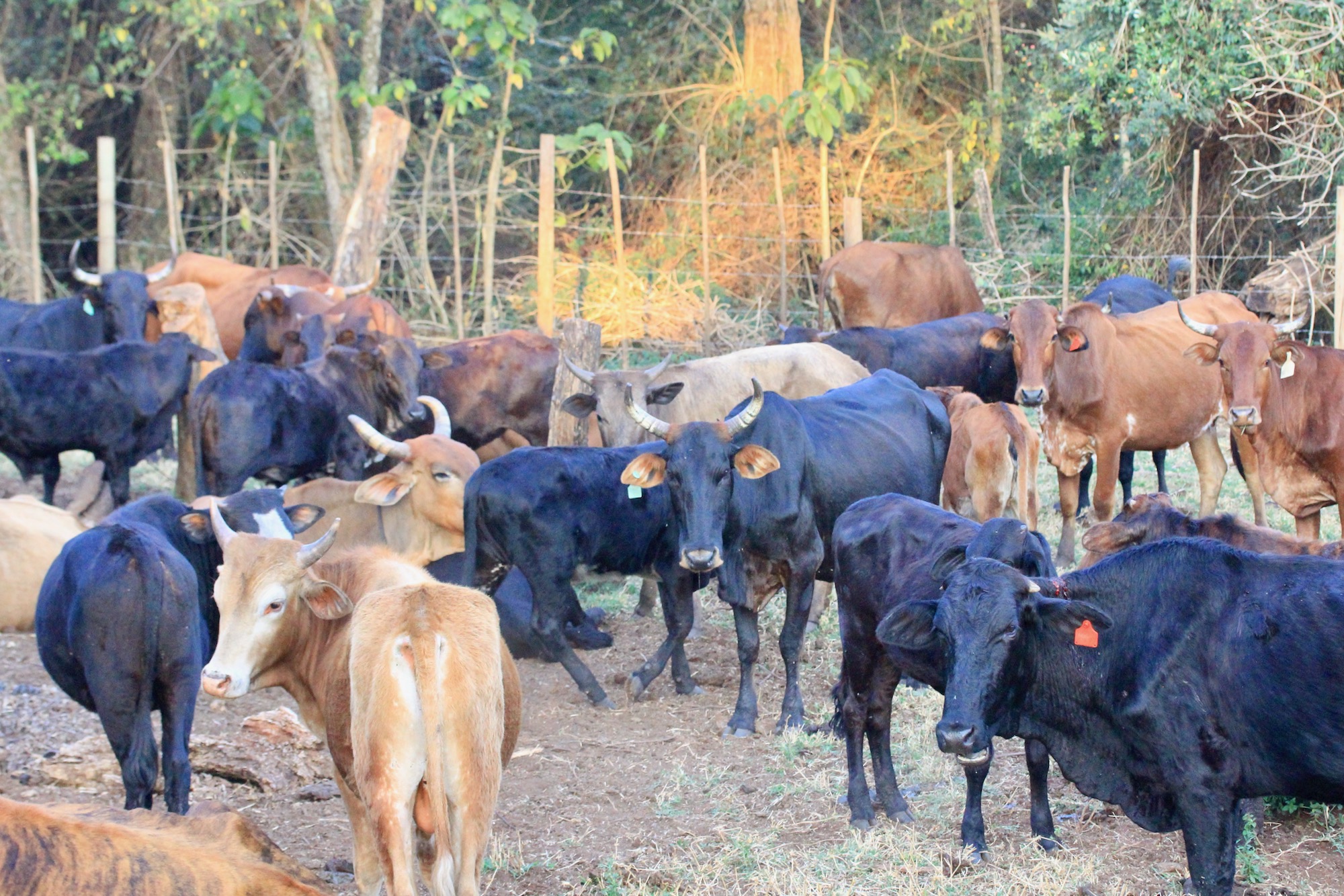
Cattle farmers in Makonde fear for their livelihoods after foot-and-mouth disease was identified in Vhembe district, Limpopo. Photo: Thembi Siaga.
When Lutendo Mundzhelele noticed frothy saliva dripping from the mouths of his cattle two weeks ago, he feared foot-and-mouth disease had reached his farm in Makonde, Limpopo. One cow, its body trembling, could no longer walk. Soon, more animals showed signs of disease.
Mundzhelele has farmed here since 1999, taking over the herd left by his late father. Like the 40 or so farmers around him, livestock is his main source of income, paying for food, school fees and emergencies.
He contacted the Limpopo Department of Agriculture and Rural Development, which sent officials. One ill cow was vaccinated.
By the next day, the situation had dramatically worsened, with 36 of his 53 cows affected.
The department returned to vaccinate all its cattle and herds in the area.
Mundzhelele has been unable to sell his livestock as the crucial festive season begins.
Tshianeo Walter Mathidi, chairperson of the Developing Farmers Union, said restrictions linked to the outbreak have disrupted sales across Vhembe District.
Last week, the department confirmed multiple foot-and-mouth disease outbreaks in Limpopo.
Three incidents are under investigation by the provincial veterinary services.
At an outbreak in Makonde village, Khubvi, within the high-surveillance area of the foot-and-mouth-free zone, control measures were implemented immediately.
At an outbreak at an auction facility in Vivo, trace-back investigations revealed the infected cattle came from a property in Alldays, which, along with linked farms, is under strict monitoring.
At a third outbreak at feedlots at two neighbouring villages — Leeupoort and Witklip in Modimolle-Mookgophong Local Municipality, Waterberg District — veterinary teams are conducting epidemiological investigations and implementing containment measures.
Limpopo agriculture department spokesperson Moshupologo Mothotse said all affected farms, feedlots and linked properties have been quarantined. The movement of cloven-hoof animals, their products and any potentially contaminated materials is prohibited.
She said the veterinary operations and joint operations committees were coordinating response efforts, with vaccination campaigns rolled out in high-risk areas.
Farmers and communities have been urged to report symptoms such as fever, excessive salivation, lameness, and mouth lesions, and to cooperate with inspections and vaccinations. Farmers are also advised not to move livestock without permission and to strengthen biosecurity measures.
“Foot-and-mouth disease does not pose a risk to human health, but it has serious economic implications for farmers and the livestock sector,” Mothotse said.
Published with the Limpopo Mirror
Support independent journalism
Donate using Payfast

Don't miss out on the latest news
We respect your privacy, and promise we won't spam you.
Next: Durban mayor urged to investigate assaults on homeless people
Previous: Thousands of families live on railway reserves without water, electricity or rubbish collection
© 2025 GroundUp. This article is licensed under a Creative Commons Attribution-NoDerivatives 4.0 International License.
You may republish this article, so long as you credit the authors and GroundUp, and do not change the text. Please include a link back to the original article.
We put an invisible pixel in the article so that we can count traffic to republishers. All analytics tools are solely on our servers. We do not give our logs to any third party. Logs are deleted after two weeks. We do not use any IP address identifying information except to count regional traffic. We are solely interested in counting hits, not tracking users. If you republish, please do not delete the invisible pixel.