
Law on naming sexual offence suspects challenged in court
The Minister of Justice and Constitutional Development is opposing the application
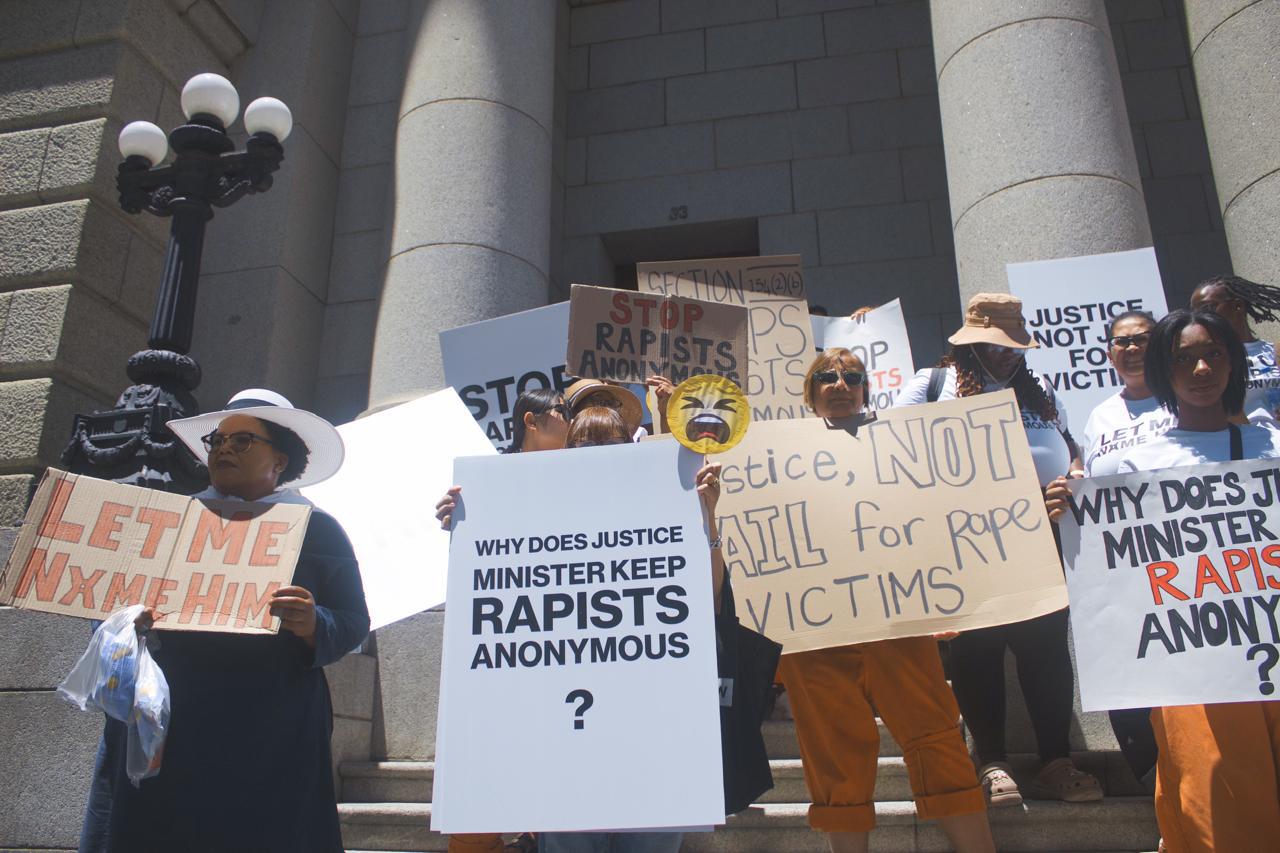
Caroline Peters of the Callas Foundation is challenging a section of the Criminal Procedure Act which prevents naming a person accused of rape or a sexual offence in the Western Cape High Court next month. Photo: supplied
- The Western Cape High Court will soon hear arguments challenging the constitutional validity of a law which prevents a rape or sexual offence accused from being named publicly.
- The case was brought by GBV activist Caroline Peters of the Callas Foundation, who faces a criminal charge for identifying a rape accused before they have formally pleaded in court.
- The Criminal Procedure Act makes naming the accused an offence, punishable with a fine or up to three years in jail.
- The Women’s Legal Centre, representing Peters, argues that it is predominantly women who are at risk of being punished for breaking the “no name” law.
- The Minister of Justice and Constitutional Development is opposing the application, saying the law is there to protect the identity of victims.
A Constitutional challenge to a law preventing naming a person accused of rape or a sexual offence before they have pleaded will be argued in the Western Cape High Court next month.
The application has been brought by GBV activist Caroline Peters, of the Callas Foundation, represented by the Women’s Legal Centre. Peters is facing a criminal charge for identifying a rape accused before he had entered a formal plea in court.
Section 154(2)(b) of the Criminal Procedure Act makes naming the accused an offence, punishable with a fine or up to three years in jail.
GroundUp reported on a case in the Durban regional court in which a well-known athletics coach is charged with the statutory rape of a 14-year-old girl he was training. Even though he has appeared in court dozens of times, he still cannot be named because he has not formally pleaded.
The Women’s Legal Centre argues that this is a limitation on the rights of victims and the media.
While the law keeps accused sexual offenders anonymous, survivors who name them can go to jail.
The Centre says the law entrenches the harmful stereotypes that women lie and that protecting the reputations of men is prioritised.
In their papers, they state that Peters believes the law in question to be a “relic of a time when women were silenced and misogynistic men’s reputations were protected”.
This is supported by the history of how the law came into being, and that it has no legitimate government purpose, particularly in a country where courts frequently lament the high levels of violent crime against women and children.
The lawyers argue that it is predominantly women who are at risk of being punished for breaking the “no name” law.
The Minister of Justice and Constitutional Development Nkhensani Kubayi is defending the law saying that it “protects the identity of the victims”.
She conceded that another, seemingly unpoliced law (section 335A), which prevents even a victim from identifying herself or giving consent to being identified, must be scrapped.
Unintended consequences
Previous versions of the Criminal Procedure Act, dating back to 1917, only prohibited the publication of any information relating to a trial involving an indecent act unless the presiding officer, having consulted the victim, had given consent to such publication.
“The purpose was to conceal information that, if published, might be detrimental to the victim,” Peters’ lawyers argue.
But the law as it stands contains no such limitation and clearly protects the accused, something the minister argued was an “unintended consequence”.
The lawyers say the only sensible interpretation of this law was that its purpose was, at least in part, to protect an accused’s reputation until they publicly admitted or denied their guilt.
The minister’s lawyers, in their heads of argument, say the “temporary” prohibition is necessary to protect the victims because most are tied to the accused through family, community or institutional links.
The lawyers argue that sexual offences and extortion carry social stigma, and are less likely to be reported if the complainant’s identity is disclosed. “The same cannot be said for other offences, such as attempted murder, robbery or fraud.”
They argue that while the minister accepts the right of the media to impart information is fundamental to democracy, it can be limited. Parliament had carefully balanced all competing interests, they said. “The media is not the custodian of what is in the public interest. Its reporting largely concerns what is interesting to the public … the minister respectfully submits that the freedom of expression challenge raised must fail.”
The lawyers further argued that the impugned sections were “gender neutral” and were therefore not discriminatory. “The fact that men are overwhelmingly perpetrators and women are overwhelming victims is an unfortunate fact relating to crime, both in South Africa and globally. But there is no differentiation between two similarly situated persons.”
Blunt instrument
Media Monitoring Project Benefit Trust and Campaign for Free Expression have joined the application. They argue that “sweeping publication bans” violate the constitution.
“The section silences publication at the precise stage when the formal justice process is underway and public scrutiny is needed.
“Open justice demands that justice be openly administered in public.”
The law is a “blunt instrument” that applies, regardless of context, without judicial oversight and without regard to whether publicity would compromise the complainant’s welfare or the fairness of the trial.
“It remains in force at least until plea and, if the accused never pleads, the ban could last indefinitely (such as if the accused dies). All the while the public is kept in the dark about the facts of the alleged offence and the progress or stagnation of the case.”
Strictly applied, any information relating to the charge, not only the name of the accused, is not allowed.
“The result is often absurd. Cases that attract media attention and public awareness suddenly disappear from public view only to resurface when a plea is eventually entered. That serves no legitimate interest,” the campaign argues.
The Women’s Legal Centre has launched a national civil disobedience campaign, called Nxme Him, where victims can enter the names of perpetrators on a secure AI platform which converts it into an emoji code.
The Centre says this allows women to symbolically name the accused. “The WLC envisions a day when Section 154 (2)(b) will be overturned and every emoji code can finally be decrypted, and survivors can name their attackers, free from the threat of prosecution,” it said in a statement.
The matter is set down for 3 and 4 March.
Support independent journalism
Donate using Payfast

Don't miss out on the latest news
We respect your privacy, and promise we won't spam you.
Next: Survivors call for probe into deadly Limpopo bus crash
Previous: Teenager beaten to death for stealing cellphone and cash
© 2026 GroundUp. This article is licensed under a Creative Commons Attribution-NoDerivatives 4.0 International License.
You may republish this article, so long as you credit the authors and GroundUp, and do not change the text. Please include a link back to the original article.
We put an invisible pixel in the article so that we can count traffic to republishers. All analytics tools are solely on our servers. We do not give our logs to any third party. Logs are deleted after two weeks. We do not use any IP address identifying information except to count regional traffic. We are solely interested in counting hits, not tracking users. If you republish, please do not delete the invisible pixel.